


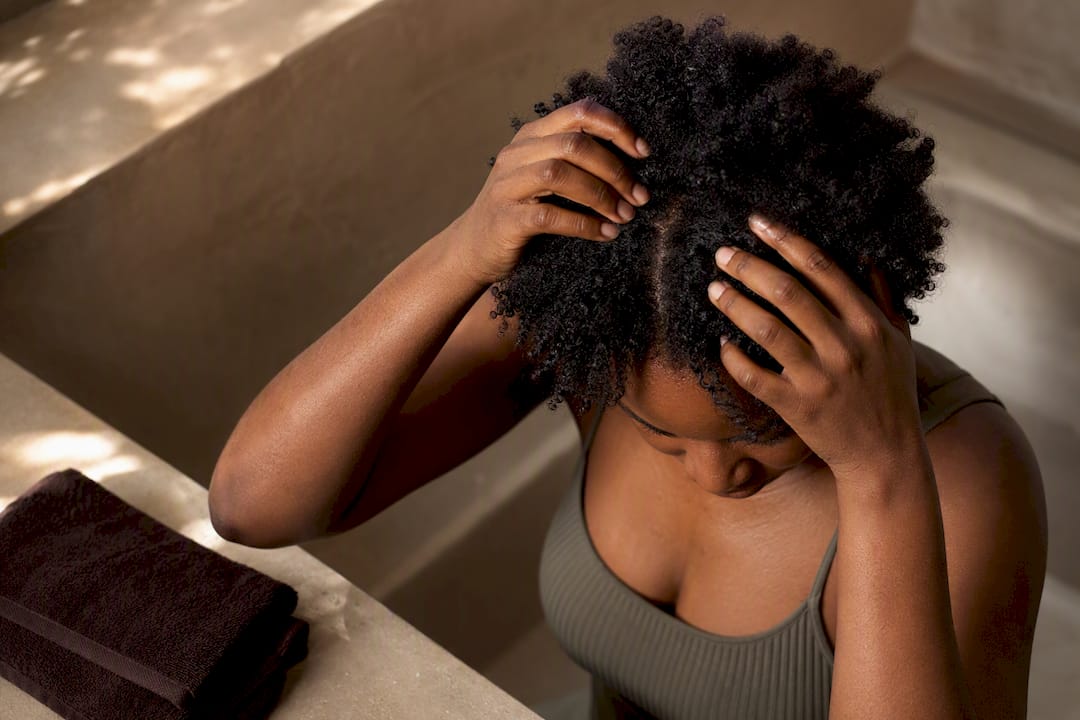
Dandruff in afro hair is almost always treatable, and the fix starts at the scalp, not the strands. Use a medicated anti-dandruff shampoo directly on the scalp on a set schedule, since most flaking comes from a treatable yeast overgrowth, and follow every medicated wash with a moisturizing conditioner on your lengths. Get the balance right between antifungal treatment and hydration, and most people see real improvement within a few weeks.
TL;DR:
- Using a medicated anti-dandruff shampoo on the scalp only, followed by moisture-rich conditioner on the lengths, is essential for effective treatment.
- Dandruff in afro hair is caused by yeast overgrowth and presents as greasy, yellow flakes with redness, unlike dry scalp, which has white, powdery flakes without inflammation.
- Curl pattern and styling habits, such as braids or extensions, influence dandruff treatment efficacy, requiring scalp-specific products and careful application.
- Active ingredients like zinc pyrithione, selenium sulfide, and ketoconazole work differently and should be paired with barrier-supporting conditioners containing ceramides.
- Most dandruff improves within four to eight weeks of correct routine, but professional consultation is necessary if symptoms persist or worsen.
Table of Contents
- What Causes Mjäll (Dandruff) in Afro Hair, and How Is It Different From Dry Scalp?
- Why Afro and High-Curl-Pattern Hair Need a Different Dandruff Strategy
- How to Build a Dandruff Treatment Routine for Afro Hair
- Which Ingredients Actually Work for Dandruff in Textured Hair?
- Styling and Prevention Habits That Keep Dandruff From Coming Back
- When to See a Doctor About Persistent Dandruff
- A Practical Wash-Day Checklist for Curl Types 3 and 4
- Treat and Protect: The Right Way to Think About Afro Dandruff
- Shop the Moisturizing Shampoo Made for Your Alternate Wash Days
- Sources
What Causes Mjäll (Dandruff) in Afro Hair, and How Is It Different From Dry Scalp?
Dandruff and dry scalp look similar from a distance and get treated the same way by a lot of people, which is exactly why so many afro hair routines backfire. They’re not the same condition, and treating one like the other tends to make things worse.
Dandruff, often part of what dermatologists call seborrheic dermatitis, is typically driven by an overgrowth of Malassezia yeast on the scalp. It shows up as larger, greasy, sometimes yellowish flakes, often with redness, itching, or a mild burning feeling underneath. Dry scalp is a different problem entirely: it’s small, dry, white flakes with no grease and usually no inflammation. It’s a moisture deficit, not a microbial one.
Here’s how to tell them apart at a glance:
- Flake size and texture: Dandruff flakes are bigger and often clump together with oil; dry scalp flakes are fine, powdery, and scatter easily.
- Color: Yellowish or waxy suggests dandruff; pure white suggests dry scalp.
- Redness or irritation: Present with dandruff, rare with simple dryness.
- Oiliness: Dandruff scalps often feel greasy at the roots even between washes; dry scalps feel tight and rough.
- Itch pattern: Dandruff itch tends to be localized and persistent; dry scalp itch usually eases once you moisturize.
The real danger is misdiagnosing one as the other. If you have dandruff and respond by piling on heavy oils and butters (a common instinct with afro hair), you’re feeding the exact environment Malassezia thrives in. That’s how a mild flaking problem turns into a scalp that stays inflamed for months.
Why Afro and High-Curl-Pattern Hair Need a Different Dandruff Strategy
Coily hair doesn’t distribute scalp oil the way straighter hair types do. The curl pattern itself creates a physical barrier, so sebum struggles to travel down the shaft the way it would on straight or wavy hair. That leaves the scalp more exposed to whatever’s happening at the surface, including yeast overgrowth, while the strands further down stay chronically underhydrated.
Research on high curl pattern hair and scalp care points to something specific: scalps affected by dandruff show measurable decreases in ceramides, the lipids that hold the skin barrier together. A weaker barrier means more moisture loss, more irritation, and a scalp that’s slower to recover even after the yeast is under control. That’s the biochemical piece most generic dandruff advice skips entirely.
On top of that, common afro hairstyling habits complicate treatment:
- Braids, extensions, and weaves can trap sebum, sweat, and product buildup against the scalp for weeks at a time, which worsens flaking.
- Relaxers and chemical straightening can inflame an already compromised scalp barrier, making dandruff symptoms harder to distinguish from chemical irritation.
- Tight, high-tension styles pull on already-fragile hair, so any drying medicated treatment adds a second stressor on top of mechanical strain.
This is also why some medicated shampoos, the ones that work great on straight hair, need a modified approach here. Ingredients that dry out the scalp can also dry out the shaft if they run down your strands during rinsing. Applying product to the scalp only, and rinsing lengths separately with conditioner, protects the parts of your hair that don’t need the antifungal exposure.
How to Build a Dandruff Treatment Routine for Afro Hair
This is a 4 to 8 week plan built to reduce flaking without wrecking your curls in the process.
- Detangle before you wet your hair. Work in four to six sections with a wide-tooth comb or your fingers. Detangling dry, unwashed hair with product buildup causes far less breakage than detangling wet, saturated strands.
- Consider a pre-poo. A lightweight oil or conditioner applied to your lengths (not your scalp) for 15 to 30 minutes before washing protects the shaft from the stripping effect of medicated shampoo.
- Apply the medicated shampoo to your scalp only, section by section. Part your hair into rows, apply the product directly to the exposed scalp, and massage gently with your fingertips for one to two minutes. Avoid dragging it down the length of your strands.
- Follow the label’s leave-on time. Most antifungal shampoos need a few minutes of scalp contact to actually work, not just a quick lather and rinse. Check the packaging for the exact window.
- Rinse thoroughly, then switch to a moisturizing shampoo or conditioner for your lengths. This is the step people skip, and it’s the one that prevents the “my dandruff shampoo dried out my whole head” complaint.
- Deep condition after every medicated wash. Your strands just went through a stripping process even if the product only touched your scalp; a moisture boost afterward isn’t optional.
- Start weekly, then taper. A narrative review on afro-textured hair care notes that weekly or every-other-week washing is often advised during active treatment. Once flaking visibly improves, stretch to every two to three weeks as maintenance.
- Add gentle exfoliation if buildup persists. A salicylic acid leave-on scalp treatment, or a soft-bristle scalp massager used carefully, can help clear residue between washes without scratching the scalp.
Pro Tip: Track your scalp weekly with a phone photo taken in the same lighting and part. Flaking that looks “about the same” week to week is easy to misjudge from memory alone, but photos make real progress (or lack of it) obvious fast.
Judge progress by flake volume and itch, not by how your hair “feels,” since moisturized hair can mask a scalp that’s still inflamed underneath.
Which Ingredients Actually Work for Dandruff in Textured Hair?
Four active ingredients do most of the heavy lifting in over-the-counter dandruff treatment, and each behaves a little differently on afro hair.
- Zinc pyrithione: A gentle, everyday antifungal that’s usually well tolerated with regular use; a solid first choice for milder cases.
- Selenium sulfide: More potent, but it can leave hair feeling dry or straw-like if it runs down your lengths, so scalp-only application matters even more here.
- Ketoconazole: Effective against Malassezia specifically and often recommended when zinc pyrithione isn’t cutting it; Swedish patient guidance lists it as a standard over-the-counter option.
- Salicylic acid: Helps break down flakes and buildup mechanically, useful for thicker scale, but can be drying if overused on an already fragile scalp.
Pair any of these with barrier-supporting ingredients on the rest of your routine. Look for ceramides, glycerin, and fatty alcohols in your conditioner and leave-in, since ceramides in particular help rebuild the scalp barrier that dandruff tends to weaken. Cocomera’s guide to ingredients for textured hair breaks down which formulas actually deliver these without weighing curls down.
What to avoid on an active dandruff scalp: heavy occlusive oils and butters applied directly to the roots. They feel moisturizing, but they seal in the exact yeast-friendly environment you’re trying to clear. Save the rich oils for your ends.
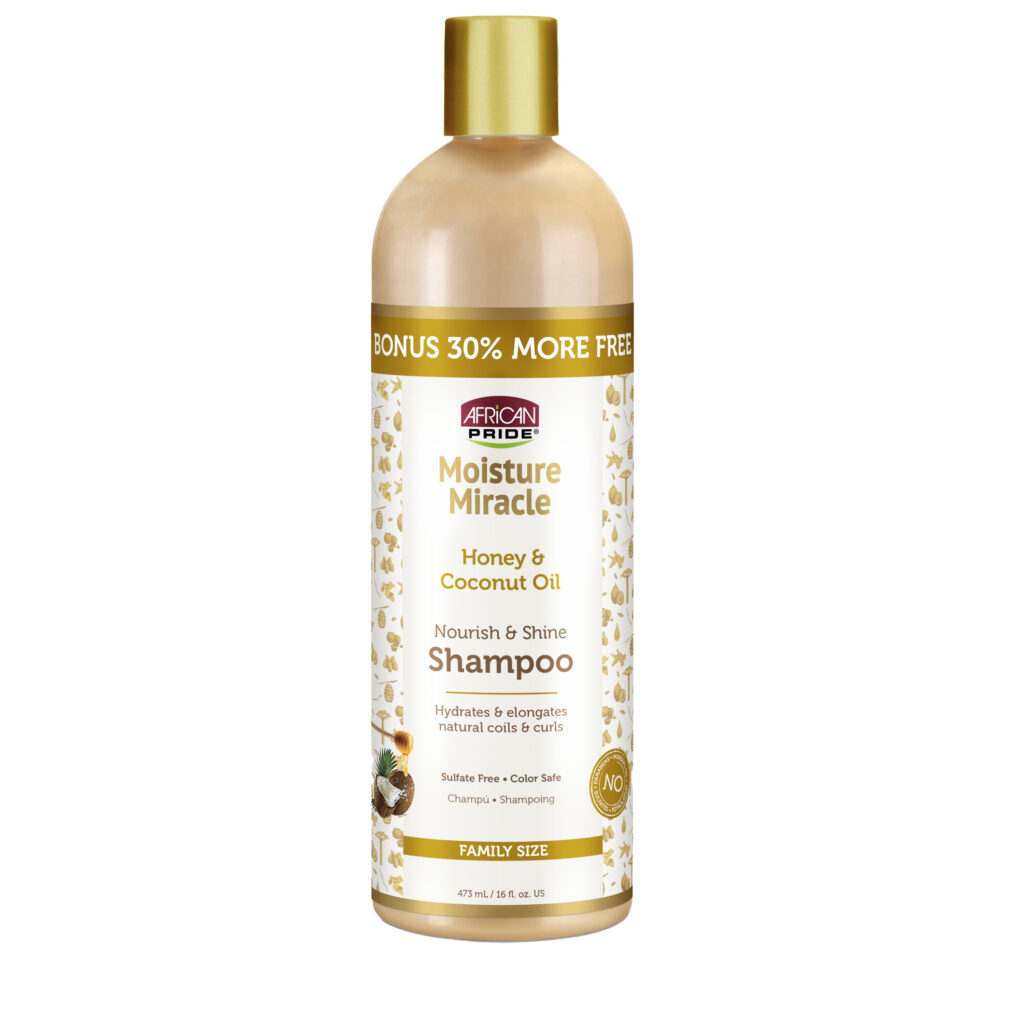
For the alternate, non-medicated wash day in your rotation, a moisturizing cleanser matters just as much as the antifungal one. African Pride Moisture Miracle Honey & Coconut Oil Shampoo works well in that slot, giving your lengths a gentle, hydrating cleanse on the weeks you’re not doing a full medicated treatment.
Styling and Prevention Habits That Keep Dandruff From Coming Back
Treatment only works long term if your styling habits stop feeding the problem in between washes.
- Choose looser protective styles. Braids and twists with less root tension let you actually cleanse your scalp underneath, instead of trapping buildup for weeks.
- Cleanse under protective styles regularly. A diluted shampoo applied with an applicator bottle, focused on the scalp, keeps buildup from accumulating even while your hair stays styled.
- Avoid tight, painful styles during active flare-ups. Traction on an inflamed scalp adds irritation on top of irritation, and it can also stress hair follicles already weakened by breakage.
- Take extensions out if inflammation is spreading. Leaving them in “to see if it clears up” almost never works in your favor.
- Sleep on silk or satin, and pineapple loosely. Cotton pillowcases pull moisture from your hair and can aggravate an already itchy scalp overnight.
- Wash in sections every time, per dermatology guidance for curly hair, so product reaches the scalp evenly instead of missing spots between your rows.
- Pause relaxers and heavy chemical treatments during a flare. Chemical processing on an inflamed scalp barrier is a recipe for a much longer recovery.
Pro Tip: If you protective style, set a two to three week cap before taking it down for a full scalp check, even if nothing looks obviously wrong. Buildup you can’t see is still buildup.
When to See a Doctor About Persistent Dandruff
Most dandruff responds to a consistent over-the-counter routine within four to eight weeks. If it doesn’t, or if you notice any of the following, it’s time to get a professional opinion instead of rotating through more shampoos.
- Severe pain, open sores, or bleeding on the scalp
- A rash that’s spreading beyond the hairline or down the neck
- No improvement after several weeks of consistent medicated shampoo use
- Flaking that keeps returning within days of washing, no matter the product
A clinician can prescribe stronger ketoconazole formulations, a short course of topical steroid to calm inflammation, or a combined approach when yeast and inflammation are both driving the problem. Bring specifics to the appointment: how often you’re washing, exactly which products you’ve tried, and, if you can, a few recent photos of your scalp. Swedish patient guidance recommends consulting a pharmacy or healthcare provider once standard over-the-counter options have genuinely been given a fair trial and failed.
A Practical Wash-Day Checklist for Curl Types 3 and 4
A dandruff routine only sticks if it fits into a wash day you’ll actually repeat. Here’s a recommended sequence for type 3 and 4 curls managing active flaking:
- Detangle dry, in sections, before any water touches your hair.
- Pre-poo lengths (skip the scalp) if your hair runs dry or is prone to breakage.
- Apply medicated shampoo to the scalp in rows, massage gently, leave on per the label.
- Rinse, then follow with a moisturizing shampoo or conditioner on your lengths.
- Deep condition to replace moisture lost during the medicated wash.
- Seal with a lightweight leave-in, avoiding heavy application directly at the roots.
For deeper technique breakdowns, Cocomera’s scalp care guide for afro hair covers sectioning and buildup removal in more detail, and the moisturizing guide is useful once your scalp has calmed down and you’re focused on length retention.
Treat and Protect: The Right Way to Think About Afro Dandruff
Most dandruff advice online treats hair like it’s all the same, and that’s the core failure. A routine written for straight or wavy hair, applied to afro hair without modification, tends to either under-treat the scalp or over-dry the shaft. Neither gets you a healthy result.
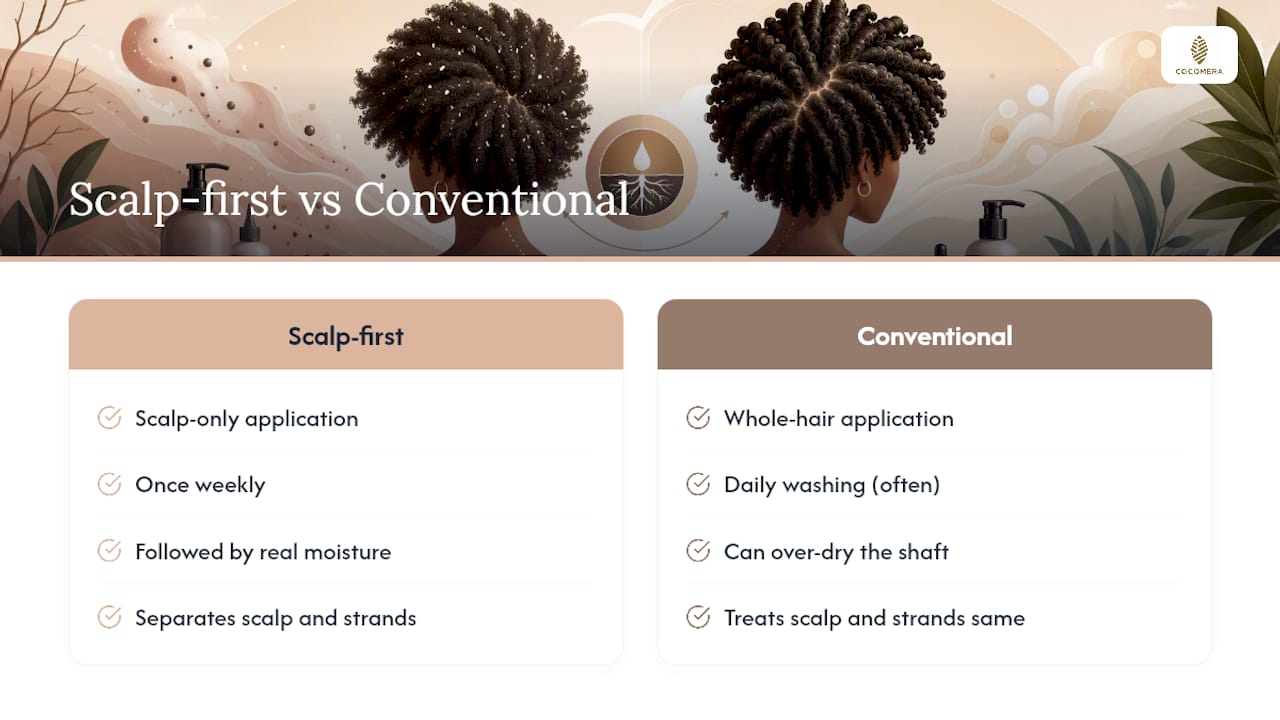
The conventional wisdom that “more washing equals more control” doesn’t hold up well here. Cleansing frequency matters less than where you apply the medicated product and how you protect everything else. A once-weekly, scalp-only application, followed by real moisture, will usually outperform daily washing with the wrong technique.
If you take one thing from this: stop treating your scalp and your strands as the same problem. They need different products, applied differently, on different parts of the same wash day. Get that separation right and both the flaking and the dryness tend to improve at the same time, which is the outcome most people are actually chasing.
**
Shop the Moisturizing Shampoo Made for Your Alternate Wash Days
Your dandruff routine needs two shampoos doing two different jobs, and Cocomera’s anti-dandruff shampoo collection is where the scalp-focused options live. But the medicated wash is only half the plan. On the weeks you’re not treating your scalp directly, your lengths still need a gentle, hydrating cleanse that won’t undo the moisture work you just did.
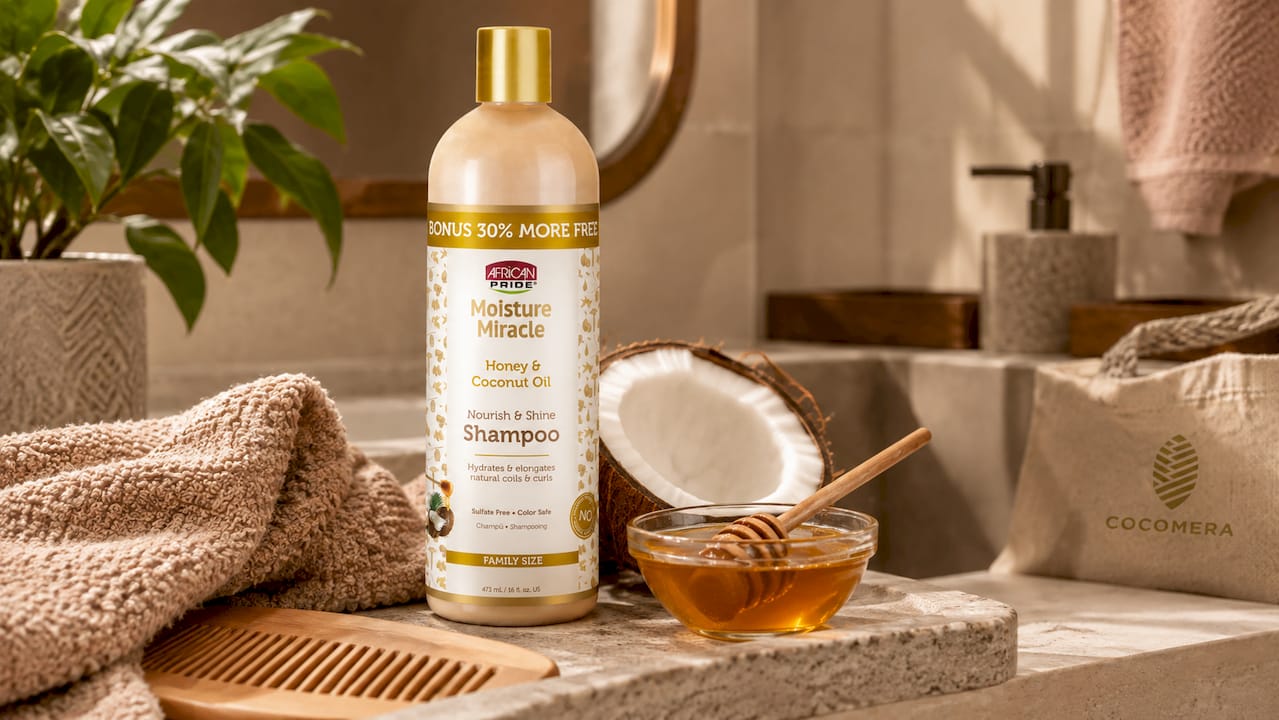
That’s exactly where the African Pride Moisture Miracle Honey & Coconut Oil Shampoo fits. Use it as your alternate wash, on the days you’re skipping the medicated shampoo, to keep your strands soft while your scalp treatment does its job underneath. It’s curated specifically for curl types 2 through 4 rather than adapted from straight hair formulas. If you’re also rebuilding scalp barrier health, pair it with a ceramide-rich conditioner from our textured hair ingredients guide, or look at a hydrating option like the Davroe Moisture Senses Shampoo for an extra dose of moisture between medicated washes. Add the honey and coconut formula to your cart and build your rotation around it this week.
This article is general information, not a substitute for advice from a qualified doctor. Consult a qualified healthcare professional about your own circumstances before acting on anything here.
Sources
- Mjäll
- High curl pattern hair and scalp care considerations to mitigate seborrheic dermatitis (PMC article)
- Doktorn


