


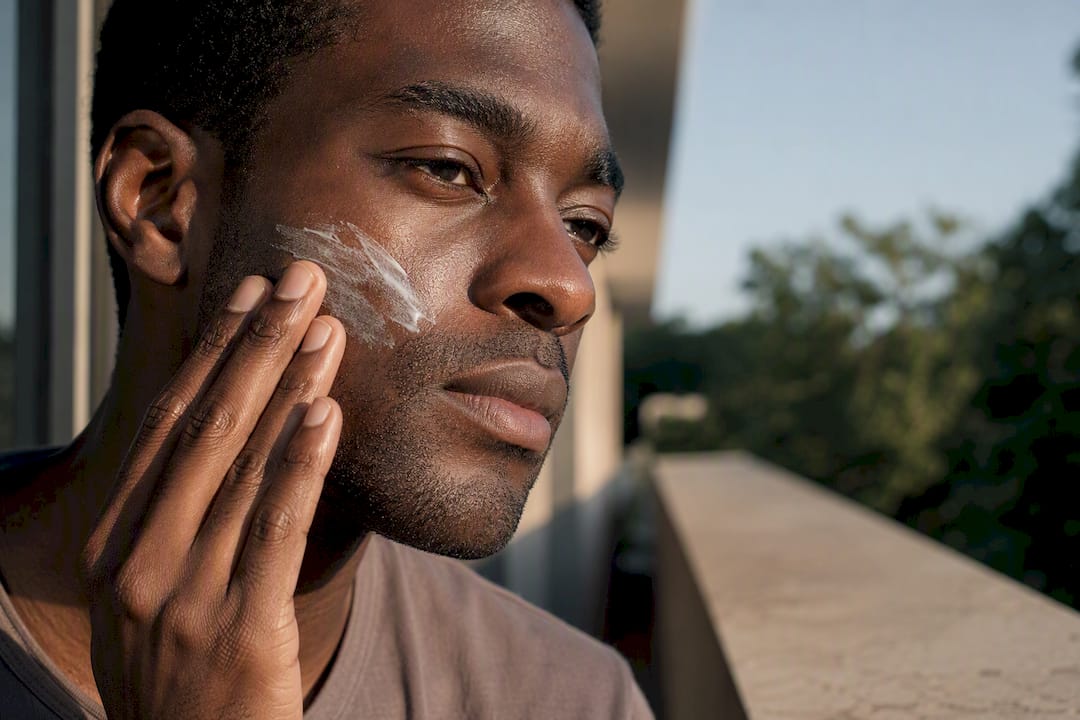
The fastest fix for rakfinnar (razor bumps) on darker skin is to stop shaving as close to the skin as possible. Leave 1 to 2mm of stubble, switch to clippers or a single-blade razor, and always shave with the grain. Pair that with warm prep, a cool compress right after, and fragrance-free moisturizer. Add daily sunscreen to keep dark spots from deepening, and see a dermatologist if bumps or dark patches don’t improve after a couple of months.
TL;DR:
- Using clippers or a single-blade razor and shaving with the grain significantly reduces the risk of recurrence, especially when paired with proper prep and protection.
- Preventing razor bumps involves gentle skin cleansing, light exfoliation, replacing blades frequently, and avoiding multiple passes over the same area to minimize inflammation.
- Active razor bumps should be treated with warm compresses, and over-the-counter options like benzoyl peroxide washes and topical retinoids can help speed healing.
- Dark spots from razor bumps are stubborn, but ingredients like tretinoin, azelaic acid, and hydroquinone can aid fading, with sun protection being essential for long-term improvement.
- Routine monitoring and dermatological consultation are necessary if bumps persist beyond 8 to 12 weeks, become infected, or leave scars, with laser hair removal offering a more permanent solution.
Table of Contents
- What Causes Razor Bumps on Dark Skin?
- How Do You Prevent Razor Bumps on Melanin-Rich Skin?
- What Helps Active Razor Bumps Heal Faster?
- How Do You Fade Dark Spots Left by Rakfinnar?
- When Should You See a Dermatologist for Persistent Bumps?
- A Practical Daily Routine for Preventing Rakfinnar
- Why Prevention-First Care Actually Works
- Where to Find Prevention-Focused Skincare for Darker Skin
- Sources
What Causes Razor Bumps on Dark Skin?
Rakfinnar is the everyday name for pseudofolliculitis barbae, a chronic inflammatory reaction that happens when tightly coiled hair curls back and reenters the skin or the follicle wall after it’s been cut too short. It’s different from a basic ingrown hair, which is usually a one-off irritation. Pseudofolliculitis barbae is a recurring cycle tied directly to hair curvature, and it hits between 45% and 83% of Black men who shave, according to dermatology literature.
Two mechanisms drive it. Transfollicular penetration happens when the sharpened hair tip pierces back through the follicle opening. Intrafollicular penetration happens when the curved hair never even exits the follicle and curls inward under the skin. Either way, the body treats the hair like a foreign object and mounts an inflammatory response. That inflammation is the real problem for melanin-rich skin, because it triggers extra melanin production as skin heals, leaving behind postinflammatory hyperpigmentation, better known as dark spots or PIH.
Watch for signs that a bump has gone beyond routine irritation:
- Pus-filled or tender bumps that keep growing
- Raised, thickened, or shiny scar tissue (possible keloid formation)
- Bumps that spread beyond the usual beard or bikini line
- Dark marks that keep expanding rather than fading
How Do You Prevent Razor Bumps on Melanin-Rich Skin?
Prevention beats treatment every time here, mostly because the cure for a razor bump is simple: stop making new ones. Follow this sequence and most people see real change within a few weeks.
- Prep the skin first. Wash with a gentle, non-stripping cleanser and shave at the end of a warm shower, or hold a warm, damp cloth against the area for two to three minutes. Warm water softens hair and opens the follicle, cutting resistance.
- Exfoliate lightly, not daily. A mild chemical exfoliant or soft brush one or two times a week helps loosen trapped hairs without over-scrubbing skin that’s already prone to marking.
- Choose the right tool. Clippers, trimmers, and single-blade razors cause less trauma than multi-blade cartridges, which tend to cut hair below the skin’s surface, the exact thing that causes it to curl back in. Electric razors set to a slightly longer guard work well for many people with coily facial or body hair.
- Replace blades often. Swap a manual blade regularly after several uses. A dull blade drags and forces extra passes, which means more irritation.
- Shave with the grain, not against it. Use short strokes, light pressure, and avoid pulling the skin taut, which lets the razor cut below the surface.
- Limit passes. One pass per area is the goal. Going over the same patch three or four times to get it “smooth” is usually what starts the bump cycle.
- Leave stubble when you can. Keeping hair at 1 to 2mm rather than shaving flush against the skin gives curly hair less chance to curl back in. Spacing out shaves by a day or two extra also helps.
- Cool it down immediately after. A cool, damp cloth for a few minutes calms redness and swelling before it sets in.
- Moisturize with something fragrance-free. Skip alcohol-based aftershaves, which dry and irritate already-inflamed follicles.
- Apply sunscreen daily. Any fresh irritation exposed to UV rays tends to darken faster and stay dark longer.
Pro Tip: If you shave a specific area often, like the neckline or bikini line, rotate which direction you shave every other session. Alternating angles slightly reduces the chance any single hair keeps re-entering the same weak point in the skin.
The American Academy of Dermatology notes that switching to clippers or pausing close shaves clears most razor bumps within several months, with visible improvement often showing up within weeks.
What Helps Active Razor Bumps Heal Faster?
Once bumps show up, the instinct is to keep shaving over them or dig them out. Both make things worse. The first move is to pause shaving on the affected area entirely, even for a few days, and apply warm compresses to bring down swelling and help trapped hairs work their way out on their own.
For active breakouts, a few over-the-counter options actually help:
- A benzoyl peroxide wash can reduce the bacterial load that turns a simple irritated follicle into a pustule.
- Topical retinoids or adapalene speed up skin cell turnover once inflammation has calmed, which helps prevent new blockages, though they should go on healed, not actively inflamed, skin.
- A short course of a mild topical steroid can knock down severe inflammation, but only when a clinician has actually recommended it. Long-term steroid use thins skin and can cause its own discoloration.
See a doctor if bumps keep coming back, look infected, or aren’t responding to a few weeks of the basics. A clinician can prescribe oral or topical antibiotics for infected follicles or a stronger retinoid regimen.
Three habits make everything worse and are worth avoiding outright: picking or force-extracting an ingrown hair, using a harsh physical scrub on inflamed skin, and applying alcohol-based aftershave to bumps that are actively irritated. Digging at a bump is the single most common way a short-term irritation becomes a long-term dark mark or raised scar.
How Do You Fade Dark Spots Left by Rakfinnar?
Postinflammatory hyperpigmentation from razor bumps is extremely common on darker skin, and it’s genuinely stubborn. Set realistic expectations early: most PIH takes several months to noticeably lighten, and it fades faster once new bumps stop forming. Treating the marks while ignoring the cause is a losing battle.
Prevalence data shows PFB affects up to 83% of Black men who shave, which is why dermatologists treat prevention, not spot treatment, as the priority for anyone dealing with repeat dark marks.
A few ingredients have real track records for fading PIH:
- Tretinoin or adapalene, used consistently over weeks to months, speeds cell turnover and pigment fading.
- Azelaic acid works more gently and suits sensitive, reactive skin that reacts poorly to retinoids.
- Hydroquinone, where available and regulated, can lighten stubborn marks but needs a break period after continuous use to avoid rebound darkening.
Professional peels and lasers can accelerate fading, but they carry real risk of making PIH worse on darker skin if the wrong strength or device is used, a point covered in more depth in this explanation of hyperpigmentation causes and safe treatment. None of this matters much without daily broad-spectrum SPF 30 or higher. Tinted mineral sunscreens tend to work better on deeper skin tones since they avoid the chalky white cast that plain mineral formulas leave behind.
When Should You See a Dermatologist for Persistent Bumps?
Book a dermatology visit if bumps stick around after 8 to 12 weeks of consistent prevention, if you notice raised or thickened scars forming, if pustules keep recurring in the same spots, or if the condition is affecting your work or daily comfort. Waiting past that point usually means more permanent marking.
Laser hair removal is the closest thing to a lasting fix for chronic razor bumps, since it targets the hair follicle directly instead of managing symptoms shave after shave. For Fitzpatrick skin types IV through VI, the Nd:YAG laser at 1,064 nm is the preferred wavelength, because it passes deeper and interacts less with melanin in the top layers of skin, lowering the risk of burns or new pigmentation issues. A broader look at energy-based device safety across Fitzpatrick IV to VI makes the same point: outcomes depend far more on operator skill than on which clinic’s marketing sounds most impressive.
Before booking anywhere, ask the provider directly:
- How many patients with your skin tone have you treated, and can you show before-and-after photos?
- What laser and wavelength do you use, and why is it suited to darker skin?
- What settings do you adjust for melanin-rich skin specifically?
Pro Tip: A clinic that hesitates to answer wavelength and settings questions, or has no photos of results on skin tones like yours, is not the right place for this procedure.
Chemical peels can also help stubborn PIH, but they carry the same risk: too aggressive a peel on darker skin can trigger the exact hyperpigmentation it’s meant to treat.
A Practical Daily Routine for Preventing Rakfinnar
A workable routine doesn’t need to be complicated. It needs to hit prep, gentle technique, and protection every single day, in that order.
- Morning prep: Cleanse gently, then mist skin with a hydrating prep spray before shaving to soften hair and reduce drag.
- Shave smart: Use light pressure, shave with the grain, and stop after one pass per area.
- Calm and protect: Apply a fragrance-free moisturizer immediately after to soothe irritation before it turns into a bump.
- Sun protection, every day, no exceptions: A tinted mineral SPF like Black Girl Sunscreen SPF 30 protects healing skin from UV exposure that worsens dark marks, without leaving the white cast that plain mineral sunscreens often do on deeper tones.
| Step | What it does | Why it matters for darker skin |
|---|---|---|
| Gentle prep | Softens hair, opens follicle | Reduces trauma that triggers bumps |
| Light-pressure shave | Cuts hair without over-shortening it | Lowers chance of hair curling back into skin |
| Fragrance-free moisturizer | Calms inflammation post-shave | Less inflammation means less pigment response |
| Daily SPF 30+ | Blocks UV that darkens healing skin | Speeds PIH fading, prevents new marks from deepening |
None of this replaces medical care. If bumps are infected, scarring, or not responding after weeks of consistent care, a dermatologist visit matters more than any product on a shelf.
Why Prevention-First Care Actually Works
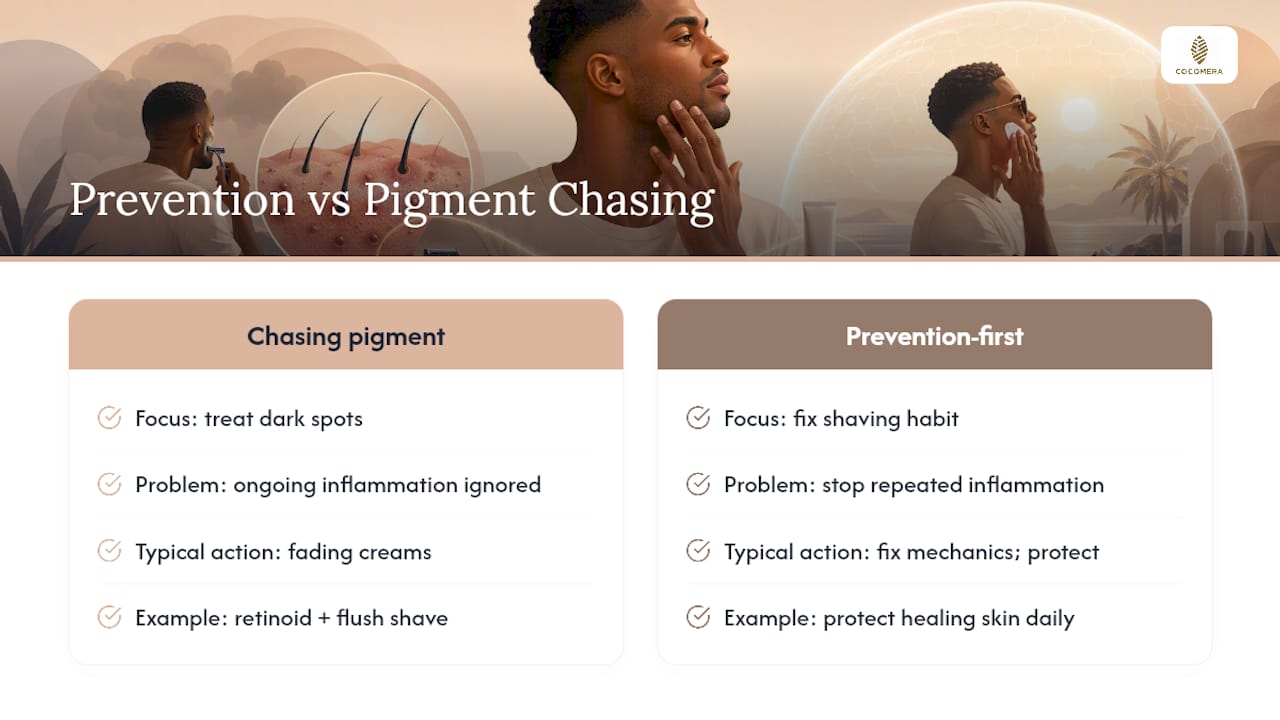
Most advice on razor bumps treats the dark spots as the problem to solve. They’re not. They’re the aftermath. The real problem is the shaving habit that keeps creating new inflammation faster than skin can heal from the last round, and that’s the piece most guides skip past on their way to selling a fading cream.
We think the biggest mistake people make is chasing pigment correction while still shaving the same way that caused it. A great retinoid regimen paired with a razor cutting hair flush against the skin is running in place. Fix the mechanical cause first, protect healing skin daily, and the dark marks have an actual chance to fade instead of getting refreshed every few days. If a specific product choice or routine question comes up that’s particular to your skin or curl pattern, product pages and customer support can help sort out specifics.
— Cocomera
Where to Find Prevention-Focused Skincare for Darker Skin
Good grooming habits do most of the work, but the right products make consistency easier, especially the one step people skip most: daily sunscreen. Skincare and hair care built specifically for melanin-rich skin and textured hair are curated, rather than treating darker skin tones as an afterthought in a general skincare lineup.

None of this is a substitute for a dermatologist when bumps are infected, scarring, or not responding to a few weeks of consistent care. But for the daily prevention work that keeps new dark spots from forming, a tinted, broad-spectrum option built for deeper skin tones removes the guessing. Browse Black Girl Sunscreen SPF 30 on Cocomera and add it to the routine you’re building today.
Sources
- PMC article on razor bumps and skin of color
- AAD: Razor bump remedies for men with darker skin tones
This article is general information, not a substitute for advice from a qualified doctor. Consult a qualified healthcare professional about your own circumstances before acting on anything here.


