


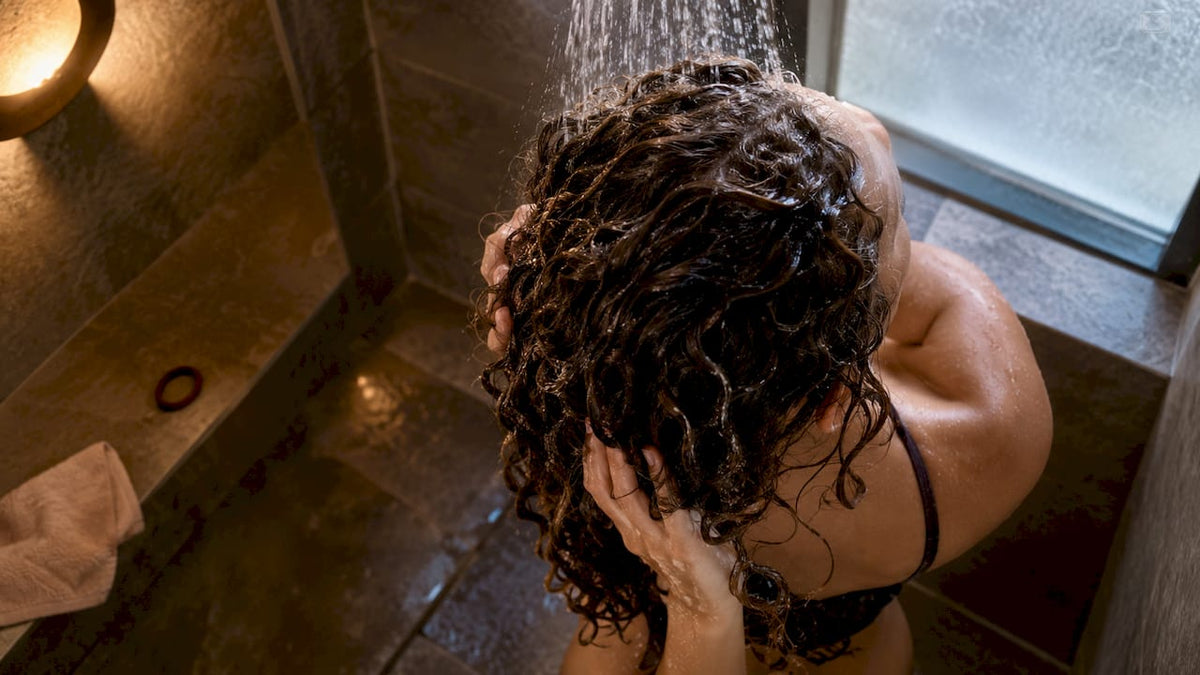
Most people with curly hair should wash it regularly throughout the week, with frequency depending on individual scalp condition and hair type, and the scalp condition, not the calendar, decides where in that range you land. Coily hair often stretches toward the once a week end. Looser waves and anyone who sweats daily lean toward three times. Adjust from there based on curl tightness, activity level, and how much product builds up between washes.
TL;DR:
- Washing frequency for curly hair depends on scalp oiliness, activity level, and product buildup, with coily hair typically needing once a week.
- Using water and proper techniques during application, such as applying styling products on soaking-wet hair, significantly improves curl definition.
- Clarifying shampoos are recommended once a month for removing buildup, while co-washing and sulfate-free shampoos serve different roles in routine maintenance.
- Regularly tracking scalp condition helps determine personalized wash days, with signs like heaviness, odor, or loss of curl shape indicating the need to wash.
- A proper wash-day routine involves pre-poo application, gentle cleansing, detangling with slip, applying products on wet hair, and controlled drying for optimal curls.
Table of Contents
- How often should you wash curly hair based on curl type?
- How do you figure out your own wash schedule?
- What’s the best step-by-step wash-day routine?
- Co-wash, sulfate-free shampoo, or clarifying: which one and when?
- How do you refresh curls between wash days?
- What mistakes are wrecking your curl definition?
- Why trust this guide?
- The routine matters more than the products
- A light spray that fits between wash days
- Sources
How often should you wash curly hair based on curl type?
Curl pattern changes the math because tighter curls hold less oil against the scalp and lose moisture faster once it’s stripped away.
- Coily hair (type 4): about once a week, adjusting as needed based on scalp cleanliness and product buildup
- Tight curls (type 3): washing regularly each week, including some co-wash days between shampoo sessions
- Loose curls and waves (type 2): shampoo frequency is typically higher because finer strands show oil sooner, adjusted individually
- Thin or fine curly hair: may require more frequent washing due to oil distribution along finer strands, because oil travels down the shaft more easily on finer strands.
Heavy sweating, an oily scalp, or daily gel and mousse use all push you toward the higher end of your range. Dry hair, chemically treated or color-treated strands, and anyone trying to build up moisture reserves should hold at the lower end. Apotek Hjärtat’s guidance puts dry or curly hair at roughly once or twice a week, with two to three times a week suggested for most people overall. Curl specialists at Ouidad go further, noting that coily types can often co-wash weekly and reserve a full clarifying wash for once a month.
How do you figure out your own wash schedule?
Your scalp gives you daily feedback if you know what to look for.
- Check scalp oiliness at the roots, not the ends. Slight shine by day two is normal; heaviness or visible grease means you’re overdue.
- Smell your hair. A sour or musty scent almost always means it’s time to wash.
- Look for flaking or itchiness, which can signal product buildup or a scalp that’s drying out.
- Notice if curls lose their shape or frizz out faster than usual. That’s often a sign of dehydration, not dirt.
- Factor in your week. Workouts, humidity, and how much product you’re layering on all shift the timeline.
Apoteket recommends shampooing multiple times a week for many hair types, with adjustments based on scalp oiliness and activity level. Test one schedule for two to four weeks, log how your scalp and curls respond, then change a single variable, like adding a co-wash day or swapping in a lighter leave-in, before judging the result.
Pro Tip: Track wash days in your phone’s notes app for a month. Patterns you can’t see day to day (like a jump in oiliness three days after a workout) become obvious once you look back at two weeks of entries.

What’s the best step-by-step wash-day routine?
A good wash day is really five moves done in the right order, not five separate chores.
- Pre-poo first. Apply an oil or conditioner to dry hair for about 10 to 15 minutes before you wash. This coats the strand and reduces the mechanical stress of detangling later.
- Cleanse gently. Section your hair, apply shampoo or co-wash directly to the scalp, and massage with your fingertips, letting the lather rinse down through the length instead of scrubbing the strands.
- Condition and detangle while hair is saturated with slip. Finger-detangle first, then follow with a wide-tooth comb from ends to roots.
- Apply styling products on soaking-wet hair. This is the step most people get wrong. Experts recommend applying leave-ins and gels while hair is still dripping, using the “praying hands” method to smooth product down the length and scrunching upward to encourage clumping. Waiting until hair is even slightly damp means less of the product actually bonds to the strand, and you lose curl definition. Seal the routine with a layer of gel to lock the pattern in place.
- Dry with intention. Air-drying preserves the most curl integrity, but a diffuser on low heat and low airflow speeds things up without disrupting clumps. Finish with a blast of cold air to help set the cuticle.
Pro Tip: Don’t skip the pre-poo step just because it adds ten minutes. Curl specialists point to it as one of the simplest ways to cut breakage during detangling, especially on wash days when hair is already stretched thin from a week of dryness.
Co-wash, sulfate-free shampoo, or clarifying: which one and when?
The three cleansing methods aren’t competitors. They’re tools for different jobs, and most curly routines end up using all three on rotation.
- Co-washing (cleansing with conditioner instead of shampoo) preserves moisture and works well between full washes, but it doesn’t lather and can’t remove heavy product buildup on its own.
- Sulfate-free shampoo cleans without stripping natural oils the way traditional sulfates do, making it the workhorse for regular wash days.
- Clarifying shampoo cuts through buildup from gels, oils, and hard water minerals. Reach for it once a month, or sooner if curls start looking dull or feel coated no matter how much you condition.
A hybrid week might look like: co-wash on day one, sulfate-free shampoo on day four, and a clarifying wash once a month to reset everything. L’Oréal Paris’s routine framework also recommends deep conditioning one to four times a month, layered into whichever cleansing method you’re using that day.
How do you refresh curls between wash days?
A refresh isn’t a mini wash. It’s about reactivating what’s already in your hair, not adding new layers on top of it.
- Mist with water or a light conditioning spray to loosen up dried curls and reshape clumps that have flattened overnight.
- Add a small amount of leave-in or refresh spray to mid-lengths and ends only. Skip the roots if your scalp is already producing oil.
- Scrunch upward while the hair is damp to reform the curl pattern instead of just smoothing frizz down.
- Spot-refresh just the areas that fell flat (usually the crown or the back) rather than redoing your whole head.
If more than half your curls have lost their shape, that’s usually a sign to re-style with a small amount of gel rather than refresh. Learning the role water plays in curl reactivation makes this step far more predictable.
Pro Tip: Keep a spray bottle with a light mix of water and leave-in conditioner in the shower. It takes ten seconds to refresh curls right after you get dressed, before frizz has a chance to set in.
What mistakes are wrecking your curl definition?
A few habits quietly undo everything else you’re doing right.
- Rubbing hair with a towel. Friction roughs up the cuticle and creates frizz. Use a microfiber towel or an old t-shirt and blot instead.
- Washing too often out of habit rather than need, which strips natural oils and leaves curls dry and prone to breakage.
- Applying styling product after hair has already started drying. By then it’s too late for the praying-hands technique to distribute product evenly.
- Loading oil onto the roots, which weighs curls down and can make an already oily scalp worse.
If curls come out flat or frizzy despite following the routine, try reactivating with water and a small amount of gel before assuming the product itself has failed. When nothing seems to work after a few weeks of consistent effort, it’s worth asking a stylist to reassess your curl pattern and porosity, since both affect which products and techniques actually work for your hair.
Why trust this guide?
Cocomera specializes in products for wavy, curly, coily, and afro-textured hair, and this guide draws on that focus rather than generic hair advice built for straight hair. For deeper dives, see the wash-day workflow guide and the type 3 curl guide for pattern-specific tips. Always patch-test a new product on a small section first, and give any routine change two to four weeks before judging it.
The routine matters more than the products
Most curly hair advice obsesses over which shampoo or gel to buy, and that’s backwards. The single biggest lever anyone can pull is timing: applying product on hair that’s still dripping wet, not hair that’s merely damp. That one habit shift does more for curl definition than switching brands three times in a year.
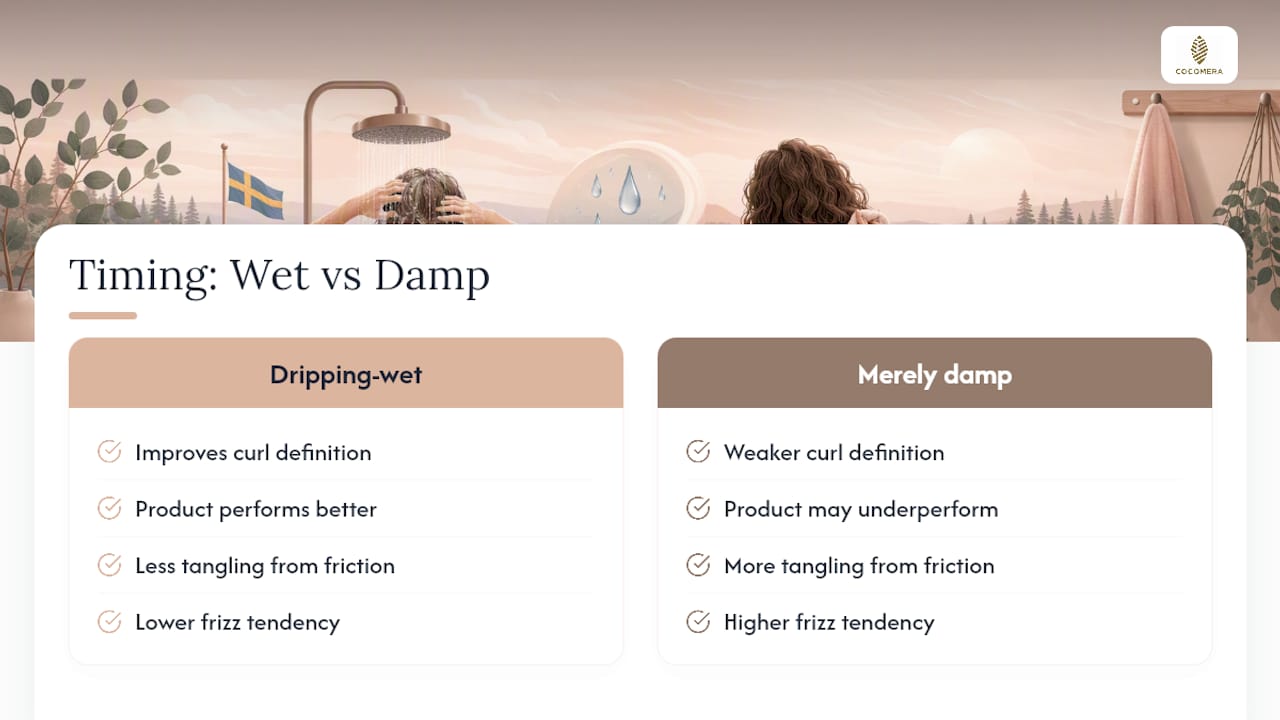
The conventional wisdom of “wash less, always” also deserves pushback. Underwashing coily and tight-curl types is common advice, but it ignores scalp buildup, which causes its own frizz and dullness problems that no amount of product can fix. The goal isn’t minimizing washes. It’s matching frequency to what your scalp is actually telling you, week to week.
If you take one thing from this guide, prioritize technique over shopping. A $40 leave-in applied on the wrong hair (already drying, already tangled from towel friction) will underperform a $10 conditioner applied correctly on soaking-wet curls with a proper detangling step first. Barbers who work with curly hair professionally know this, which is why detangling technique gets as much attention as product choice in their process.
— Cocomera
A light spray that fits between wash days
Refresh sprays earn their place when they’re used sparingly, not as a daily crutch that builds up on the scalp. The LETS DRED Locks and Braid Spray works as a light maintenance option for exactly this gap. A few spritzes on mid-lengths and ends loosen dried curls and cut down on frizz without requiring a full rewash.

Use it the way you’d use any refresh product: mist lightly, focus on the length rather than the scalp, and skip the roots entirely if your hair is already running oily that week. It also works well for detangling locks and braids between maintenance sessions, since the light formula won’t leave buildup the way heavier oils can. If your between-wash routine has been missing a reliable refresh step, check the product page and see if the 237ml size fits into your weekly rhythm.
Sources
- Så ofta ska du tvätta håret | Apotek Hjärtat
- Hur ofta ska man tvätta håret? | Apoteket
- How to build a curly hair routine with products | L’Oréal Paris


