



The one rule that changes everything for 2C hair: style on soaking-wet hair, not damp hair, using a lightweight foam or gel instead of heavy cream. Water provides the wave pattern; product only locks it in place. Skip thick butters and oils at the styling stage, scrunch out the dried cast with your hands, and pick products built for low-density, fine-to-medium texture. The lineup curated includes lightweight products focused on type-2 hair.
TL;DR:
- Applying lightweight gels or foams on soaking-wet hair is crucial, as water locks in the pattern while product provides hold.
- Sectioning and detangling dry hair before washing helps distribute product evenly and prevents matting during wash day.
- Style techniques such as praying-hands and raking, combined with drying without touching, maximize wave definition and minimize frizz.
- Finer 2C hair requires lighter products like foams, while thicker strands can handle richer textures, with trial sizes recommended before full purchase.
- Regular trims every 8 to 12 weeks and adjusting wash frequency based on scalp oiliness help preserve wave shape and reduce damage.
Table of Contents
- What’s the best rutin 2c hår routine for wash day?
- Which product types actually work for 2C hair?
- How do you apply products the right way?
- How often should you wash and trim 2C hair?
- Does rutin actually do anything for 2C hair?
- How do you refresh 2C waves without a full wash?
- Why Cocomera builds routines around type-2 hair specifically
- Build your 2C starter stack in one order
- Sources
What’s the best rutin 2c hår routine for wash day?
Getting 2C waves to hold their shape isn’t about buying more product. It’s about sequencing. Miss the water-saturation window and even the best gel in the world turns into a frizzy mess by 3 p.m. Here’s the order that actually works, step by step.
1. Section before you touch water. Split hair into three or four sections using clips. Detangle gently with your fingers or a wide-tooth comb while hair is still dry, working from ends toward roots. Sectioning before detangling prevents the matting that turns wash day into a fight, and it means product gets distributed evenly instead of clumping near your part.
2. Cleanse with intention. A sulfate-free shampoo or a co-wash keeps the natural oils 2C hair needs to hold its shape. Save clarifying shampoo for the weeks buildup or hard water leaves hair feeling coated. Washing every strand daily strips the very oil that helps waves clump.
3. Condition section by section. Apply conditioner from mid-length to ends, since that’s where dryness concentrates. Use a wide-tooth comb or your fingers to detangle while the conditioner is still in, one section at a time. This is also where you decide how much slip you need. Finer 2C hair needs less product than thicker strands in the same category.
4. Apply leave-in with praying hands, then rake. Smooth a leave-in over each section using the praying-hands technique, palms flat and pressed together over the hair. Then rake fingers through to distribute it fully, especially through thicker mid-lengths where a light pass isn’t enough.
5. Style while hair is still soaking wet. This is the step most people get wrong. A lightweight foam or gel scrunched into soaking-wet hair creates definition; the same product on merely damp hair mostly creates frizz. Stylists consistently point to this water-first technique as the actual cause of curl definition, not the product itself. Keep a spray bottle nearby so hair never dries out mid-application. Avoid heavy creams and oils here. They weigh down the fine wave pattern 2C hair tends to have and can turn definition into limp strands.
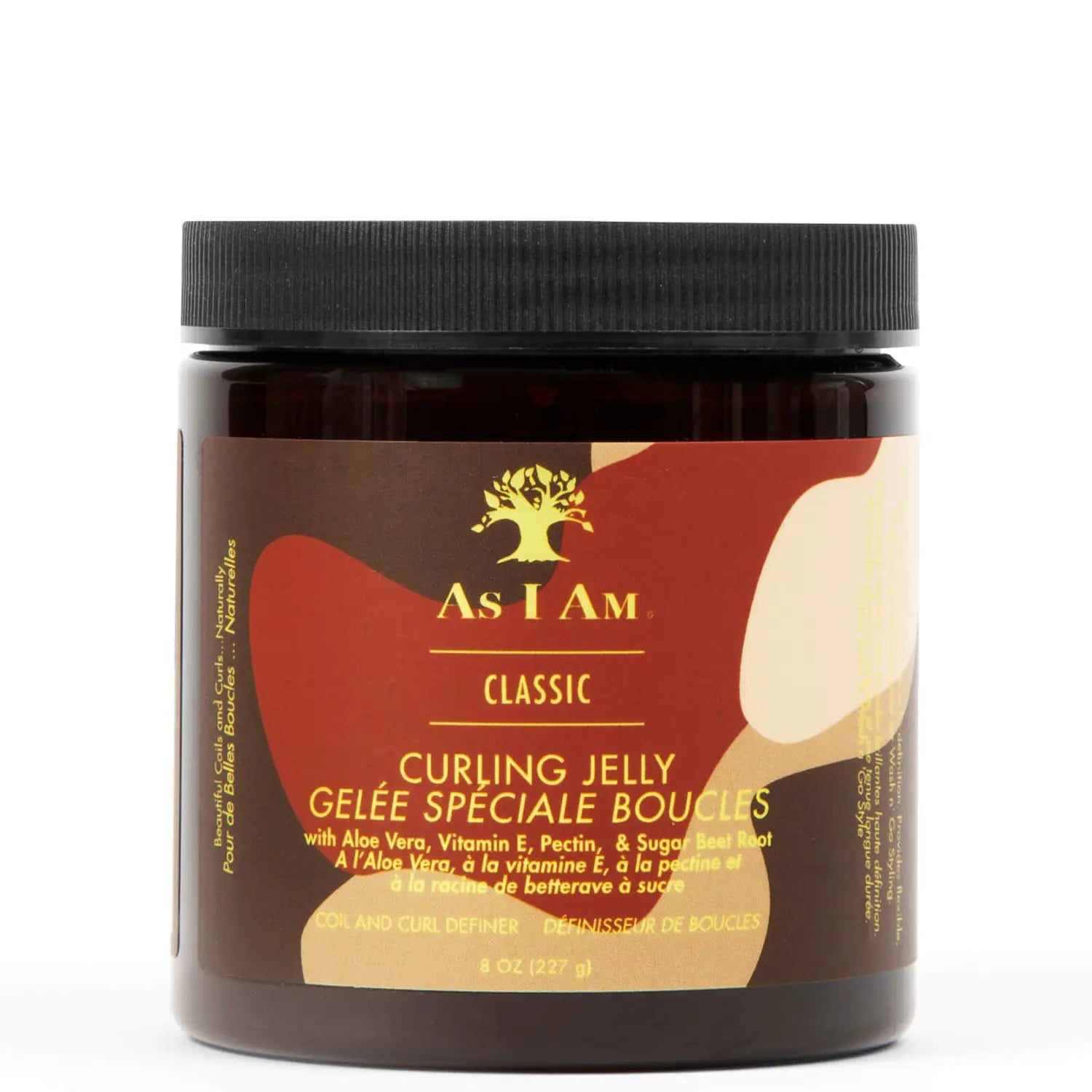
6. Dry without touching. Air-drying gives a softer, looser finish. Diffusing on low heat and low airflow speeds things up without disrupting clump formation. Either way, hands off. Touching hair while it dries breaks apart the forming clumps and is one of the fastest ways to trade definition for frizz.

7. Fully dry. Scrunching too early collapses the wave pattern before it’s set.
Pro Tip: Test dryness at your roots, not your ends. Ends dry first and can feel done while the crown is still damp, and scrunching too soon there is what causes that flat, pressed look at the top of your head.
Which product types actually work for 2C hair?
2C hair has enough wave pattern to hold a curl but not enough weight tolerance to carry heavy product. That’s the whole equation. Lightweight foams, gels, and water-based leave-ins add hold and moisture without collapsing the S-bend; thick butters and rich oils do the opposite; they smooth the pattern right out of your hair.
Here’s how that plays out across an actual routine, using specific product roles:
- Prep spray for detangling and light moisture: Innersense Hair Love Prep Spray works before conditioning or as a refresh spray between steps, adding slip without saturating hair in product.
- Leave-in cream, used sparingly: Innersense Inner Peace Whipped Creme Texturizer is a cream, so 2C hair only needs a small amount, closer to a pea-sized dab per section than a handful.
- Wave enhancer for the styling step: Innersense I Create Waves is built for exactly this texture category and pairs well with a gel layered on top for extra hold.
- Volumizing foam for fine or low-density hair: Innersense I Create Lift Volumizing Foam adds lift at the root without the weight a mousse or cream would bring.
- Trial sizes before committing to full bottles: the Bounce Curl Curly Trial & Travel Kit lets you test texture and hold on your actual hair before buying full-size versions.
Statistic callout: Trims every 8 to 12 weeks are the general benchmark for keeping wavy and curly patterns intact and preventing split ends from traveling up the shaft, which matters here too since damaged ends absorb product unevenly and throw off your wave pattern.
A few buying habits make this easier. Start with trial or travel sizes rather than guessing on a full-size bottle. Match product weight to your actual density: finer 2C hair usually needs foam over cream, while thicker 2C strands can handle a bit more richness. And when scanning ingredient lists, gels and foams built on water or aloe as a base tend to perform better on 2C hair than ones leading with oils or butters.
One more piece worth knowing about: if your part or hairline gets sun exposure on wash day or during outdoor activity, Black Girl Sunscreen SPF 30 and the Black Girl Sunscreen Make It Hybrid SPF 50 are formulated for melanin-rich skin and work well on exposed scalp along the part line.
How do you apply products the right way?
Technique moves the needle more than ingredients do. Two hands, the right motion, and the right moment in the water cycle decide whether you end up with defined waves or a frizzy halo.
- Praying-hands smooths product evenly over the surface of a section; palms flat, pressed together, gliding down the hair from root to tip. Use this first, right after applying leave-in or gel.
- Raking works better for heavier products or when you need product distributed deep into thicker mid-lengths; fingers spread wide, pulling through like a comb.
- Scrunching comes last, cupping sections upward toward the scalp to encourage clumping and shape the S-bend.
- Keep hair soaking wet, not damp, through the entire application. A spray bottle within arm’s reach makes this realistic; hair that starts drying mid-section won’t hold product the same way.
- Apply from mid-lengths to ends. Keep roots product-light unless you’re specifically going for volume with a foam, since heavy product at the root flattens the crown fast.
- Wait until hair is completely dry before scrunching out the cast. A single drop of lightweight oil rubbed between palms and smoothed over dried hair helps break the cast without adding weight back in.
Pro Tip: If your waves look stringy instead of clumped, you likely applied product to damp rather than soaking-wet hair. There’s no fix once it’s dry except rewetting and restyling. Next time, keep the spray bottle going the entire time you’re working through sections.
Common mistake worth naming directly: piling on more product when waves fall flat by midday. That usually isn’t a product problem. It’s a technique problem from the last wash day, and adding more gel on top of already-dry hair just creates buildup, not definition.
How often should you wash and trim 2C hair?
Forget rigid schedules. Start with washing every 2 to 3 weeks and adjust from there based on how your scalp actually behaves, which dermatology guidance backs as the better approach than any fixed calendar rule. Oily scalp, more frequent washing. Dry scalp, stretch it out further.
- Wash every 2 to 3 weeks as a baseline, then shift based on scalp oiliness and activity level.
- Clarify every 1 to 2 weeks only if you notice product buildup, dullness, or live in a hard-water area; a dedicated clarifying routine prevents over-stripping while still resetting your scalp.
- Trim every 8 to 12 weeks to preserve wave shape and stop split ends from splitting further up the strand.
- Time your clarifying wash to land on a day you’re already resetting your full routine, rather than adding an extra wash day just for that step.
Does rutin actually do anything for 2C hair?
Rutin is a flavonoid antioxidant found naturally in citrus and buckwheat, and cosmetic ingredient databases list its function as an antioxidant and hair and skin conditioning agent. That’s the established, low-drama use case: it helps protect strands and scalp tissue from oxidative stress the same way other antioxidants do in skincare.
The more exciting research is still early. A 2026 study found that rutin stabilizes β‑catenin through GSK3β inhibition, a signaling pathway involved in hair follicle regeneration, and that topical application accelerated hair growth phases in preclinical models.
Rutin’s mechanism in these models suggests a genuine biological pathway toward follicle regeneration, not just surface conditioning. But preclinical evidence in lab and animal models is a different tier of proof than a topical product doing the same thing on a human scalp.
That distinction matters for anyone shopping based on ingredient lists. A formulation containing rutin isn’t a documented growth treatment yet, and no dermatology body has issued growth claims tied to it for consumer use. What it can reasonably do, based on its established antioxidant role, is support a scalp environment that’s less stressed and better conditioned, which is a real but modest benefit.
If you come across a rutin-containing product, treat it the way you’d treat any new ingredient: patch test, use consistently for a few weeks, and judge it against fundamentals like proper hydration and gentle handling rather than expecting it to outperform technique. The wash-day steps and application methods already covered do more for your wave pattern than any single ingredient will.
How do you refresh 2C waves without a full wash?
Between wash days, a light mist works better than a full restyle. Here’s the order that keeps waves alive without weighing them down or causing buildup.
- Mix a small amount of leave-in with water in a spray bottle, and mist sections lightly rather than soaking them.
- If waves feel completely flat, step into a warm shower without wetting your hair directly. The steam alone can reactivate some definition.
- Reshape with your hands first before reaching for more product; often a light scrunch is all it takes.
- Only add a drop of lightweight oil if hair still feels dry after reshaping, and only after any refresh spray has dried.
- Loosen tension overnight with a pineapple twist at the crown or a loose bun, and sleep on satin or use a satin bonnet to cut down on frizz from cotton fabric.
- Reapply hold product only if you’re several days past wash day; a fresh section that’s just gone limp usually needs reshaping, not more product.
Why Cocomera builds routines around type-2 hair specifically
Most product lines treat wavy hair as an afterthought between straight hair and tight curls. That gap is exactly why a technique-first approach matters more than another product launch. Cocomera curates specifically for type 2 hair patterns, which means the lightweight foams, gels, and leave-ins on the site are chosen because they match what 2C hair can actually carry, not because they’re bestsellers in a broader curly category built for tighter curl patterns.
The routine covered here works regardless of which brand sits in your bathroom. What changes outcomes is testing products in trial sizes before committing to full bottles, since wave maintenance depends on finding the right weight for your specific density, not just following a generic curly-hair checklist.
— Cocomera
Build your 2C starter stack in one order
If you’re rebuilding your routine from scratch, don’t buy five products at once and hope one works. Start small, test the sequence, and add from there.

The Bounce Curl Curly Trial & Travel Kit is the lowest-risk way to test hold and texture on your actual hair before spending on full-size bottles. Pair it, or replace it once you know your preferences, with a simple three-step stack: mist Innersense Hair Love Prep Spray onto soaking-wet sections first, follow with a light layer of Innersense Inner Peace Whipped Creme Texturizer used sparingly through mid-lengths, then scrunch in Innersense Quiet Calm Curl Control for the hold that carries your waves through drying.
That’s three products, applied in an order that matches the water-first technique already covered, without the guesswork of assembling a routine from unrelated brands. Browse the full styling collection for curly and wavy hair to build out the rest of your stack once you know what your hair responds to, or start with the trial kit today and adjust from there.
Sources
- Curly hair care guidance — American Academy of Dermatology (AAD)
- Rutin stabilises β‐catenin through GSK3β inhibition to promote hair follicle regeneration (2026)
- How to Style Curly Hair, According to Professional Hairstylists | Glamour


