



You wash your hair, scrunch in some product, and two hours later your waves are gone. The roots are flat, the ends are frizzy, and the mirror is not your friend. If that sounds familiar, you’re not alone. Type 2 wavy hair sits in a tricky middle ground: not straight enough to just air-dry, not curly enough for heavy curl products. Add Sweden’s unpredictable weather into the mix and things get even more complicated. This guide walks you through everything you need to know, from identifying your exact wave subtype to building a routine that actually holds up through cold mornings and humid summer days.
Table of Contents
- Understanding your type 2 waves: What makes them unique
- Your wavy hair styling toolkit: Must-have products and tools
- Step-by-step routine: How to style type 2 wavy hair
- Troubleshooting and advanced tips for Swedish seasons
- A fresh perspective: Real life with wavy hair in Sweden
- Find your perfect products for Swedish waves
- Frequently asked questions
Key Takeaways
| Point | Details |
|---|---|
| Know your waves | Identifying your exact type 2 subtype unlocks better styling and product choices. |
| Prep with the right products | Using lightweight, hydrating essentials helps avoid frizz and limp roots. |
| Follow a smart routine | Washing, styling, and refreshing with care is the secret to waves that last. |
| Adapt for the Swedish climate | Switch up your techniques and products to thrive in dry winters or humid summers. |
| Be flexible | Customize advice based on your hair’s real-life needs instead of rigid rules. |
Understanding your type 2 waves: What makes them unique
Before jumping into routines, it’s crucial to understand what sets type 2 hair apart. Not all waves are the same, and treating your hair like a generic “wavy” type is one of the biggest reasons routines fail.
Type 2 hair forms S-shaped patterns and splits into three distinct subtypes. 2A gives you loose, soft waves that tend to go flat quickly and can’t handle heavy products. 2B delivers more defined S-waves with a bit more body, though frizz becomes a real concern at the mid-lengths. 2C sits right at the edge of curly, with tighter, more spiraled waves that need stronger hold and more moisture to stay defined. Knowing which one you are isn’t just useful trivia. It determines every product and technique you should reach for.
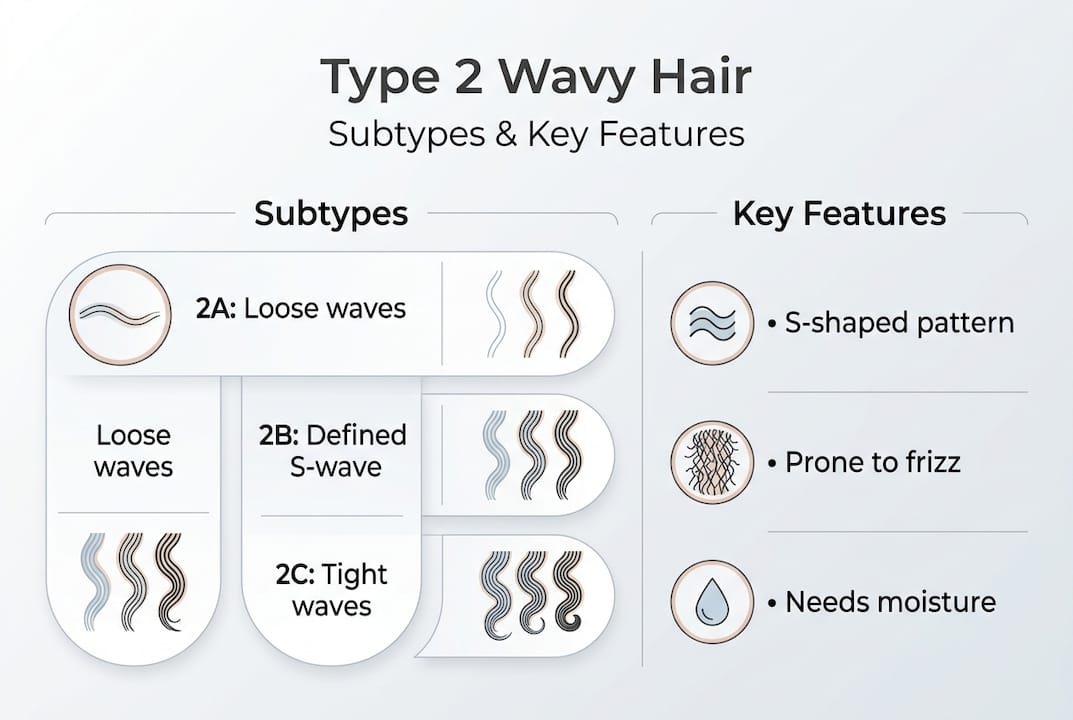
| Subtype | Wave pattern | Main challenge | Best product weight |
|---|---|---|---|
| 2A | Loose, fine waves | Goes flat easily | Ultra-lightweight |
| 2B | Defined S-waves | Frizz at mid-lengths | Light to medium |
| 2C | Tight, spiraled waves | Dryness and frizz | Medium to rich |
Common problems across all type 2 hair include:
- Flat roots caused by hair weight or heavy products pulling waves down
- Frizz at the ends from dryness or humidity exposure
- Loss of definition after a few hours, especially without proper styling techniques
- Product buildup from using formulas made for curlier hair types
Nordic weather adds another layer of difficulty. Sweden’s dry, cold winters strip moisture from the hair shaft, making frizz and breakage worse. Humid summer days cause waves to puff up and lose shape. If you’ve felt like your hair acts differently depending on the season, that’s exactly why. For a deeper look at what wavy hair really is and how to identify your pattern, that foundation knowledge will save you a lot of frustration down the line.
Your wavy hair styling toolkit: Must-have products and tools
With your wave pattern identified, equip yourself with the right products and tools tailored for type 2 hair. Getting this part right means the difference between waves that last all day and ones that collapse by noon.
Products to look for:
- Lightweight, sulfate-free cleansers that remove buildup without stripping natural oils
- Hydrating conditioners focused on mid-lengths and ends
- A frizz-control leave-in or cream applied to soaking wet hair
- A gel or mousse for hold without crunch
Tools that actually matter:
- Microfiber towel: Regular terrycloth towels rough up the hair cuticle and cause frizz. A microfiber towel absorbs water gently.
- Diffuser attachment: Speeds up drying while encouraging wave formation from the roots.
- Wide-tooth comb: Use it only in the shower with conditioner, never on dry waves.
- Silk or satin pillowcase: Reduces friction overnight so your waves survive to day two.
Pro Tip: Apply all your styling products while your hair is completely soaked, not just damp. Waves need that slip to clump together and form definition. If your hair is too dry when you apply product, you’ll just get frizz.
For Swedish shoppers, weightless styling products designed specifically for waves give you hold without weighing down 2A or 2B hair. If you use heat tools occasionally, a thermal guard leave-in protects your wave pattern while adding light moisture. And for edges and baby hairs, the EdgeLift styling brush helps smooth and define without disturbing your waves.
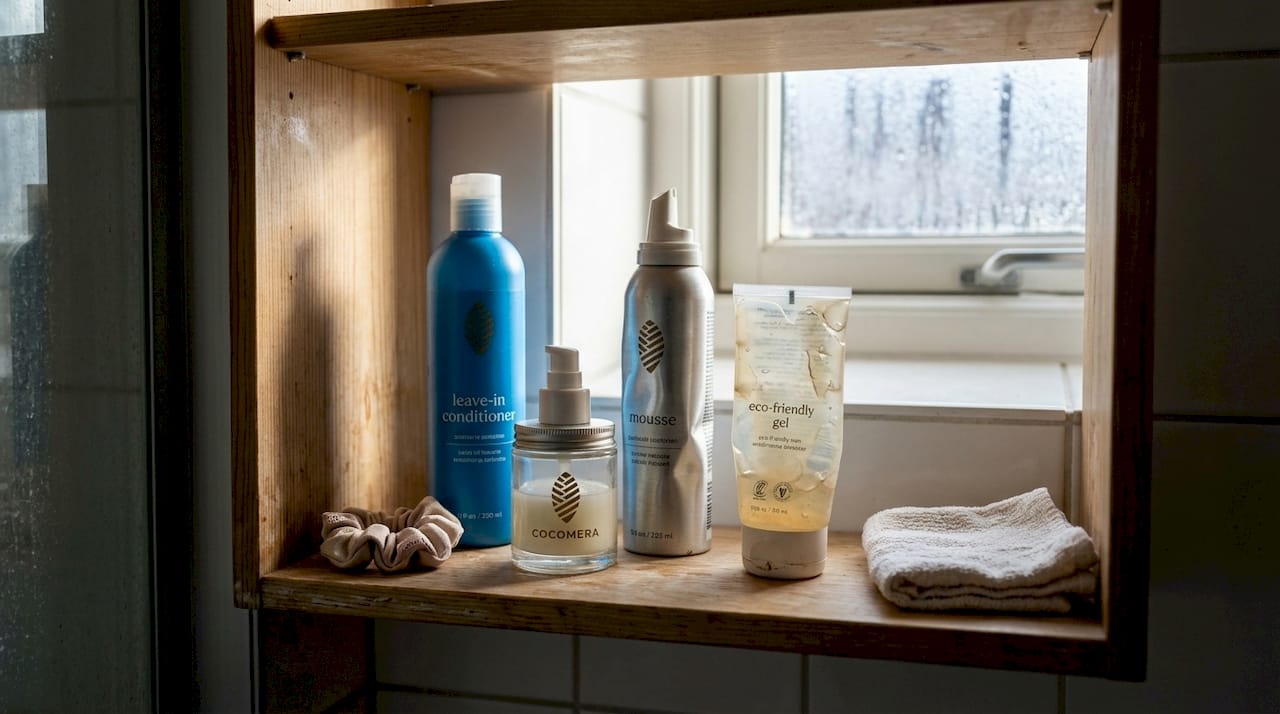
Brands like Care of Gerd offer serums developed with Scandinavian hair in mind, and other quality options like Noughty, KMS, and Sebastian round out a well-stocked wavy hair routine. The key is matching the formula weight to your subtype: lighter for 2A, richer for 2C.
Step-by-step routine: How to style type 2 wavy hair
Once you have your toolkit ready, it’s time to learn the exact routine for touchable, lasting waves. This is where most people either nail it or lose their definition before they even leave the bathroom.
- Cleanse with a sulfate-free shampoo. Focus on your scalp only, letting the lather rinse through the ends. Aim to wash 2 to 3 times per week to prevent dryness without letting oil build up.
- Apply conditioner from mid-lengths to ends. Leave it on for two to three minutes. Use a wide-tooth comb here to detangle gently. Rinse with cool water to close the cuticle.
- Add leave-in conditioner immediately. While hair is dripping wet, scrunch in a small amount of leave-in. Don’t towel dry first.
- Apply your styler on soaking wet hair. Scrunch in a lightweight cream, gel, or mousse depending on your subtype. Work in sections to make sure every wave gets coated.
- Plop for 10 to 20 minutes. Wrap your hair in a microfiber towel or a cotton T-shirt using the plopping method (lay the towel flat, flip your hair forward onto it, wrap the sides in). This encourages clumping and removes excess water without frizz.
- Diffuse or air-dry. Use a diffuser on low heat to boost volume and speed things up, or air-dry for a softer result. Avoid touching your hair while it dries.
- Scrunch out the crunch (SOTC). Once your hair is fully dry, scrunch with a small amount of oil or a dry hand to break the cast left by gel or mousse. This releases soft, defined waves.
Pro Tip: Refresh your waves on days two and three by misting with water, scrunching in a tiny amount of your original styler, and letting it re-set. You can get up to three great hair days from one wash.
For a full look at building a routine from scratch, the ultimate curl routine breaks down the method with product recommendations that also work beautifully for type 2 waves.
Troubleshooting and advanced tips for Swedish seasons
With your new routine, some tweaks may be needed for local climate and personal hair quirks. Sweden’s seasons are dramatic, and your hair will notice.
Winter: Cold, dry air causes static and breakage, so increase your moisture by reaching for richer conditioners and adding a weekly deep treatment. Avoid going outside with wet hair in sub-zero temperatures.
Summer: Humidity causes frizz and swells the hair shaft. Switch to anti-humectant products or stronger-hold gels that seal the cuticle against moisture in the air. A curl defining mousse works well in humid conditions because it gives flexible hold without going stiff.
For more options suited to different seasons, browsing hair mousse options lets you compare formulas by hold level and ingredient profile.
Protein vs. moisture balance:
- Limp, stringy waves often signal protein overload. Reach for moisture-rich products.
- Stiff, rough waves point to moisture deficiency. Add a hydrating mask.
- Fine 2A hair benefits from lighter formulas with volume focus.
- Coarser 2C hair handles and needs more moisture and hold.
“Strict adherence to the Curly Girl Method can cause buildup for wavy hair types. Modifying with occasional sulfate cleansing often gives better results.”
Low porosity hair (where water beads up on the surface) benefits from clarifying shampoos once a month to remove buildup before it weighs waves down. High porosity hair soaks up moisture fast but loses it just as quickly, so sealing with an oil after styling helps.
Pro Tip: If your waves looked great last winter but fell flat this summer, your routine needs seasonal adjusting, not replacing entirely. Swap one product at a time to find what’s changed.
A fresh perspective: Real life with wavy hair in Sweden
Here’s something the tutorials won’t always tell you: the most successful wavy-haired people in Sweden are not following any one method perfectly. They’re adapting constantly.
The Curly Girl Method swept through social media and genuinely helped a lot of people. But it was designed largely with curlier hair types in mind, and its strict no-sulfate, no-silicone rules can leave wavy hair limp and loaded with product after a few weeks. Swedish tap water is also relatively hard in many regions, which makes buildup even faster.
Real confidence with your waves comes from learning to read your hair, not a checklist. Does it feel rough after two washes? Add moisture. Do your waves disappear by lunch? Try a stronger-hold product or a different drying method. Is winter stealing all your definition? Reach for a richer leave-in.
For a complete guide to wavy hair, starting with understanding your specific pattern gives you the map. But your hair, your climate, and your lifestyle fill in the route. Success isn’t about perfect, Instagram-ready curls every single day. It’s about finding a routine that works on a Tuesday morning in February when it’s minus ten outside and you have 20 minutes to get ready.
Find your perfect products for Swedish waves
When you’re ready to upgrade your results, curated product picks for your specific waves are just a click away. Cocomera brings together the best international and Swedish brands, all selected with textured hair in mind, so you don’t have to guess which formula suits your wave type.

Explore a full range of styling products for waves covering everything from lightweight mousses to stronger-hold gels suited for Swedish climates. If your hair needs deeper care between washes, nourishing hair treatments and hydrating hair masks help restore moisture and keep your wave pattern healthy season after season. Every product is chosen to make your routine simpler, not more complicated.
Frequently asked questions
How often should I wash type 2 wavy hair?
For most people, washing 2 to 3 times per week strikes the right balance. Washing too often dries out your waves, while waiting too long leads to product buildup and limp roots.
What’s the best way to refresh waves on day 2 and 3?
Mist your hair lightly with water, scrunch in a small amount of your original styler, and let it air-dry or diffuse briefly. This reactivates the product already in your hair and brings definition back without a full wash.
Should I use mousse, gel, or cream for type 2 hair?
It depends on what your hair needs most. Mousse adds volume with a lighter feel, gel gives stronger hold and fights humidity, and cream delivers softness and moisture. Many people layer a light cream with a mousse or gel on top for the best of both.
Is the Curly Girl Method good for wavy hair?
It can be a useful starting point, but the strict version often causes buildup in type 2 waves. A modified approach that includes occasional sulfate cleansing tends to work much better for most wavy hair types.


