



Wavy hair gets dismissed as the “in-between” hair type all the time. Not straight enough to be sleek, not curly enough to be coily. But that framing completely misses what makes Type 2 hair its own category with its own rules, its own challenges, and its own product needs. If you have waves that seem to have a mind of their own, this guide is for you. We’ll break down exactly what Type 2 hair is, why it behaves the way it does, and how to build a routine that actually works for your specific wave pattern.
Table of Contents
- What is type 2 hair?
- Science behind wavy hair: structure and genetics
- Common challenges for type 2 hair
- How to identify your type 2 subcategory
- Best hair care routines for type 2 waves
- How to choose the right products for type 2 hair
- Hair care products for type 2 waves
- Frequently asked questions
Key Takeaways
| Point | Details |
|---|---|
| Type 2 hair basics | Type 2 hair is defined as wavy, forming distinct S-shaped waves that fall between straight and curly hair. |
| Unique care needs | Proper moisture balance and lightweight products help keep waves defined without weighing them down. |
| Correct subtype matters | Identifying 2A, 2B, or 2C helps you choose routines and products that fit your specific wave pattern. |
| Climate considerations | Humidity and water quality in Europe require special focus to maintain frizz-free, healthy type 2 hair. |
| Specialized products help | Products tailored for wavy hair support healthier, more manageable waves for European hair needs. |
What is type 2 hair?
The Andre Walker Hair Typing System is the most widely used framework for classifying hair texture. Developed by Oprah Winfrey’s longtime stylist, it organizes hair into four types: straight (1), wavy (2), curly (3), and coily (4). Type 2 hair sits right in the middle of the spectrum, and Type 2 forms S-shaped waves that fall between straight and curly. You can learn more about the full picture in this what is wavy hair guide.
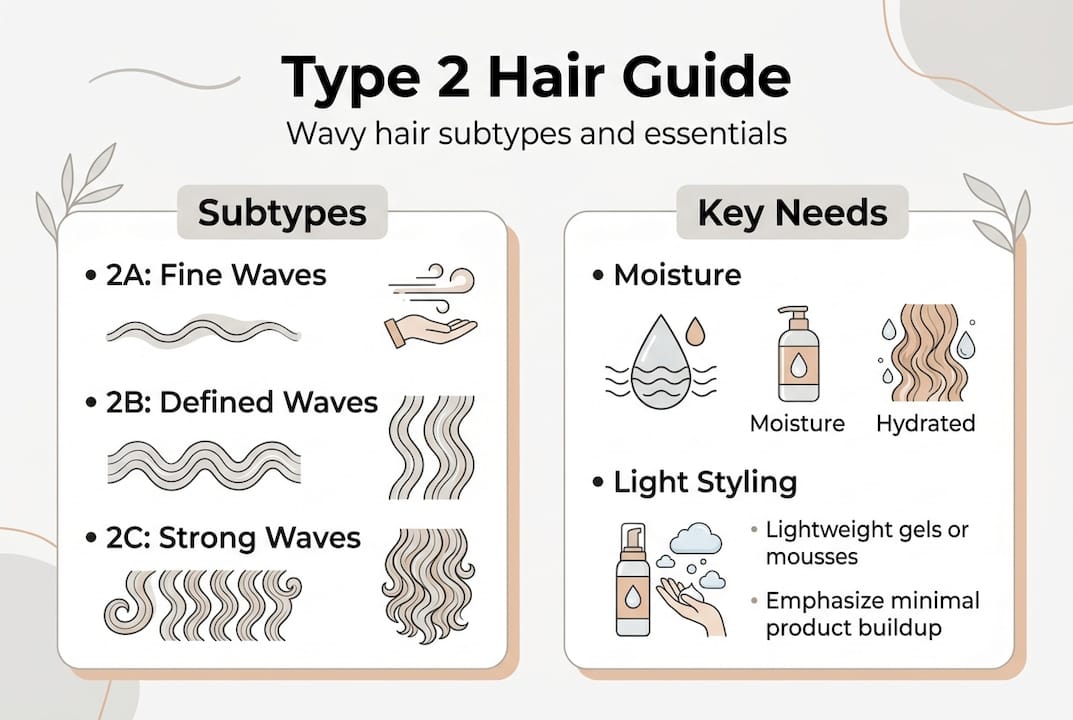
But Type 2 is not one single texture. It breaks down into three subtypes:
- 2A: Fine, loose waves that lie fairly flat. The wave pattern is subtle and easy to weigh down.
- 2B: Medium waves with a more defined S-shape. Starts to show some frizz and body.
- 2C: Thick, defined waves that border on curly. More volume, more frizz, and more product needed.
Here’s a quick comparison to help you see where each subtype lands:
| Subtype | Wave pattern | Texture | Frizz tendency | Product weight |
|---|---|---|---|---|
| 2A | Loose, flat | Fine | Low | Ultra-light |
| 2B | Defined S-wave | Medium | Moderate | Light |
| 2C | Strong wave/curl | Thick | High | Light-medium |
Knowing your subtype is not just a fun fact. It directly shapes which products work, how much moisture you need, and how your hair responds to humidity.
Science behind wavy hair: structure and genetics
Understanding the definition is only part of the picture. What actually creates a wave? It starts at the follicle. Follicle shape for Type 2 hair is slightly oval, and that asymmetry is what causes the strand to grow in a gentle curve rather than straight down. The more oval the follicle, the more pronounced the wave or curl.
Genetics play the biggest role here. The shape of your follicle is inherited, which is why wavy hair runs in families. According to hair types science, the cross-sectional shape of the hair shaft itself also contributes: rounder shafts produce straighter hair, while oval or flattened shafts produce waves and curls.
For Europeans specifically, wavy hair is extremely common. Northern and Western European populations have a high prevalence of Type 2 patterns, often ranging from 2A to 2B. Type 2C is more common in Southern European and Mediterranean backgrounds, where the follicle tends to be more oval. This also means that mixed wave patterns on a single head are very normal, something we’ll get into shortly.
One thing that affects Type 2 hair more than most people realize is moisture absorption. Because the wave pattern creates gaps along the hair shaft, hair moisture essentials become critical. Waves that lack moisture go frizzy fast, especially in humid European climates.
Key insight: Your wave pattern is not a styling choice. It’s a biological outcome of your follicle shape, and working with it rather than against it is the foundation of good wavy hair care.
Common challenges for type 2 hair
With a basic understanding of why your waves look and behave the way they do, it’s time to look at the real-world issues that come with Type 2 hair. These are the struggles that show up every wash day.
- Frizz in humidity: Type 2 hair is prone to frizz, especially when humidity is high. The wave pattern makes it easy for moisture from the air to enter the hair shaft unevenly, causing puffiness.
- Flat roots, frizzy ends: A common complaint, especially for 2A. The roots go limp while the mid-lengths and ends expand.
- Product overload: Heavy creams and oils flatten waves completely. Finding the balance between moisture and weight is a constant challenge.
- Scalp oiliness: Wavy hair tends to distribute scalp oils unevenly. The roots get greasy while the ends stay dry.
- Misclassification: Type 2C is often mistaken for Type 3 curly hair, leading to the wrong products and routines.
For practical strategies on managing these issues, the curly hair care tips guide covers techniques that apply directly to wavy hair too. And if you’re looking for products that won’t flatten your waves, the weightless curl products collection is a strong starting point.
Pro Tip: Apply products to soaking wet hair, not damp hair. The extra water dilutes the product and helps it distribute evenly without weighing down your waves.
How to identify your type 2 subcategory
Knowing the challenges, it’s even more important to properly identify where your waves fall on the spectrum. Here’s a step-by-step approach:
- Wash your hair with no styling products. Let it air dry completely without touching it. What you see is your natural wave pattern.
- Look at the shape. Barely-there waves that fall flat? That’s 2A. A clear S-shape with some body? That’s 2B. Waves that clump and almost spiral? That’s 2C.
- Feel the texture. Fine and silky points to 2A. Medium and slightly coarse suggests 2B or 2C.
- Check for mixed patterns. Type 2C can be misclassified as curly, and mixed patterns across the head are very common. Your crown might be 2A while your underlayers are 2B.
- Test product response. Apply a light gel to one section and a medium cream to another. Which gives better definition without crunch or flatness? That tells you a lot about your subtype.
For a deeper breakdown of wave patterns and what they mean for your routine, the wavy hair complete guide is worth reading alongside this article. And if you’re curious about how gels perform on different wave types, check out this breakdown of best curl gels.
Pro Tip: Take a photo of your hair after air drying with zero products. Use it as your baseline reference when testing new routines or products. It removes guesswork.
Best hair care routines for type 2 waves
You’re ready to turn your knowledge into action. Here’s how to build a routine that brings out the best in your Type 2 waves, with specific attention to European climate conditions.
- Wash frequency: Most Type 2 hair does well with washing every 2 to 4 days. Washing too often strips natural oils; waiting too long causes buildup that flattens waves.
- Moisture balance: For Europeans with Type 2 hair, care focuses on moisture balance, scrunching on wet hair, and microfiber drying to combat frizz. Hard water, common across much of Europe, can leave mineral deposits that dull waves and increase frizz.
- Scrunching technique: After washing, scrunch a lightweight leave-in or gel into soaking wet hair from ends to roots. This encourages the wave pattern to form naturally.
- Drying method: Skip the regular towel. A microfiber towel or a cotton T-shirt absorbs water without roughing up the cuticle. Plopping (wrapping hair in a microfiber towel for 10 to 20 minutes) helps set the wave pattern before air drying.
- Overnight protection: Sleep on a satin or silk pillowcase to reduce friction and preserve your waves between wash days.
- Humidity defense: In humid European summers, a light anti-humectant product or a gel with hold helps seal the cuticle and prevent frizz expansion.
For a full routine framework, the curly hair routine guide adapts well to Type 2 needs. And for more on why moisture is the foundation of everything, the hair moisture guide explains the science in plain terms.
How to choose the right products for type 2 hair
Once your routine is set, it’s all about picking the right products. The golden rule for Type 2 hair is simple: lightweight products avoid weighing down waves. Heavy formulas are the fastest way to kill your wave pattern.
Ingredients to look for:
- Aloe vera: lightweight hydration without weight
- Glycerin: draws moisture into the hair shaft
- Flaxseed extract: defines waves with flexible hold
- Hydrolyzed proteins: strengthen fine 2A strands without stiffness
Ingredients to avoid:
- Heavy silicones (dimethicone, cyclopentasiloxane): coat the hair and cause buildup
- Mineral oil and petrolatum: too heavy for most Type 2 patterns
- Thick butters as leave-ins: great for Type 4, too heavy for Type 2
Matching product to subtype:
- 2A: Ultra-light mists, diluted leave-ins, and thin gels. Less is more.
- 2B: Light creams, medium-hold gels, and foam stylers work well.
- 2C: Can handle slightly richer leave-ins and stronger-hold gels without losing definition.
For a product that works across subtypes, the sleek styling cream from Rizos Curls is a solid option. And for gel recommendations specifically, this guide to styling gels for waves breaks down what to expect from different formulas.
Hair care products for type 2 waves
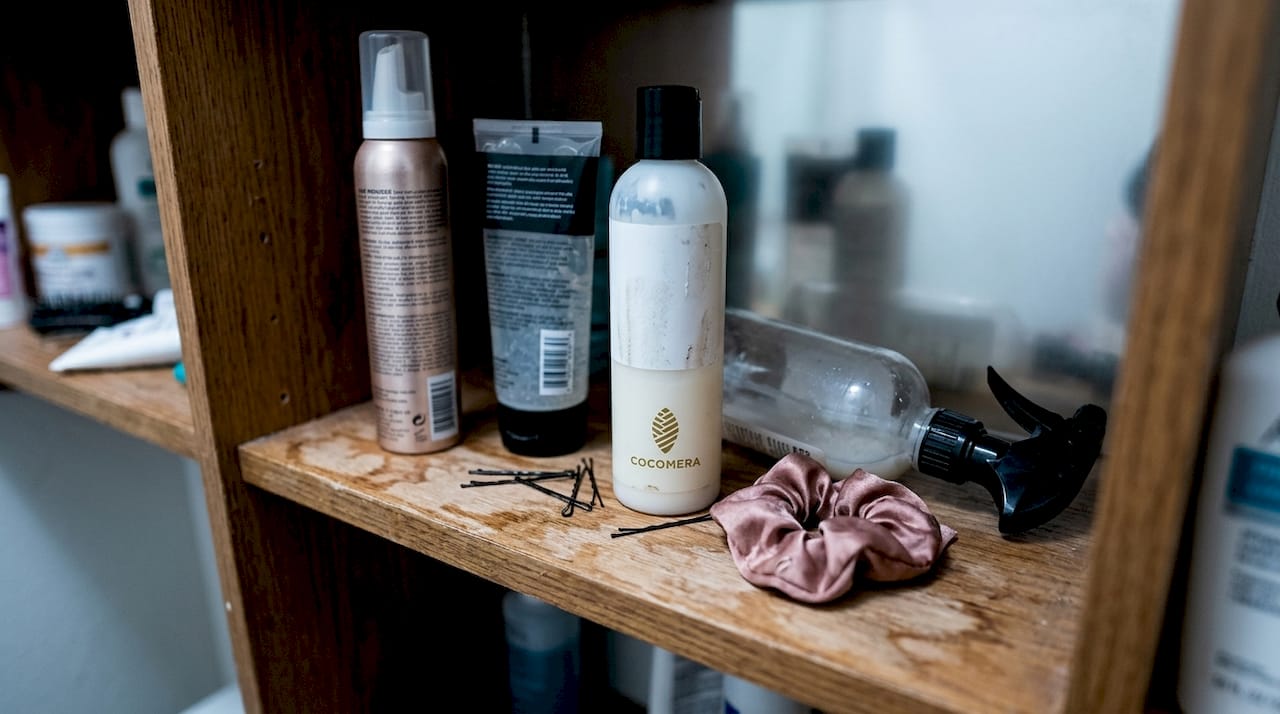
Knowing your wave type and building the right routine is a huge step forward. The next step is making sure your product shelf actually matches your needs. At Cocomera, we’ve curated a selection of lightweight, wave-friendly formulas specifically chosen for Type 2 hair, including options that perform well in European climates with hard water and seasonal humidity shifts.
Whether you’re a 2A looking for barely-there hold or a 2C managing thick waves that border on curly, you’ll find products matched to your pattern. Browse our hair styling products for gels, creams, and foams that won’t flatten your waves. Explore hair treatments for deep conditioning options that restore moisture without heaviness. And if buildup is an issue, our strengthening shampoo collection includes clarifying options that reset your hair without stripping it.
Frequently asked questions
What makes type 2 hair different from type 3 curly hair?
Type 2 forms S-shaped waves that are less coiled than Type 3, which has defined spirals, significantly more volume, and a tighter curl pattern that requires richer products.
Can type 2 hair have more than one pattern?
Yes. Mixed patterns are common across the head, especially with 2C hair, where the crown may be looser while the underlayers show tighter wave formation.
How often should type 2 hair be washed?
Most people with Type 2 hair wash every 2 to 4 days. This balances moisture and prevents buildup that can flatten waves and dull the pattern over time.
What products should be avoided for type 2 hair?
Heavy creams, thick butters, and silicone-based formulas weigh down waves and cause buildup. Stick to lightweight, water-based products with flexible hold.
Does climate affect care for type 2 hair in Europe?
Absolutely. Humidity causes frizz, and hard water leaves mineral deposits that dull waves. Moisture balance and frizz control are especially important for European wavy hair, and microfiber towels plus anti-humectant products make a real difference.


