



Yes, water-soluble silicones can work well for curly and textured hair, and for most curl types they’re a smarter pick than traditional silicones. They rinse out with plain water or a mild cleanser instead of building up on the hair shaft.
- When they help: heat styling days, smoothing frizz before a blowout, or adding temporary shine and slip for detangling.
- When to skip them: on very fine, low-density curls prone to limpness, or if you’re already seeing dullness and reduced curl clump from residue.
Try a product on one section of hair first, then wash and check how your curls spring back before committing to your whole head.
Key Takeaways
Water-soluble silicones support curl definition and shine without the buildup risk of traditional silicones, as long as you clarify regularly and match product weight to your curl density.
| Point | Details |
|---|---|
| Choose water-soluble first | Look for copolyol, PEG, stearoxy, or behenoxy silicone names on the label. |
| Layer in the right order | Apply leave-in, cream, silicone styler, then gel to soaking-wet hair for clumping. |
| Clarify on schedule | Wash with a chelating shampoo every one to two weeks if you layer products often. |
| Match weight to density | Fine curls need lightweight formulas; coarser curls tolerate richer ones. |
| Shop curated formulas at Cocomera | Cocomera’s leave-in and clarifying collections group water-soluble, curl-friendly options in one place. |
Table of Contents
- What Are Water-Soluble Silicones and How Do They Differ From Regular Silicones?
- What Are the Benefits and Downsides of Silicones for Curls?
- How Do You Spot Water-Soluble Silicones on a Label?
- How Do You Use Water-Soluble Silicones in a Curly Hair Routine?
- What Do You Do if Curls Feel Weighed Down or Coated?
- What Should You Check Before Buying a Silicone-Containing Product?
- Cocomera’s Take on Silicones and Curl Health
- Where to Find Silicone-Friendly Curl Products
- Sources
What Are Water-Soluble Silicones and How Do They Differ From Regular Silicones?
Water solubility comes down to how a silicone molecule is structured. Traditional silicones like dimethicone form a tight, water-repellent film that clings to the hair shaft and needs a sulfate shampoo to fully strip away. Water-soluble silicones carry modified side chains that let water molecules interact with them, so they loosen and rinse out with a regular wash instead of layering wash after wash.
Look for these ingredient list names:
- Dimethicone copolyol
- Stearoxy dimethicone
- Behenoxy dimethicone
These are genuinely water-soluble silicones, and they behave differently from standard silicones in three practical ways: they wash out with water or a gentle cleanser rather than requiring a clarifying shampoo, they don’t form as thick a sealing film, and they tend to leave less residue behind after repeated use.
What Are the Benefits and Downsides of Silicones for Curls?
Curly and coily hair runs drier by nature, since scalp oil struggles to travel down a bent hair shaft to coat the ends. That’s why sealing ingredients, including certain silicones, earn a place in a lot of curl routines. Used well, they smooth the cuticle, add shine, cut down frizz, and protect strands from heat tools.
The catch is buildup. Even water-soluble versions can accumulate if you use them daily without a proper wash cycle, and fine, low-density curls in particular can end up looking flat rather than defined. Silicones also sit on top of the hair, which means they can mask dryness or breakage instead of fixing it.
| Factor | Water-soluble silicones | Traditional silicones |
|---|---|---|
| Rinses with water/mild cleanser | Yes, generally | No, needs sulfates |
| Buildup risk over time | Lower | Higher |
| Best for | Most curl types, frequent washers | Occasional heat protection, thicker hair |
| Removal method | Regular shampoo | Clarifying shampoo |
Pro Tip: If your curls are fine or low-density, favor lightweight, water-soluble formulas and wash every few days. Denser, coarser curls can usually tolerate richer, silicone-containing products for longer stretches between washes.
Buildup risk also shapes your wash schedule. Non-water-soluble silicones often demand deeper clarifying to remove, while water-soluble versions are far more forgiving for people who wash two or three times a week.
How Do You Spot Water-Soluble Silicones on a Label?
Scan the ingredient list for names containing “copolyol,” “PEG” prefixes attached to a silicone (like PEG-modified dimethicone), or the specific names dimethicone copolyol, stearoxy dimethicone, and behenoxy dimethicone.
- Silicones usually sit in the middle of an ingredient list, not right at the top.
- If a silicone appears alongside gentle surfactants or PEG compounds, it’s more likely to rinse cleanly.
- Plain “dimethicone” or “amodimethicone” with no modifier is a signal it’s the non-water-soluble kind.
The one-line rule: if you want a silicone that rinses out easily, look specifically for copolyol, PEG, stearoxy, or behenoxy tags rather than trusting a “silicone-free” or “lightweight” label alone.
How Do You Use Water-Soluble Silicones in a Curly Hair Routine?
Sequence matters more than the product itself and you can learn expert guidance on building a routine in The Ultimate Curly Hair Care Routine: Expert Tips for Healthy, Defined curls at Salon Brandz curly hair care routine. Here’s how textured-hair routines typically build in silicone-containing steps without weighing curls down.
- Clarify first if needed. If curls feel limp, dull, or coated, start with a clarifying wash to remove old residue before adding anything new.
- Cleanse gently. Low-lather, sulfate-free shampoos two to three times a week keep curls clean without stripping moisture, with a deeper clarify every one to two weeks if you use a lot of styling product or live with hard water.
- Condition and detangle on soaking-wet hair. This is when slip matters most, and a silicone-containing conditioner earns its place here.
- Layer styling products in order. Apply everything to soaking-wet hair: leave-in first, then a curl cream, then a silicone-containing styler if you’re using one, and gel or foam last if you want extra hold. Working out of order is the most common reason curls end up crunchy or weighed down instead of clumped.
- Dry with intention. Diffuse on low heat or air-dry without touching your curls until they’re nearly set, finishing on cool air to lock in shape.
- Break the cast once fully dry. A drop of light oil rubbed between the palms and smoothed over the surface softens any gel cast and adds sheen without undoing definition.
Pro Tip: Test any new silicone-containing product on one section of hair for a full wash cycle before switching your entire routine. Curl response depends heavily on porosity, so what works for a friend’s curls may sit very differently on yours.
Oils work best as sealants over a water-based leave-in on damp hair, not as a standalone moisturizer on dry strands. Skipping that order is a common reason curls feel dry despite heavy product use.
What Do You Do if Curls Feel Weighed Down or Coated?
Act fast once you notice heaviness, dullness, or curls that clump less than usual.
- Clarify immediately with a chelating or sulfate shampoo to strip mineral and product residue.
- Follow with a deep conditioner to restore moisture the clarifying wash pulled out.
- Cut back leave-ins and oils for your next two to three washes and test a silicone-free product in their place.
Expect a real difference within two to three washes, with fuller improvement over two to six weeks as buildup clears and moisture balance resets. If curls stay lifeless even after clarifying and a silicone-free trial, that points to underlying damage, like heat or chemical exposure, rather than product buildup, and it calls for protein treatments or a trim instead of another product swap.
What Should You Check Before Buying a Silicone-Containing Product?
- Scan the ingredient list for copolyol, PEG, stearoxy, or behenoxy silicone names.
- Check whether the label markets the formula as “light” or “rich,” and match that to your curl density.
- Look for porosity or hair-type notes on the packaging.
- Favor products that claim to rinse with water or a mild cleanser rather than requiring sulfates.
Fine or low-density curls do best with lighter, water-soluble formulas; denser or coarser curls can handle richer ones. Clarify every one to two weeks if you’re layering silicone products often.
Cocomera’s Take on Silicones and Curl Health
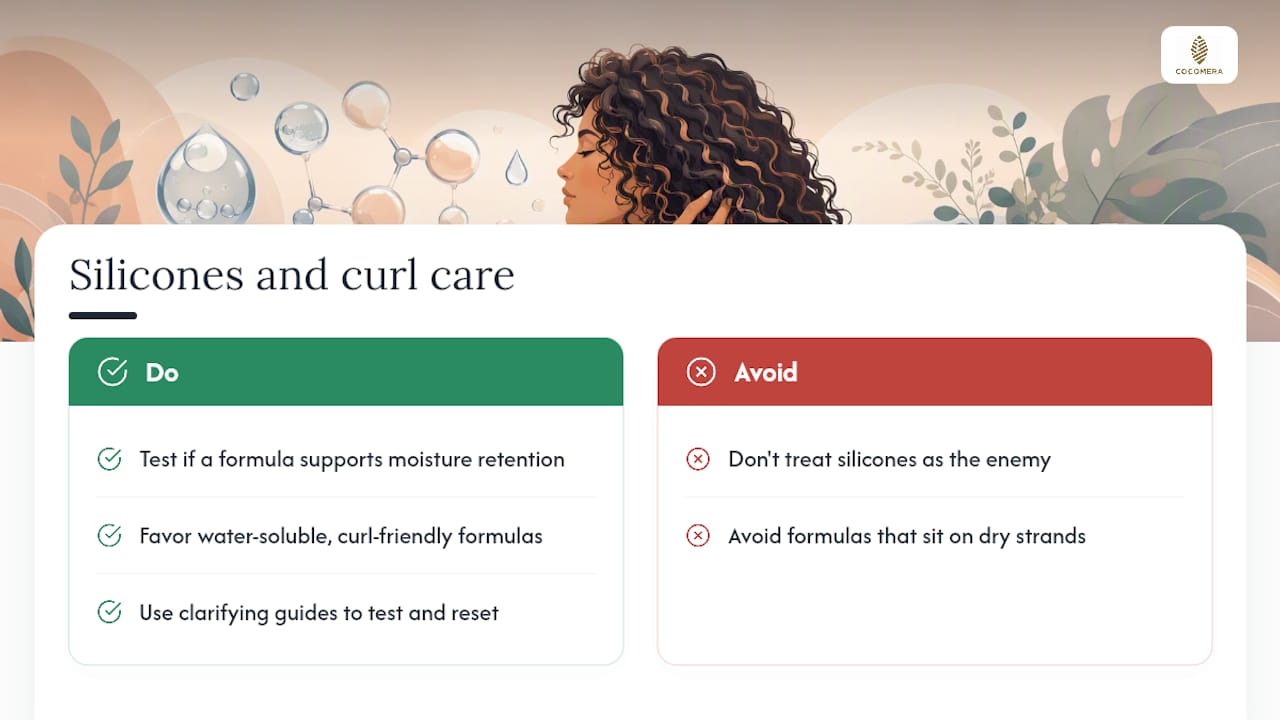
We don’t treat silicones as an enemy. The real question is whether a formula supports moisture retention or just sits on top of dry strands. Our product curation favors water-soluble, curl-friendly formulas precisely for that reason, and our clarifying guides exist so you can test confidently and reset if something doesn’t suit your curls.
Where to Find Silicone-Friendly Curl Products
Building a routine around water-soluble silicones gets easier when you’re shopping from a curated selection instead of guessing at ingredient panels. Cocomera’s leave-in styling collection groups lightweight, curl-friendly leave-ins and stylers by formula type, so you can match a product to your porosity and density without reading a chemistry textbook first.

If you’re still testing what works, the Bounce Curl Curly Trial & Travel Kit gives you a low-commitment way to trial a full silicone-aware routine before buying full sizes. Prefer a richer moisture butter for coarser curls? The Camille Rose Curlaide Moisture Butter is built for that density. And if you want a clean slate before switching formulas, pair your trial with a clarifying shampoo so buildup never gets the chance to start.
Sources
- Hydrating and Caring for Curly Textured Hair
- Sulfater & silikoner – vad gör de egentligen med ditt hår?
- Curly hair routine
- How to master a curly hair routine according to an expert
- The only curly hair routine you need according to an expert stylist


