



Choosing a curl cream depends on your hair’s texture, porosity, and environmental factors, ensuring optimal moisture and definition. Applying it on wet, sectioned hair with the raking method and layering with leave-in conditioners improves results, especially when tailored to your curl type. Understanding ingredient categories like proteins and oils is crucial for selecting formulas that enhance, hydrate, and protect textured hair effectively.
Choosing a curl cream should be simple, but with hundreds of products on the market and just as many conflicting opinions online, most women with textured hair end up cycling through half-empty jars that never quite deliver. If you have wavy, curly, coily, or afro hair and live in Europe, that challenge is even more specific: product availability, climate humidity, and brand familiarity all shape your results. This guide cuts through the noise by focusing on what actually matters: texture type, porosity, ingredients, and application method so you can shop smarter and style with confidence.
Table of Contents
Key Takeaways
| Point | Details |
|---|---|
| Match by texture | Choose a curl cream specifically formulated for your hair texture and density. |
| Check ingredients | Select creams with the right mix of proteins or oils to address your hair’s biggest needs. |
| Layer products | For best results, pair curl creams with leave-in conditioners and gels as part of your routine. |
| Test and adapt | Experiment with application methods and formulas to discover what works for your unique hair. |
| Shop smart in Europe | Look for trusted European brands offering a range of texture-specific curl creams. |
How to choose a curl cream: Key criteria
Once you know why selecting by texture is crucial, let’s break down the decision criteria for your ideal curl cream.
The most important thing to understand is that curl creams are categorized primarily by hair texture needs, not brand reputation or trending ingredients. That means your curl type (wavy, curly, coily, or afro) is the first filter you should apply before reading a single ingredient label.
Beyond texture, porosity is the factor most guides skip over. Porosity describes how well your hair absorbs and holds onto moisture. High porosity hair needs sealing creams; low porosity hair benefits from lighter, water-based formulas that won’t just sit on top of the strand. A quick way to figure out your porosity at home is the float test: drop a clean strand of hair into a glass of water and wait two minutes. If it sinks quickly, you likely have high porosity. If it floats near the surface, your hair is low porosity.
Here are the main criteria to evaluate before choosing any curl cream:
-
Hair texture type: Wavy (2A to 2C), curly (3A to 3C), coily (4A to 4B), or afro/tight coil (4C)
-
Porosity level: High, medium, or low determines product weight and ingredient type
-
Primary goal: Do you need definition, moisture, frizz control, or length retention?
-
Climate and environment: Humidity in your city affects how a formula performs on your hair
-
Formula weight: Light milks, medium creams, rich butters, or hybrid gel-creams
“Knowing your porosity before buying a curl cream will save you more money than any sale ever will. It’s the single most overlooked step in building a routine that works.”
Pro Tip: When choosing curly hair products, always match porosity first, then texture. A high-porosity 3A curl and a low-porosity 3A curl need completely different formulas even though they look similar.
Types of curl creams for every hair texture
Now that you know what to look for, here are the main curl cream types and examples available in Europe.
Lightweight curl creams for fine or wavy hair and rich, buttery creams for coily hair provide two very different results, and that distinction is the backbone of smart product selection. Here is how each texture category breaks down:
Type 2 (Wavy, fine to medium): Your main enemy is weight. A heavy cream will flatten your wave pattern and leave hair greasy rather than defined. Look for milky or fluid creams with a thin consistency. Ingredients like aloe vera, lightweight plant oils, and panthenol work well without overloading fine strands.
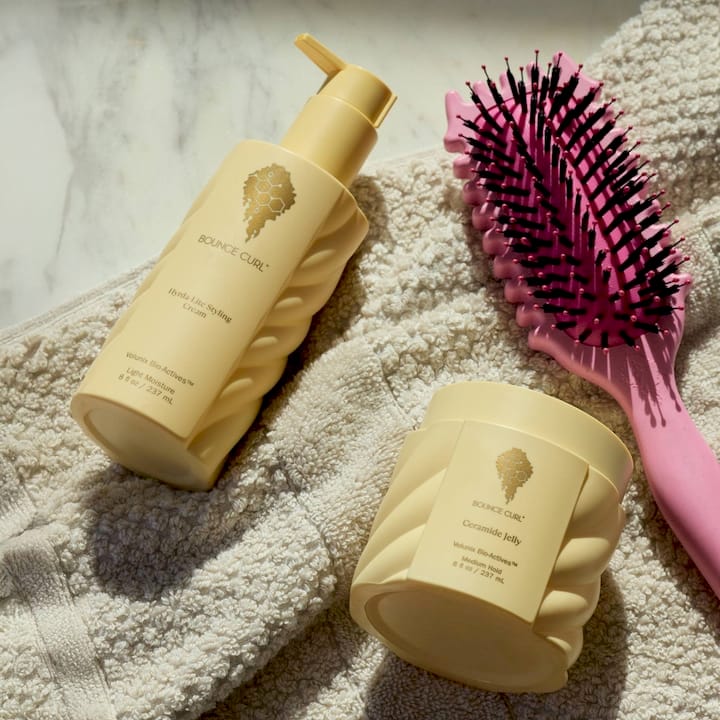
Type 3 (Curly, medium density): You need balance. A good curl cream for 3A to 3C hair delivers enough moisture to reduce frizz and enough hold to keep the curl clumped and defined. This is where moisturizing creams with a medium weight truly shine. Many moisturizers for curly and afro hair fall into this category, formulated with shea butter in small amounts alongside water-soluble humectants.
Type 4 (Coily and afro, dense and thirsty): Your strands have the tightest curl pattern and the highest need for moisture. Rich buttery creams packed with shea, mango butter, or castor oil seal in hydration and add the softness needed to detangle and define. KeraCare CurlEssence is a great example of a formula built specifically for this range.
Here is a breakdown of styling curl creams available across European markets:
| Curl type | Cream style | Key ingredients | Example products |
|---|---|---|---|
| Type 2 (Wavy) | Light milk/cream | Aloe vera, panthenol | Curlsmith Curl Defining Styling Soufflé |
| Type 3 (Curly) | Medium cream | Shea butter, glycerin | Lush Curl Power, Maria Nila Oil-in-Cream |
| Type 4A/4B (Coily) | Rich butter cream | Mango butter, castor oil | Mizani Coconut Souffle, KeraCare CurlEssence |
| Type 4C (Afro/tight coil) | Whipped/dense butter | Shea, argan, coconut | Curlsmith Oil-in-Cream, Mizani Miracle Pudding |
Pro Tip: European climates vary widely. If you live in a humid coastal city like Amsterdam or Stockholm, you may want to choose a slightly lighter formula than the one recommended for your curl type to prevent buildup and limpness on humid days.
Ingredient spotlight: What’s inside curl creams?
Understanding the types is half the story; next, let’s look at how ingredients determine what each curl cream can do for your hair.
The ingredient list on a curl cream tells you more than the marketing copy ever will. Three main ingredient categories drive performance: proteins, oils and butters, and gel-forming agents.
Proteins are the unsung heroes for damaged, over-processed, or color-treated curls. They temporarily patch gaps in the hair cuticle, reducing breakage and adding elasticity. Protein-infused creams work especially well for curly hair that has lost its spring or has been heat-styled frequently. Look for hydrolyzed keratin, silk protein, or rice protein in the ingredient list.
Oils and butters do the heavy lifting for moisture retention and softness. The curly hair oil science behind ingredient selection matters here: penetrating oils like coconut oil and avocado oil actually absorb into the hair shaft, while sealing oils like castor oil and jojoba coat the outside to lock in moisture. Rich creams designed for coily and afro hair lean heavily on these.
Hybrid gel-creams are a category worth knowing. Some formulas, like the Pattern Palo Santo cream, combine gel and cream for coily hold without the classic crunchy finish. These are particularly useful for 3B to 4C textures that want defined curls without reaching for a separate gel on top.
Here is a quick reference of what to look for by hair need:
-
Limp or breaking curls: Prioritize hydrolyzed protein, biotin, or silk amino acids
-
Dry and frizzy hair: Look for shea butter, mango butter, glycerin, and coconut oil
-
Low porosity hair: Avoid heavy butters as the first layer; use water-based creams with light humectants
-
Color-treated or bleached curls: Seek out bond-building ingredients or protein-first formulas
“Ingredient order matters. The first five ingredients make up the bulk of a formula. If water is first and a heavy butter is second, that cream will feel rich but still rinse clean. If butter is first, expect a product that stays on the surface and may require clarifying more often.”
The OCOA Hydrating Curl Cream is a good example of a balanced formula that layers water, humectants, and oils in the right order for type 3 and 4 textures without feeling heavy on the hair.
How to use curl cream for best results
Now that you’ve selected the right formula, let’s ensure your routine gets the best out of your chosen curl cream.
Even the most well-matched product will underperform if the application is off. Method matters as much as formula, and most people learn this the hard way after too many flat-curl wash days.
Here is a step-by-step application method based on best-practice techniques for textured hair:
-
Start on soaking wet hair. Water is your first layer. Never apply curl cream to dry or damp hair if your goal is definition. Wet hair allows product to distribute evenly and activate humectants.
-
Divide into sections. Work in two to four sections depending on density. This ensures even product coverage from root to tip.
-
Apply leave-in conditioner first. Rake it through each section to add a hydration base before your curl cream goes on.
-
Add curl cream using the raking method. Pull the product through small subsections with your fingers spread like a comb. This encourages clumping and defines individual curl groups.
-
Scrunch upward. Once the cream is distributed, scrunch each section upward toward the scalp to encourage the curl pattern to form.
-
Layer gel last if needed. If you want longer hold, add a small amount of top curl styling gels over the cream while hair is still wet.
-
Air dry or use a diffuser on low heat. Avoid touching curls until fully dry to prevent frizz.
The application differs slightly by texture. For fine wavy hair, use less product and skip the gel entirely to avoid weight. For dense 4C hair, apply to smaller sections and do not be afraid to use more cream to ensure every strand is coated.
Pro Tip: If your curls feel crunchy after drying, scrunch out the cast (the film that gels and some creams create as they dry) with a small drop of oil in your palms. This releases the crunch without disturbing the curl pattern underneath.
Quick comparison: Curl cream types at a glance
To wrap up all these options, here’s a quick one-glance comparison to guide your final choice.
Some creams combine gel and cream for coily hold without crunch, while lighter formulas work best for wavy textures. Here is a side-by-side overview to help you decide:
| Curl type | Best cream style | Top priority | Pros | Watch out for |
|---|---|---|---|---|
| 2A to 2C (Wavy) | Light milk or fluid cream | Enhancing wave, no weight | Adds shape, non-greasy | Heavy butters will flatten waves |
| 3A to 3B (Loose curly) | Medium moisturizing cream | Frizz control and definition | Versatile, easy to layer | Overuse leads to buildup |
| 3C to 4A (Tight curly/coily) | Rich cream or oil-in-cream | Moisture and hold | Great definition, soft finish | May need clarifying weekly |
| 4B to 4C (Coily/afro) | Whipped butter or gel-cream | Deep hydration and softness | Intense moisture, strong hold | Heaviest formulas, patch test first |
For the best moisturizers for coily hair, look for products in the bottom two rows of this table as a starting point, then adjust based on your porosity test results.
Why most guides get curl cream selection wrong
While the quick comparison can guide your shortlist, there is a deeper truth about curl cream effectiveness that standard advice consistently misses.
Most hair care content is written with a universal audience in mind, which means it flattens out the nuance that actually makes or breaks a routine. Someone in Gothenburg dealing with cold, dry winters needs a different formula from someone in Barcelona navigating summer humidity, even if they share the same curl type. European brand availability also shapes this equation in ways American-centric guides completely ignore.
The second issue is that mainstream advice tends to treat “best curl cream” as a single product answer. In reality, the most consistent results come from understanding how to layer and combine products based on what your hair needs that day or season. A curl cream that works brilliantly in spring might feel too heavy in July and too light in November. Tracking what you use and how your hair responds across different conditions is more valuable than any ranked list.
The third and most underappreciated point: packaging claims are marketing, not diagnostics. A cream labeled “for all curl types” is designed to sell broadly, not perform specifically. Your own curl product testing tips and documented results will always outperform any influencer recommendation.
Our honest advice is this: start with one product that matches your texture and porosity, use it consistently for three to four weeks, track your results, and then adjust. That process teaches you more about your hair than any guide, including this one.
Discover your perfect curl cream match at Cocomera
Ready to shop the best-matched curl cream for your textured hair? Browse tailored options and complete your routine from Europe’s leading specialist.
At Cocomera, we have curated a selection of curl creams, layered stylers, and complementary products specifically for wavy, curly, coily, and afro hair types across Europe. Every product in our range is chosen with texture and porosity in mind, so you spend less time guessing and more time enjoying your curls.
Whether you need a featherlight cream for fine waves, a rich butter for 4C coils, or a hybrid gel-cream for spring 3C definition, you will find it in our styling lotion and cream collection. Pair your cream with a leave-in or a curl-enhancing gel and build a complete routine in one place. Shipping is available across Europe, and our product selection reflects the climate, lifestyle, and curl diversity of European women with textured hair.
Frequently asked questions
What curl cream should I use if I have both fine and high-porosity hair?
You should look for a lightweight, protein-enriched curl cream that seals in moisture without weighing hair down, since high-porosity hair needs sealing formulas while fine strands cannot handle heavy butters.
Can I use a curl cream and a leave-in conditioner together?
Yes, layering a leave-in conditioner before your curl cream is highly recommended, especially for dry or frizzy hair, because curl creams provide hold and definition while leave-ins deliver the underlying hydration.
How do I know if my hair needs oil-rich or protein-rich cream?
If your hair feels limp, stretches without snapping back, or breaks easily, protein-infused creams for damaged curls are your best option; if your hair is frizzy and constantly thirsty, an oil-in-cream formula will serve you better.
Which European curly hair product brands are widely trusted?
Lush, Curlsmith, Maria Nila, and Mizani are all widely trusted and accessible in Europe, with options like Lush Curl Power and Mizani Miracle Pudding covering a wide range of curl types from wavy to afro.
What’s the best application technique for curl cream?
Apply to soaking wet, sectioned hair using the raking method first to distribute product evenly, then scrunch upward to encourage clumping and curl definition.


