


TL;DR:
- Humidity hacks for curls focus on using film-forming ingredients like polyquaterniums to prevent moisture from entering the hair cuticle and causing frizz. Applying products to soaking wet hair and fully diffusing with cool air help set curls and reduce swelling from humidity. Tailoring routines based on curl type and porosity ensures better moisture control and longer-lasting defined curls.
Humidity hacks for curls are practical product and technique choices that stop frizz before it starts by blocking moisture from entering the hair cuticle. Humidity causes frizz because swollen cuticles absorb water unevenly, lifting and separating curl strands. The most effective curly hair humidity solutions combine film-forming ingredients like polyquaterniums, smart application timing on soaking wet hair, and gentle drying with a diffuser. This guide covers every layer of that strategy, from ingredient science to porosity-specific adjustments, so your curls stay defined all summer.
1. choose products with humidity-blocking ingredients
The right product ingredients are the foundation of any humidity control strategy for curls. Film-forming polymers like polyquaterniums and PVP/VA copolymers create a flexible barrier on each strand that resists moisture uptake. That barrier is what keeps your curl pattern intact when the air is thick with moisture.
Equally important is knowing what to avoid. Glycerin-heavy formulas can cause cuticle swelling and frizz in high humidity because glycerin pulls water from the air directly into the hair shaft. That means a product that works perfectly in winter can turn your curls into a frizz cloud in July.
Heavy oils and butters carry a similar risk. Excess sealing in humid weather can trap moisture inside the cuticle and cause swelling, so use lighter oils like argan or jojoba in small amounts as a finishing step only.
The best product types for humid conditions:
- Lightweight styling gels with polyquaternium or PVP hold
- Alcohol-free mousses and foams for volume without crunch
- Curl creams with low or no glycerin content
- Leave-in conditioners that are water-based and thin in consistency
- Light finishing oils (argan, jojoba) applied sparingly after drying
Pro Tip: Do a seasonal product audit every spring. Keep your hydrating leave-in but swap any glycerin-heavy stylers for film-former based options before peak humidity hits.
2. apply products to soaking wet hair
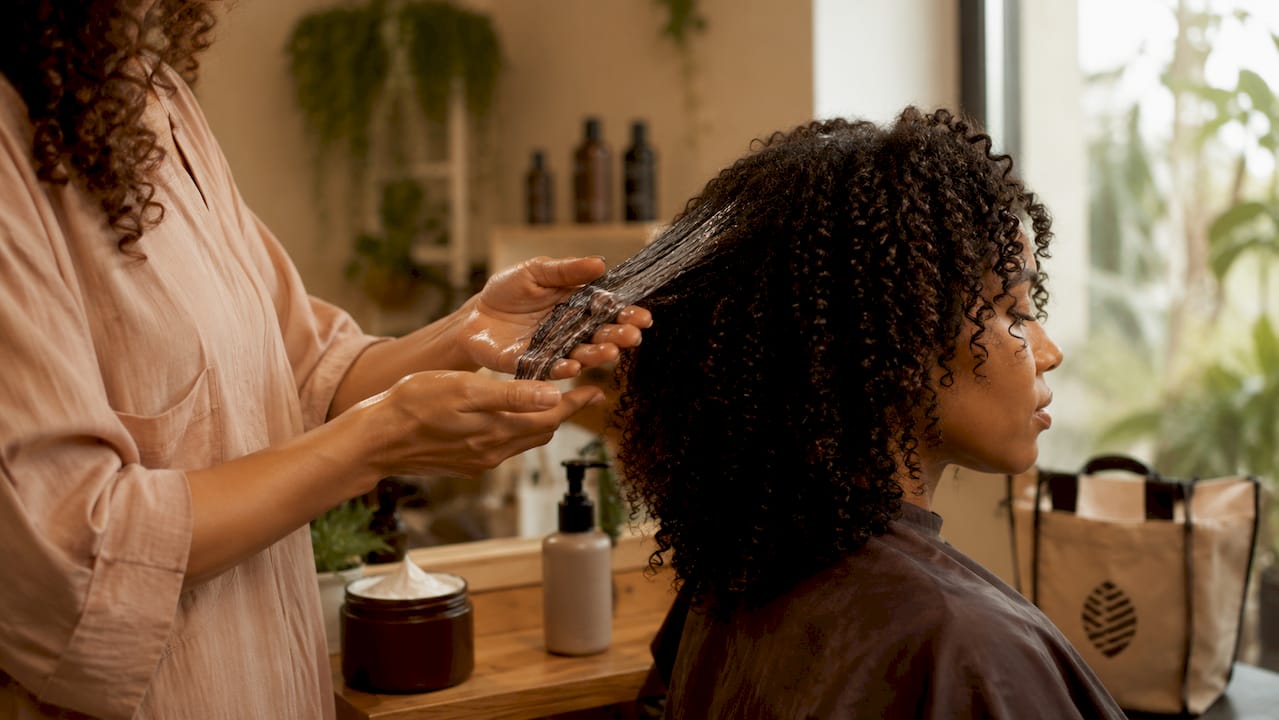
Timing your product application is one of the most overlooked antifrizz tips for curly hair. Applying products to soaking wet hair improves distribution, enhances curl clumping, and reduces frizz because water acts as a carrier that spreads product evenly across every strand. Waiting until hair is damp or towel-dried creates uneven coverage and breaks up curl groups before they form.
The layering order matters just as much as the timing. Follow this sequence for the best humidity-proof results:
- Leave-in conditioner applied section by section to dripping wet hair
- Mousse or foam scrunched upward into curls while hair is still very wet
- Gel applied on top to lock the curl cast and seal against humidity
- Light oil (optional) pressed gently over the gel to add shine and reduce white cast
Avoid stacking too many heavy products. Lighter layering in hot, humid weather prevents buildup that worsens frizz over time. Two to three products applied correctly outperform five products applied carelessly.
Pro Tip: Squeeze water out of your hair gently with a microfiber towel or a cotton T-shirt before applying leave-in. Never rub. Rubbing lifts the cuticle and creates frizz before you even start styling.
3. master the refresh without the buildup
Full restyling every day in summer leads to product buildup fast. A targeted refresh with a light water or aloe mist plus a small amount of product and scrunching reshapes curls without adding layers of residue. This approach keeps curls looking defined on day two and day three without the weight.
The key is using as little product as possible during a refresh. Spray your curls lightly with water or an aloe vera mist, then scrunch upward. If curls still feel stiff or undefined, add a fingertip-sized amount of your regular gel or cream. That is all you need.
Avoid re-wetting your hair completely during a refresh unless you plan to restyle from scratch. Partial wetting without reapplying a full product layer leaves curls vulnerable to humidity because the protective film is disrupted but not rebuilt.
4. dry curls fully before going outside
Drying technique is where many curl routines fall apart in humid conditions. Diffusing on low heat and low airflow dries curls gently without disrupting the curl pattern or lifting the cuticle. Air drying is fine in low humidity but risky in summer because partially wet hair absorbs atmospheric moisture and swells before the product cast sets.
Best drying practices for humid weather:
- Use a diffuser attachment on your blow dryer set to low heat and low speed
- Cup curls into the diffuser bowl and hold still rather than moving the dryer constantly
- Finish with a 30-second cool air blast to seal the cuticle and add shine
- Never brush or rub hair dry, as both actions break curl clumps and lift the cuticle
- Wait until hair is fully dry before stepping into humid air
The cool air finish is a step most people skip, but it makes a real difference. Gentle drying and minimal manipulation reduces frizz far more effectively than adding more products. Sealing the cuticle with cool air after diffusing gives your curl cast the best chance of holding up outside.
For a deeper look at diffuser technique, Cocomera’s guide on diffuser use for curls covers attachment types and airflow settings in detail.
5. compare humidity routines by curl type
Not every humidity routine works for every curl texture. The table below compares three common approaches so you can match the strategy to your hair.
| Routine Type | Best For | Pros | Cons |
|---|---|---|---|
| Minimalist (leave-in + gel) | Type 2 wavy, fine curls | Light feel, no buildup, fast | Less hold in extreme humidity |
| Layered (leave-in + mousse + gel) | Type 3 curly, medium density | Strong hold, defined clumps | Requires clarifying weekly |
| Heavy layering (cream + gel + oil) | Type 4 coily, high porosity | Maximum moisture seal | Can feel heavy, builds up fast |
| Refresh-only routine | All types, day 2 and 3 | Saves time, reduces buildup | Needs a strong day-1 foundation |
Protein treatments help balance moisture in curly hair and improve resilience to humidity-related frizz. Add a protein mask once every two to four weeks during summer to reinforce the hair structure without overloading it. Pair protein treatments with a clarifying wash to remove any product buildup before you start fresh.
The minimalist routine works well for wavy hair types that get weighed down easily. The layered approach suits most Type 3 curl patterns. Type 4 coily hair generally needs the heavier layering strategy but benefits most from regular clarifying to prevent accumulation.
6. tailor your approach to your hair porosity
Hair porosity determines how quickly your strands absorb and release moisture, and it changes everything about how you should approach humidity. High porosity hair loses moisture quickly and frizzes more in humidity, so it requires heavier sealants and stronger hold products. Low porosity hair needs lighter, water-based products because its tightly closed cuticle resists absorption.
Porosity-based humidity strategies:
- High porosity: Use a protein treatment monthly, layer cream under gel, and seal with a light oil after drying. Look for products with polyquaterniums and avoid anything that lists glycerin as a top-five ingredient.
- Medium porosity: Balance is your advantage. A leave-in plus a medium-hold gel is usually enough. Rotate between hydrating and protein-focused products seasonally.
- Low porosity: Warm your hair slightly with a hooded dryer or steam before applying leave-in so products can penetrate. Use water-based, thin formulas and skip heavy creams entirely in summer.
Identifying your porosity is straightforward. Take a clean, dry strand and drop it in a glass of water. If it sinks fast, you have high porosity. If it floats for a long time, you have low porosity. Medium porosity strands sink slowly. This test gives you a reliable starting point for building your curly hair routine.
Pro Tip: Low porosity hair benefits from applying products in a warm shower or immediately after rinsing while the cuticle is still slightly open from the heat. That window gives water-based products the best chance of absorbing.
7. build humidity-proof hairstyles as a backup
Some days, even the best product routine is not enough. Humidity-proof hairstyles give you a reliable fallback when conditions are extreme. Protective styles like twist-outs, braid-outs, and pineapple updos keep curl strands grouped together and reduce the surface area exposed to humid air.
A pineapple updo at night preserves your curl pattern and prevents friction against pillowcases. In the morning, release the pineapple, shake gently, and refresh with a light mist. This approach extends your style by two to three days without a full wash and restyle.
Twist-outs and braid-outs work especially well for Type 3 and Type 4 hair in high humidity because the defined sections hold their shape better than loose curls. Apply your gel on twisted or braided sections before bed, diffuse or air dry fully, then release in the morning for a defined, frizz-resistant style.
Key takeaways
The most effective humidity control for curls combines film-forming product ingredients, wet-hair application, full diffusing, and porosity-matched layering to block frizz at every stage.
| Point | Details |
|---|---|
| Use film-forming ingredients | Look for polyquaterniums and PVP/VA copolymers to block moisture uptake. |
| Avoid glycerin in summer | Glycerin pulls humidity into the cuticle and worsens frizz in hot weather. |
| Apply products to wet hair | Soaking wet application improves curl clumping and product distribution. |
| Dry fully before going outside | Partially wet hair absorbs atmospheric moisture and breaks the curl cast. |
| Match products to your porosity | High porosity needs heavier sealants; low porosity needs lighter, water-based formulas. |
What Cocomera has learned about humidity and curls
Working with textured hair across Types 2, 3, and 4 has shown us one consistent truth: technique almost always outperforms product switching alone. We see customers spend months cycling through new gels and creams when the real issue is that they are applying products to damp hair, skipping the diffuser, or refreshing with too much product on day two.
The other pattern we notice is seasonal neglect. People find a routine that works in winter and stick with it through summer without adjusting. Swapping glycerin-heavy products for film-former based options before peak humidity is a small change that makes a significant difference. It does not require a full routine overhaul.
We also want to be honest about expectations. No product or technique makes curls completely immune to humidity. What the right approach does is reduce frizz to a manageable level and extend the life of your style. Patience and consistency matter more than finding a perfect product. Keep a simple log of what you try and how your hair responds. That habit builds the self-knowledge that no article can replace.
— Cocomera
Find the right humidity products at Cocomera
Managing curls in humid weather gets easier when you have the right products in your routine.
Cocomera carries a curated selection of styling products for curly hair including lightweight gels, mousses, curl creams, and leave-ins formulated for wavy, curly, coily, and afro hair types. Every product is chosen with specific curl types and porosity in mind, so you are not guessing. If your curls need extra resilience, explore the hair treatments collection for protein masks and deep conditioners that strengthen strands against humidity-related frizz. Your next great curl day starts with the right shelf.
FAQ
What causes frizz in curly hair during humidity?
Humidity causes frizz by pushing moisture into the hair cuticle unevenly, which swells and lifts the outer layer of each strand. Curly hair is especially prone to this because its structure leaves more cuticle edges exposed.
Should i avoid glycerin in humid weather?
Yes. Glycerin is a humectant that draws water from the air into the hair shaft, which worsens frizz in high humidity. Switch to products with film-forming polymers like polyquaterniums during summer months.
How do i refresh curls without adding buildup?
Use a light water or aloe mist and scrunch upward with a small amount of your regular gel or curl cream. Avoid re-wetting fully unless you plan to restyle completely, as partial wetting without rebuilding the product layer leaves curls unprotected.
Does hair porosity affect how curls respond to humidity?
High porosity hair frizzes more in humidity because it absorbs moisture quickly and loses it just as fast. Low porosity hair resists absorption but can still frizz if products sit on the surface rather than penetrating the strand.
Is air drying or diffusing better in humid weather?
Diffusing is better in humid weather. Fully drying curls with a diffuser on low heat before going outside prevents the hair from absorbing atmospheric moisture mid-dry, which breaks the curl cast and causes frizz.


