


Yes, you can get defined, touchable curls without gel. Apply a lightweight curl cream or mousse to soaking-wet hair, then either walk away and let it dry hands-off or set it with a heatless overnight technique. Use the product-and-air-dry route for everyday soft hold, and save heatless sets like silk rods or sock curls for when you want tighter, longer-lasting definition. Starter kits are available for testing both paths without committing to a full-size bottle.
Table of Contents
-
Preparation: Washing, Conditioning, and Detangling Before Gel-Free Styling
-
Product Alternatives to Gel: What Each Option Does and When to Pick It
Preparation: Washing, Conditioning, and Detangling Before Gel-Free Styling
Clean, well-conditioned hair clumps better than hair coated in old product residue. Buildup from silicones or heavy stylers weighs curls down and blocks the slip you need for smooth application, so start with a sulfate-free shampoo that lifts grime without stripping the cuticle bare.
Conditioner does more than soften. It closes the cuticle and adds the glide that lets strands group into clumps instead of separating into frizz. Detangle while hair is wet and full of conditioner, working from the ends upward with a wide-tooth comb or your fingers. Wet strands stretch before they snap, so working dry hair with a comb is one of the fastest ways to shred curl clumps you just spent ten minutes forming.
How wet matters more than most people realize. Techniques built around mousse, praying hands, or shingling work best on hair that’s soaking wet, almost dripping. Most heatless set methods, on the other hand, want hair around 60 to 80 percent damp, wet enough to shape but not so saturated that it takes all day to dry.
-
Sulfate-free shampoo, focused on the scalp, rinsed thoroughly
-
A hydrating rinse-out or leave-in conditioner applied section by section
-
Detangle wet, ends first, before any product goes on
-
Confirm dampness level matches the technique you’re using next
Pro Tip: Keep a spray bottle of water nearby while you style. If a section dries out mid-application, a light mist restores enough slip to finish shingling without starting the wash over.
Product Alternatives to Gel: What Each Option Does and When to Pick It
Gel isn’t the only way to hold a curl clump together, and for a lot of curl patterns, it isn’t even the best way. Mousse, curl cream, styling lotion, leave-in conditioner, and flaxseed gel each hold hair together differently, and picking the wrong one is the most common reason curls fall flat or turn frizzy by noon.
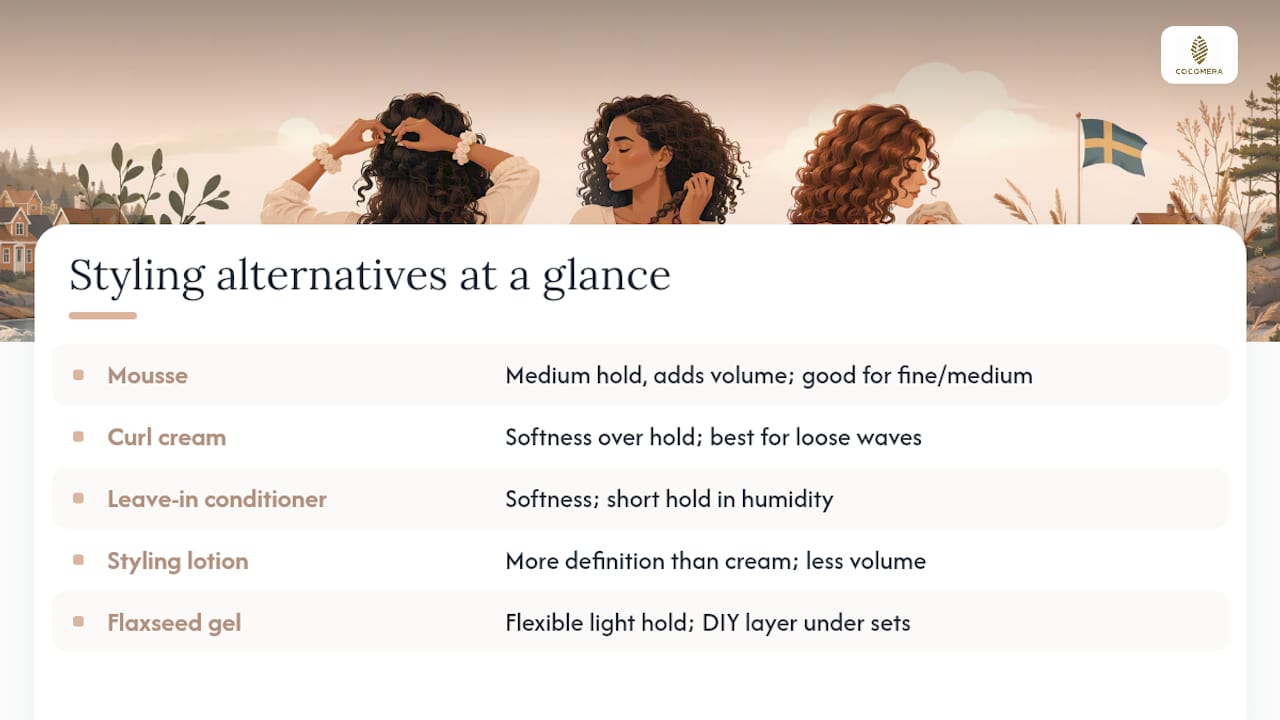
Mousse gives medium hold and real volume with far less crunch than old-school gel formulas. That makes it a strong middle ground for anyone who wants shape without the stiff, crunchy cast traditional gel leaves behind, and it works particularly well for fine or medium hair that gets weighed down easily. A product like Cocomera’s guide to mousse for curls breaks down which formulas suit which density.
Curl cream and leave-in conditioner trade hold for softness. They’re your best bet for loose waves or type 3A/3B curls that just need shape and shine, not a rigid cast, though they rarely hold up past a humid afternoon on their own.
Styling lotion sits between mousse and cream, usually offering a bit more definition than a leave-in without the volume boost of mousse.
Flaxseed gel, a DIY option many curl communities swear by, gives flexible hold without a hard cast. It’s cheap to make at home and works well as a light-hold layer under a set method.
Apply any of these to soaking-wet hair using praying hands (smoothing product between flat palms pressed around a section) or shingling (working small sections individually with a rat-tail comb or your fingers for maximum clump definition). Smaller sections almost always mean cleaner clumps.
Skipping product entirely works too, especially on tighter natural patterns, but expect shorter-lasting definition. Product-free curls tend to lose their shape by midday without a light film-former to hold the clump together.
Heatless Set Methods: Step-By-Step Instructions
When soft hold isn’t enough and you want curls that survive a full day (or a full night’s sleep), heatless set methods physically shape the hair rather than relying on product alone. These techniques dry hair in a curled position, which minimizes both heat damage and frizz compared to hot tools.
-
Silk rod or band method. Section damp hair, wrap each section around a silk rod (or tie with a silk scarf strip), and secure. Silk creates less friction than foam or fabric, which makes it the gentler choice for fine or thin strands prone to breakage.
-
Sock method (the “sock curl”). Roll damp sections around a soft sock, tucking the ends in. This creates tighter, more defined curls than silk rods, making it a solid pick for thicker or coarser hair that needs more grip to hold a shape.
-
Unicorn bun (or “one-bun twist”). Gather damp hair into a single high bun, twisting as you go. This method is fast, adds root lift, and works well for anyone chasing volume over tight ringlets.
-
Braid-outs and twist-outs. Section hair into two to six large braids or twists on damp hair. These set styles impose shape rather than relying on your existing curl pattern, which makes them more reliable than simple application methods on uneven or heat-damaged hair.
-
Finger coils and Bantu knots. For targeted definition, wrap small sections around one finger (finger coils) or twist and coil sections into small knots against the scalp (Bantu knots). Both work well on tighter patterns needing precision.
Timing depends on the method and hair density, but most heatless sets typically require several hours, with many people setting overnight for convenience. Thinner hair sets faster; dense or coarse hair may need the full 8 hours or longer to lock in shape.
-
Silk methods: best for fine hair, moderate curl definition
-
Sock method: best for medium to coarse hair, tighter curls
-
Braid-outs and twist-outs: best for damaged or inconsistent patterns
-
Finger coils and Bantu knots: best for precise, targeted definition
Pro Tip: If your curls unravel within a few hours of taking down a heatless set, your hair was probably too wet going in. Aim for damp, not dripping, before you wrap or roll.
Techniques That Actually Create Curl Clumps
The method you use to apply product matters almost as much as the product itself. Sloppy application spreads product unevenly and breaks up clumps before they even form.
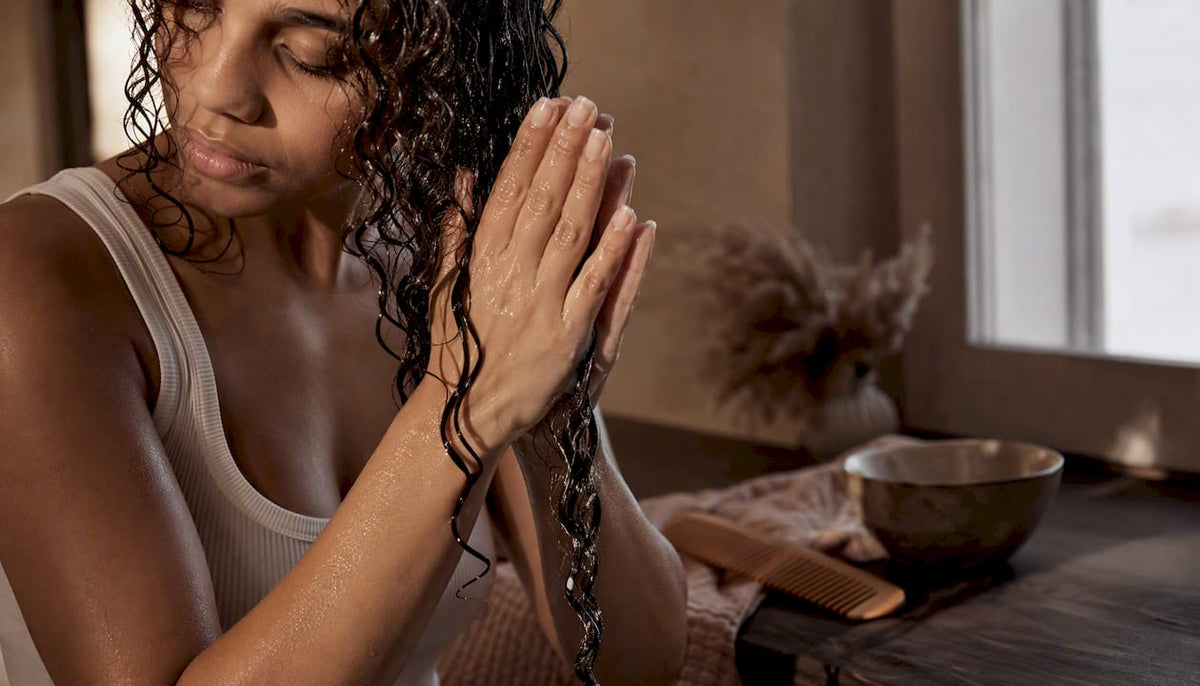
Praying hands means smoothing product through a section by pressing your palms together around the hair, like a prayer gesture, and sliding down the strand. It’s fast and distributes product evenly, which makes it a good first pass before finer detail work.
Shingling takes more time but delivers the sharpest definition. You work small, individual sections (sometimes finger-width) with a comb or your fingers, coating each one and letting it clump on its own before moving to the next.
Scrunching encourages clumps to bunch upward toward the scalp. Cup sections in your palm and squeeze gently upward, repeating until the water stops dripping. Applying too much pressure or scrunching too aggressively can undo the clumping you just created, so keep it gentle.
The bowl method involves flipping your head over a bowl of water and diluted conditioner or curl cream, dunking sections, and scrunching directly in the liquid. It encourages uniform clumping across the whole head and tends to speed up drying since hair isn’t overloaded with product.
-
Praying hands: fast, even distribution, good starting technique
-
Shingling: slower, most precise definition, best for special occasions
-
Scrunching: gentle upward pressure only, stop once dripping slows
-
Bowl method: good for whole-head consistency and lighter product use
Whichever technique you choose, resist the urge to touch your hair while it dries. Curls are at their most fragile wet, and repeated touching breaks apart clumps before the cuticle has a chance to set, undoing everything the application step just built.
Drying and Preserving Curls Without Crunch
How you dry curls matters as much as how you style them. A rushed or rough drying process can undo an hour of careful shingling in minutes.
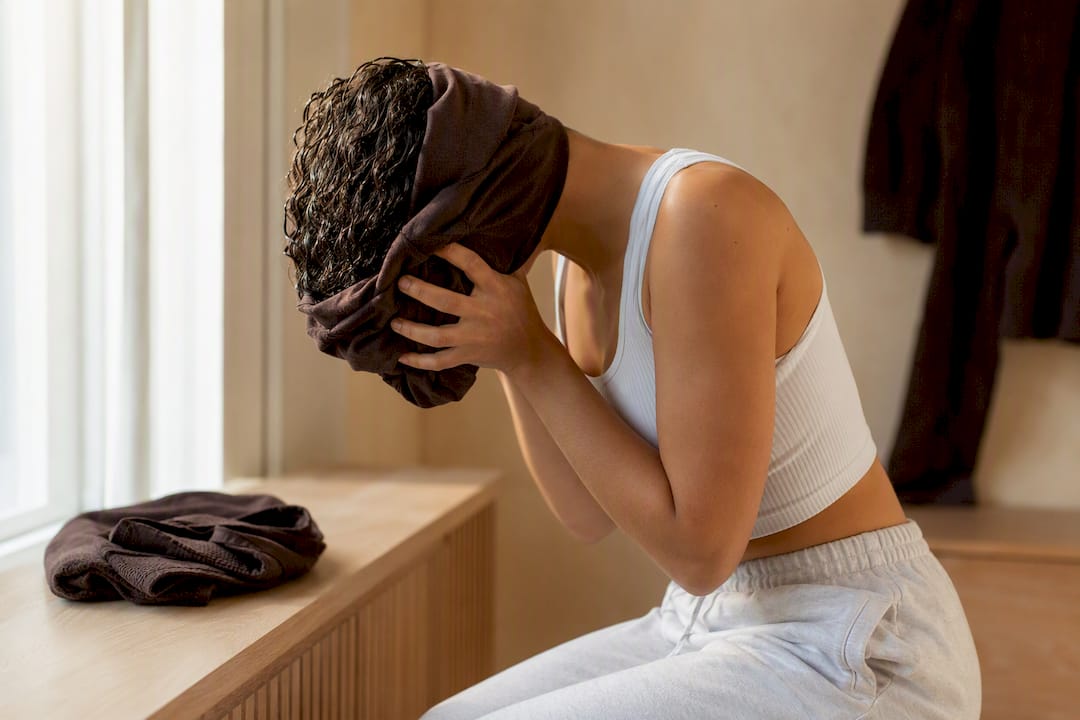
Micro-plopping involves flipping wet hair into a microfiber towel or cotton T-shirt and letting it sit for 10 to 20 minutes to absorb excess water before you do anything else. Microfiber and cotton T-shirt material causes far less frizz than a regular terrycloth towel, which roughs up the cuticle and creates fuzz.
Diffusing works best on low airflow and low to medium heat. Cup sections in the diffuser bowl and hold them against the scalp rather than moving the dryer around, which disturbs curl clumps mid-dry. Less movement equals less frizz.
For air drying without a diffuser, the same hands-off rule applies: set it and step away.
Overnight protection depends on hair length and how much you move in your sleep. Options include:
-
A satin or silk bonnet, best for shorter hair or tighter coils
-
A satin pillowcase, lower effort, good for longer or looser waves
-
Pineappling (a loose high ponytail at the crown) to preserve root volume
-
Loose twists for anyone who wants curls reshaped, not flattened, by morning
Satin and silk reduce the friction that causes frizz and breakage far more than cotton, which is why a mulberry silk pillowcase is worth the upgrade if you sleep on your curls often. More detail on nighttime routines is in Cocomera’s guide to protecting hair overnight.
Humidity is the honest limit here. Gel-free hold usually softens faster in damp weather than a gel cast does, so keep expectations realistic and carry a small spray bottle for quick refreshes rather than expecting all-day, all-weather hold.
Why Didn’t My Curls Turn Out? Fixing Common Mistakes
Curl clumps that fall apart within an hour usually point to one of two problems: sections that were too large, or product that was too light for the hair’s texture. Smaller sections and slightly heavier film-formers, meaning more mousse or flaxseed gel per section, almost always produce more consistent clumping on uneven curl patterns, while bigger sections tend to relax into looser waves instead of defined curls.
Fine or thin hair does best with silk-based set methods and light mousses. Heavy curl creams or butters will weigh fine strands flat within hours, so lean toward Cocomera’s lighter options, detailed in the type 3 curl guide, rather than richer formulas built for coarser textures.
Thick or coarse hair generally needs more structure, not less. Braids, twists, or a tightly wrapped sock method hold shape better than a light mousse alone, and pairing a set style with a stronger lightweight film-former like mousse or flaxseed gel extends how long the definition lasts.
-
Clumps unraveling fast: use smaller sections, more product, or switch to a set style
-
Frizzy roots but defined ends: try pineappling or a looser overnight wrap
-
Flat curls by midday: swap curl cream for mousse or try a heatless set instead
-
Refresh without a full rewash: mist lightly with water, scrunch, and let air dry
Cocomera’s Take: Matching Products to the Right Method
The curated hair care focuses on wavy, curly, coily, and afro textures, with products chosen to suit specific curl patterns and techniques rather than a one-size-fits-all approach.
For readers building a gel-free routine, a few pairings come up again and again:
-
Lightweight mousses and curl controls suit soaking-wet application and hands-off drying
-
Whipped texturizers work well after a heatless set to soften any stiffness in the finished curl
-
Trial and travel kits let you test two or three products across a few wash days before committing to full sizes
The type 3 curl guide and mousse breakdown both expand on the techniques covered above, with more specifics on application order and product layering for different curl densities.
Soft Hold or All-Day Hold? A Perspective on Trade-Offs
Soft, touchable curls and long-lasting definition rarely come from the same wash day. Product-and-air-dry gives you hair you can actually run your fingers through; heatless sets give you hold that survives a humid commute but takes more overnight planning. Pick one variable to test per wash, track what actually holds past hour six, and let the results decide your routine instead of guesswork. Trial kits make testing options cheap and low-risk.
— Cocomera
Cocomera Starter Picks to Try First
If you’re building a gel-free routine from scratch, three products cover most of what this guide walks through. The Bounce Curl Curly Trial & Travel Kit is the lowest-risk way to test several formulas across a few wash days before buying full sizes, which matters when curl products can be hit or miss on any given head of hair.
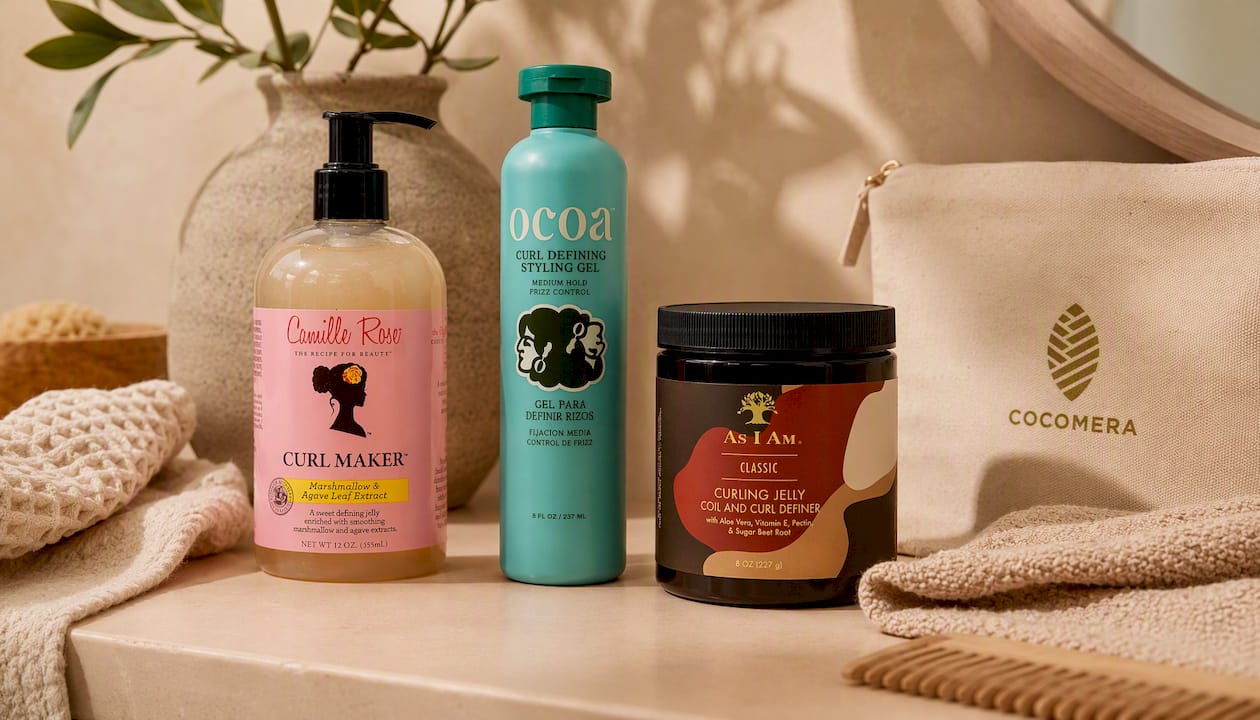
For everyday soft hold without a heavy cast, Innersense Quiet Calm Curl Control applies well on soaking-wet hair using the praying-hands technique and dries touchable rather than stiff. If you want more texture and a slightly matte finish after a heatless set, Innersense Inner Peace Whipped Creme Texturizer softens any stiffness left behind by silk rods or a sock curl.
Start with the trial kit, apply on wet hair using shingling or praying hands, and let the first wash day tell you which formula your curl pattern actually likes. Browse the full curl cream and styling lotion collection for more options once you know what your hair responds to.
Sources
-
Heatless curls (marketplace & method overview) — Etsy listings and guides
-
Locka håret utan värme – 3 enkla metoder steg för steg — Bakom kulisserna
-
How to define curls without gel: 7 easy secrets — NaturalHairCares
FAQ
Is Heatless Curling Bad for Your Hair?
No. Heatless methods like silk rods and sock curls avoid the heat damage associated with curling irons and hot tools, and silk-based options are especially gentle on fine or fragile strands.
How Do You Make Curls Look Natural Without Gel?
Apply a lightweight mousse or curl cream to soaking-wet hair using shingling or praying hands, then dry hands-off or with a low-heat diffuser to avoid disturbing the clumps as they form.
What Is the LOC Method?
LOC stands for Liquid, Oil, Cream, a layering routine where you apply a water-based liquid first, seal it with an oil, then finish with a cream to lock in moisture and definition. It’s commonly used alongside gel-free techniques rather than as a replacement for them.
How Long Do You Leave in a Heatless Curl Set?
Most heatless sets, including silk rods and sock curls, need roughly 6 to 8 hours to fully set, which is why overnight is the most practical timing for most people.
Can You Define Curls With No Product at All?
Yes, though results usually hold for less time than styles using a light mousse or curl cream, especially on looser wave patterns that rely more on product for clump formation.


