


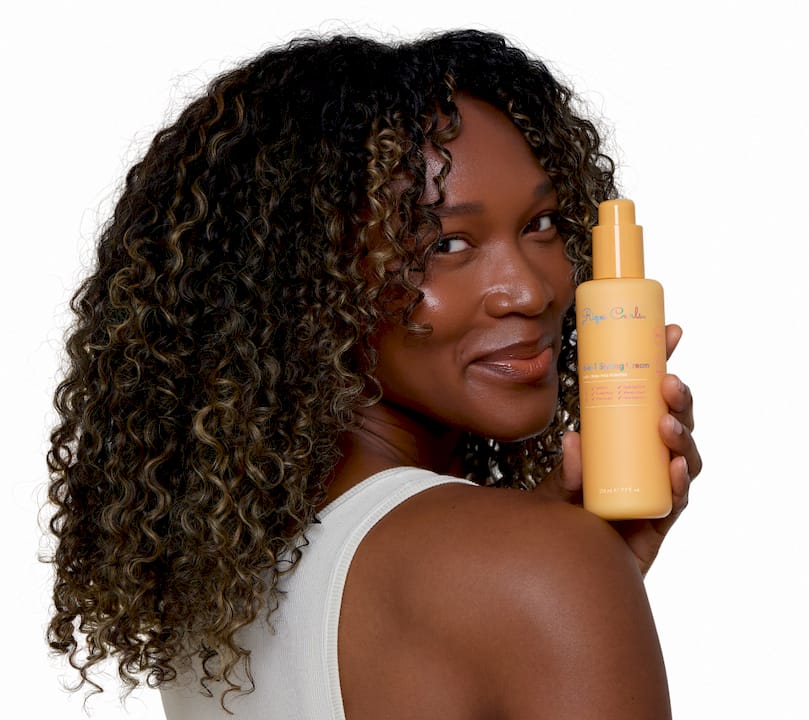
- Moisture retention in curly hair involves applying water-based products first to hydrate and sealing with oils afterward to lock in moisture. Proper layering, gentle handling, and correct cleansing routines are essential to prevent dryness, frizz, and product buildup. A consistent, simplified routine tailored to hair porosity and curl type yields the best long-term moisture retention results.
Moisture retention in curly hair is defined as the ability of the hair strand to absorb water-based hydration and hold it long enough to keep curls soft, defined, and frizz-free. Scalp oils struggle to travel down curls the way they do on straight hair, which means curly and textured hair dries out faster than almost any other hair type. Knowing how to retain moisture in curls is not about using more products. It is about using the right products in the right order, washing at the right frequency, and handling your hair in ways that protect what you put in. This guide covers every step, from cleansing to styling to troubleshooting.
How to retain moisture in curls: why it starts with structure
Curly hair loses hydration faster than straight hair because of its spiral shape. Natural oils produced at the scalp cannot coat the full length of a coiled strand the way they glide down a straight one. The result is that the ends of your curls are almost always the driest part of your hair, regardless of how often you condition.
Environmental factors compound the problem. Hard water deposits minerals on the hair shaft that block moisture from entering. Humidity pulls water out of the hair when the cuticle is open and unprotected. Heat styling without a protective product strips the outer cuticle layer, leaving the strand porous and prone to rapid moisture loss.
The two processes you need to understand are hydration and sealing. Hydration means delivering water into the hair shaft, which requires water-based products. Sealing means locking that water in with an oil or butter applied on top. These are not interchangeable steps. Oils do not hydrate hair. They only seal. Applying oil to dry hair traps dryness inside the strand instead of moisture.
Key factors that accelerate moisture loss in curly hair:
-
Overwashing with sulfate-heavy shampoos strips the scalp’s natural sebum
-
Hard water leaves calcium and magnesium deposits that block the cuticle
-
High heat from blow dryers and flat irons opens and damages the cuticle layer
-
Friction from cotton pillowcases and rough towels breaks the curl pattern and causes frizz
-
Dry detangling tears the hair shaft and destroys curl clumping
What does a good cleansing routine actually look like?
Curly hair thrives with one wash per week, and tighter textures like Type 4 coils can go 10 to 14 days between washes. Washing too frequently strips the natural oils your curls depend on. The right frequency depends on your scalp activity, lifestyle, and how much product buildup you accumulate, not on a fixed schedule.
When you do wash, the cleanser you choose matters as much as how often you use it. Sulfate-free shampoos and co-washes (conditioner-only washes) clean the scalp without aggressively removing the lipid layer that protects each strand. Brands like SheaMoisture, As I Am, and Kinky-Curly all offer sulfate-free options formulated specifically for textured hair.
-
Wet hair thoroughly with lukewarm water before applying any cleanser. Hot water opens the cuticle too aggressively.
-
Apply cleanser to the scalp only, not the length. Let the rinse water carry it down the shaft.
-
Condition from mid-length to ends immediately after rinsing, and leave it on for at least three to five minutes.
-
Deep condition once a week or every two weeks with a treatment that matches your porosity. Low porosity hair needs lighter, heat-activated formulas. High porosity hair benefits from protein-rich, heavier masks.
-
Rinse with cool water to close the cuticle and lock in the conditioner’s work.
Low and high porosity hair require distinct product weights and formulations. A heavy deep conditioner on low porosity hair will sit on top of the strand rather than absorb, leaving curls greasy and limp. Matching your conditioner to your porosity is one of the most overlooked steps in curly hair care. You can find a curated selection of conditioners by curl type at Cocomera, organized to make that match easier.
Pro Tip: If your hair feels mushy or loses definition right after conditioning, you are over-conditioning. Cut your deep conditioning time in half and reassess. Over-conditioning causes curls to expand and lose shape because styling products cannot bond effectively to oversaturated hair.
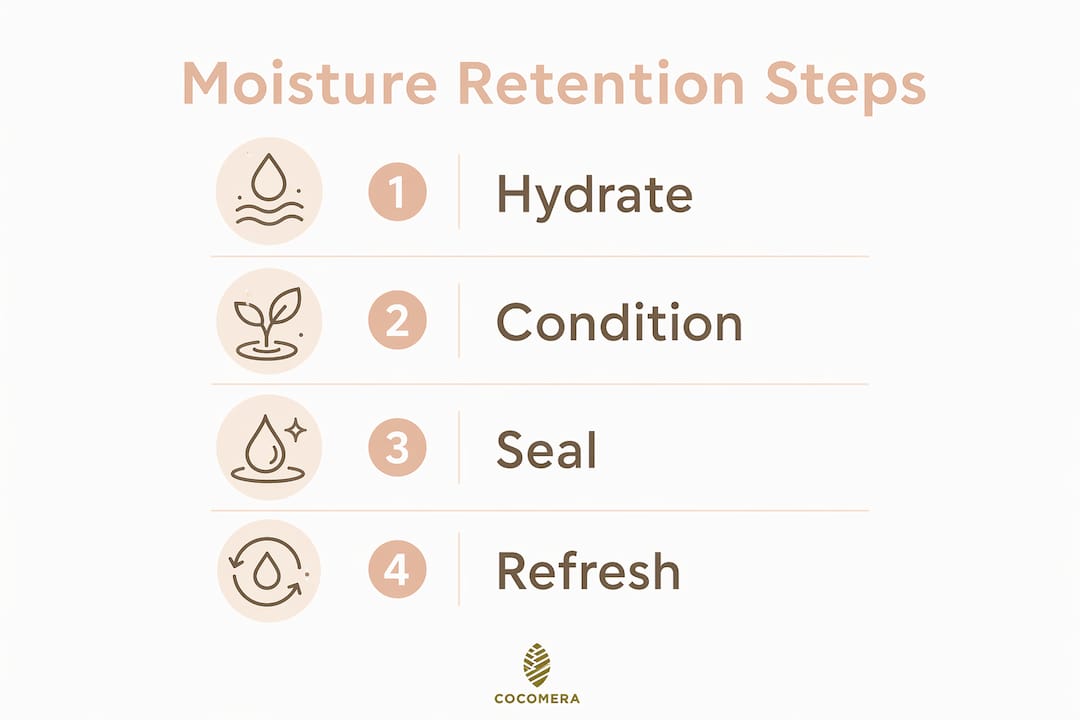
How should you layer products to lock in hydration?
Product layering is the single most effective technique for keeping curls hydrated between wash days. The sequence follows a simple logic: water in first, then hold, then seal.
| Layer | Product type | Purpose |
|---|---|---|
| First | Water-based leave-in conditioner | Delivers hydration directly into the hair shaft |
| Second | Curl cream or styling gel | Provides hold and creates a protective barrier against humidity |
| Third | Lightweight oil or butter | Seals moisture inside the strand and adds shine |
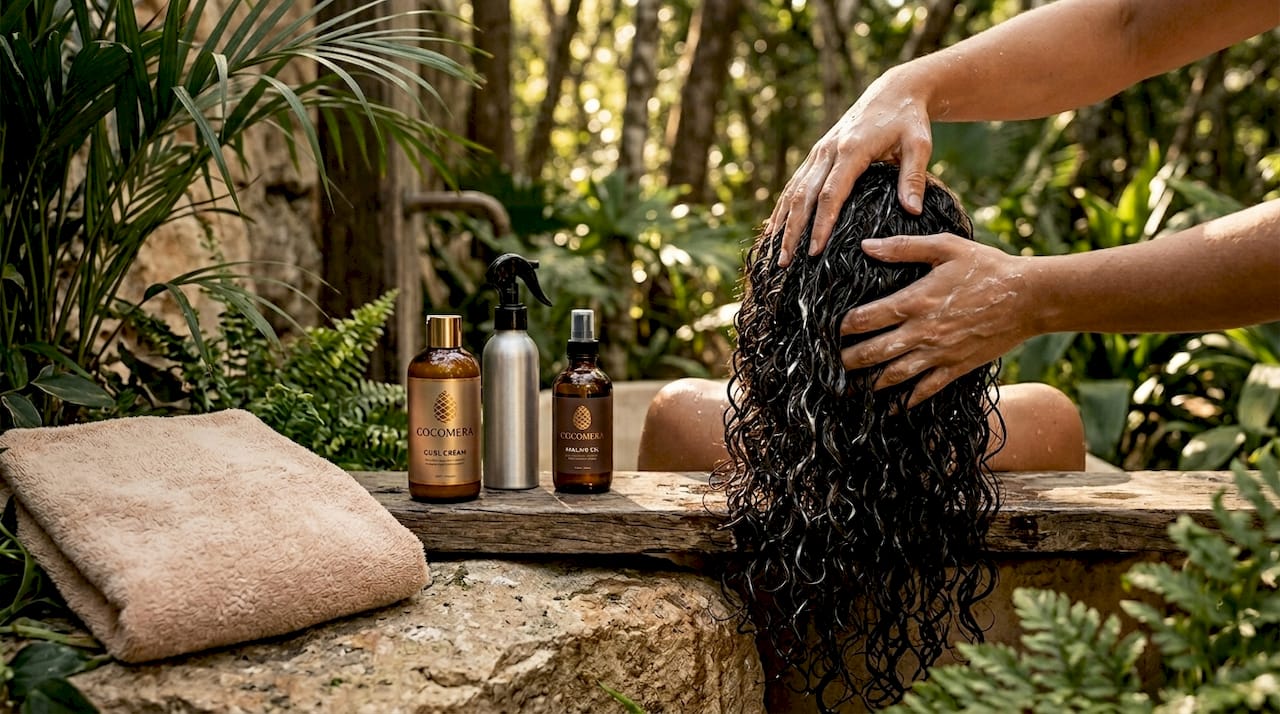
Start with a leave-in conditioner applied to soaking wet hair. Wet application is not optional. The water already in the strand is what the leave-in locks in. Applying it to dry hair gives you far less benefit because there is nothing to seal inside.
Follow with a curl cream or gel. These products form a film around each strand that resists humidity and holds the curl pattern in place as the hair dries. The Moisture-Hold Balance Framework developed by curl specialists explains that conditioning builds cumulatively across every step, so the hold product you choose must balance that moisture load. Too much conditioning with too little hold gives you soft but undefined curls. Too much hold with too little moisture gives you crunchy, brittle ones.
The final layer is a sealing oil applied over the styled curl. Lightweight oils like argan, jojoba, or sweet almond work well for fine to medium curls. Heavier butters like shea or mango butter suit coarser, drier Type 4 textures. The science behind hair sealing is straightforward: the oil sits on top of the cuticle and slows the rate at which water evaporates from the strand.
Pro Tip: For mid-week refreshes, skip the full product stack. A light mist of water followed by a small amount of leave-in is enough to reactivate curl definition without causing product buildup that blocks future moisture absorption.
Gentle handling techniques that preserve curl moisture
How you touch your hair matters as much as what you put on it. Rough handling breaks the curl clumps that hold moisture in and creates frizz that signals moisture loss.
-
Never brush dry curls. Brushing dry hair destroys curl alignment, causes frizz, and breaks the pattern that keeps strands grouped together. Detangle only when hair is saturated with conditioner in the shower, using a wide-tooth comb or your fingers.
-
Ditch the regular towel. Standard cotton towels create friction that roughens the cuticle. Use a microfiber towel or a plain cotton t-shirt to scrunch out excess water gently.
-
Protect your curls at night. A satin pillowcase or a silk scarf reduces friction while you sleep, which is when most mechanical damage occurs. Pineappling (loosely gathering hair at the top of your head) before bed preserves curl shape overnight.
-
Leave your hair alone while it dries. Touching curls while they are wet breaks the clumps and causes frizz. Let the gel cast form completely before you scrunch it out.
-
Scrunch out the cast correctly. A properly formed gel cast protects the curl pattern during drying. Once hair is fully dry, scrunch it with a drop of oil in your palms to break the cast and reveal soft, defined curls that last longer than air-dried curls without gel.
Troubleshooting common moisture retention problems
Recognizing whether your curls are dry or over-moisturized is the first step to fixing the problem. Dry curls feel rough, look dull, and frizz immediately on contact with air. Over-moisturized curls feel limp, lose definition quickly, and do not hold a style.
-
Frizz on dry hair usually means the cuticle is open and unprotected. Add a gel or cream layer to your routine to create a humidity barrier.
-
Limp, undefined curls after conditioning signal over-moisturizing. Reduce your deep conditioning frequency or switch to a lighter formula.
-
Product buildup blocks new moisture from entering the strand. Use a clarifying shampoo once a month to reset the hair shaft. After clarifying, follow immediately with a deep conditioning treatment to restore what the clarifier removed.
-
Seasonal dryness in winter requires heavier products and more frequent deep conditioning. In summer, lighter layers prevent sweat from mixing with heavy butters and causing buildup.
Before swimming, wet your hair with clean water and apply a lightweight protective product. Pre-wetting prevents chlorine and salt water from soaking into the strand, which would strip your curl’s moisture completely.
Key takeaways
Retaining moisture in curly hair requires hydrating with water-based products first, sealing with oils second, and protecting the strand from friction and overwashing at every step.
| Point | Details |
|---|---|
| Hydrate before you seal | Apply water-based leave-in conditioner to wet hair before any oil or butter. |
| Match wash frequency to your hair | Most curls need one wash per week; tighter textures can go up to 14 days. |
| Layer products in sequence | Leave-in, then curl cream or gel, then a lightweight sealing oil. |
| Handle curls gently | Detangle only in the shower with conditioner; use microfiber towels and satin pillowcases. |
| Clarify monthly | Remove buildup with a clarifying shampoo once a month to keep the cuticle open to moisture. |
What Cocomera has learned about moisture and curly hair
The most common mistake we see is treating moisture retention as a product problem when it is actually a sequencing problem. Customers come to us with shelves full of oils, creams, and masks, yet their curls are still dry. Almost every time, the issue is application order. Oil applied before a leave-in traps dryness inside the strand. A deep conditioner used on low porosity hair without heat sits on the surface and does nothing. The products are fine. The sequence is wrong.
The second thing we have noticed is that consistency beats complexity. A three-step routine done correctly every wash day outperforms a ten-step routine done inconsistently. You do not need every product in the catalog. You need the right three products for your specific porosity and curl type, applied in the right order, at the right frequency.
We also want to push back on the idea that more conditioning is always better. Curls lose definition when over-conditioned because the styling gel cannot grip an oversaturated strand. If your curls look great in the shower but fall flat by the time they dry, reduce your conditioning time before you buy anything new.
Finally, give your routine at least four to six wash days before judging it. Hair responds to change slowly. The routine that will transform your curls in six weeks might look unremarkable after week one.
— Cocomera
Build your moisture routine with Cocomera
Cocomera curates every product in its collection specifically for wavy, curly, coily, and afro hair types, which means you are not sorting through products designed for straight hair to find what works for yours.
Whether you are building a routine from scratch or fixing a specific problem like frizz or dryness, Cocomera’s collections are organized by step and hair type. Explore curl styling products that define and protect, or go deeper with intensive hair treatments formulated for moisture-starved curls. If buildup is blocking your hydration, the strengthening shampoo collection includes sulfate-free options that cleanse without stripping. Every product is chosen because it works for textured hair, not despite it.
FAQ
How often should curly hair be washed for moisture retention?
Most curly hair types retain moisture best with one wash per week. Tighter coil patterns like Type 4 can go 10 to 14 days between washes without moisture loss.
What is the correct order to apply products for curly hair?
Apply a water-based leave-in conditioner to wet hair first, follow with a curl cream or gel for hold, then seal with a lightweight oil. This sequence hydrates, defines, and locks moisture in.
Why do my curls feel dry even after conditioning?
Dry curls after conditioning usually mean either the conditioner is not matched to your porosity, or product buildup is blocking absorption. Try a clarifying shampoo followed by a deep conditioning treatment to reset the hair shaft.
Does oil moisturize curly hair?
No. Oils seal moisture but do not deliver hydration. Applying oil to dry hair without a water-based product underneath traps dryness inside the strand rather than locking in moisture.
How do I protect curly hair from frizz caused by humidity?
Layer a curl cream or gel over your leave-in conditioner to create a barrier that resists external moisture. Mid-week refreshes with a light water mist reactivate the barrier without causing buildup.


