


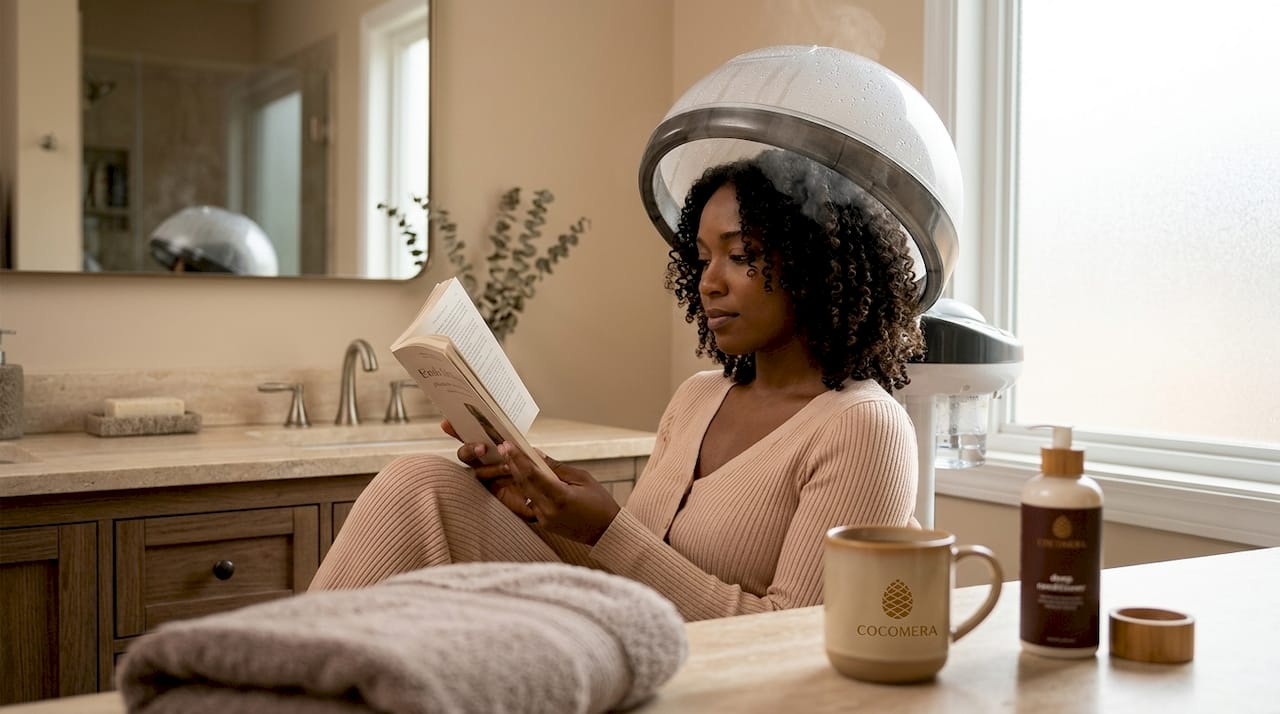
TL;DR:
- Hair steaming gently lifts hair cuticles with warm vapor, enhancing moisture absorption and treatment effectiveness. It benefits textured, low-porosity hair by promoting hydration, curl definition, and scalp health when used appropriately. To avoid damage, steaming should be limited to weekly sessions of 15-20 minutes, with proper product application beforehand.
Hair steaming is one of those techniques that sounds simple but quietly transforms how textured hair holds moisture. At its core, what is hair steaming? It’s the process of applying warm, moist vapor to your hair shaft to deeply hydrate strands, open the cuticle, and help treatments absorb more effectively. If you have wavy, curly, coily, or afro hair, you’ve probably struggled with dryness that no leave-in conditioner seems to fully fix. Steaming addresses that problem at a structural level, and understanding how it works changes the way you build your entire routine.
Table of Contents
- Key takeaways
- What hair steaming actually does to your strands
- Benefits of hair steaming for textured hair types
- Risks and how to steam hair without causing damage
- How to steam hair at home: techniques and product pairing
- Hair steaming vs. deep conditioning and other treatments
- What I’ve learned from years of working with textured hair
- Build your steaming routine with the right products
- FAQ
Key takeaways
| Point | Details |
|---|---|
| Steam lifts cuticles gently | Warm vapor temporarily opens the cuticle so moisture and treatments absorb deeper into the strand. |
| Low-porosity hair benefits most | Tightly closed cuticles in low-porosity hair resist products, and steam is the best tool to change that. |
| Frequency matters | Steaming once a week for 15 to 20 minutes is enough for most hair types to avoid hygral fatigue. |
| Always apply product first | Steaming dry, product-free hair misses the point. Apply your mask or treatment before the steam. |
| Steaming is not deep conditioning | Steam enhances deep conditioning; it does not replace it. They work best together. |
What hair steaming actually does to your strands
To understand why steaming works, you need a quick look at hair structure. Each strand has an outer layer called the cuticle, made up of overlapping scales similar to roof shingles. Beneath that is the cortex, where moisture and protein live. When those cuticle scales are tightly closed, very little gets in or out, which is the defining problem for low-porosity hair.
Steam creates warm, humid conditions that gently lift those cuticle scales, allowing moisture and treatment products to move into the cortex instead of sitting on top of the strand. Critically, this happens at much lower temperatures than a flat iron or blow dryer. You’re not forcing the cuticle open with damaging direct heat. You’re coaxing it with gentle, moist warmth.
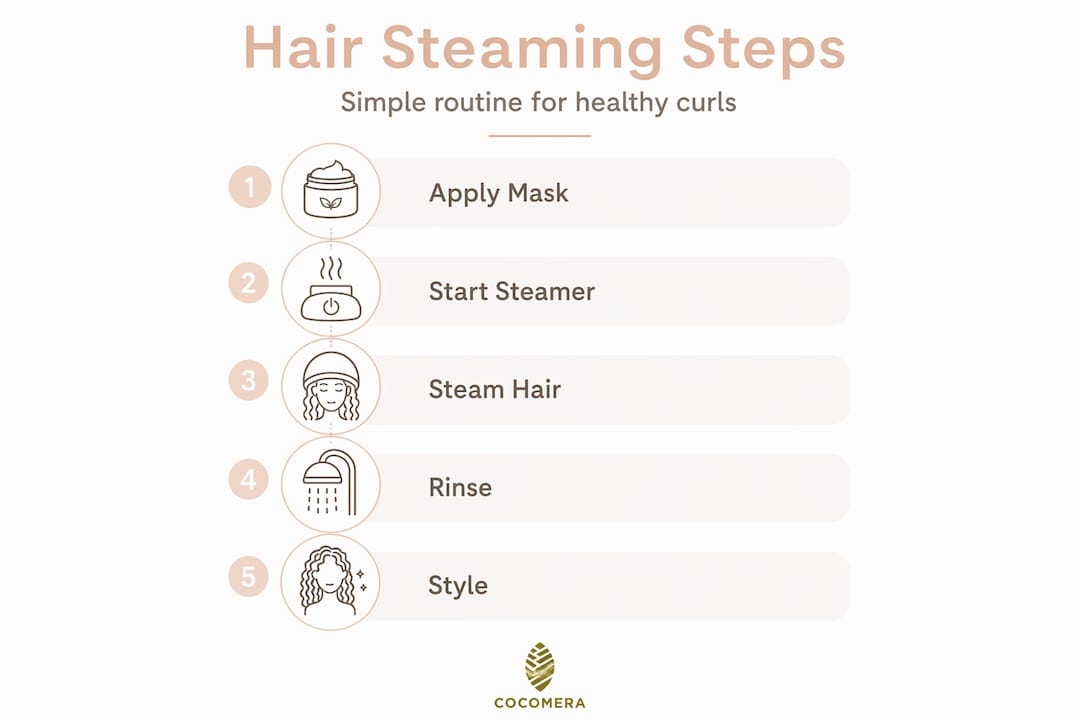
Hair steaming typically applies warm vapor for 15 to 45 minutes depending on your hair’s thickness and dryness. Fine hair sits at the lower end, while thick or very dry coils can benefit from the full duration. The devices used range from professional hooded steamers to handheld facial steamers and even a heated towel wrapped around conditioned hair.
Here’s what happens during a steam session, step by step:
- Warm vapor surrounds the hair and raises the local humidity around each strand.
- The cuticle scales begin to lift slightly in response to the moist heat.
- Any mask, conditioner, or serum applied to the hair is drawn inward as the strand absorbs the moisture.
- When the steam ends and hair cools, the cuticle closes back down, locking in whatever it absorbed.
Pro Tip: Steam is a facilitator, not a treatment. It amplifies what you put on your hair before the session, so always apply a deep conditioning mask or moisturizing treatment first.
Benefits of hair steaming for textured hair types
Textured hair, especially Type 3 and Type 4 coils, has a naturally elliptical or spiral shape. That shape makes it harder for the scalp’s natural oils to travel down the strand, which is why dryness is such a persistent challenge. Steaming directly addresses this by delivering moisture from the outside in.
“Steam acts as a facilitator for deeper conditioner absorption, especially beneficial for low-porosity hair types struggling with hydration.” Helmet Salon
Steaming is especially beneficial for low-porosity hair, which has tightly closed cuticles that actively resist moisture. If you’ve ever noticed conditioner pearling up on your hair instead of absorbing, that’s low porosity in action. Steam temporarily changes that equation. It gives even the most resistant strands a window to actually drink in hydration.
The benefits go beyond moisture absorption:
- Curl definition. Better hydrated strands clump together more naturally, reducing frizz and bringing out your curl pattern without extra product.
- Softness and manageability. Steam reduces the roughness that makes detangling feel like a battle, especially on 4C hair.
- Scalp health. Scalp steaming opens pores, improves circulation, and clears product buildup, which can support healthier follicles over time.
- Reduced itchiness and dryness. For anyone dealing with a flaky or irritated scalp, the moisture from steam offers real relief.
- Longer-lasting moisture. Because hydration reaches the cortex rather than just coating the outside, it lasts longer between wash days.
For coily hair specifically, consistent steaming as part of your wash day workflow can reduce breakage over time. When hair is well-hydrated, it’s more pliable. More pliable strands stretch instead of snap.
Risks and how to steam hair without causing damage
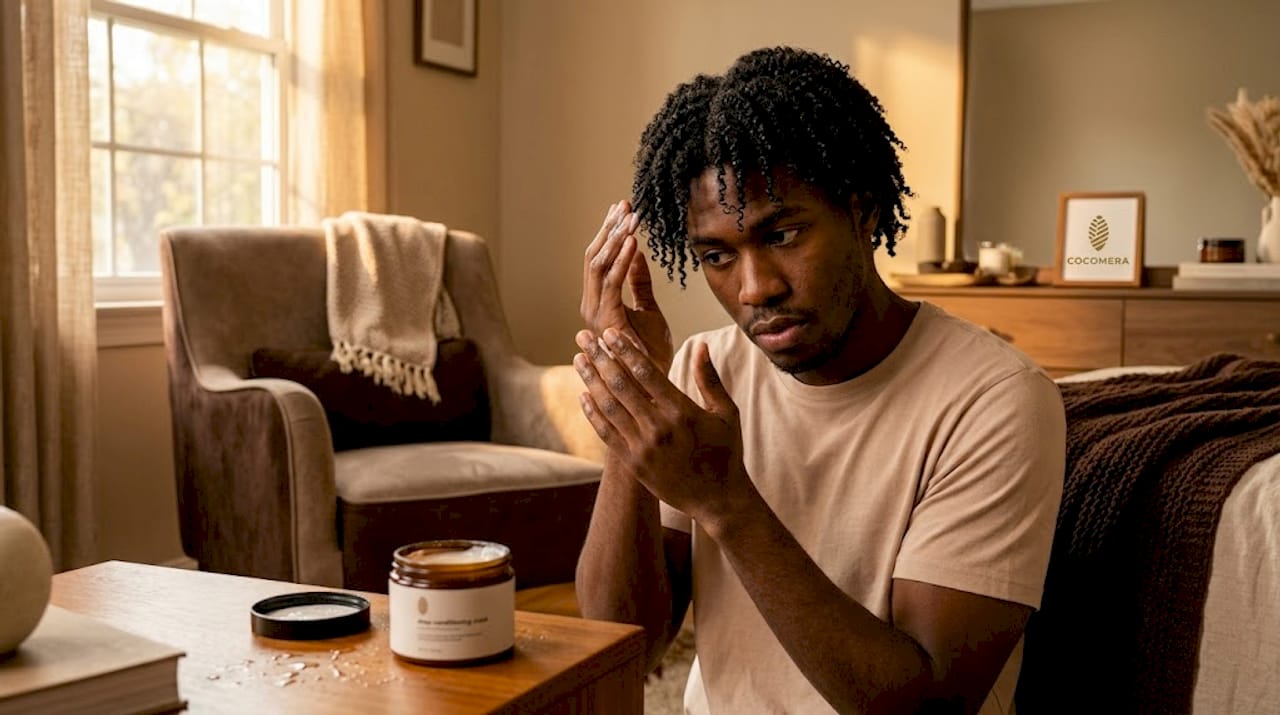
The biggest risk with hair steaming is a condition called hygral fatigue. Repeated swelling and shrinking of the hair strand from excessive moisture exposure weakens the fiber at a structural level. The signs include limp, mushy hair, loss of curl pattern, and increased breakage. This is most common on fine, high-porosity, or color-treated hair.
The good news is hygral fatigue is entirely avoidable with a few simple rules:
- Limit sessions to once a week. Steaming roughly once a week for 15 to 20 minutes is the sweet spot for most textured hair types. More frequent sessions push you into diminishing returns and risk territory.
- Watch your duration. Fine hair should not exceed 15 to 20 minutes. Thick or coily hair can handle up to 30 to 35 minutes. The 45-minute ceiling is for the driest, most porous hair with proper protein balance.
- Balance moisture with protein. If your hair feels mushy or limp after steaming, add a protein treatment to your routine before the next session. Protein strengthens the strand structure so it can handle consistent moisture.
- Use the right device setting. If you’re using a hooded steamer, keep the temperature at a low to medium setting. The goal is warmth, not heat.
- Avoid buildup. Steaming without removing product buildup first can trap old residue inside the strand. Start sessions on freshly washed hair.
Pro Tip: Pay attention to how your hair feels 24 hours after steaming. Well-steamed hair feels soft, plump, and defined. If it feels weak or overly elastic when wet, cut back on frequency or duration.
How to steam hair at home: techniques and product pairing
Getting results from steaming comes down to preparation and the right product sequence. Here’s how to do it effectively at home:
- Start with clean hair. Shampoo to remove any buildup. Buildup blocks the cuticle from responding to steam and prevents absorption.
- Apply your treatment before any heat. Choose a moisturizing hair treatment or deep conditioning mask and apply it generously to damp hair. Work it in section by section for full coverage.
- Choose your steaming method. A hooded steamer is the most effective option because it surrounds all your hair evenly. A handheld steamer works well for targeting specific sections. No device? Soak a towel in hot water, wring it out, and wrap it around your head for a low-tech but effective alternative.
- Position your hair carefully. All hair must be fully exposed to the steam, including the ends. Improper positioning leaves the ends dry and defeats the purpose of the session.
- Steam for the right amount of time. 15 to 20 minutes for fine or wavy hair, 20 to 30 minutes for curly hair, and up to 35 minutes for coily or very dry hair.
- Rinse or seal. After steaming, you can do a cool water rinse to close the cuticle, then follow with a leave-in and a sealing oil to lock in everything the steam helped deliver.
Choosing the right products to pair with steam
The products you use during steaming matter as much as the technique itself. Steam works best with moisturizing masks or serums already applied, not on bare strands.
| Product type | When to use it | Why it works with steam |
|---|---|---|
| Deep conditioning mask | Before steaming, applied to damp hair | Steam drives the mask deeper into the cortex |
| Hair oil | After steaming, as a sealant | Locks in the moisture the steam delivered |
| Protein treatment | Before steaming if hair feels weak or mushy | Strengthens the strand before moisture floods in |
| Leave-in conditioner | After steaming, before styling | Maintains hydration between steam sessions |
For more guidance on picking the right oils based on your porosity, the breakdown of oils by porosity type is worth reading before your next session.
Hair steaming vs. deep conditioning and other treatments
Steam is not a replacement for deep conditioning. It’s an amplifier. Steam is a treatment tool focused on hydration and product absorption, not the same as the dry heat from a hooded dryer, which dries hair as it processes product.
| Treatment | Heat type | Primary benefit | Best for |
|---|---|---|---|
| Hair steaming | Moist heat | Opens cuticle, boosts absorption | Low-porosity, dry, coily hair |
| Deep conditioning alone | No heat (or body heat) | Conditions surface and cortex | All hair types |
| Heat cap | Dry heat | Activates deep conditioner | Normal to high-porosity hair |
| Hot oil treatment | Warm oil | Seals cuticle, adds shine | Dry, porous, or brittle hair |
Steaming paired with deep conditioning is the most powerful combination for textured hair. Deep conditioning alone on low-porosity hair often means the product sits on top of the strand. Steam changes that by opening the door first.
What I’ve learned from years of working with textured hair
In my experience, the biggest mistake people make with hair steaming is treating it as a cure-all rather than one tool in a larger system. I’ve seen people add weekly steaming to a routine that’s already overloaded with moisture, and then wonder why their curls feel like wet noodles. The hair wasn’t asking for more moisture. It needed protein, and steaming was pushing it further out of balance.
What I’ve found actually works is learning your hair’s response before committing to a frequency. Steam once, wait 48 hours, and assess. Does your hair feel plump and defined, or soft and limp? That tells you more than any general recommendation can.
I also think steaming gets undersold as a scalp treatment. Most conversations focus on the strands, but the scalp benefits are real and noticeable. A monthly scalp steam session, even just from a hand steamer, makes a difference in dryness and circulation, especially through colder months.
The self-care dimension of steaming is something I genuinely value. Sitting under a steamer for 20 minutes with a good mask is a built-in pause in the week. That consistency is what actually moves the needle on hair health over time, not any single product.
— Cocomera
Build your steaming routine with the right products
At Cocomera, we’ve curated the products that make hair steaming genuinely effective for textured hair. Steaming without the right treatments paired in is a missed opportunity. Explore our curly hair treatments for deeply moisturizing masks, conditioners, and serums formulated specifically for Type 2, 3, and 4 hair. Our selection of hair masks for curly hair includes options for every porosity level and curl type, so you’re not guessing. After your steam session, seal everything in with a finishing oil or styling products that support moisture retention and curl definition through your next wash day.
FAQ
What is hair steaming, exactly?
Hair steaming is the application of warm, moist vapor to the hair for 15 to 45 minutes to open the cuticle, improve hydration, and boost the effectiveness of conditioning treatments.
Is hair steaming good for all hair types?
Steaming benefits most hair types, but it’s especially effective for low-porosity and coily hair. High-porosity or fine hair should limit sessions to avoid hygral fatigue.
How often should you steam your hair?
Once a week for 15 to 20 minutes is the standard recommendation for most textured hair types. Fine or high-porosity hair may do better with every two weeks.
What is the difference between hair steaming and deep conditioning?
Deep conditioning adds moisture and nutrients to the strand. Steaming opens the cuticle so those treatments absorb more deeply. They work best when used together in the same session.
Can you steam your hair without a steamer?
Yes. A towel soaked in hot water and wrapped around conditioned hair mimics the effect of a steamer. It’s less precise but still more effective than no heat at all during a deep conditioning session.


