


TL;DR:
- Damaged curl patterns result from broken disulfide bonds and weakened keratin proteins inside the hair strand. This damage causes curls to loosen, lose definition, or change texture permanently, especially from heat, chemicals, and mechanical stress. Recovery depends on maintaining a balanced routine of protein and moisture while limiting further mechanical and heat damage.
A damaged curl pattern is defined as a structural alteration inside the hair strand where broken disulfide bonds and denatured keratin proteins cause curls to loosen, lose definition, or change texture permanently. This is the technical term hair professionals use: structural curl damage. For people with textured hair, types 2, 3, and 4, understanding what is a damaged curl pattern means recognizing that the change you see on the outside reflects a breakdown happening deep inside the strand. Heat, chemical treatments, mechanical stress, and environmental exposure are the four primary causes. The good news is that identifying the problem early gives you real options for healthy curl maintenance before damage becomes irreversible.
What is a damaged curl pattern, and what causes it?
A damaged curl pattern occurs when the internal protein architecture of the hair strand is compromised. Hair gets its curl shape from disulfide bonds, which are sulfur-to-sulfur connections inside the cortex of each strand. When those bonds break, the strand loses its ability to hold its natural curl formation.
Keratin is the structural protein that makes up most of the hair shaft. Heat, harsh chemicals, and physical stress all denature keratin, meaning they unfold and weaken the protein chains that keep curls intact. Once keratin is denatured at high enough temperatures or concentrations, no conditioning treatment can fully rebuild it. That is the key distinction between dryness, which is reversible, and structural curl damage, which is not.
Curl pattern types range from wavy (type 2) to coily (type 4). Each type relies on the same disulfide bond structure, but tighter curl patterns have more bonds per strand. That makes coily hair both more defined and more vulnerable to bond disruption when stressed. Recognizing your curl type helps you understand how much structural risk each styling choice carries.
How does heat styling affect the curl pattern?
Heat breaks disulfide bonds and denatures keratin proteins, causing permanent changes to curl shape. This is not a gradual softening. Above 300°F (150°C), the damage to bonds essential for curl formation becomes irreversible. That threshold is lower than most people expect, and many flat irons and blow dryers reach it easily.
Moisture plays a critical role here. Heat evaporates the water molecules trapped inside the hair shaft. Those water molecules act as a buffer, keeping the strand flexible and responsive. When they are gone, the strand becomes rigid and brittle. Repeated heat sessions compound this effect, stripping more moisture each time and leaving the cortex increasingly exposed.
The cumulative nature of heat damage is what catches most people off guard. A single flat iron session at high heat may not produce visible curl loss immediately. After several sessions, the curl pattern shifts noticeably. By that point, the structural change is already permanent in the affected sections.
Key heat damage facts:
- Temperatures above 300°F break disulfide bonds irreversibly
- Moisture evaporation reduces strand flexibility and curl bounce
- Cumulative exposure accelerates pattern loss even at moderate temperatures
- Heat protectants reduce damage from drying and styling, minimizing curl disruption
Pro Tip: Apply a heat protectant to every section before any heat tool touches your hair. Choose a product rated for temperatures above 400°F so you have a genuine buffer, not just a light coating.
What are common signs of a damaged curl pattern?
Signs of damaged curls include inconsistent curl formation, brittleness, dryness, frizz, split ends, and resistance to hydration. The most telling sign is inconsistency. Healthy curls form predictable, repeating shapes from root to tip. Damaged curls look stringy in some sections and frizzy in others, with no clear pattern.
Resistance to hydration is a particularly reliable indicator. When you apply a leave-in conditioner or deep conditioning mask and your hair still feels dry within hours, the cuticle layer is too compromised to hold moisture in. Healthy hair absorbs and retains moisture. Damaged hair absorbs it briefly and loses it fast.
Texture changes are another clear signal. Hair that was once soft and springy becomes rough and stiff. Manageability drops sharply. Detangling becomes harder, and breakage increases during styling. These are not signs of a bad product choice. They are signs that the internal structure needs attention.
Signs to check regularly:
- Looser or inconsistent curl formation compared to your baseline
- Brittleness and snapping during gentle detangling
- Persistent dryness even after deep conditioning
- Frizz that does not respond to anti-frizz products
- Split ends appearing more frequently than usual
- Curl clumps that separate into thin, stringy pieces
Pro Tip: Take a photo of your curls every four to six weeks after wash day. Comparing photos over time is the most reliable way to catch pattern changes before they become severe.
Other causes that damage or alter curls besides heat
Chemical treatments are the second most common cause of structural curl damage. Relaxers work by permanently breaking disulfide bonds to straighten the curl. Perms do the same in reverse, reforming bonds into a new shape. Color processing, especially bleaching, raises the cuticle and weakens the cortex. Each of these processes leaves the strand more porous and fragile than before.
Mechanical damage from brushing dry curls and friction from harsh styling practices strips the cuticle layer and disrupts the curl pattern over time. Detangling textured hair while dry creates friction that physically breaks the strand. Cotton pillowcases cause the same problem overnight, pulling and snagging curls repeatedly.
Environmental stressors such as UV rays, pollution, and harsh weather contribute to curl damage over time. UV exposure oxidizes the proteins in the hair shaft. Pollution deposits particles on the cuticle that block moisture absorption. Cold, dry air pulls moisture out of the strand, making it brittle.
| Cause | Primary Effect on Curls |
|---|---|
| Heat styling above 300°F | Permanent disulfide bond breakage, curl loss |
| Chemical relaxers and bleach | Cortex weakening, increased porosity |
| Dry brushing and friction | Cuticle damage, breakage, frizz |
| UV and pollution exposure | Protein oxidation, moisture blockage |
| Harsh sulfate shampoos | Oil stripping, dryness, cuticle roughening |
Product misuse also belongs on this list. Harsh sulfate shampoos strip the natural oils that protect the cuticle. Using them daily on textured hair removes the lipid layer that keeps moisture in and environmental damage out. Switching to a strengthening shampoo formulated for curly hair reduces this stripping effect significantly.
How to maintain healthy curls and repair damaged curl structure
Repairing curl structure starts with understanding that protein and moisture must stay in balance. Protein treatments every 4–6 weeks help rebuild hair structure while avoiding brittleness from over-proteinization. Too much protein without enough moisture makes hair stiff and prone to snapping. Too much moisture without protein leaves it limp and unable to hold curl shape.
Modern curl care prioritizes proactive bond protection with products that reinforce disulfide, hydrogen, and salt bonds before damage occurs. This is a shift from the older approach of treating damage after it appears. Bond-building products used consistently during washing and styling maintain structural integrity over time. They are not a cure for existing damage. They prevent new damage from accumulating.
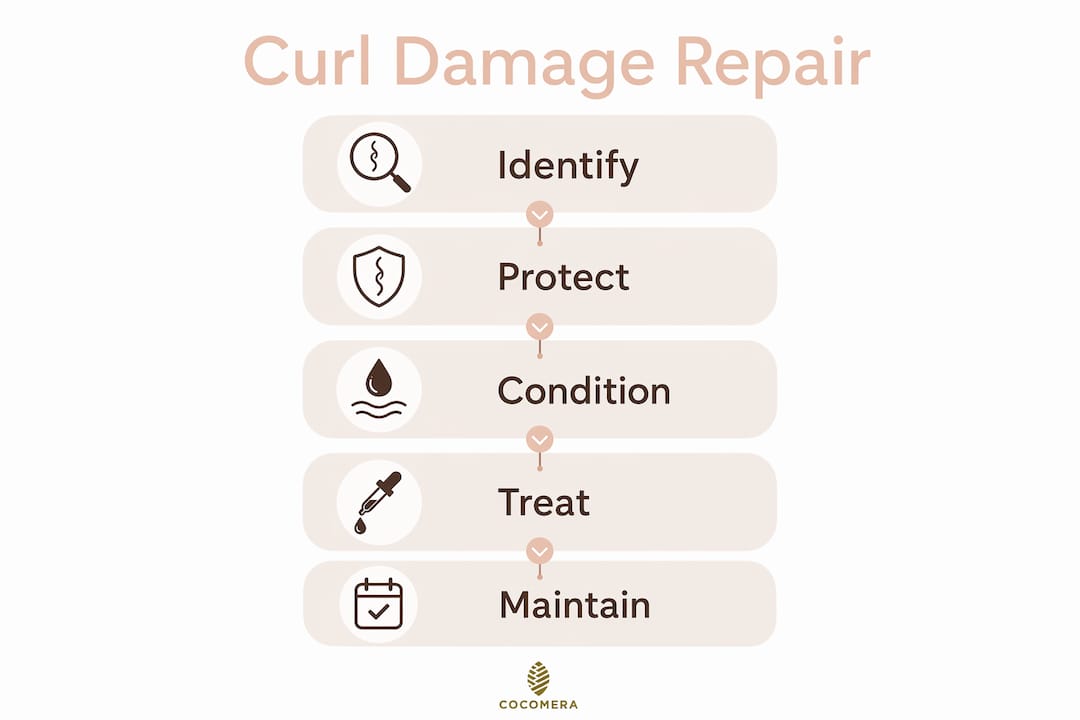
Hydrating and protein-related products work together to smooth the cuticle and protect the cortex, enhancing curl recovery potential. Effective routines combine reconstructors and moisture treatments in a balanced sequence. A typical approach: clarify with a gentle shampoo, follow with a protein treatment, then seal with a deep conditioner. This sequence addresses porosity, structure, and hydration in one wash session.
Practical steps for damaged curls recovery:
- Use a deep conditioning treatment weekly to restore moisture and improve elasticity
- Apply bond-building products during every wash to reinforce structural integrity
- Detangle only on wet, conditioned hair using a wide-tooth comb or fingers
- Trim split ends every eight to twelve weeks to prevent breakage from traveling up the strand
- Protect curls overnight with a satin or silk bonnet or pillowcase
- Limit heat styling to once per week or less, and always use a heat protectant
Pro Tip: Test your hair’s protein and moisture balance with a simple strand test. Wet a single strand and stretch it gently. If it snaps immediately with no stretch, it needs moisture. If it stretches but does not return to shape, it needs protein.
Protective styling also plays a role in damaged curls recovery. Styles that tuck the ends away, like twists, braids, and buns, reduce daily mechanical stress on the most fragile parts of the strand. Protective styles are not a substitute for a solid care routine, but they reduce the rate of new damage while the hair recovers.
Key Takeaways
A damaged curl pattern results from broken disulfide bonds and denatured keratin, and recovery requires consistent protein and moisture balance, proactive bond protection, and reduced mechanical and heat stress.
| Point | Details |
|---|---|
| Structural damage is permanent | Broken disulfide bonds above 300°F cannot be fully restored by any product. |
| Protein and moisture must balance | Protein treatments every 4–6 weeks rebuild structure without causing brittleness. |
| Signs appear before full damage sets in | Inconsistent curl formation and hydration resistance are early warning signals. |
| Multiple causes compound damage | Heat, chemicals, friction, and UV exposure each weaken the curl structure independently. |
| Proactive care outperforms reactive repair | Bond-building products used consistently prevent damage better than post-damage treatments. |
What I have learned from watching curl damage up close
Working with textured hair across types 2, 3, and 4 at Cocomera, the pattern I see most often is this: people wait until their curls are visibly altered before they change anything. By that point, the structural damage is already done in the affected sections. The only real solution is to cut those sections off and grow healthy hair from the root.
The most effective shift I have seen is when people move from reactive to proactive care. That means using bond-building products before damage appears, not after. It means treating heat as a tool with real consequences, not a styling shortcut. Temperatures above 300°F are not a guideline. They are a threshold past which the curl is gone permanently.
The other thing I want to be direct about: patience is not optional in this process. Curl recovery takes months, not weeks. The hair that grows from a well-maintained scalp with a balanced routine will be structurally sound. The damaged sections will not transform. Accepting that distinction makes the recovery process far less frustrating and far more effective.
— Cocomera
Cocomera’s curl care collection for damaged and fragile curls
Restoring a damaged curl pattern takes the right products in the right sequence. Cocomera curates treatments, masks, and shampoos specifically for textured hair types 2, 3, and 4, selected for their ability to address both protein and moisture needs without guesswork.

The hair treatments collection includes protein-rich reconstructors and deep conditioning masks designed to work together in a balanced routine. For wash day, the hair masks range offers targeted moisture and bond support for curls at every stage of recovery. Every product at Cocomera is chosen because it does a specific job for textured hair, not because it sounds good on a label.
FAQ
What is a damaged curl pattern exactly?
A damaged curl pattern is a permanent or semi-permanent change in curl shape caused by broken disulfide bonds and weakened keratin proteins inside the hair strand. It appears as looser, inconsistent, or missing curl formation compared to the hair’s natural baseline.
Can a damaged curl pattern be fully restored?
Structural damage from heat above 300°F or chemical treatments cannot be fully reversed by products. New growth from a healthy routine will have an intact curl pattern, but the already-damaged sections must be trimmed over time.
How often should I do protein treatments for curl repair?
Protein treatments every 4–6 weeks are the recommended interval for rebuilding hair structure. Exceeding this frequency without balancing moisture can cause over-proteinization, making hair stiff and brittle.
What is the fastest way to identify curl damage?
The fastest check is a wet strand stretch test. Healthy hair stretches slightly and returns to shape. Damaged hair either snaps immediately (moisture deficit) or stretches without returning (protein deficit and structural weakness).
Does brushing dry curls cause permanent damage?
Brushing dry curls causes mechanical damage to the cuticle layer and increases breakage, but it does not typically cause the same permanent bond breakage as heat or chemical treatments. Consistent dry brushing does compound damage over time, especially in already-fragile curl patterns.


