



TL;DR:
- Frizz occurs when a raised or damaged hair cuticle allows uneven moisture absorption, causing swelling and separation. Textured hair is naturally more prone to frizz because its curved structure makes its cuticle more likely to lift, especially in humid environments. Proper care matches products and techniques to hair porosity and climate, helping to reduce frizz effectively.
Frizz is defined as the result of a raised or damaged hair cuticle that allows moisture to enter unevenly, causing individual strands to swell and separate. For people with wavy, curly, and coily hair, this is not just an occasional bad hair day. The curved structure of textured hair makes the cuticle naturally prone to lifting, and natural oil distribution along curved strands is far less efficient than along straight ones. Understanding what causes frizz is the first step toward choosing care that actually works for your specific curl type.
What causes frizz at the structural level?
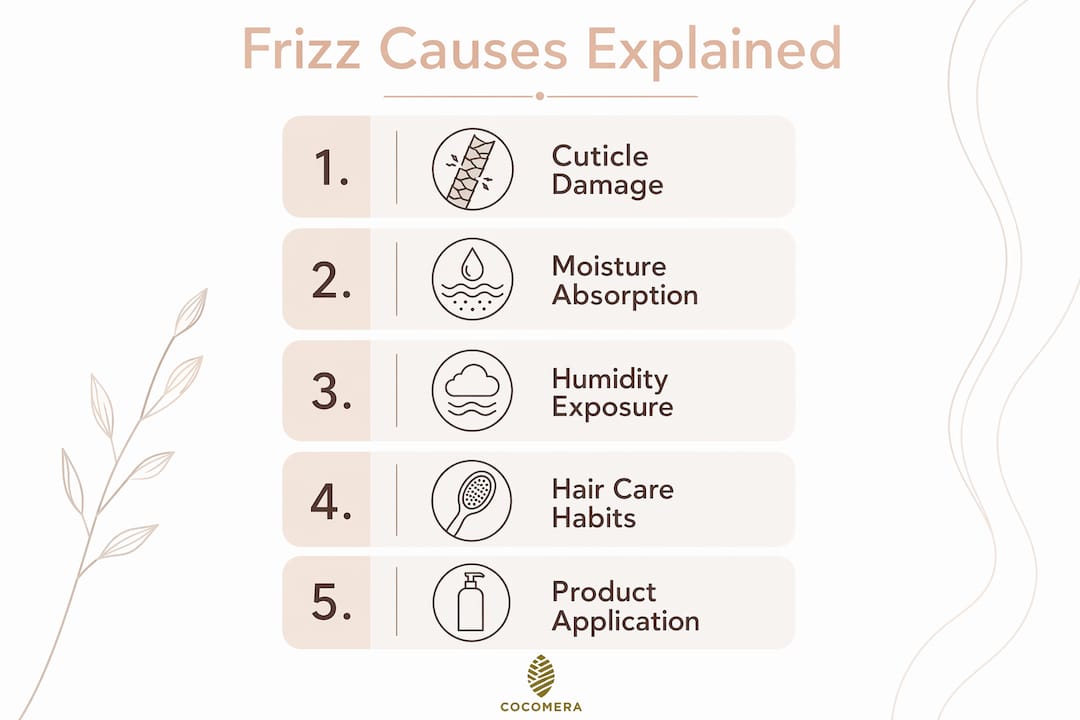
Frizz begins inside the hair shaft. The outer layer of each strand, called the cuticle, is made up of overlapping scales. When those scales lie flat, hair looks smooth and defined. When they lift or crack, the strand becomes porous and absorbs moisture from the air unevenly, causing it to swell in unpredictable directions.
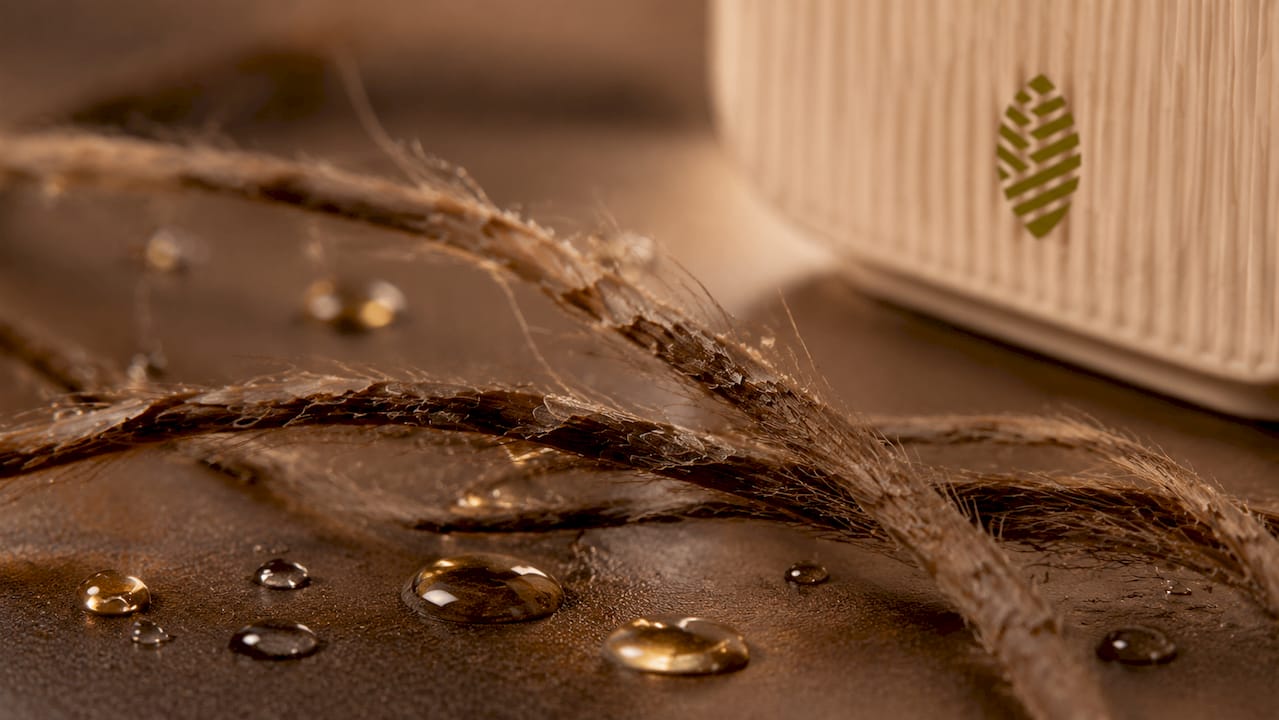
Frizz occurs when the cuticle becomes rough, allowing hair to absorb moisture from humid air and swell. That swelling is what you see as frizz. The more damaged or naturally open the cuticle, the more moisture enters, and the more pronounced the frizz becomes.
Textured hair is especially vulnerable because its coiled shape creates natural points of stress along the strand. Each curve is a spot where the cuticle can lift more easily. This is not a flaw. It is simply the structure of hair types 2, 3, and 4, and it means your care routine needs to account for this reality from the start.
How does humidity affect frizzy hair?
Humidity is the most common trigger for frizz, and the mechanism is straightforward. Water molecules in humid air are absorbed by any raised or open cuticle. Once inside the strand, that water causes the cortex to swell unevenly, which disrupts curl pattern and creates the puffed, undefined look most people recognize as frizz.
High humidity environments cause cuticle swelling above certain thresholds, accelerating frizz in already porous or damaged hair. The higher the humidity, the faster and more severe the swelling reaction.
For textured hair, humidity effects on hair are amplified because the cuticle is already working harder to stay flat. Several environmental factors compound this problem:
- High ambient humidity: Triggers rapid moisture absorption through open cuticles.
- Sun exposure: UV radiation degrades the cuticle’s protective protein layer, making it more porous over time.
- Hard water: Mineral deposits from hard tap water coat the strand and disrupt the cuticle’s ability to lie flat.
- Wind and friction: Physical agitation from wind lifts cuticle scales mechanically, even before moisture enters.
Knowing your local climate matters. In high-humidity environments, anti-humectant products block moisture absorption and are the better choice. In dry climates, humectants that draw moisture into the strand are more appropriate. Using the wrong type can make frizz significantly worse.
Which hair care habits raise the cuticle and cause frizz?
Daily habits are responsible for a large share of frizz problems, and most of the damage is preventable. The cuticle is physically fragile. Anything that creates heat, friction, or chemical stress can lift or crack it permanently.
-
High-heat styling. Heat styling at 180–230°C damages keratin bonds and cracks the cuticle, creating a permanently frizz-prone structure. Heat damage causes irreversible changes to hair protein bonds, which means prevention matters far more than treatment after the fact.
-
Rough towel drying. Rubbing hair with a standard cotton towel creates intense friction against the cuticle. Microfiber towels and silk pillowcases reduce this friction and lower the risk of mechanical damage significantly.
-
Hot water washing. Hot water opens the cuticle aggressively. Washing with hot water and harsh sulfate shampoos strips the scalp’s natural oils and leaves the cuticle raised after rinsing.
-
Chemical treatments. Bleaching and perming break down the cuticle’s protective layers. Repeated chemical processing leaves hair with chronically high porosity, meaning it absorbs and loses moisture rapidly.
-
Brushing wet hair with the wrong tool. Wet hair is at its most elastic and vulnerable. Using a stiff bristle brush on wet textured hair lifts the cuticle and causes breakage. Detangling tools designed for textured hair types reduce this risk considerably.
Pro Tip: Always apply a heat protectant before using any tool above 180°C. A protectant creates a barrier that absorbs thermal stress before it reaches the cuticle.
Hair porosity is the key concept connecting all of these habits. High porosity hair has a cuticle that is already open or damaged, so it absorbs moisture fast and loses it just as quickly. Low porosity hair has a tightly closed cuticle that resists moisture entry. Both types frizz, but for different reasons and with different solutions.
Is frizz always a sign of damage?
No. Frizz is partly a personality trait of naturally textured hair, not always a sign that something has gone wrong. This distinction matters because treating natural frizz the same way you treat damage-related frizz leads to the wrong products and routines.
Curly and coily hair has a structural characteristic that makes the cuticle naturally more prone to lifting at the curves of each strand. Scalp oils travel easily down a straight strand but struggle to coat a tightly coiled one. That lack of natural oil coverage leaves the mid-lengths and ends drier, which means the cuticle in those areas lifts more readily.
- Damage-related frizz shows up as uneven texture, breakage, and strands that no longer hold a curl pattern. It often appears after heat styling, chemical treatments, or prolonged mechanical stress.
- Natural texture frizz is consistent, appears even on healthy hair, and is part of how your curl type expresses itself. It responds well to moisture and sealing products rather than protein treatments.
Understanding which type you are dealing with changes everything. If your hair needs moisture rather than protein repair, loading up on bond-building treatments will not solve the problem. Knowing your hair’s porosity level is the most reliable way to tell the difference.
How to reduce frizz with better techniques and products
Reducing frizz consistently requires addressing both the cuticle’s physical state and the moisture balance inside the strand. No single product does both. A layered approach works best.
Washing technique matters more than most people realize. Using lukewarm water and finishing with a cool rinse helps flatten the cuticle after washing. Apply shampoo only to the roots and scalp. Let the rinse water carry it through the lengths without scrubbing, which prevents unnecessary friction on the cuticle.
Product selection should match your porosity and climate.
- High porosity hair benefits from sealant products like heavier oils and butters that lock moisture inside the strand.
- Low porosity hair responds better to lighter, water-based leave-ins that penetrate the tightly closed cuticle without sitting on top of it.
- In humid conditions, anti-humectants block moisture absorption and prevent the swelling cycle from starting.
- In dry conditions, humectants draw moisture from the air into the strand, which is exactly what you want.
Application technique affects results significantly. Apply serums and oils only to mid-lengths and ends to seal the cuticle where moisture loss is greatest. Applying oils to the roots causes buildup and a greasy appearance without improving frizz control where it counts.
Deep conditioning is the long-term foundation. Topical serums provide temporary surface smoothing, but long-term control requires deep moisturizing to restore cortex hydration and cuticle integrity. A weekly deep conditioning treatment rebuilds internal moisture and protein bonds that daily washing depletes.
Pro Tip: Swap your cotton pillowcase for a satin or silk one tonight. You will notice less frizz and fewer tangles by morning, with zero product required.
The comparison below shows how product type and technique differ by porosity level:
| Hair porosity | Best product type | Application focus |
|---|---|---|
| High porosity | Heavy sealants, butters, oils | Mid-lengths and ends to lock moisture in |
| Low porosity | Light water-based leave-ins | Warm steam or heat cap to open cuticle first |
| Normal porosity | Balanced creams and gels | Even distribution from roots to ends |
Key Takeaways
Frizz in textured hair is caused by a raised cuticle that absorbs moisture unevenly, and managing it requires matching your products and techniques to your hair’s porosity level and climate.
| Point | Details |
|---|---|
| Cuticle is the root cause | Raised or damaged cuticle scales allow uneven moisture absorption, which causes frizz. |
| Humidity accelerates frizz | Anti-humectants block moisture in humid climates; humectants help in dry ones. |
| Daily habits damage the cuticle | Heat above 180°C, rough towel drying, and hot water washing all lift or crack the cuticle. |
| Natural frizz is not damage | Curly and coily hair frizzes naturally due to oil distribution challenges, not always breakage. |
| Deep conditioning is the long-term fix | Surface serums smooth temporarily; only deep conditioning restores internal moisture and structure. |
Frizz and textured hair: what I’ve learned from working with curls
The most common mistake I see is treating frizz as a problem to be eliminated rather than a signal to be understood. When someone with type 4 hair comes in frustrated after trying every serum on the market, the issue is almost never the product itself. It is that they are fighting their hair’s natural structure instead of working with it.
Frizz that appears consistently, even on freshly washed and conditioned hair, is usually the hair expressing its texture. That kind of frizz responds to moisture, sealing, and gentle handling. Frizz that appears suddenly, or in patches, or alongside breakage, is a different story. That is the hair telling you something in your routine is causing damage.
The other pattern I see constantly is applying oils to the roots. It feels intuitive. The scalp is where oil comes from naturally. But for textured hair, the scalp produces enough oil on its own. Adding more there creates buildup that weighs down curls and blocks the scalp. The cuticle needs sealing at the ends, not the roots.
One more thing worth saying directly: heat damage is permanent. A heat protectant reduces the risk, but no treatment reverses a cracked cuticle or a broken keratin bond. The people with the healthiest textured hair I have worked with are the ones who made peace with air drying and low-heat techniques years ago. Their hair is not perfect. It is just genuinely healthy, and healthy hair frizzs far less.
— Cocomera
Cocomera’s picks for frizz-prone textured hair
Frizz control starts with the right products, and finding them for textured hair used to mean hours of research across dozens of brands.
Cocomera curates styling products for curly hair specifically chosen for wavy, curly, coily, and afro hair types, including leave-ins, curl creams, and anti-frizz serums formulated for high and low porosity hair. The range also includes strengthening shampoos that cleanse without stripping natural oils, and hair treatments designed to restore moisture and protein balance over time. For tools, Cocomera stocks brushes and combs built to detangle textured hair with minimal cuticle damage. Every product is selected with curl types 2, 3, and 4 in mind, so you spend less time guessing and more time seeing results.
FAQ
What is the main cause of frizzy hair?
Frizz is caused by a raised or damaged hair cuticle that absorbs moisture from the air unevenly, causing strands to swell and separate. Textured hair is especially prone because its curved structure makes the cuticle harder to keep flat.
Why is my hair frizzy even when it’s not humid?
Frizz in low humidity is usually a sign of high porosity or moisture imbalance inside the strand. Damaged cuticles from heat styling, chemical treatments, or rough handling cause frizz regardless of weather conditions.
Does humidity always make frizz worse?
Humidity worsens frizz when the cuticle is already raised or damaged, because the hair absorbs airborne moisture and swells. Using an anti-humectant product in humid conditions creates a barrier that blocks this moisture absorption.
What is the difference between frizz and breakage?
Frizz is a cuticle-level issue where strands swell and separate, while breakage involves the strand actually snapping due to structural weakness. Frizz is often manageable with moisture; breakage requires protein repair.
How do I choose the best products for frizz on textured hair?
Match your product to your hair’s porosity level. High porosity hair needs heavy sealants like butters and oils applied to the ends. Low porosity hair responds better to lightweight, water-based leave-ins used with gentle heat to open the cuticle.


