


TL;DR:
- Curl training guides natural curls to form better through specific styling and moisture techniques without changing hair biology. Most people notice improvements within 8 to 12 weeks of consistent practice, focusing on handling hair while wet and maintaining moisture balance. Proper technique, patience, and suitable products are essential for achieving defined, frizz-free curls.
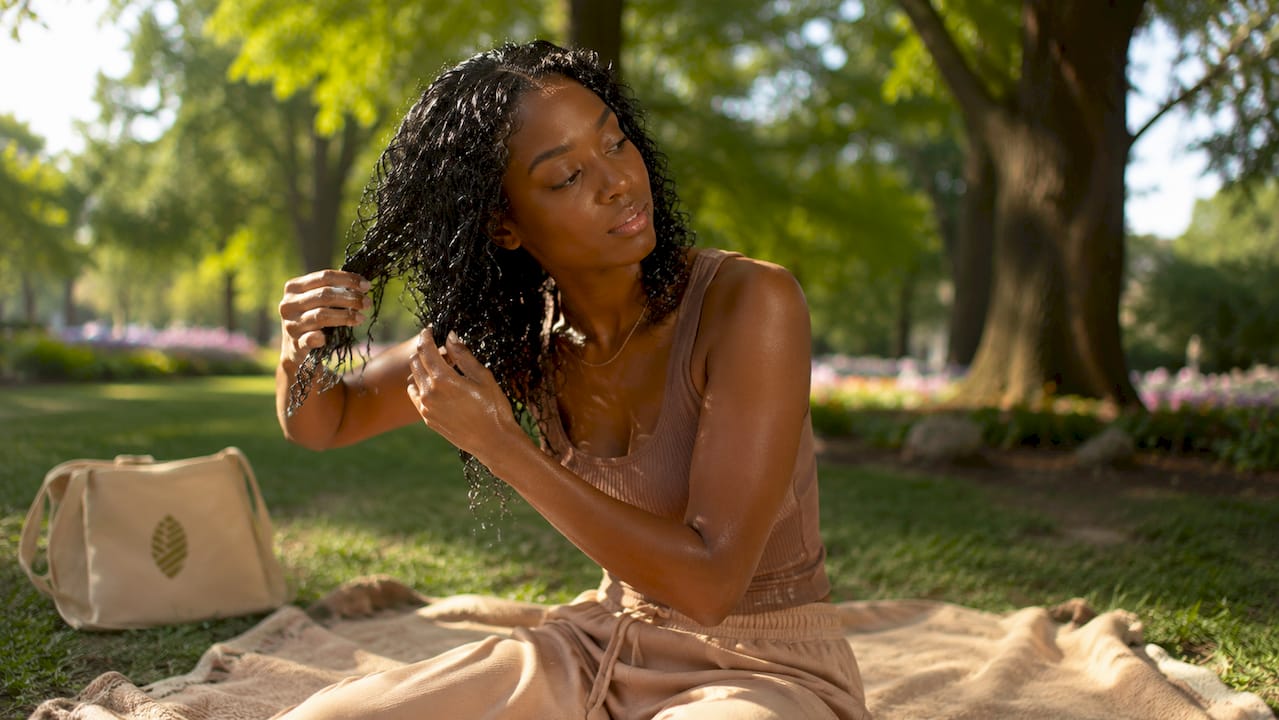
Curl training is the practice of guiding your natural curls to clump and define better through specific mechanical styling techniques and consistent moisture care. It does not change your hair’s biology. Instead, it teaches healthy strands to follow their natural curl pattern more reliably. If your curls look undefined, frizzy, or inconsistent, curl training gives you a repeatable method to fix that. Most people see real improvement within 8–12 weeks of consistent practice.
What is curl training, and how does it work?
Curl training is defined as a set of styling and moisture techniques that encourage your hair’s existing curl pattern to form with more consistency and definition. The industry also refers to this practice as curl pattern training or curl method styling. Both terms describe the same process: working with your hair’s natural structure rather than against it.
Your hair’s curl shape starts at the follicle. Curly and coily hair grows from an oval or hook-shaped follicle, which causes the strand to spiral as it grows. That shape also affects how sebum travels down the shaft. Because the strand curves, natural oils from the scalp cannot coat the full length easily. This leaves curly hair drier and more prone to breakage than straight hair.
Curl memory is the hair’s capacity to return to its natural shape after being stretched or disturbed. Healthy hair with good moisture levels clumps and defines well. Damaged or dry hair loses that memory and produces frizz instead of defined curls. Curl training works by restoring and reinforcing that memory through repeated, gentle styling.
Understanding your curl pattern type matters here. Hair types 2 (wavy), 3 (curly), and 4 (coily) each respond differently to moisture and styling methods. Knowing your type helps you choose the right techniques and products from the start.
Key biological factors that affect curl training results:
- Follicle shape: Determines the tightness of your curl pattern
- Porosity: Controls how well your hair absorbs and retains moisture
- Density: Affects how much product you need and how long drying takes
- Curl memory: Reflects overall hair health and moisture balance
Common curl training techniques that actually work
The most effective curl training methods rely on how and when you handle your hair, not just what products you use. Physical handling is as important as products. The goal is to encourage curl clumping while the hair is wet and then leave it completely alone until it dries.
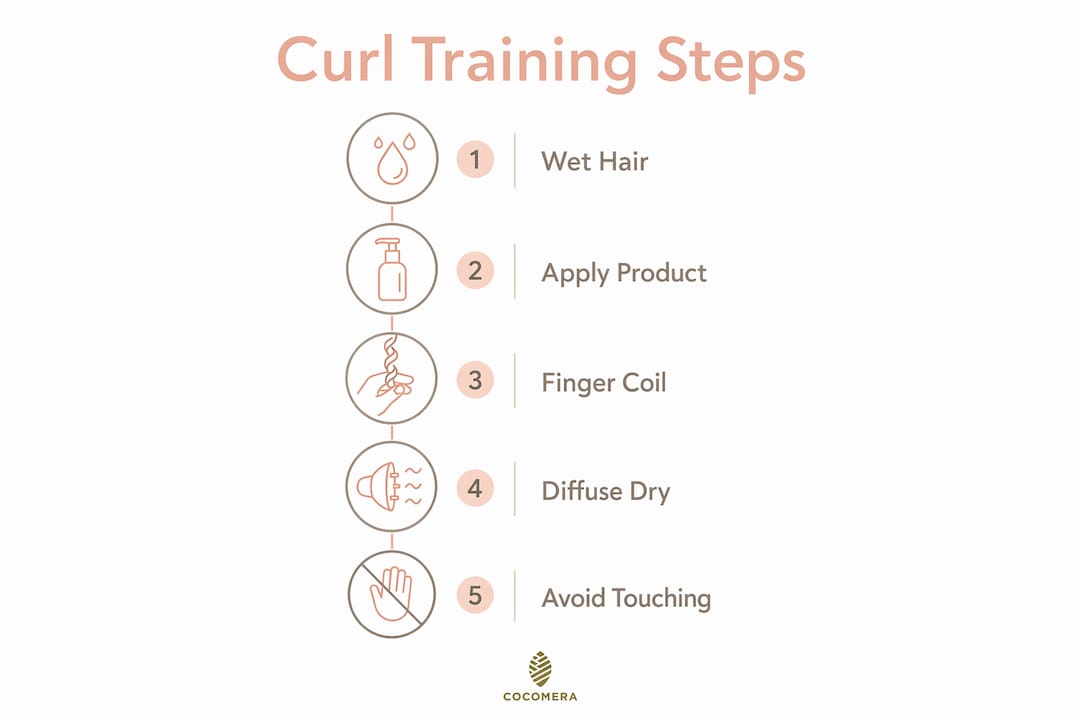
The five core techniques used in curl training:
- Finger coiling: Wrap small sections of wet hair around your finger to encourage tight, defined curls. This works especially well for type 3 and 4 hair that needs extra definition.
- Scrunching: Cup sections of wet hair and squeeze upward toward the scalp. This compresses the curl and encourages clumping without disturbing the pattern.
- Praying hands: Smooth product through a section by pressing both palms together around the hair and sliding downward. This coats strands evenly without separating curls.
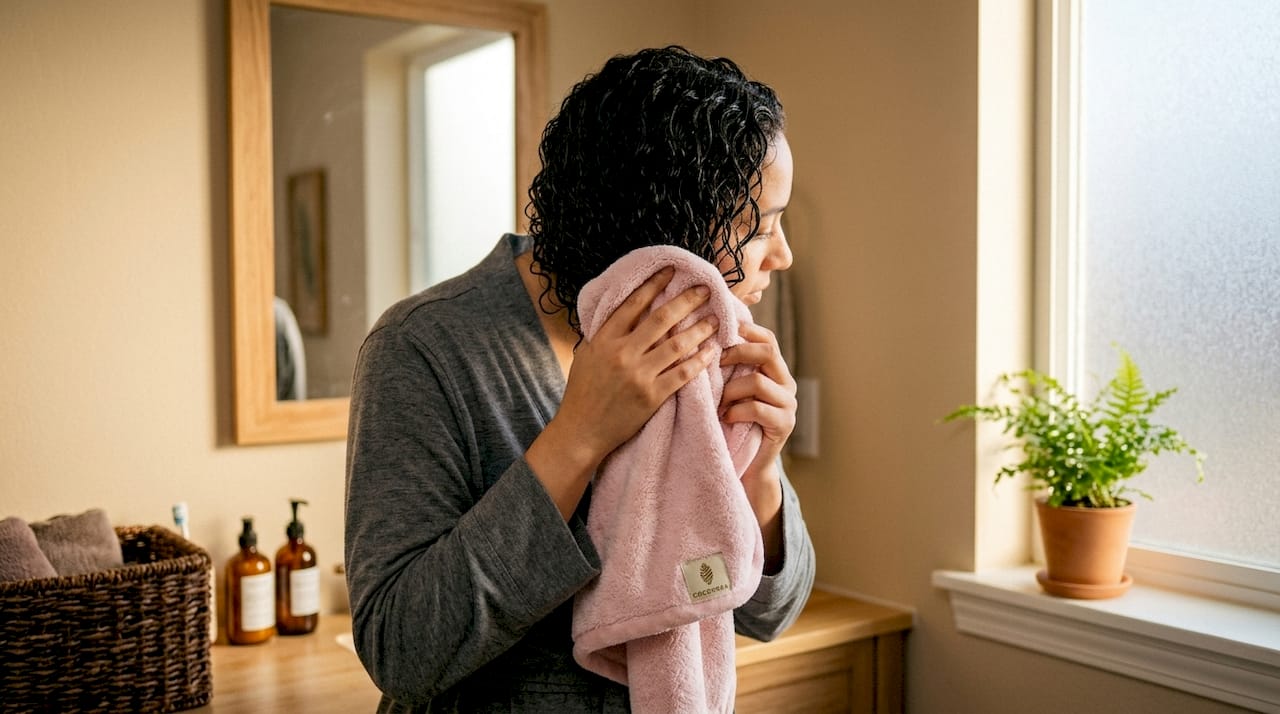
- Plopping: Lay wet hair onto a microfiber towel or cotton T-shirt, then wrap the fabric around your head. This removes excess water without friction and preserves curl shape.
- Gel casting: Apply a curl gel over wet hair to form a firm cast around each curl. Once the hair is fully dry, scrunch the cast out gently to reveal soft, defined curls underneath.
Styling must happen on soaking wet hair. Once hair starts to dry, the curl pattern sets. Touching or rearranging damp curls after that point breaks the clumps and creates frizz.
Pro Tip: Swap your terry cloth towel for a microfiber wrap or a plain cotton T-shirt. Terry cloth creates friction that disrupts curl formation and causes frizz before your curls even have a chance to set.
Avoid touching your hair until it is at least 80% dry. If you use a diffuser, hover it near the hair rather than pressing it directly against the curls. Direct contact breaks the cast and flattens the curl.
How moisture and protein balance affect curl training
Moisture and protein work together to keep curly hair strong and defined. An imbalance in either direction causes problems. Too little moisture produces dry, brittle strands that snap easily. Too much protein without enough moisture makes hair feel stiff and eventually causes breakage. Over-conditioning or protein overload can cause limp, gummy, or brittle hair, and periodic clarifying washes help restore balance.
Signs your hair needs more moisture: curls feel rough, look dull, and shrink more than usual. Signs of protein overload: hair feels hard, snaps when stretched, and loses its elasticity. Learning to read these signals is the core skill in curl training.
Deep conditioning is a key part of any curl routine. Deep conditioners that create a protective cast around curls help train curl memory over time. Use a deep conditioner once a week, but do not overdo it. More is not always better.
Pro Tip: Clarify your hair with a sulfate-free clarifying shampoo once a month. Product buildup blocks moisture from reaching the strand, which stalls your curl training progress.
| Ingredient type | Examples to seek | Examples to avoid |
|---|---|---|
| Moisturizing agents | Aloe vera, glycerin, shea butter | Sulfates (SLS, SLES) |
| Proteins | Hydrolyzed keratin, silk protein | Heavy silicones (dimethicone) |
| Oils for sealing | Argan oil, jojoba oil, castor oil | Drying alcohols (isopropyl alcohol) |
| Humectants | Panthenol, honey | Mineral oil (in heavy amounts) |
Sulfate-free shampoos clean the scalp without stripping the moisture your curls need. Products with drying alcohols and heavy silicones block hydration and cause buildup that no amount of conditioning can fix. For people dealing with dry or damaged hair, rebuilding moisture balance before starting curl training gives faster and more visible results.
Consistency, not expensive products, is the key to long-term curl health. A simple routine with the right ingredients beats an elaborate routine with the wrong ones every time.
How to start curl training: steps and realistic timelines
Starting curl training requires a clean slate and a repeatable routine. Follow these steps to build your practice from the beginning.
- Step 1: Clarify first. Wash with a sulfate-free clarifying shampoo to remove buildup before you begin. This lets your hair absorb moisture properly from day one.
- Step 2: Deep condition. Apply a deep conditioning mask and leave it on for 20–30 minutes. This restores moisture and prepares strands for styling.
- Step 3: Style on soaking wet hair. Apply your leave-in conditioner, then your styling product, while hair is dripping wet. Use the praying hands or scrunching method to distribute product evenly.
- Step 4: Define your curls. Use finger coiling or scrunching to encourage clumping. Apply a curl gel to set the cast.
- Step 5: Dry without touching. Air dry or hover-diffuse until hair is fully dry. Do not touch, flip, or rearrange curls during this stage.
- Step 6: Scrunch out the cast. Once hair is completely dry, scrunch gently to break the gel cast and release soft, defined curls.
- Step 7: Protect overnight. Use the pineapple method: gather curls loosely on top of your head and secure with a satin scrunchie. Sleep on a silk or satin pillowcase to reduce friction and preserve curl shape.
Visible improvements typically take 8–12 weeks with a consistent routine. That timeline assumes you are washing, conditioning, and styling the same way each time. Skipping steps or switching products frequently resets your progress.
Refreshing curls between wash days extends your results. Lightly mist hair with water, scrunch in a small amount of leave-in conditioner, and let it air dry. This reactivates the curl pattern without a full wash.
Common troubleshooting situations:
- Frizz after drying: You likely touched the hair while it was still damp. Start again on fully wet hair next wash day.
- Limp, flat curls: Check for protein overload or product buildup. Clarify and reduce deep conditioning frequency.
- Undefined curls: Try finger coiling on smaller sections or increase gel application on wet hair.
Hair density, porosity, and curl type all dictate how your routine should look. There is no single method that works for every head of hair. Adjust based on how your hair responds each week.
Key Takeaways
Curl training works because consistent mechanical styling and moisture management teach healthy hair to clump and define reliably over time.
| Point | Details |
|---|---|
| Curl training definition | A set of styling and moisture techniques that reinforce your hair’s natural curl pattern. |
| Timeline for results | Most people see defined improvement within 8–12 weeks of a consistent routine. |
| Technique matters most | Style on soaking wet hair and avoid touching curls until fully dry to prevent frizz. |
| Moisture-protein balance | Signs of imbalance include gummy, limp, or brittle hair; clarify monthly to reset. |
| Customize your routine | Curl type, porosity, and density all affect which techniques and products work best for you. |
What I’ve learned from watching hundreds of curl routines
At Cocomera, we work closely with people across hair types 2, 3, and 4. The most common mistake we see is treating curl training as a product problem when it is actually a technique problem. People buy more products when what they really need is to stop touching their hair while it dries.
The second thing we have noticed is that patience is genuinely hard to maintain. Hair that has been heat-damaged or chemically processed cannot be trained until it recovers. Curl training only guides healthy hair to clump and define better. Damaged strands need time and targeted care before any technique will show results. Accepting that reality saves a lot of frustration.
We also believe the curl community sometimes overcomplicates moisture and protein. Your hair tells you what it needs. Gummy and stretchy means too much moisture. Snapping and stiff means too much protein. You do not need a lab test. You need to pay attention and adjust one variable at a time.
The curly hair care tips that hold up over years are always the simple ones: wet hair before styling, gentle handling, the right products for your porosity, and consistency. Everything else is refinement.
— Cocomera
Products that support your curl training routine
Getting your technique right is the foundation. The right products make that technique work better and faster.

At Cocomera, we curate curl styling products specifically for wavy, curly, coily, and afro hair types. Every product in our range is selected with textured hair in mind, including sulfate-free shampoos, leave-in conditioners, deep conditioning masks, and nourishing oils. These are the categories that directly support the techniques covered here. Whether you are building your first curl routine or refining one that is already working, Cocomera carries the products that fit each step. Browse by hair type or concern to find what your curls actually need.
FAQ
What is curl training in simple terms?
Curl training is the practice of using specific styling techniques and moisture care to encourage your natural curls to clump and define more consistently. It does not change your hair’s biology.
How long does curl training take to show results?
Most people see visible improvement within 8–12 weeks of a consistent routine that includes proper cleansing, conditioning, and wet-hair styling.
Can curl training work on heat-damaged hair?
Curl training only works on healthy hair. Heat-damaged strands need time to recover and grow out before techniques like finger coiling or gel casting will produce defined results.
What products do I need to start curl training?
You need a sulfate-free shampoo, a deep conditioner, a leave-in conditioner, and a curl gel or styling cream. Avoid products with sulfates, heavy silicones, and drying alcohols.
Why do my curls still look frizzy after curl training?
Frizz usually means you touched your hair while it was still damp, or you have product buildup blocking moisture. Clarify your hair and restyle on fully soaking wet hair without disturbing the curls during drying.


