


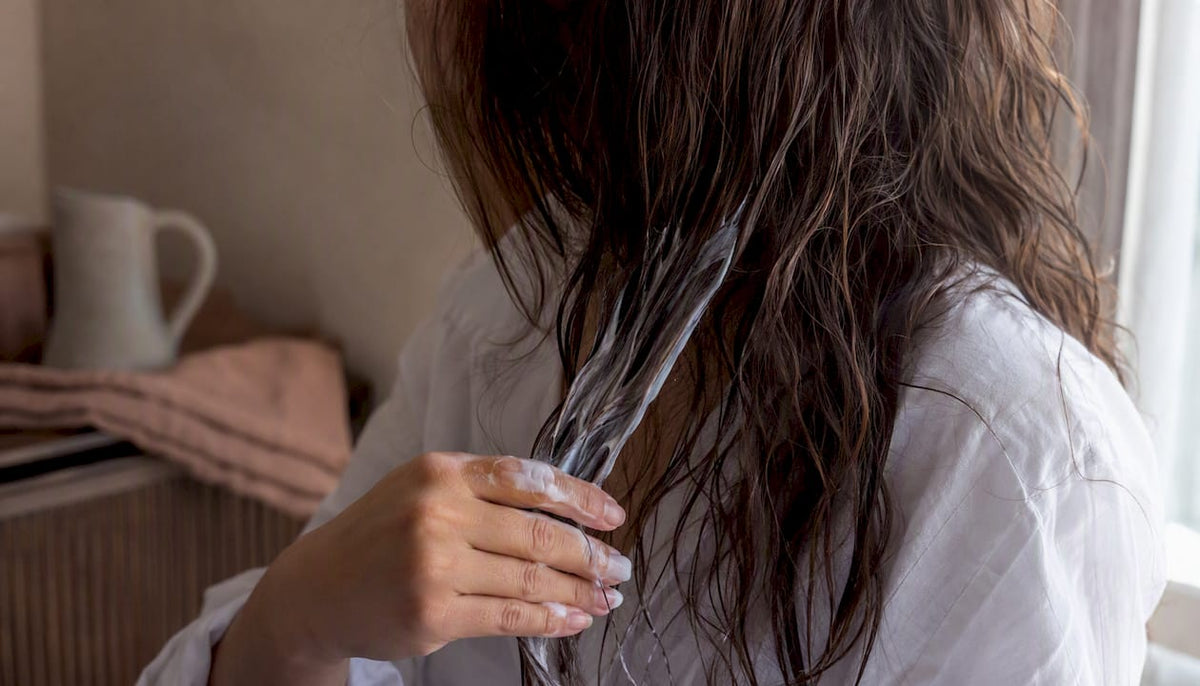
Not all alcohols damage hair. Short-chain alcohols like Alcohol Denat., SD Alcohol, and Isopropyl Alcohol strip natural oils and can leave hair brittle over time. Long-chain fatty alcohols like Cetyl Alcohol and Cetearyl Alcohol do the opposite: they condition, smooth the cuticle, and help retain moisture. Knowing which is which lets you read any ingredient list in under 30 seconds.
Common drying alcohols to watch for (INCI names):
- Alcohol Denat.
- Ethanol / Ethyl Alcohol
- SD Alcohol / SD Alcohol 40
- Isopropyl Alcohol
- Propanol / Propyl Alcohol
Fatty alcohols that are hair-friendly:
- Cetyl Alcohol
- Cetearyl Alcohol
- Stearyl Alcohol
- Behenyl Alcohol
- Lauryl Alcohol / Myristyl Alcohol
A drying alcohol near the top of an ingredient list means higher concentration and higher risk. One near the bottom, in a rinse-off product, is far less of a concern. The practical rule: check the position first, then decide.
Key Takeaways
Short-chain alcohols like Alcohol Denat. and SD Alcohol dry hair by stripping oils and raising the cuticle, while fatty alcohols like Cetearyl Alcohol condition and protect.
| Point | Details |
|---|---|
| Identify drying alcohols by name | Look for Alcohol Denat., SD Alcohol, Isopropyl Alcohol, Ethanol, and Propanol on INCI lists. |
| Ingredient position signals risk | A drying alcohol in the top five ingredients means higher concentration and higher exposure. |
| Fatty alcohols are safe and beneficial | Cetyl, Cetearyl, Stearyl, and Behenyl Alcohol condition hair and belong in your conditioners and masks. |
| Compensate when you do use drying products | Apply a leave-in or oil first, follow with a weekly deep-conditioning mask, and use low heat settings. |
| Cocomera curates curl-safe options | Cocomera’s collections for types 2–4 include alcohol-free styling and fatty-alcohol-rich treatments for textured hair. |
Table of Contents
- Why do some alcohols dry hair while others condition it?
- Drying alcohols: the INCI names you need to recognize
- Fatty alcohols that actually help your hair
- How drying alcohols actually change your hair over time
- How to read an ingredient list and judge alcohol risk fast
- When alcohol in styling products is acceptable and how to limit the damage
- Shopping for textured hair in Sweden: what to look for
- The part most curl guides get wrong about alcohol
- Cocomera makes it easier to shop for curl-friendly formulas
- Sources
Why do some alcohols dry hair while others condition it?
The word “alcohol” covers a large family of molecules. What separates a damaging one from a helpful one is mostly chain length and whether the molecule evaporates quickly or stays on the hair.
Short-chain alcohols like ethanol have just two carbon atoms. They evaporate fast, which is exactly why formulators love them in sprays and quick-dry gels: they deliver a product to the hair and then disappear, leaving hold or shine behind. The problem is that on the way out, they pull surface oils with them and can disrupt the cuticle layer. Research on denatured alcohol in hair care shows that at high concentrations or with repeated use, this evaporation process can reduce water content inside the hair cortex and weaken elasticity, particularly on porous or bleached hair.
Fatty alcohols work completely differently. Picture a short, volatile molecule versus a long, waxy one that clings to the hair shaft. Cetearyl Alcohol, for example, has 16 to 18 carbon atoms. It doesn’t evaporate. It sits on the cuticle, fills in gaps, adds slip, and helps the hair hold onto moisture. According to HAIRCODE UK, long-chain fatty alcohols act as emollients that add moisture and improve manageability rather than stripping anything away.
Drying alcohols: the INCI names you need to recognize
These are the short-chain alcohols most commonly found in hair drying products like aerosol hairsprays, quick-dry styling mists, and some dry shampoos. Formulators use them because they speed up drying time and create a lightweight, non-greasy feel.
- Alcohol Denat. (denatured ethanol): the most common. Found in sprays, lacquers, and volumizing mists.
- Ethanol / Ethyl Alcohol: essentially the same molecule, sometimes listed separately.
- SD Alcohol / SD Alcohol 40: a specially denatured version of ethanol, common in US-formulated products sold in Sweden.
- Isopropyl Alcohol: used in some scalp treatments and quick-dry formulas.
- Propanol / Propyl Alcohol: less common but worth recognizing.
Octean’s ingredient guide lists these same names as the primary drying offenders in styling products, which aligns with what you’ll find on most Swedish product labels.
Pro Tip: If a drying alcohol appears within the first five ingredients on an INCI list, the concentration is likely significant. If it appears in the bottom third of a long list, the exposure is much lower. Position is everything.
Fatty alcohols that actually help your hair
Seeing “alcohol” on a conditioner label is not a red flag. It’s often the opposite. Fatty alcohols are intentionally placed early in conditioner formulas because they’re doing the heavy lifting: thickening the formula, improving slip for detangling, and helping the hair retain moisture after rinsing.
Here’s what each common fatty alcohol contributes:
- Cetyl Alcohol: a lightweight emollient that adds softness and helps conditioners spread evenly.
- Cetearyl Alcohol: a blend of cetyl and stearyl; thickens formulas and provides excellent slip.
- Stearyl Alcohol: slightly heavier, great for sealing moisture and adding body.
- Behenyl Alcohol: a longer-chain fatty alcohol that gives a silky, smooth finish.
- Lauryl Alcohol / Myristyl Alcohol: less common in conditioners but used in some styling creams for emolliency.
A practical check: fatty alcohols almost always appear alongside oils, butters, and humectants in the ingredient list. Their INCI names typically end in “-yl alcohol” and have longer, more complex-sounding names than simple “Alcohol Denat.” If you see Cetearyl Alcohol next to Shea Butter and Glycerin, that’s a conditioning formula. Lean into it.
How drying alcohols actually change your hair over time
The immediate effect of a short-chain alcohol is a raised cuticle. The hair feels dry, looks frizzy, and loses some of its natural sheen. That’s the oil-stripping in action. With repeated use, the damage compounds: increased porosity, reduced elasticity, and a higher risk of breakage, especially at the ends.
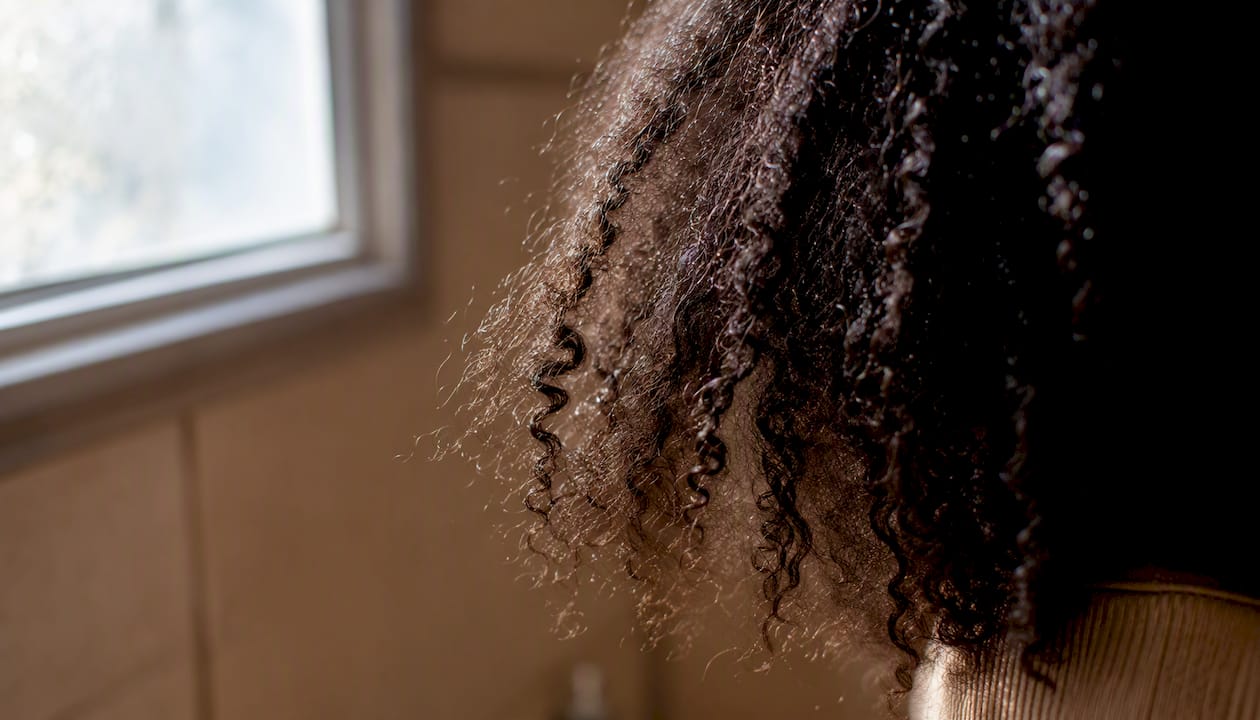
Textured hair types (curl patterns 2 through 4) are more vulnerable than straight hair for a structural reason. Natural scalp oils travel easily down a straight shaft but struggle to navigate the bends and coils of curly or coily hair. That means curls and coils start with less natural protection and have less buffer against an ingredient that strips what little oil reaches the mid-lengths and ends.
Heat makes it worse. Using a blow dryer on high heat after applying an alcohol-heavy spray accelerates moisture loss significantly. Byrdie’s testing-based guidance consistently points to lower heat settings and diffuser attachments as the practical fix, and that advice matters even more when the styling product you just applied contains Alcohol Denat.
| Attribute | Short-chain alcohols | Fatty alcohols |
|---|---|---|
| Evaporation | Rapid | None |
| Typical products | Aerosol sprays, quick-dry gels, dry shampoo | Conditioners, masks, leave-in creams |
| Immediate effect | Fast drying, light hold | Slip, softness, moisture |
| Long-term risk | Dryness, raised cuticle, breakage | None; generally beneficial |
| Hair types most affected | Porous, bleached, textured (types 2–4) | All types benefit |
How to read an ingredient list and judge alcohol risk fast
That single rule is your most useful shopping tool.
- Scan for drying INCI names first. Look for Alcohol Denat., SD Alcohol, Isopropyl Alcohol, Ethanol, Propanol. These are the names to flag.
- Check their position. Top five ingredients means high concentration. Bottom third of a long list means low concentration and lower risk.
- Look for balancing ingredients earlier in the list. If Glycerin, Panthenol, or a fatty alcohol like Cetearyl Alcohol appears before the drying alcohol, the formula is likely better balanced.
- Apply stricter standards to leave-on products. A rinse-off conditioner with SD Alcohol near the bottom is a minor concern. A leave-in spray with Alcohol Denat. as the second ingredient stays on your hair all day.
A practical example: imagine a label that reads Aqua, Alcohol Denat., Glycerin, Parfum, Cetearyl Alcohol… The drying alcohol is second, which signals a significant concentration. The Glycerin and Cetearyl Alcohol later in the list offer some balance, but for daily use on dry or textured hair, this formula carries real risk. Ingredient order as a concentration proxy is the single most useful label-reading skill you can develop.
When alcohol in styling products is acceptable and how to limit the damage
Short-chain alcohols aren’t always the enemy. For an event where you need firm hold or a sleek finish that lasts hours, an alcohol-based spray does the job nothing else quite matches. The key is treating it as an occasional tool, not a daily routine.
When it’s acceptable:
- Occasional use for special occasions or events
- Spot-application (edges, flyaways) rather than all-over coverage
- Rinse-off products where the alcohol leaves with the water
How to compensate when you do use them:
Apply a leave-in conditioner or lightweight oil before reaching for the alcohol-based spray. This creates a barrier that reduces direct contact with the hair shaft. After styling, a weekly deep-conditioning mask replenishes what the alcohol pulled out. Sealing with a hair oil afterward locks in whatever moisture remains.
On the heat side, pair any alcohol-containing product with the lowest effective dryer setting and a diffuser attachment. Temperature-sensing dryer technology and diffusers reduce the compounding effect of heat on already-stressed hair.
Pro Tip: Apply your hydrating leave-in first, let it absorb for two minutes, then apply the alcohol-based styler on top. The leave-in acts as a buffer and the styler still holds. You get the finish without the full drying hit.
Frequency matters too. If your hair is high-porosity, bleached, or a tight curl pattern, limit alcohol-heavy styling products to once or twice a week at most. Low-porosity hair handles occasional use better but still benefits from the compensating steps above.
Shopping for textured hair in Sweden: what to look for
For wavy, curly, coily, and afro hair, the practical shopping checklist comes down to a few clear priorities:
- Leave-on products: avoid short-chain alcohols in the top five ingredients. Prefer formulas where Glycerin, Panthenol, or a fatty alcohol appears before any drying alcohol.
- Conditioners and masks: fatty alcohols early in the list are a green flag. Look for Cetearyl Alcohol, Shea Butter, and humectants together.
- Styling products: if you need hold, check whether an alcohol-free styling option delivers the same result. Hydrating gels and curl creams often do.
- Dry shampoos and aerosol sprays: these almost always contain drying alcohols. Use them sparingly and follow up with a conditioning step.
Cocomera curates products specifically for curl types 2 through 4, which means the collections are already filtered for textured-hair needs. The hair treatments collection covers deep conditioners and masks with the fatty-alcohol-rich formulas that repair and protect. For brittle or damaged hair that’s been through repeated alcohol exposure, a consistent deep-treatment routine is the fastest route back to elasticity.
Expert formulation guidance confirms that balance matters: a well-formulated product can include Alcohol Denat. and still perform without causing significant drying, provided the formula offsets it with emollients. That’s exactly the kind of nuance a curated collection accounts for.
The part most curl guides get wrong about alcohol
Most Curly Girl Method resources treat alcohol as a binary: drying alcohols are banned, fatty alcohols are approved. That framing is useful for beginners, but it misses something important.
The real variable isn’t the ingredient in isolation. It’s concentration, frequency, and what else is in the formula. A product with Alcohol Denat. as the eighth ingredient in a conditioner-heavy formula is a different proposition than one where it’s the second ingredient in a daily leave-in. Blanket avoidance of any product containing a drying alcohol means ruling out some genuinely well-balanced formulas that work beautifully on curls.
The framework worth using instead: check position, check frequency of use, and check what’s compensating for it. If a drying alcohol is high on the list and you’re using the product daily with heat, that’s the combination to fix. If it’s low on the list in an occasional-use product and you’re sealing with oil afterward, the risk is manageable.
Strict CGM alignment makes sense for hair that’s severely damaged or extremely dry. For everyone else, a more flexible read of the label, grounded in the chemistry, gives you more options without sacrificing hair health.
Cocomera makes it easier to shop for curl-friendly formulas
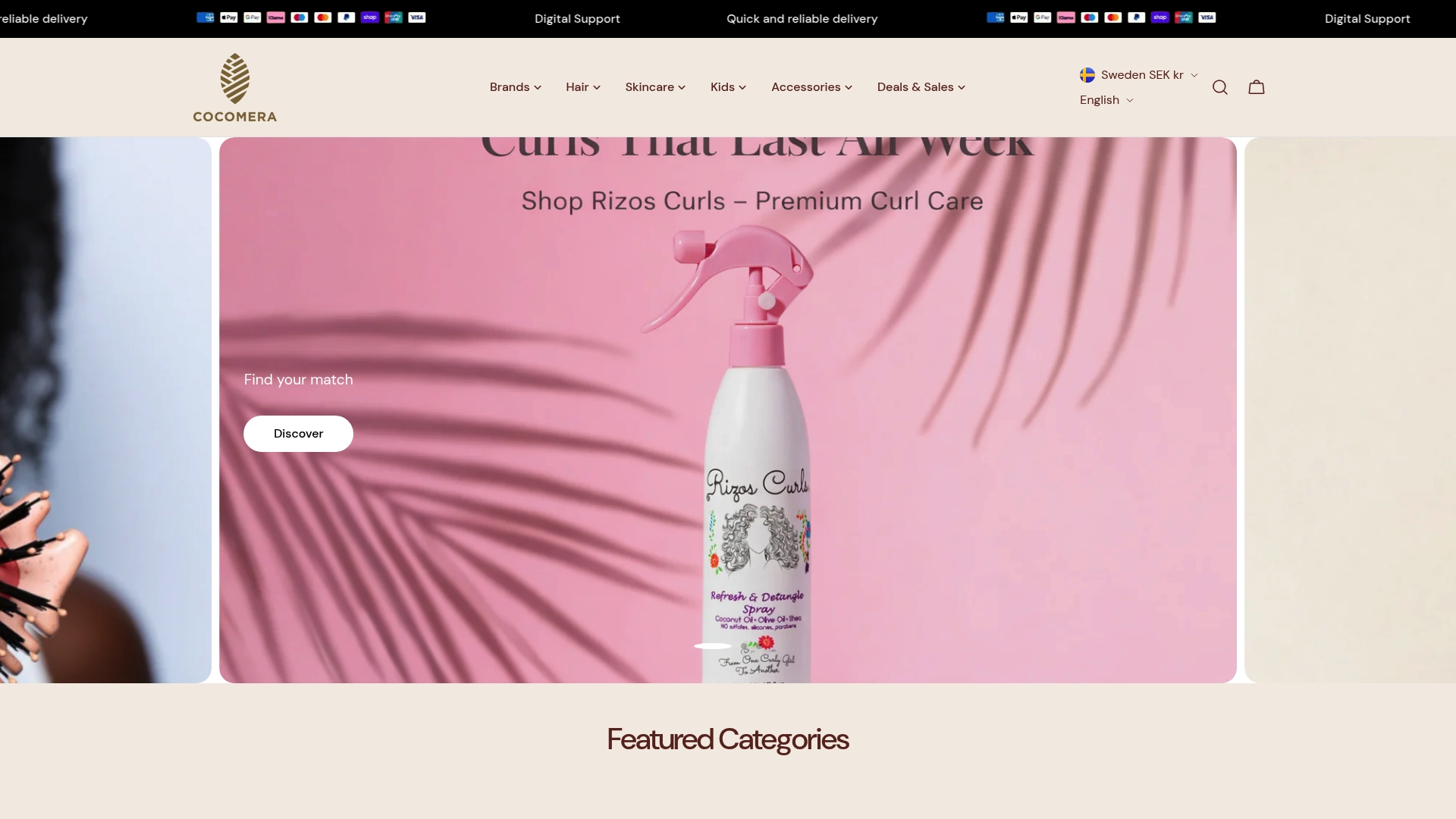
Finding products that work for textured hair without the guesswork of decoding every ingredient list is exactly what Cocomera is built for. The collections are curated for curl types 2 through 4, with a focus on formulas that prioritize moisture, slip, and long-term hair health over quick-fix hold.
Start with the hair masks collection if your hair needs repair after repeated exposure to drying styling products. For daily styling, the curl styling collection includes alcohol-free and low-alcohol options that deliver hold and definition without the drying trade-off. If you want to build a full compensating routine, the hair treatments range covers leave-ins, deep conditioners, and oils that work together to keep moisture locked in.
Browse Cocomera’s collections at Cocomera and filter by hair type to find what fits your curl pattern.
Sources
- Hårguide: Läs innehållsdeklarationen som ett proffs · Octean
- Is Alcohol Bad for Hair? | HAIRCODE UK
- Does Alcohol Dry Hair: What To Avoid And What To Use - Hair Dryer Review
- Denatured Alcohol in Hair Care: Chemistry, Fiber Risks and Professional Guide | Hairswiss
- Ask Dr. Joe: Is Alcohol Bad For Your Hair? – Color Wow UK
- Best hair dryers — Byrdie


