



More women with curls, coils, and waves are quietly stepping away from 10-step routines and reaching for something far simpler: one pure ingredient. Not a blend, not a formula, just a single natural substance doing exactly what your hair needs. The idea sounds almost too basic to work, yet single ingredient approaches for textured hair are showing real results for hair types 2, 3, and 4. This article breaks down what single ingredient haircare actually means, why it works so well for textured hair, and how you can build a routine around it without the confusion that usually comes with haircare advice.
Table of Contents
- What is single ingredient haircare?
- How do single ingredients benefit textured hair types?
- Popular single ingredients in natural haircare
- Single ingredient vs. multi-benefit blends: Key differences
- How to choose and use single ingredient treatments
- A fresh perspective on single ingredient haircare for curls
- Explore top natural haircare solutions at Cocomera
- Frequently asked questions
Key Takeaways
| Point | Details |
|---|---|
| Pure ingredient focus | Single ingredient haircare eliminates additives for gentler, tailored textured hair routines. |
| Strengthens and hydrates | Natural oils and gels target moisture, repair, and definition for curls and coils. |
| Better customization | Using one ingredient at a time helps you respond directly to your hair’s needs and sensitivities. |
| Science-backed approach | Clinical evidence supports the benefits of specific pure ingredients for textured hair health. |
What is single ingredient haircare?
Single ingredient haircare is exactly what it sounds like: using one pure, natural substance on your hair, with nothing else added. No preservatives, no fragrance, no emulsifiers. Just the ingredient itself. Think 100% baobab leaf powder, raw shea butter, pure castor oil, or cold-pressed peanut oil. According to ingredient research, single ingredient approaches use substances like 100% baobab leaf powder, pure oils, or raw butters applied directly to hair.
This approach strips haircare down to its most honest form. There is no guessing which ingredient is doing the work or which one is causing a reaction. You apply one thing, observe the result, and adjust from there.
The most popular single ingredients for textured hair include:
- Baobab leaf powder (lalo): A mucilaginous powder that creates a hydrating gel when mixed with water
- Castor oil: Thick, coating, and widely used for sealing moisture and supporting growth
- Shea butter: A rich butter that nourishes and improves elasticity
- Coconut oil: A penetrating oil that strengthens the hair shaft from within
This concept is gaining real traction among women with multi-textured hair care needs, especially those who have experienced product buildup, scalp sensitivity, or simply too many steps with too little payoff.
Pro Tip: If you are new to single ingredient routines, start with one ingredient for at least two weeks before adding another. This gives your hair time to respond and gives you clear feedback on what is actually working.
The simplicity is the point. When your routine is built on pure substances, you become a better observer of your own hair.
How do single ingredients benefit textured hair types?
With the basics defined, let’s look at what single ingredients actually do for textured hair types.
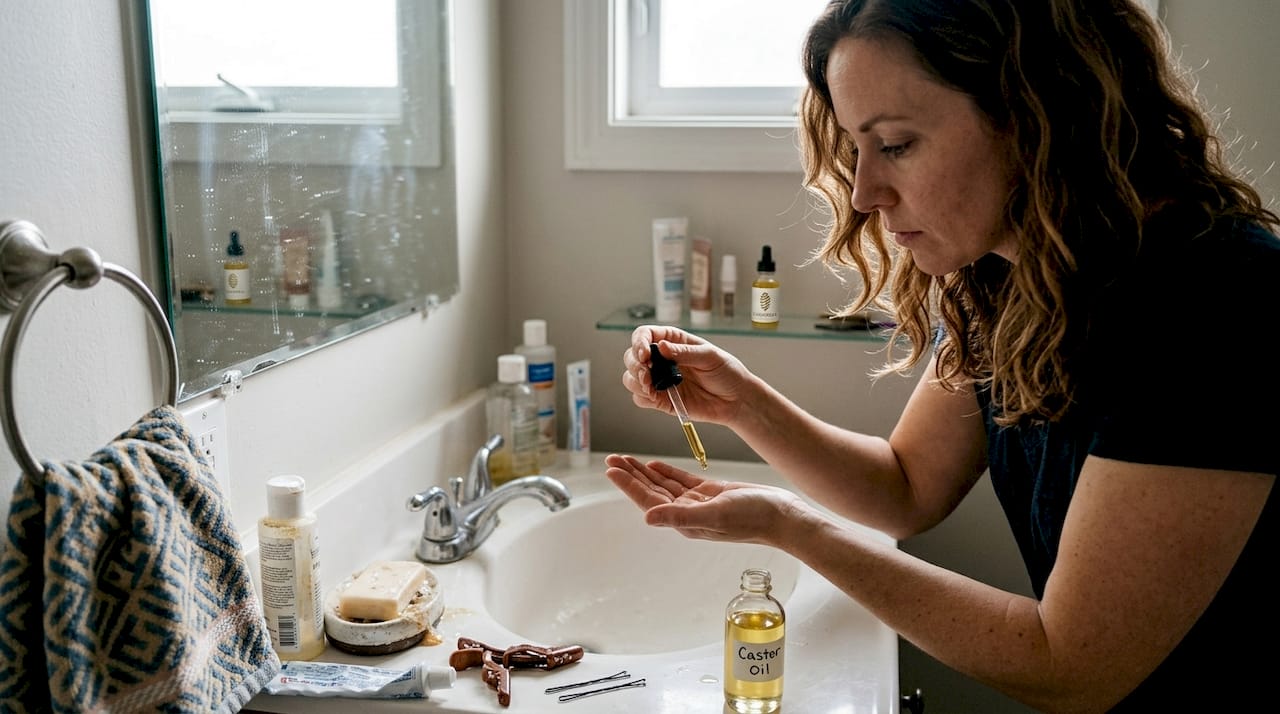
Textured hair, whether wavy type 2, curly type 3, or coily type 4, tends to have a more open cuticle structure. This means it is often more porous and loses moisture faster than straight hair. It also means it responds intensely to what you put on it. Mucilaginous gels coat and hydrate porous hair while oils penetrate the shaft, seal in moisture, and strengthen the fiber.
Here is how different single ingredient types work on textured hair:
- Powder-based gels (like baobab/lalo): When mixed with water, these create a slippery gel that physically coats each strand, improving slip and making detangling far easier.
- Penetrating oils (like coconut): These oils are small enough to enter the hair shaft, delivering nutrients and reducing internal breakage.
- Sealing oils and butters (like castor oil and shea butter): These sit on the outside of the strand and lock in whatever moisture is already there.
- Protein-rich ingredients: Some natural powders and butters contain amino acids that temporarily patch weak spots in the hair fiber.
| Ingredient type | Primary action | Best for |
|---|---|---|
| Mucilaginous powder | Coats and hydrates | Detangling, definition |
| Penetrating oil | Strengthens from inside | Breakage, dryness |
| Sealing butter | Locks in moisture | Moisture retention |
Clinical data backs this up. Peanut oil significantly increases hydration and reduces breakage in textured hair per controlled trials. Understanding the importance of moisture for curls helps you choose the right ingredient for your specific goal, and pairing that with healthy curly hair tips makes the whole routine click into place.
“The hair fiber’s response to a single ingredient is far easier to track than its response to a 15-ingredient formula. Purity creates clarity.” — from textured hair science
Popular single ingredients in natural haircare
Understanding the benefits, let’s see which natural ingredients are most valued and how they differ.
Baobab leaf powder, castor oil, shea butter, and coconut oil are among the most common single ingredient choices for hydrating and protecting textured hair. Each one brings something distinct to the table.
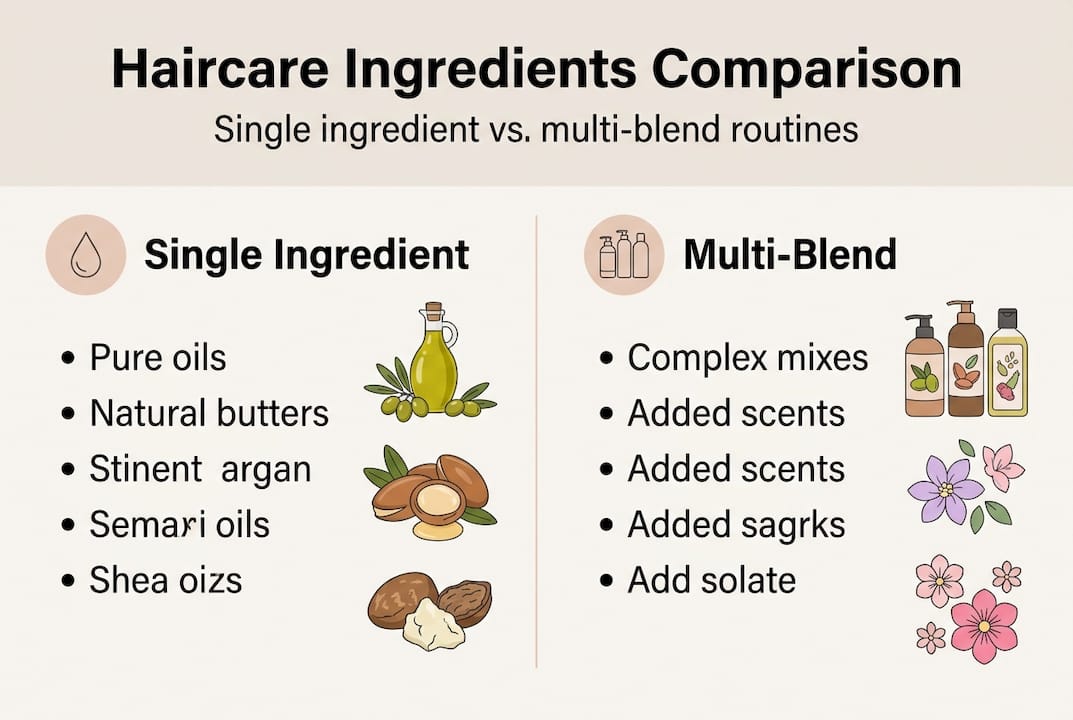
| Ingredient | Texture | Key benefit | Hair types |
|---|---|---|---|
| Baobab leaf powder | Gel-forming | Detangles, strengthens | 3C, 4A, 4B, 4C |
| Castor oil | Very thick | Seals, stimulates growth | All textured types |
| Shea butter | Rich, creamy | Deep nourishment, elasticity | 3A to 4C |
| Coconut oil | Light to medium | Penetrates shaft, reduces protein loss | 2A to 4C |
Here is what makes each one worth knowing:
- Baobab (lalo): The mucilage in the powder creates a natural gel that coats strands without synthetic polymers. It is especially popular in West African haircare traditions and is making a strong comeback in Europe.
- Castor oil: Its thickness means it stays on the hair longer, making it ideal as a sealant or scalp treatment. Use it sparingly since a little goes a long way.
- Shea butter: Packed with fatty acids and vitamins A and E, raw shea butter softens coily hair and helps restore elasticity after heat or chemical damage.
Pro Tip: Raw, unrefined versions of these ingredients are almost always more effective than refined ones. Refining removes some of the beneficial compounds that make these ingredients work.
You can find quality natural ingredient hair masks and a curated range of hair oils and butters that use these exact ingredients in their purest form.
Single ingredient vs. multi-benefit blends: Key differences
Now, how do single ingredient routines stack up against more complex blends?
Multi-ingredient blends are designed to do several things at once: moisturize, define, protect, and smooth, all in one application. That sounds appealing. But there is a real tradeoff. Single ingredients offer purity but lack the combined effects of blends, and more research is still needed for textured hair specifically.
| Factor | Single ingredient | Multi-ingredient blend |
|---|---|---|
| Purity | Very high | Variable |
| Irritation risk | Low | Higher (more potential triggers) |
| Customization | Full control | Limited |
| Ease of use | Simple | Convenient |
| Buildup risk | Low | Moderate to high |
| Potency | Concentrated | Can be diluted |
The case for singles is strongest when your scalp is sensitive, your hair is high porosity, or you have been struggling to identify what is causing dryness or breakage. When you use a blend and your hair reacts badly, you have no idea which of the 12 ingredients caused it. With a single ingredient, you know immediately.
Blends are not bad. They can be genuinely useful, especially when you need heat protection or a product that handles multiple steps in one. But the idea that a blend is automatically better because it has more ingredients is worth questioning.
“More ingredients does not mean more results. For textured hair especially, purity can outperform complexity when the goal is hydration and scalp health.”
If you are dealing with a dry or reactive scalp, even your shampoo for curly hair matters. Choosing one with a short, clean ingredient list is a natural extension of the single ingredient philosophy.
How to choose and use single ingredient treatments
Ready to try a single ingredient routine? Here is how to make it work for your unique hair.
The first step is understanding your hair’s current state. Porosity is the most useful starting point. High porosity hair absorbs products fast but loses moisture just as quickly. Low porosity hair resists absorption but holds moisture well once it gets in. Texture analysis benchmarks like tensile strength and elasticity help validate which single oils and butters are best suited for repairing curly and coily hair.
Here is a practical step-by-step approach:
- Identify your hair’s main concern: Is it dryness, breakage, frizz, or lack of definition? This narrows your ingredient choice immediately.
- Choose one ingredient to test: Start with something gentle like shea butter or baobab powder. Avoid starting with heavy oils if your hair is low porosity.
- Patch test first: Apply a small amount to your scalp or behind your ear and wait 24 hours before full application.
- Apply to damp hair: Most single ingredients work best when hair is wet or damp. This helps with absorption and distribution.
- Observe for two weeks: Track how your hair feels, looks, and behaves. Note any changes in moisture, breakage, or scalp comfort.
- Adjust amount and frequency: Some ingredients, like castor oil, work best used once a week. Others, like baobab gel, can be used at every wash.
For sourcing in Europe, look for certified organic or cold-pressed labels. These signal minimal processing. You can also find trusted natural hair oils curated specifically for textured hair. Building your routine around a solid wash day workflow makes single ingredient application much more consistent and effective.
Pro Tip: Keep a simple hair journal for the first month. Just a few notes after each wash day will help you spot patterns faster than memory alone.
A fresh perspective on single ingredient haircare for curls
Beyond the step-by-step, here is a point of view that cuts through the typical haircare noise.
The haircare industry has spent decades convincing women with textured hair that their hair is complicated, that it needs special formulas, layered systems, and professional-grade blends to thrive. And while some of that is true, a lot of it is marketing. The reality is that many of the most effective treatments for curls and coils are also the oldest and simplest ones.
The evidence for single ingredients is promising, but it is not complete. There are still gaps in the research, especially for European hair types and mixed textures. That means you have to be your own experiment. Listen to your hair. If a pure ingredient is working, that is real data. If it is not, that is also real data.
We believe that purity supports healthier hair and scalp over time, especially for women who have been dealing with buildup, sensitivity, or product overwhelm. Less is genuinely more for a lot of textured hair types. You can explore more on this through curly hair care tips that align with this simpler, more intentional approach.
A blend is not always better. Sometimes the most powerful thing you can do for your curls is remove the noise.
Explore top natural haircare solutions at Cocomera
If you are ready to take the next step toward natural, simplified care, Cocomera has done the sourcing work for you. Our curated selection focuses on pure, effective ingredients chosen specifically for wavy, curly, coily, and afro hair types.
Browse our range of curly hair treatments to find options that align with the single ingredient philosophy, or explore our full collection of hair oil for textured hair featuring cold-pressed and unrefined options. If deep hydration is your goal, our hydrating hair masks are a great place to start. Every product is selected with your curl type in mind, so you spend less time guessing and more time seeing results.
Frequently asked questions
What makes a hair product ‘single ingredient’?
A single ingredient product uses only one pure, natural component with no added fragrances, preservatives, or fillers. The ingredient itself is the entire formula.
Are single ingredient treatments safe for sensitive scalps?
Yes, purity reduces irritation risk significantly, but you should always patch-test any new ingredient before applying it to your full scalp.
Which hair types benefit most from single ingredient haircare?
Textured hair types 2, 3, and 4 benefit most, particularly when hair is high porosity, dry, or prone to breakage, since pure ingredients are easier to absorb and track.
Do single ingredients work as well as professional blends?
For hydration and strength, some pure ingredients match blends or outperform them, but results depend on your specific hair needs and porosity level.
How do I pick the right single ingredient for my curls?
Start by assessing porosity and your main hair concern, then choose a gentle starting point like baobab powder or shea butter, guided by texture analysis principles for ingredient selection.
Recommended
- What is multi-textured hair? Essential care guide – Cocomera
- Why hair needs moisture: essential guide for textured curls – Cocomera
- Anti-Dandruff Shampoo for Curly Hair - Dry/Itchy Scalp - Cocomera
- Hair Treatments for Curly Hair - Cocomera
- Raw Hair Explained: Purity and Lasting Beauty – Gaurash Beauty Supply


