


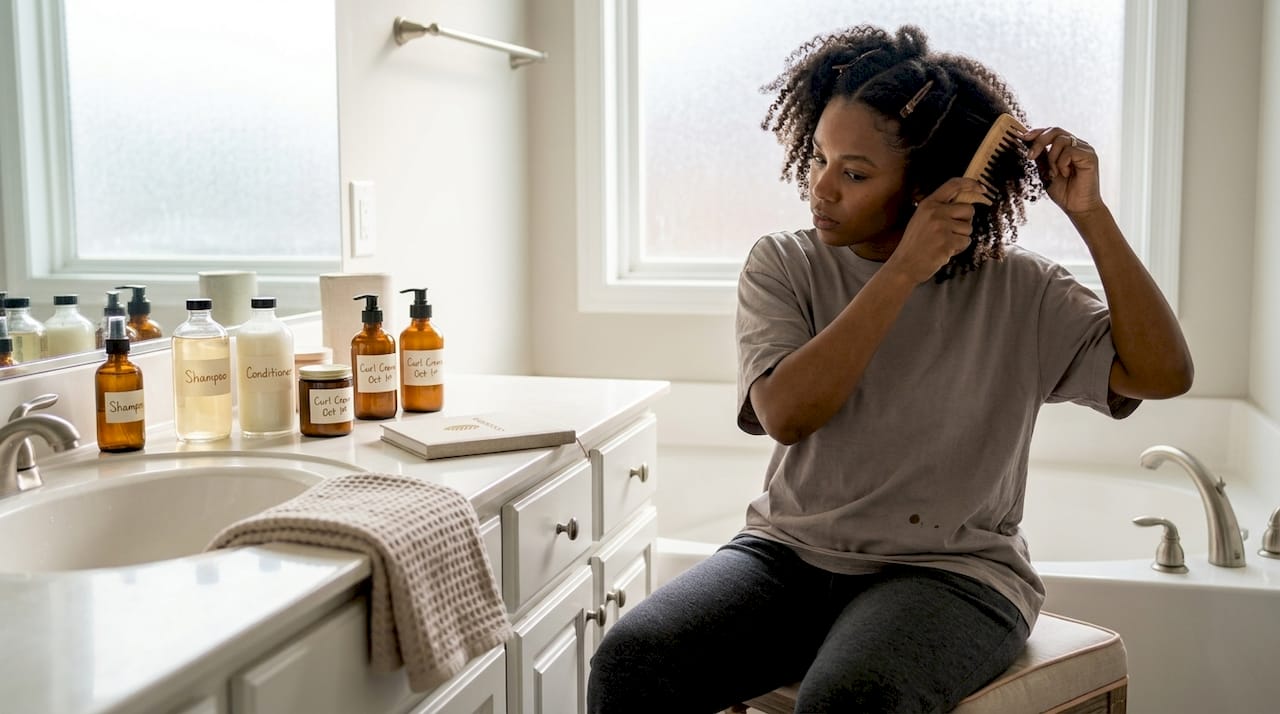
Wash day for coily hair can feel overwhelming when tangles, dryness, and breakage threaten your progress. Many women with coily textures struggle to find a routine that cleanses effectively while preserving precious moisture and curl definition. This guide walks you through a proven step-by-step workflow designed specifically for coily hair needs, from preparation through styling. You will discover which products work best, how to detangle without damage, and techniques to lock in hydration for days of beautiful, healthy curls.
Table of Contents
- Key takeaways
- Preparing for wash day: tools and products you need
- Step-by-step coily hair wash day workflow
- Moisturizing and styling techniques after wash day
- Shop curated coily hair care essentials
- FAQ
Key Takeaways
| Point | Details |
|---|---|
| Protects curls and scalp | An effective wash day cleanses without stripping natural oils, preserving curl definition and scalp health. |
| Prep before washing | Gather the right tools, section hair into four to eight parts, and lightly mist or pre soak sections to reduce tangles and ease detangling. |
| Moisture rich products | Choose sulfate free shampoos and rich slip conditioners, and use deep conditioners to lock in moisture after washing. |
| Gentle detangling | Detangle with a wide tooth comb or detangling brush on wet, conditioned hair and work in sections to minimize breakage. |
| Moisture lock after wash | Follow up with conditioning and styling to seal in moisture and maintain curl definition. |
Preparing for wash day: tools and products you need
Successful wash day starts long before water touches your hair. Gathering the right tools and products transforms a frustrating experience into an efficient, damage-free routine. Using the right products designed for coily hair enhances moisture retention and scalp health, making every step easier and more effective.
Your essential toolkit should include a sulfate-free clarifying or moisturizing shampoo that cleanses without stripping natural oils. Look for formulas with gentle surfactants that remove buildup while maintaining your hair’s moisture barrier. A rich, slip-heavy conditioner is non-negotiable for coily hair because it provides the lubrication needed for safe detangling. Deep conditioners or hair masks offer intensive moisture treatments when your curls need extra care.
Beyond products, specific tools make the physical process gentler and more effective:
- Wide-tooth comb or detangling brush with flexible bristles
- Microfiber towel or cotton t-shirt to reduce friction during drying
- Spray bottle filled with water or diluted leave-in conditioner
- Hair clips or bands to section hair into manageable parts
- Shower cap for deep conditioning treatments
Sectioning your hair before you begin is crucial for thorough cleansing and even product distribution. Divide your hair into four to eight sections depending on density and length. Secure each section with clips to keep them separated throughout the process. This prevents you from missing areas and reduces the temptation to rush through thick sections that need individual attention.
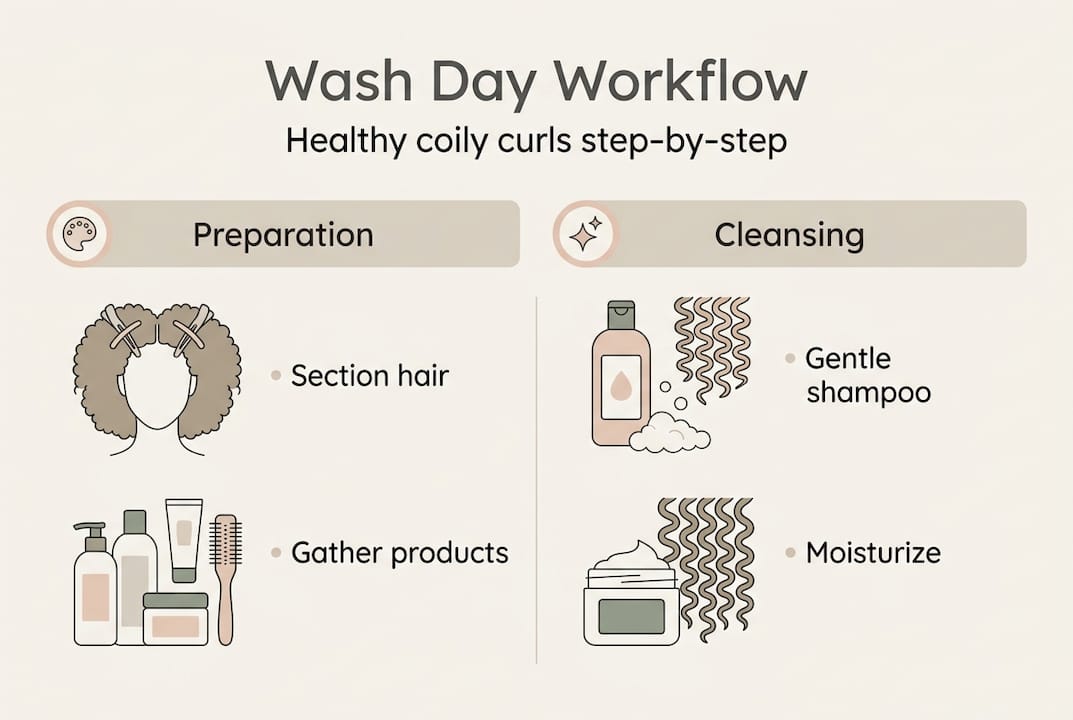
Pro Tip: Lightly mist each section with water or a leave-in spray 30 minutes before washing. This pre-soaking softens the hair shaft and begins loosening tangles, making the detangling process significantly easier and reducing breakage.
Here is a comparison of top product categories for coily hair wash day:
| Product Type | Key Benefits | Best For |
|---|---|---|
| Sulfate-free shampoo | Cleanses without stripping oils | Regular cleansing, sensitive scalps |
| Co-wash conditioner | Ultra-gentle cleansing with moisture | Between wash days, very dry hair |
| Deep conditioner | Intensive moisture and protein balance | Weekly or bi-weekly treatments |
| Detangling conditioner | High slip for easy comb-through | Severe tangles, wash day detangling |
| Leave-in conditioner | Lasting moisture and heat protection | Daily moisture, styling base |
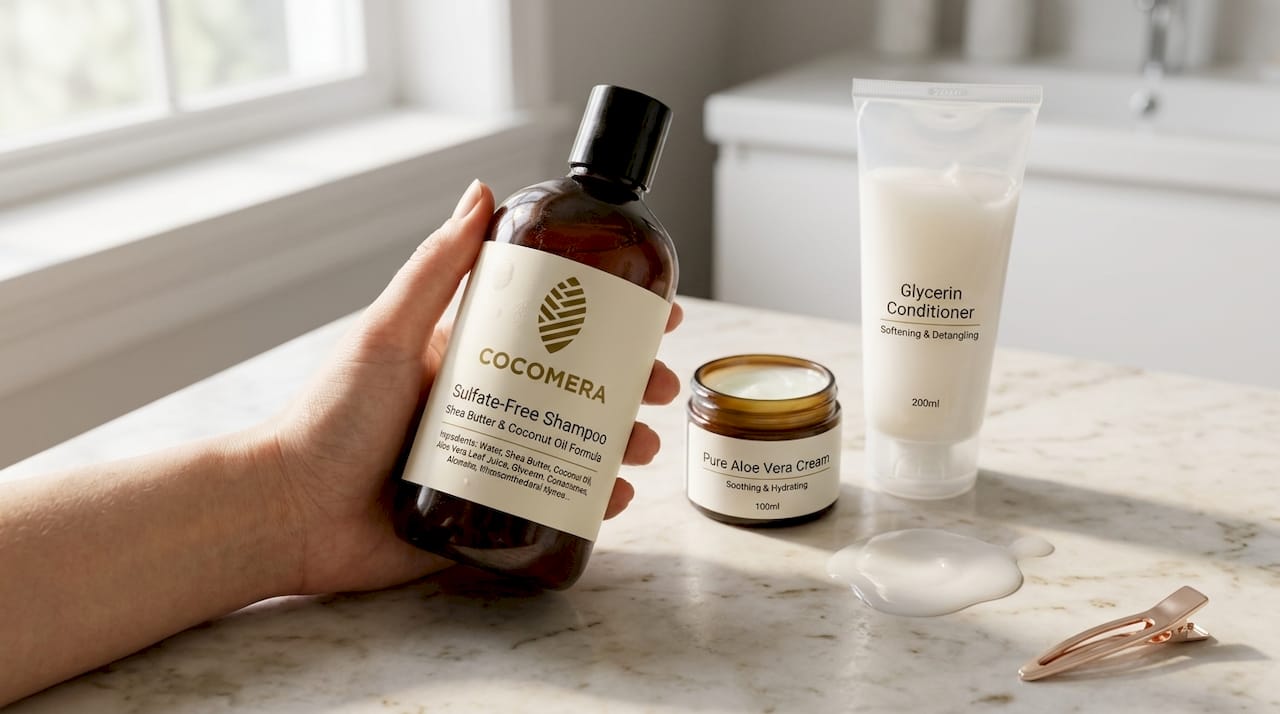
Choosing products with ingredients like shea butter, coconut oil, aloe vera, and glycerin provides the moisture coily hair craves. Avoid formulas with drying alcohols, sulfates, or heavy silicones that create buildup. Read ingredient lists carefully and prioritize products specifically formulated for type 4 hair textures.
Step-by-step coily hair wash day workflow
Once preparation is complete, following a structured sequence ensures every curl receives proper care without unnecessary manipulation. This workflow balances thorough cleansing with gentle handling to protect fragile coily strands. Gentle cleansing combined with thorough detangling reduces hair breakage in coily hair, preserving length and health over time.
Follow these steps in order for optimal results:
-
Thoroughly wet your hair with warm water, ensuring every section is saturated. Take your time here because properly wet hair accepts products better and detangles more easily. Massage your scalp gently with fingertips to stimulate blood flow and begin loosening dirt and oil.
-
Apply pre-poo treatment if desired. This optional step involves coating hair with oil or conditioner before shampooing to add extra protection against moisture loss during cleansing. Coconut oil, olive oil, or a rich conditioner works well. Leave on for 15 to 30 minutes under a shower cap.
-
Apply shampoo directly to your scalp, not the length of your hair. Focus on massaging the scalp with your fingertips in circular motions to lift dirt, oil, and product buildup. The shampoo that rinses down through your hair will cleanse the strands sufficiently without excessive manipulation.
-
Rinse thoroughly with lukewarm water until all shampoo is removed. Hot water opens the cuticle too much and can cause dryness, while cold water may not rinse products completely. Lukewarm provides the best balance for coily textures.
-
Apply a generous amount of conditioner from roots to ends, focusing heavily on the mid-lengths and ends where dryness concentrates. Use more conditioner than you think you need because coily hair is incredibly thirsty and absorbs product quickly.
-
Begin detangling while conditioner coats your hair. Start with your fingers, gently separating large clumps and working through obvious knots. This finger detangling removes most tangles with minimal stress on the hair. Once you have worked through each section with fingers, follow up with a wide-tooth comb, starting from the ends and working up to the roots in small increments.
Pro Tip: Never detangle from roots to ends. Always start at the tips and work upward in small sections. This prevents pushing tangles down into tighter knots and reduces the pulling force on your scalp and follicles.
-
Leave conditioner in for at least five minutes, or longer if using a deep conditioning treatment. This dwell time allows moisture and nutrients to penetrate the hair shaft. Cover with a shower cap and apply gentle heat from a hooded dryer or warm towel if doing a deep treatment.
-
Rinse with cool to lukewarm water until the water runs clear. Some people prefer to leave a small amount of conditioner in for extra slip and moisture, but ensure most product is removed to prevent buildup.
This systematic approach respects the unique needs of coily hair while ensuring cleanliness and manageability. Consistency with this workflow trains your hair to respond better over time, reducing the effort required for each subsequent wash day.
Moisturizing and styling techniques after wash day
The post-wash phase determines how long your curls stay hydrated, defined, and frizz-free. Proper moisturizing and styling techniques seal in the moisture you just added and set your curls up for success until the next wash. Using leave-in conditioners and curl defining gels helps maintain moisture and define coily hair curls longer, reducing daily manipulation.
The LOC or LCO method provides a proven framework for layering products effectively. LOC stands for liquid, oil, cream, while LCO uses liquid, cream, oil. Both methods work, so experiment to see which your hair prefers. The liquid layer is typically a water-based leave-in conditioner that provides hydration. The oil layer seals moisture into the hair shaft. The cream layer adds additional moisture and hold.
Apply each product to soaking wet hair, working in sections. Use praying hands method by smoothing product between your palms down the length of each section, then scrunch upward to encourage curl formation. This technique distributes product evenly while defining your natural curl pattern. For extra definition, you can rake products through with fingers spread wide or use a denman brush to clump curls together.
Popular styling methods for coily hair include:
- Wash and go: Apply products and allow hair to air dry or diffuse in its natural state
- Twist out: Create two-strand twists on damp hair, allow to dry completely, then unravel for defined, stretched curls
- Braid out: Similar to twist out but using three-strand braids for a different curl pattern
- Finger coils: Wrap small sections around your finger to create uniform spiral curls
- Rod set: Use perm rods or flexi-rods on damp hair for tight, bouncy curls
Here is a comparison of styling products and their benefits:
| Product Type | Primary Function | Texture Result | Hold Level |
|---|---|---|---|
| Leave-in conditioner | Moisture and detangling | Soft, moisturized | Light |
| Curl cream | Definition and moisture | Defined, smooth | Light to medium |
| Curl gel | Hold and frizz control | Defined, crispy when dry | Medium to strong |
| Mousse | Volume and light hold | Fluffy, defined | Light to medium |
| Edge control | Sleek edges and flyaways | Smooth, laid | Strong |
Avoid these common moisturizing mistakes that sabotage your wash day efforts:
- Applying products to dry hair instead of wet or damp hair
- Using too little product out of fear of buildup or greasiness
- Skipping the sealing step with oil, allowing moisture to escape
- Touching and manipulating hair too much while it dries
- Going to bed without protecting your style with a satin bonnet or pillowcase
Preserving your style overnight extends the life of your wash day and reduces daily manipulation. Sleep on a satin or silk pillowcase to minimize friction, or wrap hair in a satin bonnet. For longer styles, you can re-twist or re-braid sections before bed and unravel in the morning. Refresh curls between washes by spritzing with water or a leave-in mixture and reapplying a small amount of gel or cream to revive definition.
Shop curated coily hair care essentials
Now that you understand the complete wash day workflow, having the right products makes all the difference in your results. Cocomera specializes in carefully curated hair care specifically for textured hair types like yours. Browse trusted brands formulated for coily hair needs, from gentle scalp care shampoos to complete care bundles.
Discover complete solutions like the Aunt Jackie’s kids hair care bundle that simplify your routine with coordinated products designed to work together. Every product at Cocomera is selected with your curl type in mind, making it easier to find exactly what your coily hair needs without endless research. Shop with confidence knowing these products are proven to deliver moisture, definition, and healthy hair growth.
FAQ
How often should I do a full wash day for coily hair?
Most women with coily hair benefit from washing every 7 to 14 days depending on scalp condition, lifestyle, and product buildup. Washing too frequently strips natural oils that coily hair needs to stay moisturized, leading to dryness and breakage. Waiting too long between washes allows dirt, sweat, and styling products to accumulate on the scalp, potentially causing irritation or clogged follicles. Listen to your scalp and adjust frequency based on how oily or dry it feels.
What is the best way to detangle coily hair without causing breakage?
Always detangle while hair is soaking wet and thoroughly coated with a slippery conditioner. Start with your fingers to gently separate large sections and work through major tangles before introducing any tools. Once finger detangling is complete, use a wide-tooth comb or detangling brush, starting from the very ends and working upward in small increments. Never rush this process or try to force through resistant tangles, as this causes unnecessary breakage and damage.
Can I use regular shampoos on coily hair during wash day?
Regular shampoos typically contain harsh sulfates that strip the natural oils coily hair depends on for moisture and protection. Specialized shampoos for coily hair preserve moisture and reduce scalp irritation compared to regular shampoos. Choose sulfate-free formulas designed specifically for textured or coily hair types. These gentler cleansers remove dirt and buildup without leaving your hair feeling stripped, dry, or brittle.
How do I know if I am using too much or too little product?
Too little product leaves hair feeling dry, rough, or difficult to detangle even when wet. You will notice frizz, lack of definition, and moisture that does not last more than a day or two. Too much product makes hair feel heavy, greasy, or sticky, and may leave visible residue or cause curls to lose their bounce. Start with more product than you think you need for coily hair, as it absorbs significantly more than other textures. You can always use less next time if needed.
Should I air dry or use heat after washing coily hair?
Air drying is gentler and preserves moisture better, but it takes significantly longer for coily hair to dry completely. Using a hooded dryer or diffuser on low to medium heat speeds the process while minimizing heat damage. If you choose to diffuse, keep the dryer moving and avoid concentrating heat on one section too long. Whatever method you choose, avoid touching or manipulating your hair while it dries to prevent frizz and preserve curl definition.


