


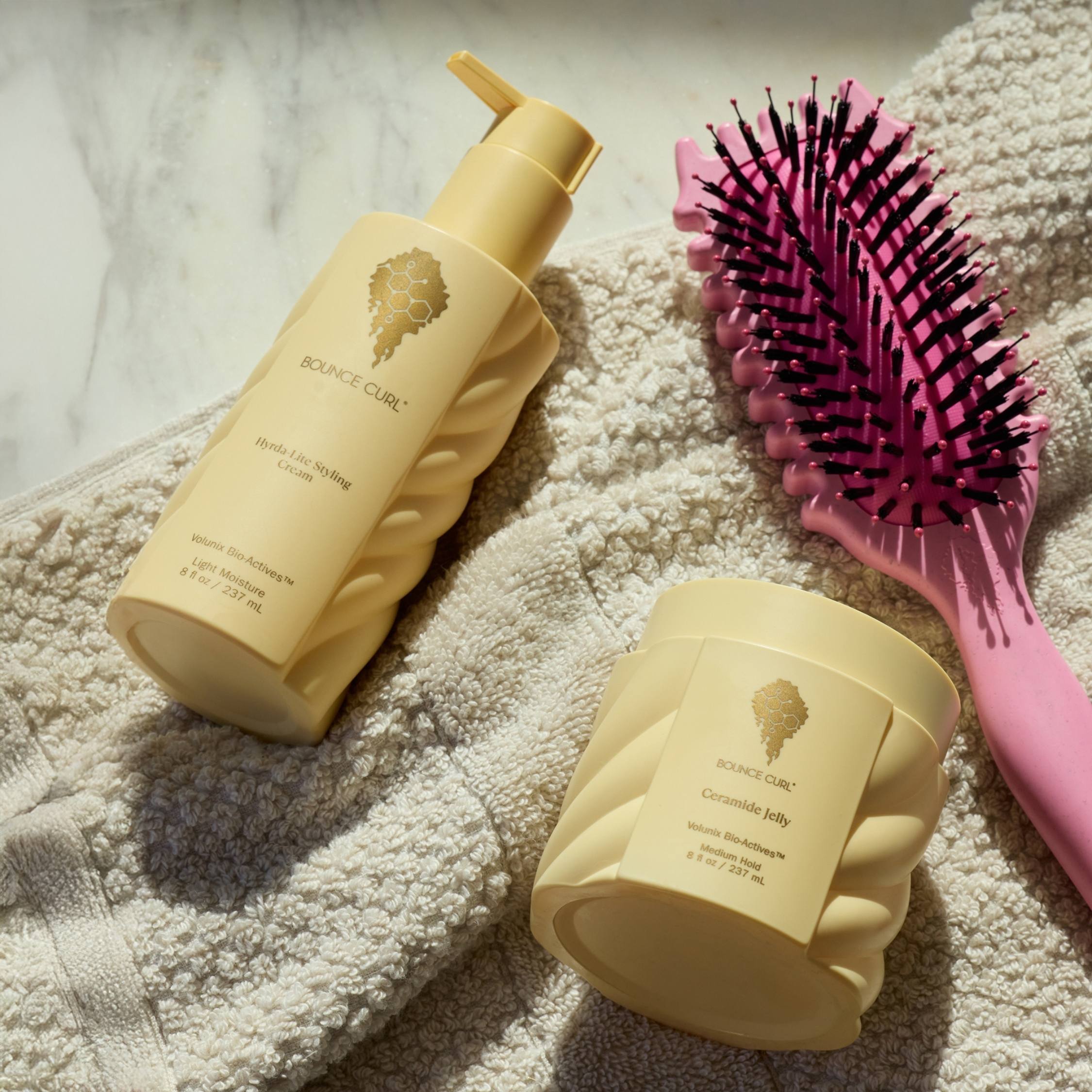
Managing textured hair can feel like solving a puzzle with missing pieces. You try a new product, follow someone’s routine online, and still end up with frizz, dryness, or undefined curls. The truth is, hair types 2, 3, and 4 each have distinct needs, and a one-size-fits-all approach rarely works. Whether your waves lose definition by midday or your coils shrink beyond recognition, the problem is usually a routine that was never built for your specific curl pattern. This checklist breaks down exactly what your hair needs, step by step, so you can stop guessing and start seeing real results.
Table of Contents
- Criteria for an effective natural hair routine
- Step-by-step natural hair checklist
- Key product recommendations for textured curls
- Comparison of routines for types 2, 3, and 4 curls
- What most natural hair checklists get wrong
- Discover tailored products for your curly routine
- Frequently asked questions
Key Takeaways
| Point | Details |
|---|---|
| Personalized routines matter | Adapting your hair care routine to your unique curl type and texture delivers better hydration and results. |
| Step-by-step checklists simplify care | A structured checklist helps you avoid mistakes and stay consistent with your wash, moisturize, and styling processes. |
| Product selection is crucial | Choosing the right shampoo, conditioner, and moisturizer for your hair type ensures healthy, defined curls. |
| Routine comparisons boost results | Comparing routines for types 2, 3, and 4 curls lets you see what works and tailor your approach for your best hair. |
Criteria for an effective natural hair routine
Before you follow any checklist, you need to understand what your hair is actually asking for. Multi-textured hair care starts with recognizing that curl pattern is foundational for customizing a routine. Knowing whether you have type 2 waves, type 3 curls, or type 4 coils changes everything from how often you wash to which products you reach for.
But curl type is just the starting point. Three other factors matter just as much:
- Porosity: How well your hair absorbs and holds moisture. Low porosity hair repels water; high porosity hair soaks it up but loses it fast.
- Density: How many strands you have per square inch. Dense hair needs more product; fine hair can get weighed down easily.
- Scalp health: An oily scalp may need more frequent washing, while a dry or sensitive scalp calls for gentler, less frequent cleansing.
Once you know these three factors, you can start asking better questions about your current routine. Are your curls feeling dry two days after wash day? That points to a moisture retention issue. Is your scalp itchy or flaky? That’s a scalp health signal. Are your curls defined right after washing but fall flat within hours? That’s a styling and sealing problem.
A curly hair routine built without this self-assessment is just borrowed advice. It might work for someone else, but it won’t consistently work for you.
Pro Tip: Keep a simple hair diary for four weeks. Note what products you used, how your hair felt on day one versus day three, and what the weather was like. Patterns will emerge fast, and you’ll stop wasting money on products that don’t suit your hair.
Step-by-step natural hair checklist
Once you know your hair’s criteria, apply these step-by-step actions to maximize results. Washing, moisturizing, and styling must be adapted to your curl type, but the core framework stays the same across types 2, 3, and 4.
- Clarify or co-wash based on buildup. Use a sulfate-free shampoo every one to two weeks to remove buildup. If your scalp is dry or sensitive, a co-wash (conditioner-only wash) works well between shampoo sessions.
- Deep condition every wash day. Apply a deep conditioner from mid-length to ends. Leave it on for 15 to 30 minutes, ideally under a shower cap for heat activation. This step is non-negotiable for types 3 and 4.
- Detangle gently while wet. Use a wide-tooth comb or your fingers on soaking-wet, conditioned hair. Start from the ends and work upward slowly. Rushing this step causes the most breakage.
- Apply a leave-in conditioner. This is your moisture base. Distribute it evenly through sections while hair is still damp.
- Seal with a cream or oil. Lock in that moisture with a styling cream or a lightweight oil. This is the “sealing” step in the LOC method (Liquid, Oil, Cream).
- Style and define. Use a gel, curl cream, or activator to define your pattern. Scrunch, twist, or braid depending on your preferred style.
- Protect your hair at night. Sleep on a satin pillowcase or use a satin bonnet to preserve moisture and reduce friction.
For a deeper look at single ingredient haircare, simpler formulas often outperform complex ones for sensitive scalps and fine-textured curls.

Pro Tip: Try an overnight deep conditioning treatment once a month. Apply your conditioner, cover with a plastic cap and a satin bonnet, and rinse in the morning. The extended time dramatically improves softness and elasticity.
Key product recommendations for textured curls
After following the core steps, let’s review which products truly support healthy, manageable curls. Moisturizer selection makes a significant impact on curl health, and the wrong formula can undo an otherwise solid routine.
Here’s a breakdown by routine step:
- Wash: Choose a sulfate-free shampoo for regular cleansing or a moisturizing co-wash for drier hair. Avoid formulas with heavy silicones if you’re not using a clarifying shampoo regularly.
- Condition: Look for detangling conditioners with ingredients like slippery elm, marshmallow root, or behentrimonium methosulfate. These provide the slip you need to detangle without tearing through your curls.
- Moisturize: Water-based leave-in conditioners work for all types. For types 3 and 4, layer a thicker cream on top. Type 2 waves do better with lighter milks or sprays to avoid weighing down the wave pattern.
- Seal: Lightweight oils like argan or jojoba suit type 2 and fine type 3 hair. Thicker oils like castor or shea butter blends work better for dense type 3 and type 4 coils.
- Style: Curl-defining gels give hold and reduce frizz. Curl creams add softness. Activators refresh second-day curls without rewetting entirely.
“The right moisturizer doesn’t just soften your hair. It changes how your curls respond to humidity, styling, and even sleep.”
Understanding why hair needs moisture helps you make smarter product choices rather than just following trends. And when you’re ready to try something new, browsing curly hair treatments by function rather than brand name makes the decision much easier.
Comparison of routines for types 2, 3, and 4 curls
To help you tailor your routine, here’s a clear comparison of what works best for different curl patterns. Routine customization is key for managing dryness, shrinkage, and definition across all curl types.
| Routine step | Type 2 (wavy) | Type 3 (curly) | Type 4 (coily) |
|---|---|---|---|
| Wash frequency | Every 5 to 7 days | Every 7 days | Every 7 to 10 days |
| Conditioner type | Lightweight rinse-out | Moisturizing, medium slip | Rich, heavy slip |
| Leave-in texture | Milk or light spray | Cream or lotion | Thick cream or butter |
| Sealing oil | Argan, jojoba | Coconut, avocado | Castor, shea butter |
| Styling product | Light gel or mousse | Curl cream plus gel | Twisting butter or gel |
| Protective styling | Loose braids, buns | Twist-outs, braid-outs | Protective styles weekly |
Quick do’s and don’ts for each type:
- Type 2: Do scrunch products in for volume. Don’t use heavy butters that flatten waves.
- Type 3: Do layer moisture and seal consistently. Don’t skip deep conditioning, even if curls look fine.
- Type 4: Do stretch styles to reduce single-strand knots. Don’t detangle dry hair under any circumstances.
Shrinkage is one of the most misunderstood aspects of type 4 hair. It’s actually a sign of healthy elasticity, not a problem to fix. Learning styling steps for type 3 and 4 curls helps you work with your natural pattern rather than against it.
For daily care between wash days, a simple refresh spray with water and a small amount of leave-in conditioner keeps curls looking defined without overloading them with product.
What most natural hair checklists get wrong
Most natural hair checklists are built around a single curl type, then presented as universal advice. That’s the core problem. Real hair, especially across Europe where climate, water hardness, and lifestyle vary widely, doesn’t behave like a single category.
Another common mistake is treating product swaps as the solution to every problem. Switching from one gel to another won’t fix a routine that skips deep conditioning or uses the wrong detangling technique. Products support a good routine. They don’t replace one.
Perhaps the biggest oversight is ignoring multi-textured hair, which is extremely common. Many women have type 3 curls at the crown and type 4 coils at the nape. A single approach applied to the whole head will always leave one section underserved.
The fix is simple but requires honesty. Treat your hair in sections. Adjust your products and techniques based on what each section actually needs. And stop chasing routines you found on social media from someone whose hair, climate, and water supply are completely different from yours. Your hair’s feedback is the only data that matters.
Discover tailored products for your curly routine
Building a routine that actually works starts with having the right products for each step. At Cocomera, every product in the collection is carefully selected for textured hair types 2, 3, and 4, so you’re not sorting through formulas made for straight hair.
From curly hair styling products that define and hold your pattern to a full hair treatments collection for deep conditioning days, the range covers every step in this checklist. If your hair needs an extra moisture boost, the hair masks collection offers rich, targeted options for all curl types. Browse by routine step and find exactly what your curls have been missing.
Frequently asked questions
How often should I wash my natural hair?
Weekly wash routines are recommended for healthy coily hair, though every 10 days works well if your scalp is dry or you use minimal products between washes.
What kind of moisturizer is best for type 3 and 4 curls?
Rich moisturizers improve curl health for types 3 and 4 because they deliver deeper hydration and create a stronger barrier against moisture loss.
How do I prevent excessive breakage when detangling?
Use a detangling conditioner with good slip and always start from the ends, working upward slowly. Gentle technique combined with the right conditioner reduces breakage significantly.
Can I use oils for all textured hair types?
Yes, but the type matters. Thinner oils like argan suit type 2 hair, while thicker oils or butters work better for types 3 and 4 as sealants after moisturizing.


