


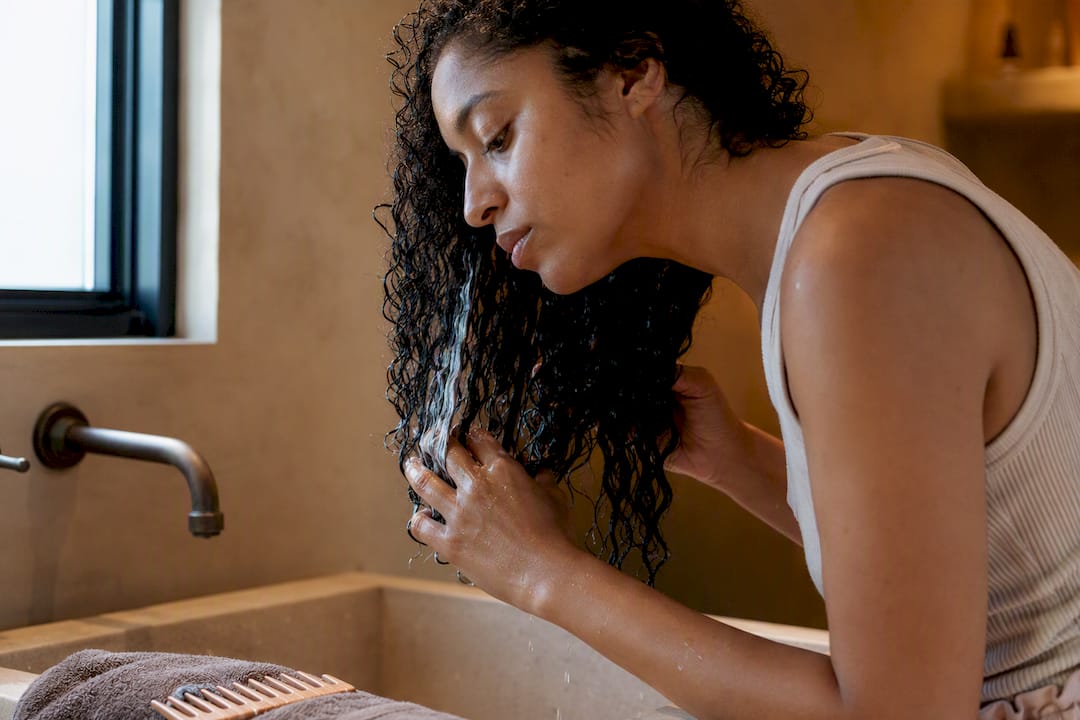
Try LOC first if your hair is high-porosity, dense, or has tightly coiled texture. Try LCO first if your hair is low-porosity or fine textured. The reasoning comes down to how fast your strands lose or resist moisture, not what curl pattern you were assigned at birth. Test either method for two to four wash cycles, then adjust the product weight before you write off the whole approach.
Table of Contents
- LOC vs LCO Method: What the Letters Actually Mean
- LOC vs LCO Analysis: Matching the Method to Your Hair
- Step-by-Step: Applying LOC and LCO on Wash Day
- Choosing the Right Leave-In, Cream, and Oil for Each Method
- Fixing Greasy Roots, Flat Curls, and Product Buildup
- How Cocomera Approaches Moisture Retention for Textured Hair
- Porosity Beats Curl Pattern Every Time
- Build Your LOC or LCO Routine with Cocomera’s Curated Picks
- Where This Guide Came From
- Sources
- FAQ
LOC vs LCO Method: What the Letters Actually Mean
LOC stands for Liquid, Oil, Cream. LCO stands for Liquid, Cream, Oil. Both start with a water-based liquid, usually a leave-in conditioner or diluted spray, because water is the actual moisturizer. Oil and cream just decide how that water gets locked in and how the finished style feels.
The LOC method applies oil before cream, so the oil coats each strand first and the heavier cream seals everything on top. That order tends to build more hold and more weight. LCO flips the last two steps: cream goes on before oil, letting the cream’s water and slip absorb into the hair first, with a thin oil layer sealing it in afterward.
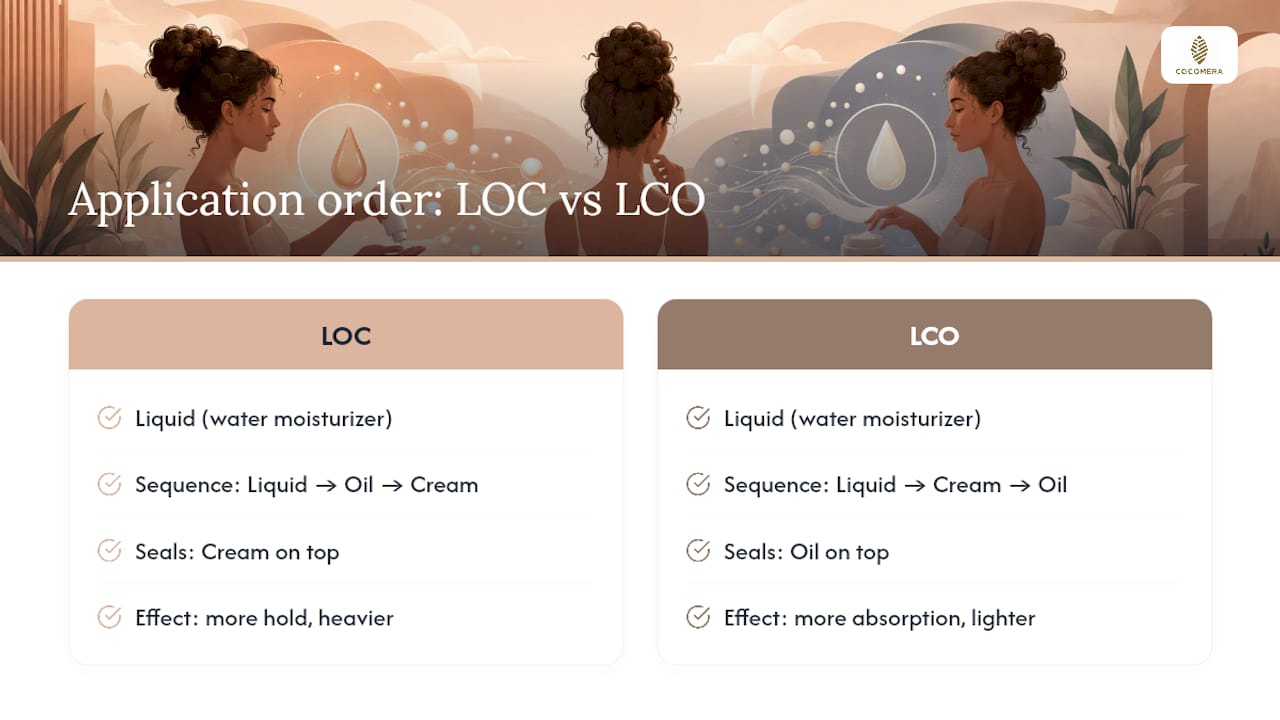
Picture the liquid as a drink of water, the cream as a thick lotion, and the oil as a raincoat. In LOC, you put the raincoat on before the lotion soaks in. In LCO, the lotion sinks in first, then a lighter raincoat goes over the top. That single swap in sequence is the entire difference between the two, and it changes outcomes more than most people expect.
LOC vs LCO Analysis: Matching the Method to Your Hair
Porosity decides more than curl pattern does. High-porosity hair has raised or damaged cuticles that let moisture in fast, but let it escape just as fast, so it needs a heavier sealant to trap water in. Low-porosity hair has a tighter cuticle layer that resists moisture altogether, so heavy products tend to sit on top instead of soaking in, leaving strands greasy and flat.
That’s the real logic behind the LOC vs LCO comparison: LOC’s oil-then-cream order works well for coarse, dense, or type 4 hair because the extra sealing power holds onto hydration all day. LCO’s cream-then-oil order works better for finer or type 3 strands since the lighter final layer won’t drag down curls that already struggle to absorb product.
Run a quick check before committing to either routine:
- Strand test: Drop a clean strand of shed hair in a glass of water. It sinks fast if you have high porosity, floats for a while if you have low porosity.
- Wet feel test: If conditioner rinses out slippery and slow, your cuticles are tight (low porosity). If it seems to disappear instantly, your cuticles are more open (high porosity).
- Density check: Grab a small section at your part. If you can barely see your scalp, your hair is dense and likely wants LOC’s extra sealing step.
- Product memory: If your curls constantly feel dry within a day despite moisturizing, lean LOC. If they feel coated or weighed down by midday, lean LCO.
None of this is permanent. Porosity and density can vary by section, especially if you have color treatments or heat damage in certain areas.
Step-by-Step: Applying LOC and LCO on Wash Day
LOC method, wash day:
- Rinse out conditioner leaving hair fully saturated.
- Section hair into four to six parts for even coverage.
- Apply a leave-in liquid throughout, focusing on ends.
- Smooth a dime-sized amount of a light, penetrating oil over each section.
- Seal with a heavier cream or curl cream, scrunching or raking through.
LCO method, wash day:
- Start with soaking wet, freshly conditioned hair.
- Section the same way as above.
- Apply the leave-in liquid evenly.
- Work in a lighter cream first, distributing from mid-shaft to ends.
- Finish with a thin layer of oil to seal, focusing on ends where hair is oldest and driest.
For quick refreshes between wash days, LCO is usually faster since a spray bottle of water or diluted leave-in, a small amount of cream, and a drop of oil can revive curls in minutes. LOC refreshes work too, but skip the oil if hair still feels coated from the day before.
Air-dry or diffuse on low heat either way. Applying product to soaking wet hair, not just damp hair, helps both methods lock in more water before the sealants go on.
Pro Tip: Apply products to hair that’s dripping wet, not towel-dried. The extra water gives the leave-in something to trap before your oil or cream even touches your strands.
If curls feel crunchy after drying, you likely used too much cream. If they feel dry again by afternoon, the sealant layer was probably too light for your porosity.
Choosing the Right Leave-In, Cream, and Oil for Each Method
Product weight matters more than brand loyalty. A cream built for fine, low-porosity hair will sit on top of coarse, high-porosity strands and do almost nothing.
- Leave-ins: Look for lightweight, water-based formulas as your first layer regardless of method. A prep spray works well here since it detangles and hydrates without adding weight before the real moisturizing steps.
- Creams for LOC: Go heavier. Butters and thick curl creams give high-porosity or coarse hair something substantial to hold onto after the oil layer. The Mielle Rosemary Mint Daily Styling Créme fits this role for denser hair types.
- Creams for LCO: Go lighter. A whipped or lotion-style cream, like Innersense Quiet Calm Curl Control, absorbs into fine or low-porosity strands without leaving buildup.
- Oils: Penetrating oils (coconut, castor) suit LOC’s earlier placement, since they need time to work into the hair shaft. Lighter oils like jojoba or grapeseed suit LCO’s sealing role, since they sit on the surface without adding grease.
- Sealing gels: For extra frizz control on either method, a gel like Eco Style Olive Oil Styling Gel can substitute for or layer with your final oil step.
Butters deserve a special mention for high-porosity hair since they behave more like a cream than an oil. Read more on the role of butters in textured hair care if you’re building an LOC routine around them.
Fixing Greasy Roots, Flat Curls, and Product Buildup
Greasy or flat curls by day two usually mean your cream or oil is too heavy for your porosity, not that moisturizing itself failed. Crunchy, straw-like strands after several days often signal buildup from skipping clarifying washes.
- Switch to a lighter cream or oil if curls feel weighed down within hours of styling.
- Add a heavier sealant or extra oil step if curls feel dry again before your next wash day.
- Clarify every two to three weeks if you use heavier LOC products regularly, since oils and butters build up faster than lighter LCO formulas.
- Deep condition weekly if hair still feels dry despite consistent moisturizing.
Pro Tip: Run a four-week experiment: pick one method, keep every other product constant, and track how your curls look and feel by day three of each wash cycle. That’s usually enough time to see a real pattern.
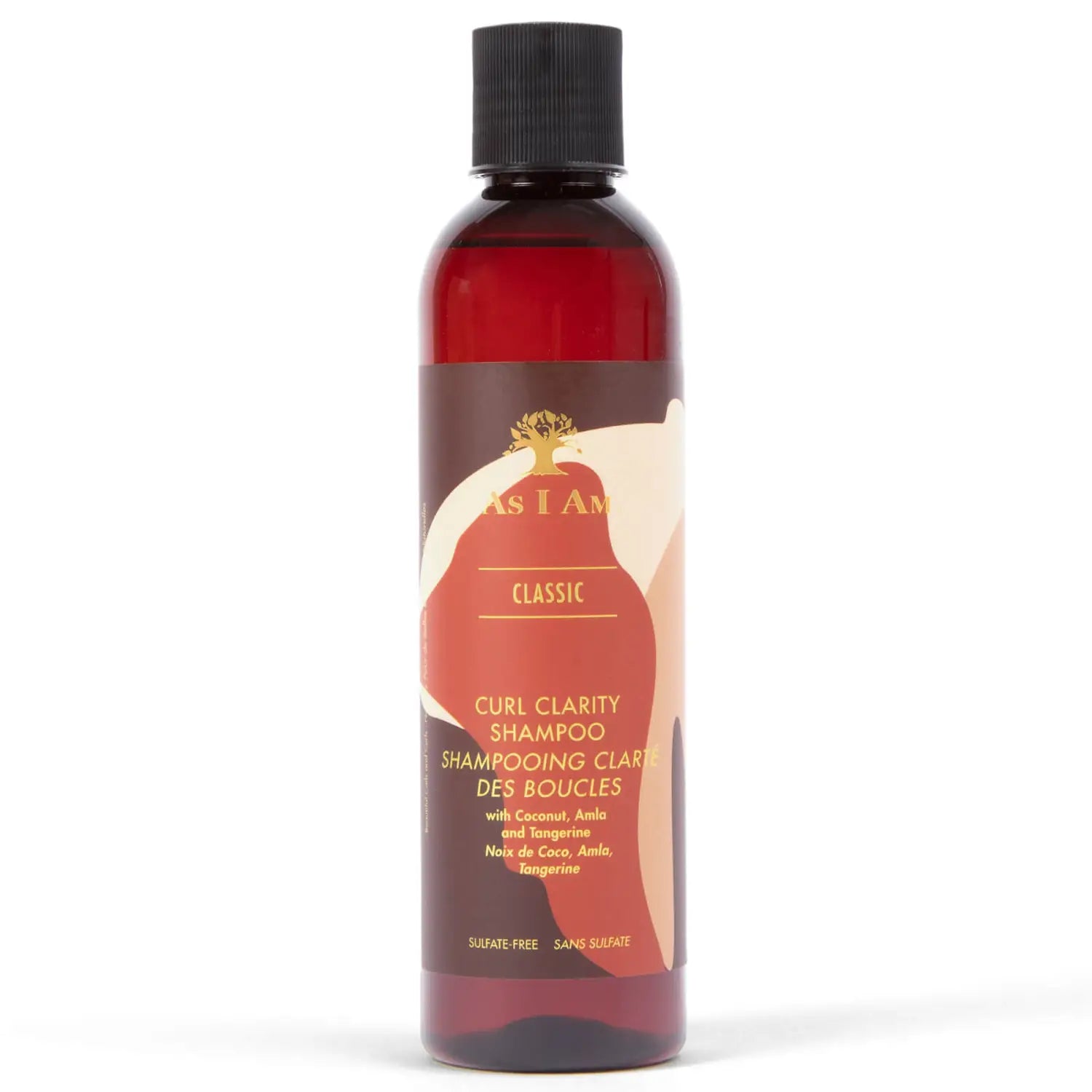
A clarifying wash like the AS I AM Curl Clarity Shampoo resets buildup without stripping curls bare, which matters if you’re testing product-heavy LOC routines.
How Cocomera Approaches Moisture Retention for Textured Hair
Some retailers curate products specifically by hair type and porosity rather than stocking everything under one generic “curly hair” label. That distinction matters when you’re trying to figure out whether your next purchase should be a lightweight cream or a heavy butter.
One goal of guides like the guide to retaining moisture in curls is cutting down the trial-and-error most people go through before finding a routine that actually works. Instead of buying five creams and hoping one sticks, shoppers can filter by porosity and density from the start, using curated collections built around how ingredients actually perform on different hair textures.
Porosity Beats Curl Pattern Every Time
Most advice on this topic still leads with curl type, “type 3 does this, type 4 does that,” when porosity and density are the actual variables driving results. Two people with identical curl patterns can need completely different routines if one has damaged, high-porosity ends and the other has virgin, low-porosity hair.
The overlooked piece is that hair isn’t uniform across the head. Your crown might be low-porosity while your ends, especially if they’re color-treated or heat-damaged, behave completely differently. That’s why a single wash-day routine sometimes fails at the ends while working fine everywhere else.
Start with the strand test, not a curl chart. Give one method a real four-week trial before switching, and adjust product weight before you abandon the method entirely. Most people give up on LOC or LCO after one bad wash day, when the fix was simply a lighter cream or an extra oil step, not a different letter order altogether.
— Cocomera
Build Your LOC or LCO Routine with Cocomera’s Curated Picks
Finding the right leave-in, cream, and oil combination usually takes months of trial and error, and a lot of half-used bottles along the way. Cocomera solves that by grouping products according to the exact roles they play in a moisturizing routine, so you can shop by function instead of guessing from a shelf of unfamiliar labels.
For a wash-day cleanse, start with a gentle option like the Innersense Hair Renew Scalp Hairbath, or reach for the AS I AM Jamaican Black Castor Oil Shampoo if your strands lean dry and high-porosity. Follow with Innersense Clarity Conditioner to detangle before you even reach your LOC or LCO steps, and stock up on the As I Am Hydration Elation Intensive Conditioner for weekly deep conditioning if your hair runs on the drier side. Browse the full shampoo and conditioner collections to match a cleanser and conditioner to your exact porosity before you build out the rest of your routine.
Where This Guide Came From
Application steps and porosity guidance draw from CurlCentric’s LOC vs LCO breakdown, HairstyleCamp’s moisturizing method comparison, and Hair, alongside Cocomera’s own moisture retention resource.
Sources
- LOC vs LCO Method: Which Method Is Better for Natural Hair? — CurlCentric
- LOC Vs. LCO: Which Moisturizing Method Is Best for Hair? — HairstyleCamp
- Hair
FAQ
Should I Use the LCO or LOC Method?
Use LCO if your hair is fine, low-porosity, or type 3, since the lighter final oil layer won’t weigh curls down. Use LOC if your hair is coarse, dense, or type 4, since the heavier cream on top seals in moisture that would otherwise escape fast, according to CurlCentric’s comparison.
Is the LCO Method Good for Low-Porosity Hair?
Yes, LCO tends to work well for low-porosity hair because the cream absorbs before the final oil seal, avoiding the greasy buildup that heavier LOC routines can cause on tight cuticles. This matches the porosity-based guidance from HairstyleCamp.
Is LOC or LCO Better for Type 4C Hair?
LOC generally suits tightly coiled, dense hair better since it loses moisture quickly and benefits from a heavier cream sealing everything in after the oil. Some strands with lower porosity may still do better with LCO, so a strand test is advisable.
How Many Times Should I Do the LCO Method?
Most people use LCO on wash day, then do lighter refreshes with just the liquid and a touch of cream or oil every one to three days depending on how fast curls dry out. Track results over two to four wash cycles before deciding if the method is truly working for your hair.


