


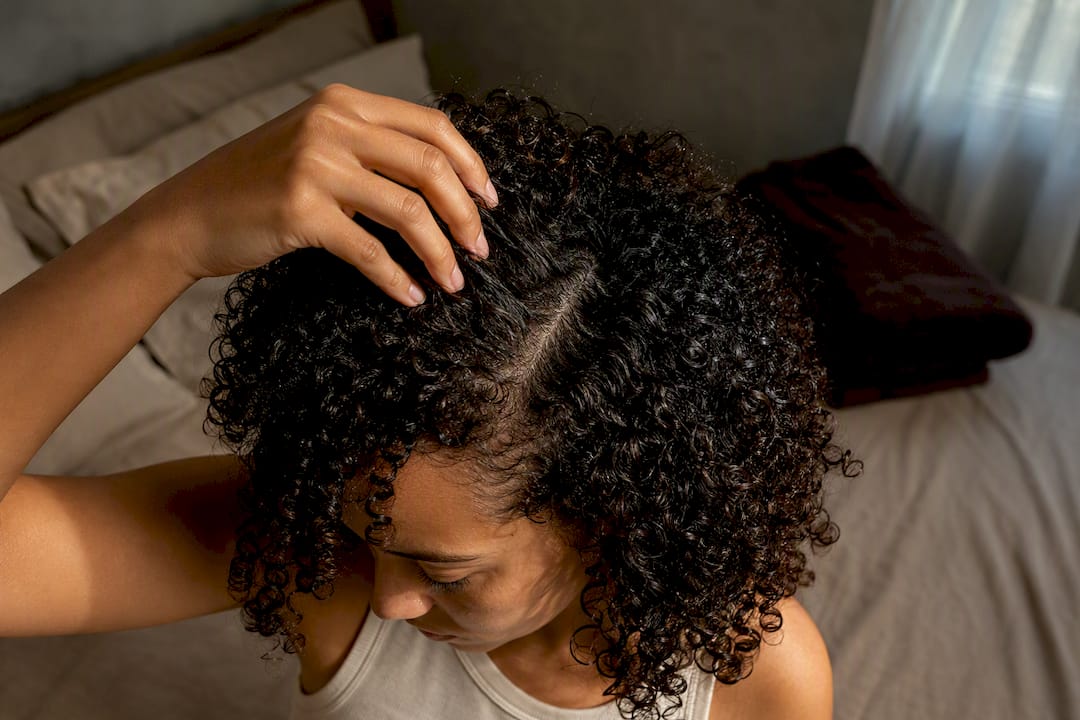
Most itchy scalp under curly hair comes down to three overlapping causes: dry scalp, product buildup, or dandruff and seborrheic dermatitis. The fastest relief is switching to lukewarm water and pressing your fingertips into the scalp instead of scratching, then applying a lightweight, alcohol-free scalp gel at the roots. If the itch keeps coming back after a week of that, move to the targeted routine and medicated options below.
TL;DR:
- Using lukewarm water and gentle fingertip pressure can significantly reduce scalp irritation without damaging curl pattern.
- Clarifying washes or diluted apple cider vinegar rinses help reset the scalp when flakes or buildup are present before medicated treatments.
- Curly hair’s curved follicles slow sebum travel, making the scalp prone to oil imbalance, dandruff, and seborrheic dermatitis, especially with hard water buildup.
- Targeted scalp treatments with active ingredients like ketoconazole or zinc pyrithione are effective for persistent dandruff, but require proper application and monitoring.
- Regular, curl-specific scalp care routines that separate cleansing from moisturizing are crucial for preventing itch and maintaining healthy curls.
Table of Contents
- Fast Checklist: 6 Things to Do Right Now for an Itchy Scalp
- Why Curly Hair Itches More Than Straight Hair
- A Curl-Friendly Routine That Treats the Scalp Without Wrecking Your Curls
- Medicated Treatments and When to See a Dermatologist
- Why Texture-First Scalp Advice Actually Works
- What Most Scalp Advice Gets Backwards
- Two Cocomera Picks Worth Adding to Your Routine
- Sources
- FAQ
Fast Checklist: 6 Things to Do Right Now for an Itchy Scalp
Before you diagnose anything, calm the irritation. Curly hair is more fragile when wet and more prone to breakage when scratched, so the goal is relief that doesn’t cost you curl definition.
- Turn the water down. Hot water strips natural oils and inflames already-sensitive skin, worse on a scalp that’s already reactive.
- Press, don’t scratch. Use fingertip pressure in small circles instead of nails. It relieves the itch without opening the skin.
- Apply a cooling, alcohol-free scalp gel or light serum at the roots. Aloe or glycerin based formulas calm irritation without adding oil residue.
- Keep styling creams and butters off the scalp. Apply them starting at mid-lengths so the scalp stays clear of buildup.
- If you see flaking or film on the scalp, do one clarifying wash or a diluted apple cider vinegar rinse. This resets things before you add anything medicated.
- Save medicated shampoo for when you actually need it, rather than using it every wash out of habit.
Pro Tip: Keep a small spray bottle of diluted leave-in conditioner or water near your desk. A quick scalp mist between washes can interrupt an itch cycle without disturbing your curl pattern.
Why Curly Hair Itches More Than Straight Hair
The shape of your follicle is the root of the problem, literally. In curly and coily hair, the curved follicle slows how sebum travels down the hair shaft, which means the scalp can run oily right at the roots while the rest of the strand stays dry. That imbalance raises your risk of both irritation and seborrheic dermatitis, since trapped oil and shed skin cells feed the yeast (Malassezia) responsible for dandruff-type flaking.
Once you know that mechanism, the common causes start to look different from each other:
- Dry scalp feels tight and flaky, usually worse after washing with harsh sulfates or in cold, dry weather.
- Dandruff or seborrheic dermatitis shows up as greasy, yellowish flakes, often along the hairline, with a persistent itch that doesn’t fully resolve after washing.
- Contact allergy causes redness and itching that starts shortly after using a new product, often with a burning sensation.
- Psoriasis produces thicker, silvery scaling with defined patches, sometimes extending past the hairline onto the forehead or neck.
- Lice cause intense itching concentrated behind the ears and at the nape, and you can usually spot nits attached to the hair shaft itself.
Protective styles, heavy butters, and stretching washes too far apart can all worsen any of these by trapping oil and product against the scalp. Hard water adds another layer: mineral buildup can coat the scalp and hair, leaving both feeling dry, dull, and itchy even when you’re washing regularly.
A Curl-Friendly Routine That Treats the Scalp Without Wrecking Your Curls
Treat your scalp the way you’d treat facial skin, not the way you treat the rest of your hair. The goal is targeted cleansing and treatment at the roots, and hydration everywhere else.
- Set a wash schedule that fits your pattern. Looser waves (type 2) often do well washing every 2 to 3 days; tighter curls and coils (types 3 to 4) can usually stretch to 5 to 7 days without buildup becoming a problem, since less frequent washing protects moisture in coily strands.
- Apply shampoo, or medicated treatment, directly to the scalp, not the length of your hair. Massage gently with fingertips for 3 to 5 minutes using the press-and-release technique, then rinse thoroughly before conditioner touches your scalp.
- Clarify on a schedule that matches your texture. Looser curls benefit from clarifying every 1 to 2 weeks; tighter coils can go 3 to 4 weeks between clarifying washes, according to curl-specific guidance.
- If you use pre-shampoo oil, choose something light. MCT oil or fractionated coconut oil sinks in without the heavy, pore-clogging effect of thicker butters, which can trap sebum against the scalp and make dermatitis worse.
- Hydrate the scalp with lightweight, water-based ingredients. Glycerin, aloe, and hyaluronic acid calm irritation without leaving residue that feeds yeast overgrowth. Save your conditioner for the lengths and ends only.
- Dry with a diffuser on medium heat, held a few inches away. Avoid pointing concentrated hot air directly at the roots, which dries out an already-sensitive scalp.
- Exfoliate gently once every 1 to 2 weeks using a soft-bristle scalp brush or a scrub formulated for the scalp, never nails or a stiff brush that can cause micro-tears.
Pro Tip: If you wear braids, twists, or another protective style, don’t abandon scalp care while it’s installed. Ask your stylist for slightly looser parts or shorter install times so you can still access and treat your scalp between styles.
Medicated Treatments and When to See a Dermatologist
For dandruff or seborrheic dermatitis that doesn’t respond to basic cleansing changes, medicated actives work, but how you apply them on curly hair matters as much as which one you pick.
- Ketoconazole, zinc pyrithione, and selenium sulfide target the Malassezia yeast behind most dandruff-driven itch.
- Salicylic acid helps break down thicker scale and flaking, especially on a scalp with visible buildup.
- Apply any of these to the scalp only, massage for 2 to 3 minutes, and rinse completely, then follow immediately with a moisturizing conditioner on the lengths to prevent the shaft from drying out.
- During an active flare, use medicated shampoo twice weekly until symptoms calm down, then drop to once weekly for maintenance.
- If scale is thick, do a 10 to 15 minute pre-treatment with MCT or fractionated coconut oil before the medicated wash. It softens flakes so they lift away instead of tearing at the scalp.
See a dermatologist if you notice severe or persistent itch that doesn’t improve after two to three weeks of consistent care, spreading redness, open sores, patchy hair loss, or any symptoms beyond the scalp itself. A 2026 dermatology consensus specifically flags high curl pattern hair as more vulnerable to seborrheic dermatitis, which is one more reason not to wait it out if home care isn’t working after a few weeks.
Why Texture-First Scalp Advice Actually Works
Generic scalp advice fails curly and coily hair constantly, because it’s written for hair that doesn’t trap oil, moisture, or product the way textured hair does. Hair care curated specifically for types 2 through 4 means that shampoos, oils, and scalp treatments are chosen with curl mechanics in mind, not adapted after the fact.
That shows up in practical guidance, not just product selection:
- Drying techniques that protect curl clumping instead of frizzing it out with rough toweling
- Product application methods that keep butters and heavier creams off the scalp and on the lengths where they belong
- Clarifying routines are timed to curl type instead of a one-size-fits-all weekly reset
The scalp care guidance and clarifying methods on the Cocomera blog exist because textured hair needs a different playbook, not a smaller version of the same one.
What Most Scalp Advice Gets Backwards
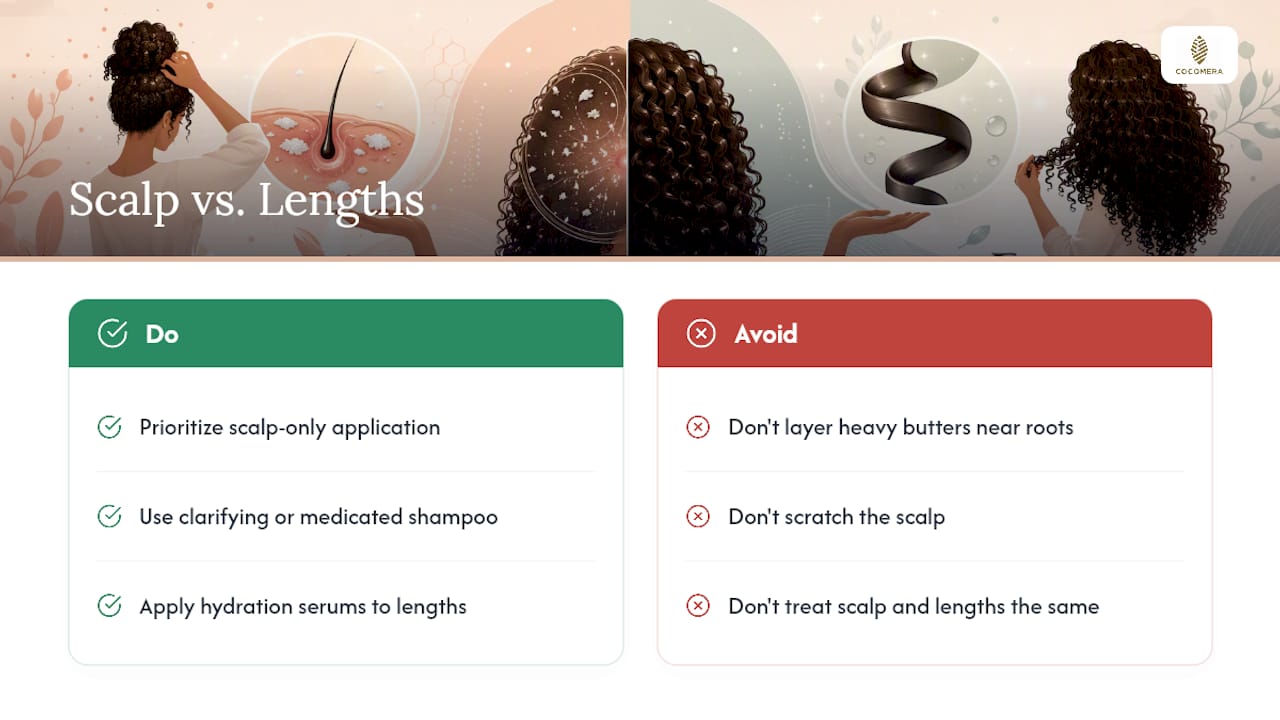
Most advice on itchy scalps treats curly hair as an afterthought, the same shampoo instructions written for straight hair with a note to “add more conditioner.” That’s backwards. The real fix starts with recognizing that your scalp and your strands have opposite needs. The scalp wants cleansing and light treatment; the lengths want moisture and protection. Trying to solve both with the same product in the same motion is why so many people bounce between “too oily” and “too dry” without ever landing on relief.
The habit worth breaking is scratching, obviously, but almost as damaging is layering heavy butters near the roots because the ends feel dry. That single mistake feeds buildup and yeast overgrowth at exactly the spot you’re trying to soothe. Prioritize scalp-only application first. Everything else, clarifying schedule, medicated shampoo, hydration serums, works better once that habit is fixed.
— Cocomera
Two Cocomera Picks Worth Adding to Your Routine
If your scalp care routine needs an upgrade, two products handle the two biggest gaps: refreshing between washes and rebuilding hydration on wash day.
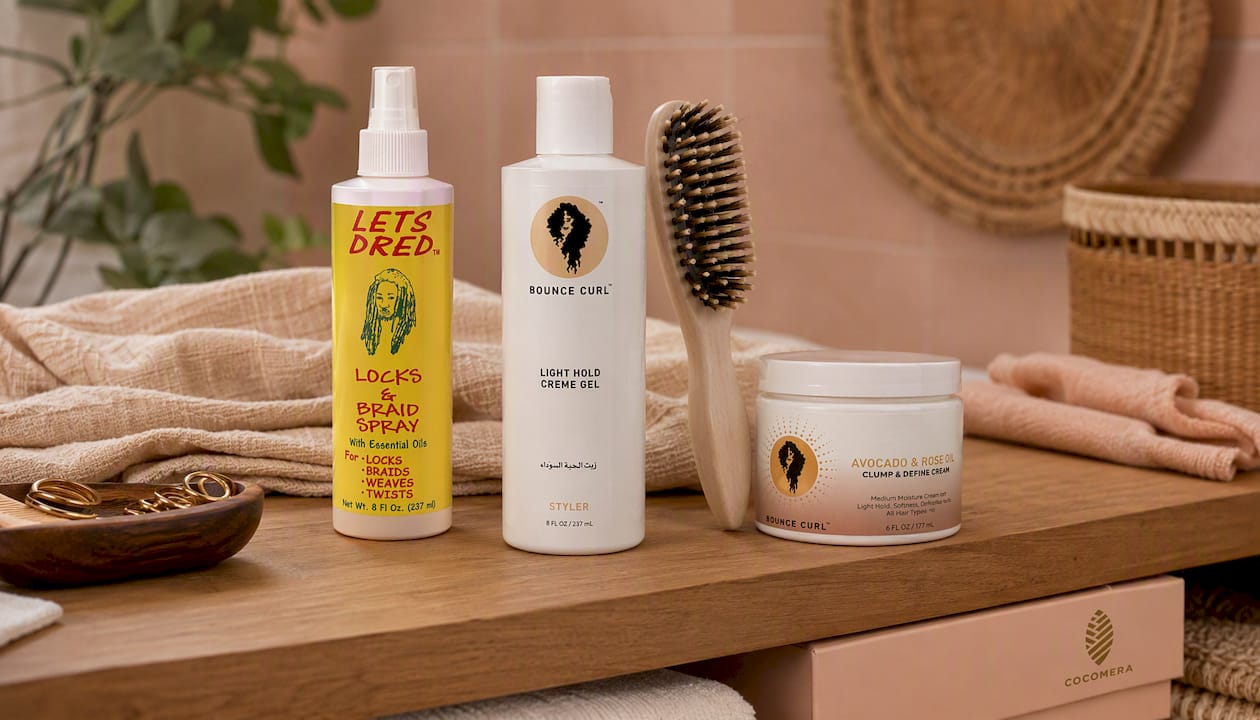
The LETS DRED Locks and Braid Spray is built for exactly the between-wash window when itch tends to creep back, especially if you’re wearing locks, braids, or twists. A light mist at the roots calms irritation without disturbing your style or leaving heavy residue behind, and it works well as a quick refresh on days you can’t wash.
On wash day, the Bounce Curl Bundle picks up right where scalp treatment leaves off. After cleansing the scalp and rinsing thoroughly, the bundle’s hydrating formulas go to work on your lengths, replacing moisture that medicated or clarifying washes can pull out. Pair the two: scalp treatment first, hydration second, refresh spray in between. Check current stock and full ingredient details on each product page before your next wash day.
Sources
- High Curl Pattern Hair and Scalp Care Considerations to Mitigate Seborrheic Dermatitis - PMC
- Seborrheic Dermatitis and Curly Hair: Scalp Care Guide (2026) - SEBDERMATOLOGY
- Curly Hair Itchy Scalp Relief: Expert Curl-Friendly Tips
FAQ
What causes itchy bumps on the scalp?
Itchy bumps often point to folliculitis (inflamed hair follicles), contact allergy from a new product, or a flare of seborrheic dermatitis. If bumps persist beyond a week or spread, see a dermatologist rather than self-treating.
How can I calm an itchy scalp quickly?
Switch to lukewarm water, apply gentle pressure with your fingertips instead of scratching, and use an alcohol-free, cooling scalp gel or serum at the roots. Products like those in Cocomera’s dry and itchy scalp collection are formulated specifically for this.
Why does my scalp itch so much even after washing?
If the itch persists after washing, buildup, hard water minerals, or an underlying condition like seborrheic dermatitis is likely the cause rather than simple dryness. A clarifying wash or a switch to medicated shampoo usually resolves it within one to two weeks.
Why does my scalp itch when I don’t have lice?
Itching without lice is most often dry scalp, dandruff, or contact irritation from a fragranced or alcohol-based product. Checking your recent product changes and switching to fragrance-free options, as noted in guidance on hypoallergenic formulation, is a good next step before assuming lice.


