


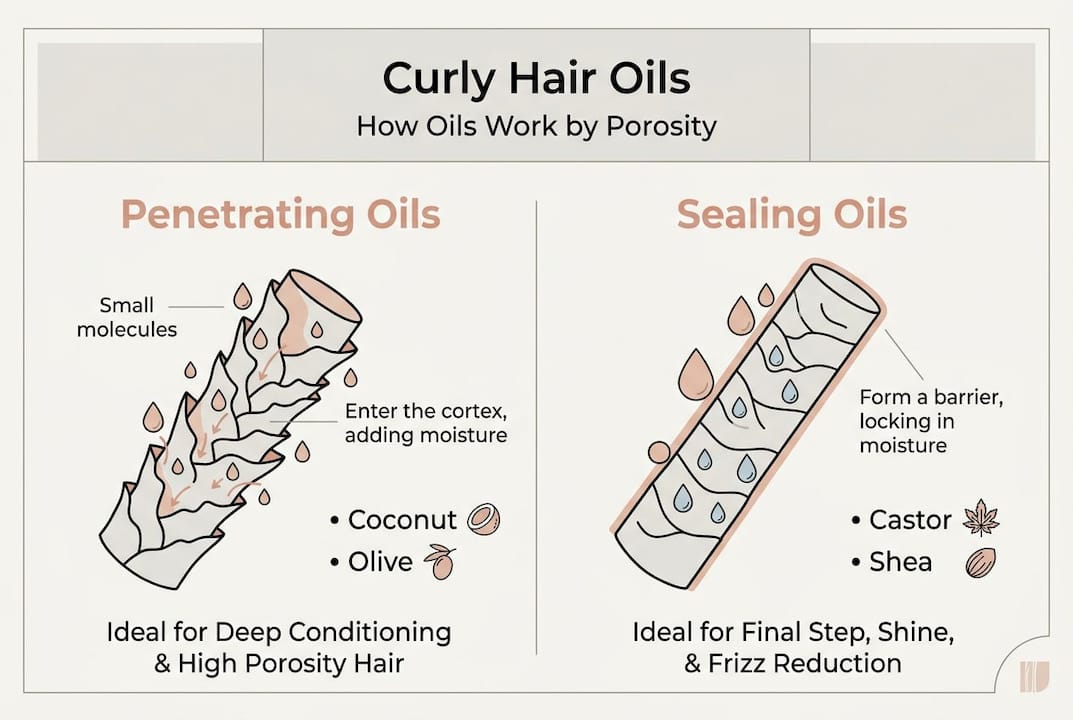
- Curly hair’s unique lipid structure affects moisture retention, making it prone to dryness.
- Oil choice should be based on hair porosity for effective moisture sealing and penetration.
- Personalizing routines to specific curl types, porosity, and climate yields the best results.
Curly and afro hair is not just a texture — it’s a completely different biological structure. Research shows that curly hair has distinct internal lipid differences compared to straight hair, which directly affects how it holds moisture. That’s why your curls can feel dry even an hour after washing. The frustrating part? Most oil guides skip the science entirely and hand you a generic list. This article breaks down exactly why your hair behaves the way it does, how porosity shapes every oil decision you make, and what actually works for curly and afro hair in Sweden’s cold, dry climate.
Table of Contents
- Understanding curly hair’s natural oils and dryness
- Matching oils to hair porosity: high, medium, and low
- The science behind oil penetration: coconut, olive, and beyond
- Creating an effective routine: dos, don’ts, and Swedish context
- What most routines miss about oils and curly hair
- Discover curated oils and treatments for Swedish curls
- Frequently asked questions
Key Takeaways
| Point | Details |
|---|---|
| Porosity matters for oil choice | Matching your curly hair’s porosity with the right oil type is crucial for moisture retention and shine. |
| Science explains dryness | Internal lipids within curly and afro hair slow water regain, highlighting the need for regular oil treatments. |
| Routine must adapt to climate | Adapting your oil routine for Sweden’s dry, cold seasons prevents buildup and achieves healthy curls year-round. |
| Oil penetration affects protein | Oils like coconut deeply penetrate and protect curly hair’s protein structure, reducing breakage. |
| One-size-fits-all doesn’t work | Individual porosity, curl pattern, and local climate demand personalized oil routines for curly and afro hair. |
Understanding curly hair’s natural oils and dryness
Building on the initial insight about dryness, let’s look deeper into what makes curly and afro hair different from other hair types.
Curly hair has a unique internal lipid composition that sets it apart. Lipids, which include ceramides and other fatty compounds, sit inside and around the hair shaft and act like a gatekeeper for moisture. The science is clear: lipids regulate water retention in curly hair, and differences in this lipid profile directly influence how prone your hair is to dryness. When those lipids are depleted or imbalanced, water escapes faster and your curls feel rough, brittle, and thirsty.
“The lipid barrier in curly hair behaves differently than in straight hair — it’s not just about curl shape, it’s about chemistry.”
Here’s why this matters for your routine:
- Ceramides act as the glue between hair cells. When ceramide levels drop, the cuticle lifts and moisture escapes more easily.
- Free fatty acids on the hair surface help repel water loss. Curly hair tends to have fewer of these, making it more vulnerable.
- The curl pattern itself means natural scalp oils (sebum) have a harder time traveling down the spiral shaft, leaving the ends chronically dry.
This is not a personal care failure. It’s biology. Understanding it changes everything about how you approach your routine. Instead of piling on any oil you find, you start choosing oils that actually match what your hair’s lipid structure needs.
For a deeper look at how moisture works in textured hair, the moisture guide for textured curls is a great place to build your foundation. The key takeaway here is simple: your curls are not broken. They just need oils that work with their chemistry, not against it.
Matching oils to hair porosity: high, medium, and low
Now that we understand the science behind curly hair dryness, let’s see how it informs oil selection based on porosity.
Porosity is the single most important factor most people skip. It refers to how easily your hair absorbs and holds moisture. Get this wrong and even the most expensive oil will sit on top of your hair or disappear too fast to do anything useful.
Oil choice depends on porosity — high porosity needs sealing oils, low porosity benefits from lightweight or heat-activated options, and medium porosity only needs minimal oil for shine.
| Porosity type | What it means | Best oil types | Examples |
|---|---|---|---|
| High porosity | Cuticle is open, absorbs fast but loses moisture quickly | Heavy, sealing oils | Castor oil, shea butter |
| Medium porosity | Balanced absorption and retention | Light to medium oils | Jojoba, sweet almond |
| Low porosity | Cuticle is tight, resists absorption | Lightweight, penetrating oils | Argan, grapeseed |
Here’s a quick breakdown of what works for each type:
- High porosity curls need oils that seal the cuticle shut. Castor oil is thick and occlusive, meaning it creates a barrier that slows moisture loss. Shea butter works similarly.
- Low porosity hair already has a tight cuticle, so heavy oils just sit on top and cause buildup. Argan oil and grapeseed oil are light enough to absorb without blocking the hair shaft.
- Medium porosity is the sweet spot. A small amount of jojoba or sweet almond oil adds shine without weighing curls down.
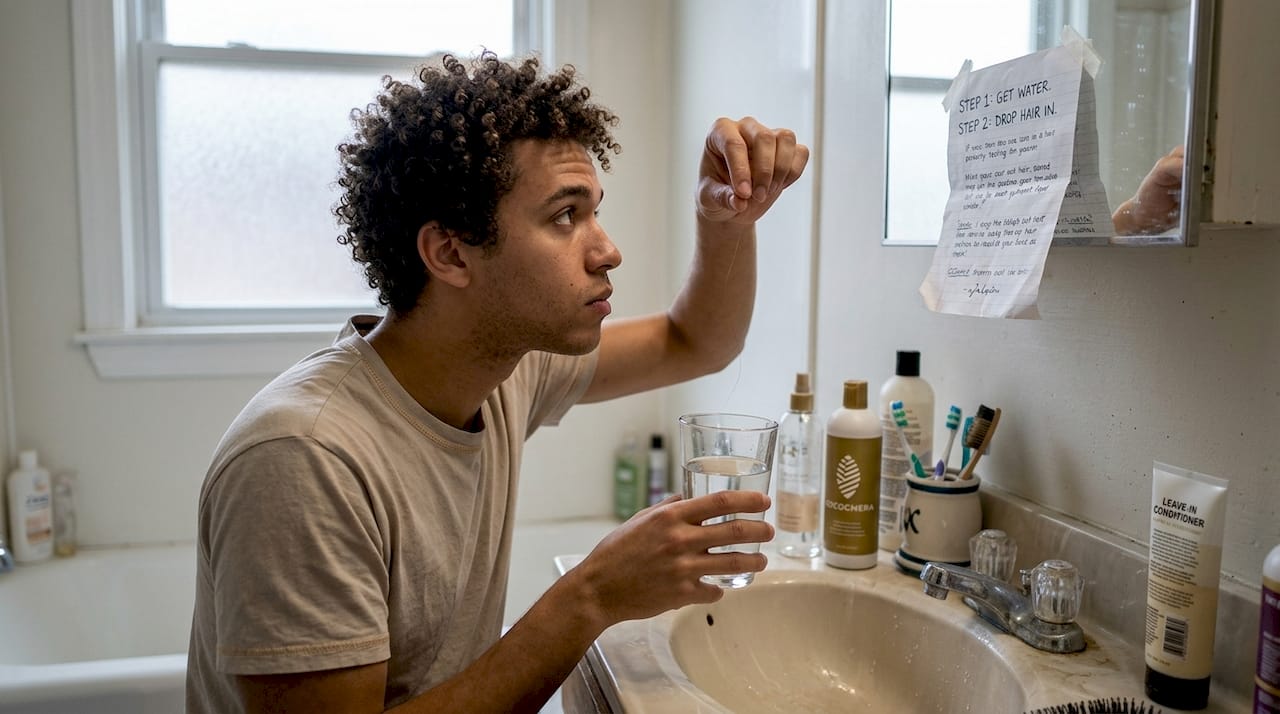
Pro Tip: Before switching any oil in your routine, do a quick porosity check first. Wet a clean strand and drop it into a glass of water. If it sinks fast, you have high porosity. If it floats, you have low porosity. Medium porosity strands sink slowly.
For more guidance on building a full routine around your porosity type, check out curly hair moisturizer tips and explore curly hair treatment options that are matched to specific curl needs. If you’re still figuring out which products suit European climates, choosing products for European curls walks you through that process clearly.
The science behind oil penetration: coconut, olive, and beyond
After learning how porosity guides oil selection, let’s examine which oils actually penetrate and protect curly hair best.
Not all oils are equal when it comes to getting inside the hair shaft. Some oils sit on the surface and create a coating. Others actually penetrate the cortex, the inner layer of your hair, and protect it from the inside out.
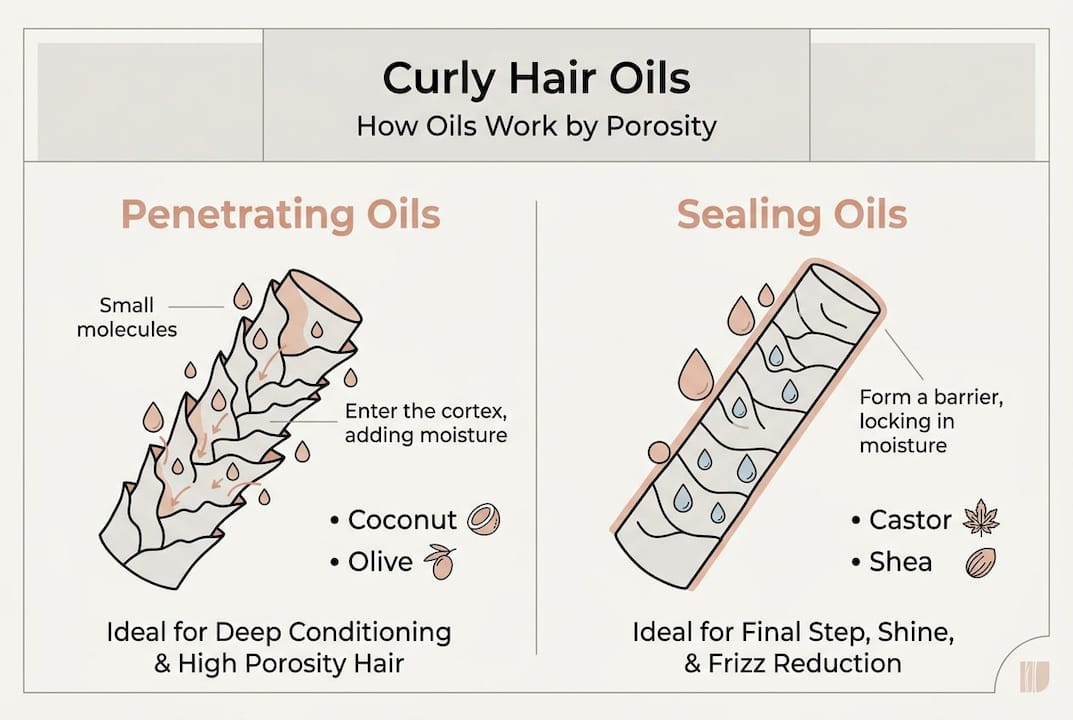
Research shows that coconut oil has superior penetration compared to most other oils, including mineral oil and sunflower oil. Its small molecular structure allows it to travel past the cuticle and bind to the protein structure inside the hair shaft. This matters because curly hair is at higher risk of protein loss through washing, heat, and manipulation.
| Oil | Penetrates hair shaft | Best for | Key benefit |
|---|---|---|---|
| Coconut oil | Yes | All porosity types | Protein protection |
| Olive oil | Partial | High and medium porosity | Softening and sealing |
| Argan oil | Surface level | Low porosity | Shine and frizz control |
| Grapeseed oil | Minimal | Low porosity | Lightweight moisture |
| Castor oil | No (occlusive) | High porosity | Sealing and thickness |
Coconut oil reduces protein loss by up to 39% when used as a pre-wash treatment, making it one of the most evidence-backed options for curly and afro hair.
Here’s how to get the most out of your oils:
- Apply coconut oil before washing as a pre-poo treatment. Leave it on for 30 minutes to let it penetrate fully.
- Use olive oil on damp hair after washing to seal in moisture while the cuticle is slightly open.
- Finish with a light oil like argan on top to add shine and reduce frizz without buildup.
- Avoid applying heavy oils to dry hair — they won’t absorb and will just create greasiness.
- Warm your oil slightly before applying. This opens the cuticle just enough to improve absorption, especially for low porosity hair.
For more practical advice on building a healthy curl routine, curly hair care tips covers the full picture from washing to styling.
Creating an effective routine: dos, don’ts, and Swedish context
With oil science and porosity matched, let’s put it all together for an effective European routine.
Sweden’s climate adds a layer of complexity that most international hair guides completely ignore. Cold winters, dry indoor heating, and low humidity all pull moisture out of your curls faster than in warmer climates. Your routine in January needs to work harder than your summer routine.
Here’s what to do:
- Prep your hair before washing with a penetrating oil like coconut to protect protein during cleansing.
- Apply oils to damp hair, not dry. Moisture is the base; oil is the seal.
- Layer your products from lightest to heaviest. Water-based leave-in first, then a light oil, then a heavier sealant if needed.
- Adjust for the season. In winter, add a richer oil or butter to your routine to compensate for the dry air.
Here’s what to avoid:
- Don’t skip the porosity check. Using castor oil on low porosity hair is a recipe for buildup and limp curls.
- Don’t overload on oil. More is not better. A few drops of the right oil beats a handful of the wrong one.
- Don’t use heat without protection. If you diffuse or use a hooded dryer, apply a heat-protective oil first.
- Don’t rely on one oil year-round without reassessing. Your hair’s needs shift with the seasons.
Pro Tip: In Sweden’s coldest months, layer a light oil under a heavier butter or cream to create a double seal. Think of it like dressing in layers — your hair needs the same logic.
If you have kids with curly hair, the kids oil routine collection has gentle options worth exploring. For a full overview of oils suited to different curl types, browse hair oils for all curl types. And if you’re working with type 3 or 4 curls specifically, afro hair styling tips offers targeted styling guidance.
Remember: medium porosity curls only need minimal oil for shine, and overusing oil causes buildup that blocks moisture from getting in at all.
What most routines miss about oils and curly hair
Here’s an uncomfortable truth: most oil guides are written for a general audience and assume all curly hair works the same way. It doesn’t.
The diversity in curly hair dryness comes from lipid differences that most routines completely ignore. Add to that the reality that someone with type 2 wavy hair in Stockholm has completely different needs than someone with type 4c coils in a humid climate, and the “best oils for curly hair” list starts to feel pretty useless.
What actually works is building a routine around three things: your porosity, your curl pattern, and your climate. Not someone else’s Instagram routine. Not a trending oil. Your specific combination.
We’ve seen this play out repeatedly. Someone switches to coconut oil because it’s popular, but they have low porosity hair in a cold climate, and suddenly their curls are weighed down and dull. The oil wasn’t wrong. The match was wrong.
For people navigating multiple textures in one head of hair, multi-textured hair care is worth reading before committing to any single oil routine. Personalization is not a luxury — it’s the only approach that actually works.
Discover curated oils and treatments for Swedish curls
Finding the right oil is one thing. Finding it in Sweden, suited to your specific curl type and climate, is another challenge entirely.

At Cocomera, we’ve done the curation work for you. Our curly and afro hair oils collection brings together carefully selected options for every porosity type and curl pattern, from type 2 waves to type 4 coils. If your hair needs more than oil, explore our curly hair treatments for deeper conditioning options, or browse our hair masks for curly hair for intensive moisture sessions that work especially well in Sweden’s dry winter months. Every product is chosen with textured hair in mind, so you spend less time guessing and more time loving your curls.
Frequently asked questions
Why does curly hair need more oil than straight hair?
Curly hair’s unique lipid structure slows water regain and makes it prone to dryness, so added oil helps compensate for the moisture that escapes faster than in straight hair.
What’s the best oil for high porosity curly hair?
Sealing oils like castor and shea are ideal for high porosity hair because they lock in moisture and prevent the rapid moisture loss that open cuticles cause.
How can I check my hair’s porosity?
Drop a clean, dry strand into a glass of water and watch what happens. If it sinks quickly, you have high porosity; if it floats, you have low porosity; if it sinks slowly, you’re in the medium range.
Does coconut oil help protect curly hair protein?
Yes, coconut oil penetrates the hair shaft and binds to the protein structure inside, making it one of the most effective options for reducing protein loss in curly and afro hair.
Should oil routines change in winter for Swedish curly hair?
Absolutely. Cold temperatures and dry indoor heating pull moisture out faster, so layering a light oil under a richer butter or cream sealant gives your curls the extra protection they need through the colder months.


