


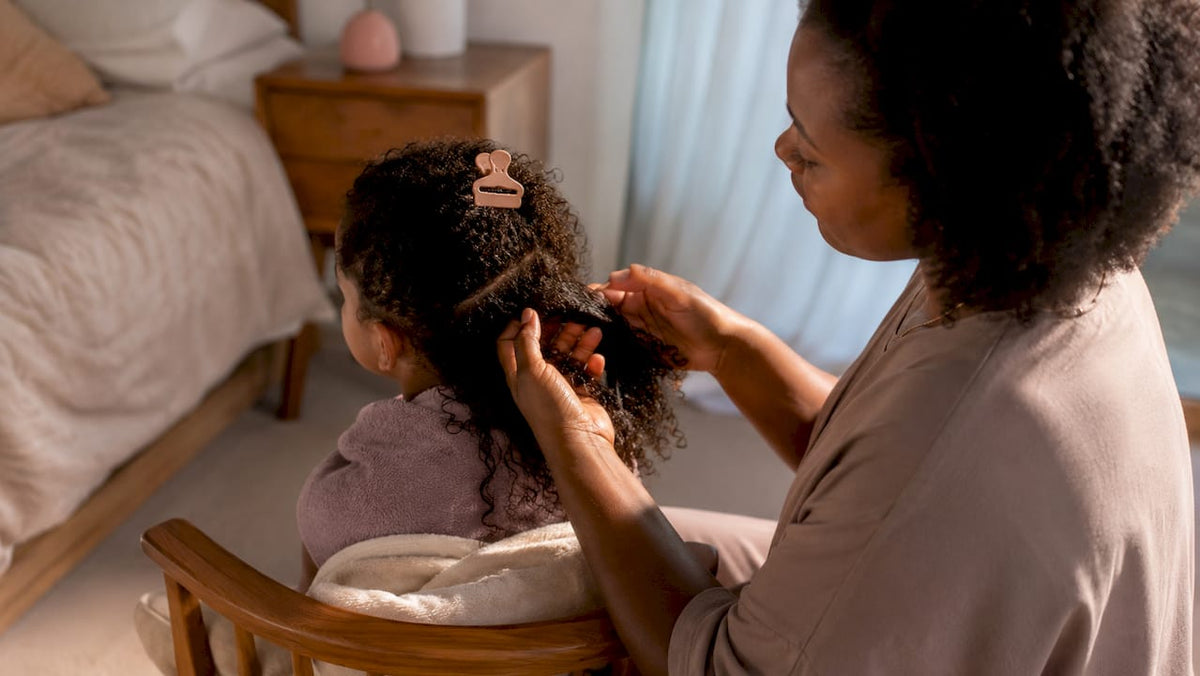
For most children with afro-textured hair, the routine boils down to four moves: wash weekly or co-wash between shampoos, detangle only on wet hair coated in conditioner, moisturize daily with a light LOC or LCO layer, and protect it overnight with a satin bonnet or pillowcase. Cocomera builds its whole approach around these four habits because each one directly targets the biggest cause of breakage in kids’ curls: dry manipulation and friction.
Table of Contents
-
What Does a Weekly Afro Hair Care Routine Look Like for Kids?
-
How Do You Moisturize Afro Hair Every Day Without Overdoing It?
-
Which Protective Styles and Night Routines Actually Prevent Breakage?
-
What Mistakes Do Parents Make Most Often With Kids’ Curly Hair?
What Does a Weekly Afro Hair Care Routine Look Like for Kids?
A good children’s afro hair care routine doesn’t need to be elaborate. It needs to be repeatable. Here’s the breakdown parents actually use, organized by how often each step happens.
Daily:
-
Spritz hair with water or a light leave-in
-
Apply a small amount of cream, then seal with oil
-
Style gently (puff, twist, or leave loose with a headband)
Weekly:
-
Co-wash or a conditioner-focused wash
-
Detangle in the shower while conditioner is still in
-
Deep condition if hair feels dry or looks dull
Monthly:
-
Clarifying wash only if you notice product buildup
-
Trim split ends if they’re catching or causing knots
Every night:
-
Satin bonnet or satin/silk pillowcase, no exceptions
-
Loose protective style if hair tends to tangle overnight
This is the skeleton. The next sections explain the “why” behind each piece, since knowing the reasoning is what makes parents actually stick with it past week two.
How Should You Wash a Child’s Afro or Curly Hair?
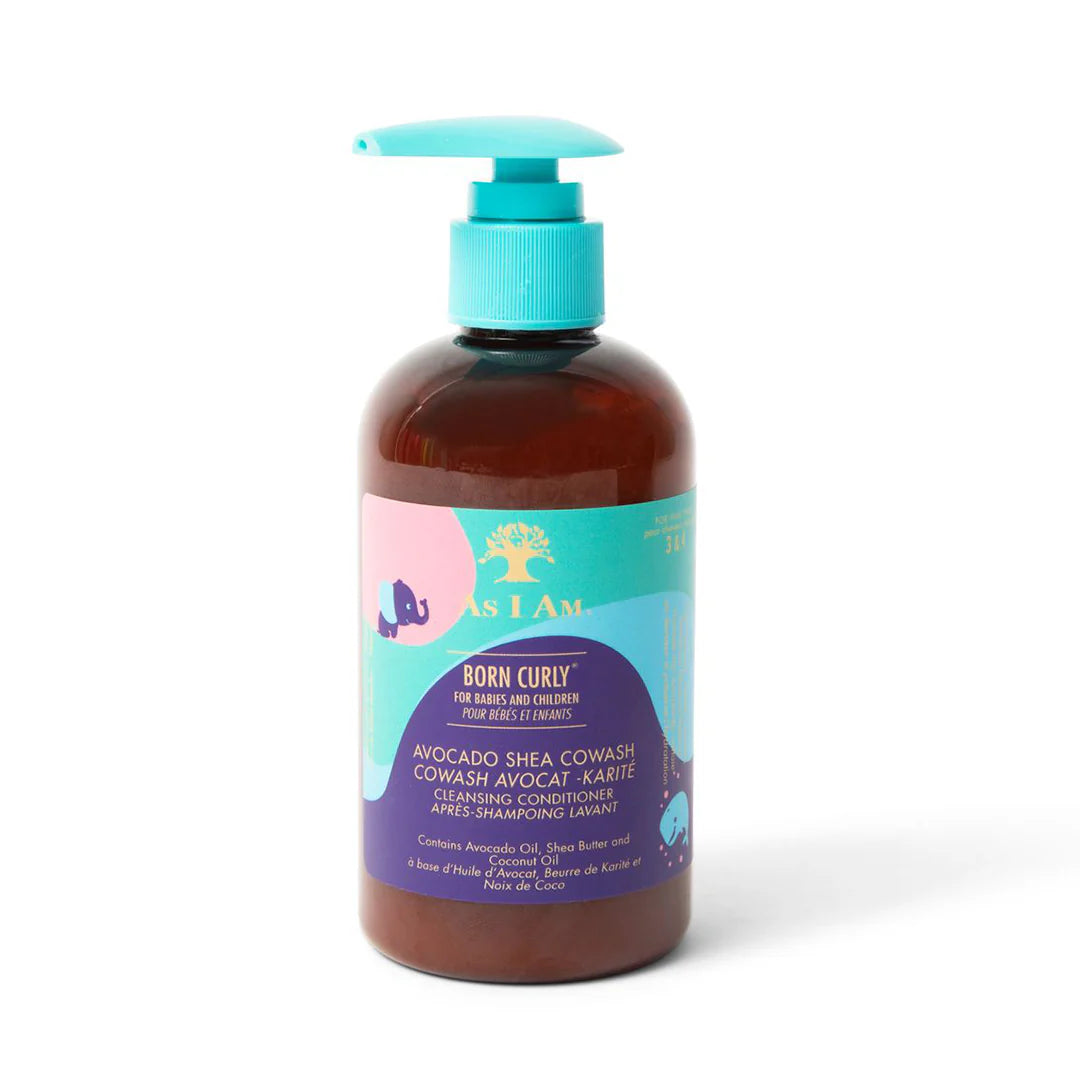
Wash frequency depends on curl pattern and age more than habit. For babies, once a week is usually plenty, and gentler is always better when cradle cap or eczema is present. Toddlers and school-age kids with looser curl patterns (3A to 3C) often do fine with a conditioner-only co-wash. Kids with tighter coils (4A to 4C) usually need a small amount of sulfate-free shampoo mixed into conditioner to actually lift dirt and oil buildup without stripping moisture, according to Expressen’s guidance on curly-haired children.
Here’s the wash sequence that minimizes breakage:
-
Pre-poo first. Apply oil or conditioner to dry hair before wetting it. This forms a barrier that keeps shampoo from stripping too much moisture.
-
Wet thoroughly, then apply a generous amount of conditioner.
-
Detangle right there in the shower, working from ends up while the conditioner is still in.
-
Wash the scalp, not the strands. Massage cleanser into the scalp only.
-
Rinse, leaving a small amount of conditioner behind for slip.
-
Deep condition once a week or every other week, longer if hair feels rough. Ten to fifteen minutes under a warm (not hot) towel is enough.
Pro Tip: Skip the daily shampoo entirely for tightly coiled hair. Over-washing with harsh cleansers is one of the fastest ways to trigger dryness and breakage in 4C strands.
How Do You Moisturize Afro Hair Every Day Without Overdoing It?
Tighter coils need moisture applied in layers, because natural oils from the scalp struggle to travel down the hair shaft on their own. That’s the entire logic behind LOC (liquid, oil, cream) and LCO (liquid, cream, oil), and it’s why these methods show up constantly in 4C-specific hair care guidance.
-
LOC works better for very dry or tightly coiled hair, since the oil traps moisture the cream added before it hardens on the strand.
-
LCO works better for finer or lower-porosity hair, where a heavy oil applied last can sit on top and weigh curls down instead of sealing them.
A daily refresh takes under five minutes: mist with water or a diluted leave-in, smooth a light cream through, then seal ends with a small amount of oil. Skip anything with heavy waxes or high alcohol content. These strip moisture and build up fast on a child’s finer, more fragile strands, undercutting the entire point of daily moisturizing.
Pro Tip: If curls look dull by midweek, that’s usually a sign of too little water, not too little product. Try misting first before reaching for more cream.
What’s the Safest Way to Detangle a Child’s Curly Hair?
Detangling dry hair is the single most common cause of unnecessary breakage in kids’ curls. Hair should always be wet or damp and coated generously in conditioner or a slip-heavy detangler before a comb touches it, a rule practitioners repeat consistently.
-
Work in small sections, no bigger than a couple of inches at a time.
-
Finger-detangle first to loosen the biggest knots.
-
Follow with a wide-tooth comb or a soft detangling brush, always starting at the ends.
-
Move upward toward the roots only once the ends are free.
-
Clip finished sections out of the way so you’re not re-detangling the same spot twice.
Tools worth owning: a wide-tooth comb, a gentle detangling brush built for curls, and a handful of sectioning clips. Rinse combs and brushes weekly to clear out product buildup, since a gunked-up tool just adds friction instead of reducing it.
Which Protective Styles and Night Routines Actually Prevent Breakage?
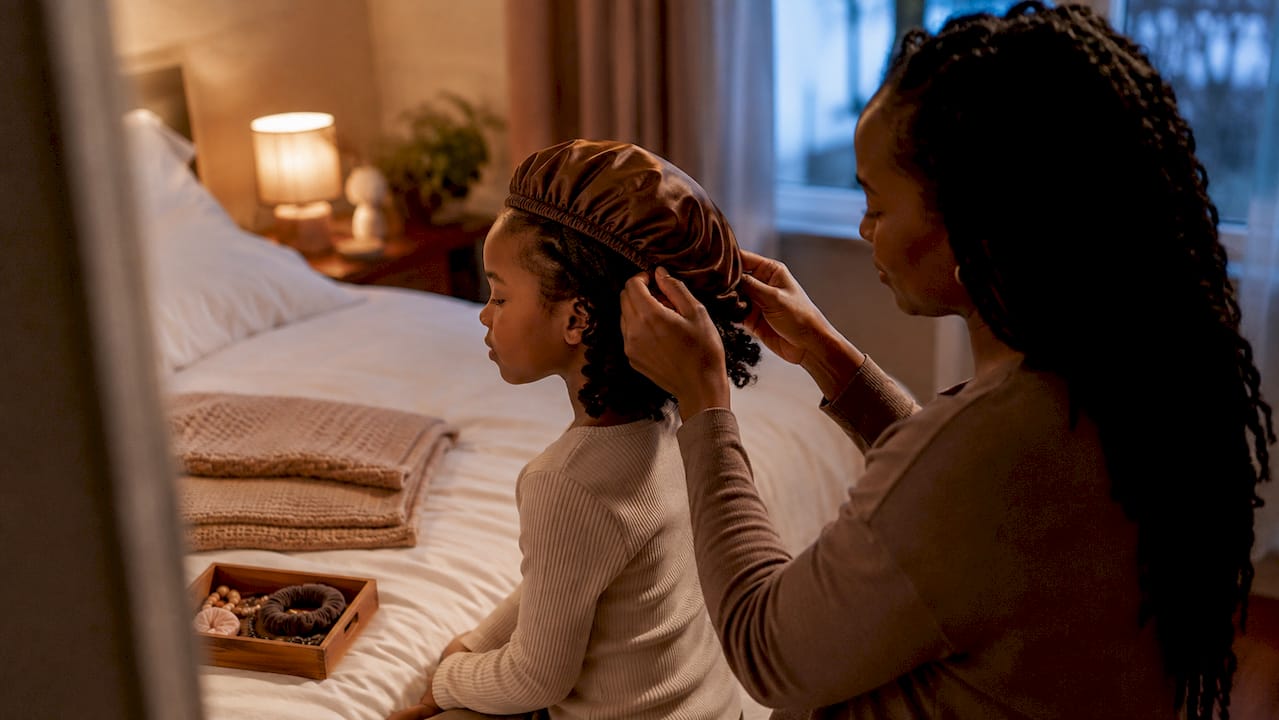
Loose braids, twists, and low buns protect ends from friction during the day, but tension is the enemy here. If a child complains of a tight scalp or you see bumps along the hairline, the style is too tight and needs to come out. Redo protective styles every one to two weeks rather than leaving them in for a month straight.
Night protection matters just as much as anything done during the day. Cotton pillowcases and bedding pull moisture out of curls and create friction that leads to tangles by morning. A satin or silk bonnet, or simply a satin pillowcase, solves this. Older kids who resist a bonnet often tolerate a loose “pineapple” (hair gathered high on top) instead.
-
Moisturize lightly before bed even when hair is in a protective style; dryness doesn’t pause overnight.
-
Choose a bonnet sized for a child’s head so it stays on, not an adult one that slides off by midnight.
-
Watch for redness or soreness at the hairline. That’s the earliest sign a style needs to be loosened or removed.
Pro Tip: Let your child pick their bonnet color or pattern. Kids who choose their own night gear are far more likely to actually keep it on.
Why Does Scalp Care Matter More Than People Think?
Healthy hair growth starts at the scalp, not at the ends. Cleansing should target the scalp directly, and a gentle massage during wash day stimulates circulation without requiring aggressive scrubbing of the lengths. A little lightweight oil massaged in once or twice a week is plenty. More isn’t better here, and heavier oils can clog follicles rather than help them.
Most flaking or dryness responds to consistency: regular gentle cleansing, light oiling, and patience. But persistent flaking, redness, sores, or breakage that doesn’t improve after a few weeks of a solid routine is worth a conversation with a dermatologist or pediatrician rather than another product swap. Cocomera’s guide to scalp care for afro hair walks through the massage technique step by step.
What Mistakes Do Parents Make Most Often With Kids’ Curly Hair?
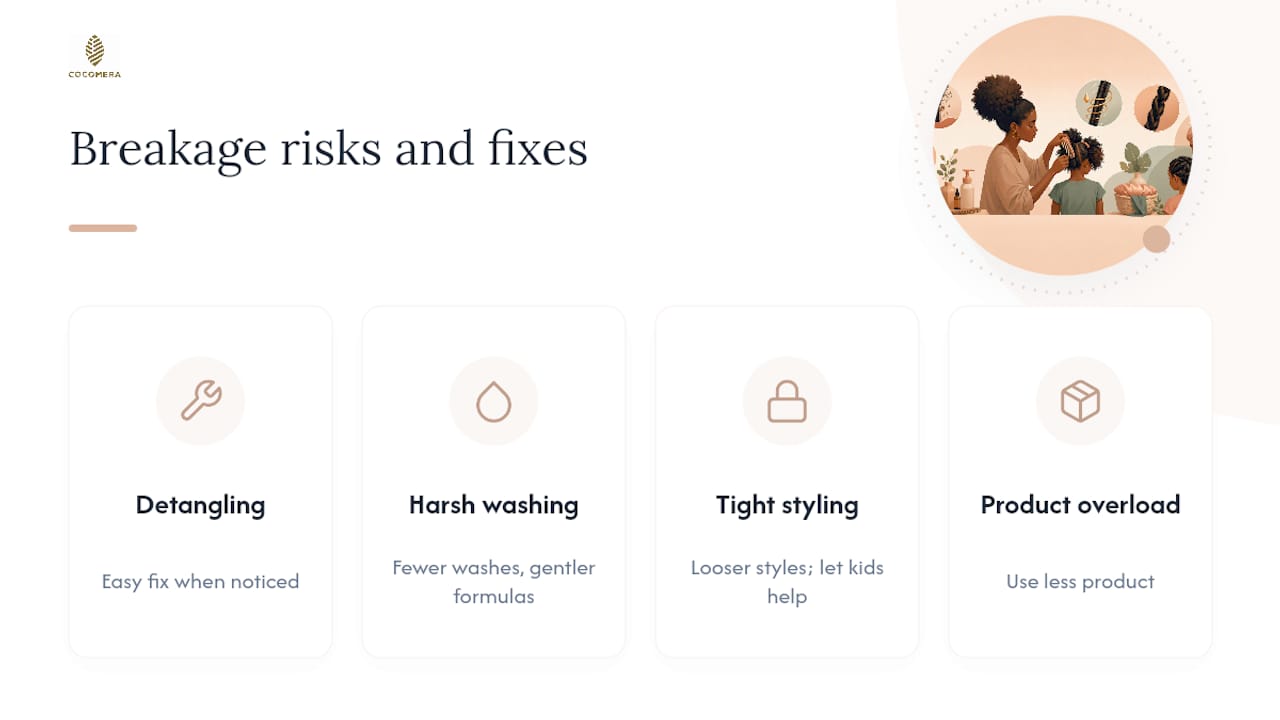
The big four: detangling dry hair, washing with harsh shampoo too often, styling too tight, and layering on so much product that curls end up weighed down instead of defined. Each one is an easy fix once you know to watch for it.
Age changes the routine more than most parents expect. Babies need fewer washes and gentler, fragrance-light formulas, especially around cradle cap. Toddlers can handle a bit more styling as their tolerance for sitting still grows. School-age kids can start taking on small tasks themselves, like holding the detangling brush or picking their nightly bonnet.
Chemical color is a separate conversation entirely. Defer to a licensed professional, always patch-test first, and avoid any chemical color service on very young children. Their scalp and strands are simply more sensitive than an adult’s.
Why This Routine Actually Works
Every step in this routine traces back to one goal: reduce unnecessary friction and manipulation. Wet detangling, scalp-focused washing, and nighttime protection aren’t trends. They’re the three habits that consistently show up wherever breakage in textured hair gets studied or discussed by stylists. Cocomera built its curl-care resources, including guides on why hair routines matter for curly and afro hair and styling steps for 3 and 4 curl types, around this same logic. If you want the deep-dive version of any single step above, those guides go further than a general routine article can.
Why Most Advice on Kids’ Curly Hair Misses the Point
Most advice aimed at parents treats a child’s curly hair like a smaller version of adult hair care. It isn’t. Kids have less patience for a fifteen-step regimen, thinner strands that tangle faster, and zero tolerance for a routine that hurts. The parents who succeed aren’t the ones with the most products. They’re the ones who picked three or four habits and repeated them without fail.
Conventional advice also overweights products and underweights technique. A shelf full of creams won’t fix a child’s dry, breaking hair if detangling still happens dry, or if cotton pillowcases are still stripping moisture every single night. Technique first, then product.
If you’re starting from zero, prioritize two things before anything else: wet detangling with real conditioner slip, and a satin sleep setup that actually stays on. Get those two right, and the rest of the routine becomes far easier to sustain, because you’re no longer fighting daily damage just to break even.
— Cocomera
Building a Starter Kit for a Child’s Afro Hair Routine
A few well-chosen products cover this entire routine, and Cocomera has built a kids’ collection around exactly that idea.

Start with the OCOA Curl Care Conditioner for wash day and in-shower detangling. It’s the conditioner doing double duty as your pre-poo and slip agent. For daily refreshes, the Innersense Hair Love Prep Spray works as the liquid step in an LOC or LCO layer, while the Innersense Inner Peace Whipped Creme Texturizer handles the cream step and gives just enough hold for a puff or twist-out. Round it out with a satin bonnet from the hair accessories collection for nights, and detangling gets easier with the right brush from the same collection.
If you’d rather test before committing to full sizes, the Bounce Curl Curly Trial & Travel Kit is a low-risk way to see what your child’s hair responds to. Browse the full kids’ curly hair collection to build a routine that fits your child’s exact curl pattern, and check availability before your next wash day.
Sources
-
Barn med lockigt hår – här är bästa hårtipsen! | mama (Expressen)
-
The Ultimate 4C-Friendly Afro Hair Care Routine | Cult Beauty


