


Paraben-free products contain no paraben preservatives, the family that includes methylparaben, propylparaben, butylparaben, and ethylparaben. The short verdict: dropping parabens removes one class of preservative, but it doesn’t automatically make a product safer. The FDA and EU cosmetics regulators allow parabens at set concentration limits, and the Cosmetic Ingredient Review has repeatedly found most of them safe at those levels.
- Parabens are regulated, not banned outright, in the US and much of the EU.
- “Paraben-free” is a formulation choice, not a certified safety claim.
- What replaces the paraben matters as much as removing it.
Key Takeaways
Paraben-free simply means a product’s formula excludes paraben preservatives, and that choice reflects a formulation decision rather than a guaranteed safety upgrade.
| Point | Details |
|---|---|
| Definition first | Paraben-free means no methylparaben, propylparaben, butylparaben, or similar preservatives in the formula. |
| Regulators set limits, not bans | The EU caps most parabens at 0.4% or 0.14%, with a combined 0.8% mixture limit; five specific parabens are banned outright. |
| Evidence is associative, not conclusive | Some studies link parabens to endocrine activity and health correlations, but major reviews call current use levels generally safe. |
| Check the replacement too | Alternatives like phenoxyethanol or organic acids carry their own irritation or coverage trade-offs. |
| Cocomera lists full ingredients | Products like the Innersense Inner Peace Whipped Creme Texturizer let you verify paraben-free claims directly on the product page. |
Table of Contents
- What Parabens Are and Why Formulators Use Them
- Where Parabens Show Up Most Often
- What Science and Regulators Actually Say About Risk
- How to Spot Parabens on an Ingredient List
- Paraben Alternatives and What You Give Up
- Should You Actually Avoid Parabens?
- A Shopping Checklist for Paraben-Free Hair and Skin Products
- Frequently Asked Questions
- Sources
What Parabens Are and Why Formulators Use Them
Parabens are synthetic preservatives derived from para-hydroxybenzoic acid. On an ingredient label, they show up as methylparaben, ethylparaben, propylparaben, butylparaben, isobutylparaben, or isopropylparaben. Chemists reach for them because they’re cheap, stable across a wide pH range, and effective against bacteria, yeast, and mold in water-based formulas.
That antimicrobial job matters more than most shoppers realize. A moisturizer or conditioner sitting in a humid bathroom for months is a breeding ground for contamination without something keeping it in check. Skip the preservative entirely and you risk a product that grows mold before you finish the bottle, which is its own health hazard.
- Methylparaben and propylparaben are the two most common in leave-on products.
- Parabens work across a broad pH range, unlike some natural alternatives.
- They’re rarely used alone.
Pro Tip: Formulators typically blend two or three parabens, or pair one paraben with a non-paraben preservative, because combinations cover a wider range of microbes than any single ingredient can handle alone. That’s also why safety testing looks at total paraben load in a formula, not just one ingredient in isolation.
Where Parabens Show Up Most Often
Parabens turn up most often in water-based leave-on products, since those need protection over months of repeated hand contact. Expect to find them in:
- Moisturizers, lotions, and body creams
- Foundation, concealer, and other liquid makeup
- Shampoos and conditioners
- Serums and some sunscreens
- Shaving creams and gels
They’re less common now in stick deodorants and in the growing tier of “clean beauty” brands that have reformulated around alternative preservatives. Rinse-off products like shampoo carry lower long-term exposure than leave-on lotions or creams simply because they’re on your skin for seconds, not hours. That distinction matters most for baby products and anything used near mucous membranes, where lower exposure thresholds are the more cautious default.
What Science and Regulators Actually Say About Risk
The evidence on parabens splits into two camps that don’t fully contradict each other. Some laboratory and epidemiological research points to weak estrogenic activity, raising questions about endocrine disruption with high or repeated exposure. A separate review has reported correlations between parabens and hypersensitivity, obesity, infertility, and detection in breast cancer tissue samples, though the authors are careful to note these are correlations, not proof of cause.
Regulators reading that same evidence have landed on a more measured conclusion. The Cosmetic Ingredient Review panel found most evaluated parabens safe at current use concentrations, provided the total mixture stays under 0.8%. The EU has gone further procedurally, banning five parabens outright and capping the rest.
Here’s the concrete limit: the EU cosmetics regulation caps methylparaben and ethylparaben at 0.4% each (as acid), propylparaben and butylparaben at 0.14% each, with a combined mixture ceiling of 0.8% for all parabens in one product.
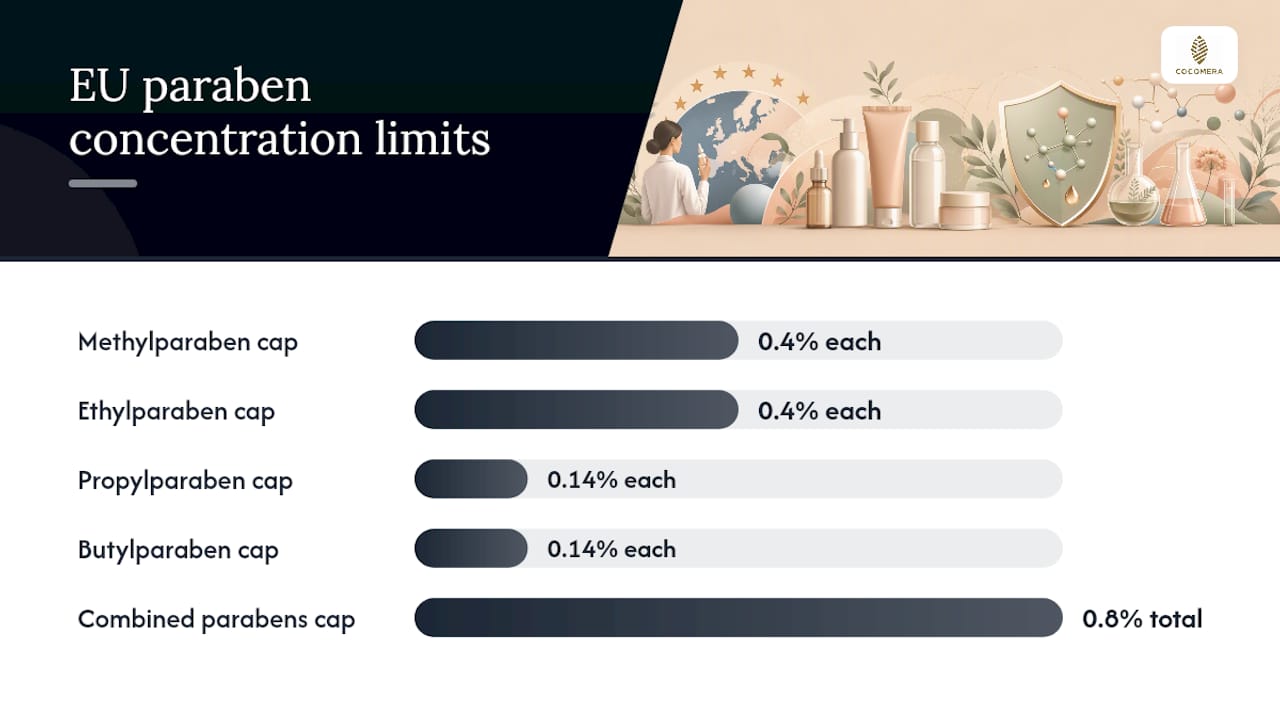
Risk, in other words, is a function of concentration and cumulative exposure, not simply whether a paraben is present at all.
How to Spot Parabens on an Ingredient List
Reading a label for parabens is easier than reading it for most preservatives, since the suffix “paraben” appears in almost every common name: methylparaben, ethylparaben, propylparaben, butylparaben. Scan the ingredient list, usually printed in descending order by concentration, and check anything ending in that suffix.
The catch is that parabens can also hide under systematic chemical names, like methyl 4-hydroxybenzoate instead of methylparaben. And “fragrance” or “parfum” on a label is a legal umbrella term that can mask dozens of undisclosed compounds, parabens sometimes included.
- Search for the “-paraben” suffix first; it catches most instances.
- Cross-check unfamiliar chemical names against known INCI synonyms.
- Treat “fragrance” as a black box unless the brand publishes a full breakdown.
Pro Tip: When a product lists several ingredients ending in “-benzoate” or similar, don’t assume they’re automatically parabens. Verify against an official INCI database or a regulator’s ingredient glossary before drawing conclusions, since not every hydroxybenzoate compound belongs to the paraben family.
Paraben Alternatives and What You Give Up
Brands that go paraben-free still need something to fight microbial growth, and the replacement isn’t automatically an upgrade. Common substitutes include phenoxyethanol, benzyl alcohol, sorbic acid and other organic acids, and various plant-derived or “natural” preservative systems.
Each comes with trade-offs. Phenoxyethanol works well but at higher concentrations can irritate sensitive skin. Organic acids often need a narrower pH window to stay effective, which limits which formulas they suit. Natural preservative blends frequently offer narrower antimicrobial coverage, meaning the brand has to lean on tighter manufacturing controls or shorter shelf life to compensate.
- Phenoxyethanol: broad coverage, but a known irritant at higher levels for some users.
- Organic acids: effective within a narrow pH range, limiting formulation flexibility.
- Natural preservative systems: appealing for sensitive-skin buyers, but often narrower in what microbes they control.
If you’re weighing simplified formulas generally, this look at single-ingredient haircare covers the same trade-off from a different angle.
Should You Actually Avoid Parabens?
The honest answer depends on who you are, not a blanket rule. Here’s how to think about it by situation:
- Sensitive skin or known allergies: paraben-free formulas can reduce a specific irritation trigger, but check the replacement preservative too, since some cause more reactions than the paraben did.
- Pregnant or breastfeeding: a precautionary approach toward leave-on products makes sense given the endocrine-activity questions still under study.
- Parents of infants: prioritize paraben-free for diaper-area and leave-on baby products first, since that’s where exposure and skin absorption are highest.
- General shoppers with no specific concern: regulator-approved concentrations are considered safe by the CIR and EU, so switching is a preference, not a necessity.
A risk-based approach beats an all-or-nothing one. Focus on cutting exposure from products used near mucous membranes or left on skin for hours, rather than panicking over trace parabens in a rinse-off shampoo.
Pro Tip: If cutting exposure is the goal, Cleveland Clinic notes that one study found paraben levels in the body dropped by more than 40% within three days of switching products. Reduction happens fast once you make the swap.
A Shopping Checklist for Paraben-Free Hair and Skin Products
- Scan the ingredient list for the “-paraben” suffix and known chemical synonyms.
- Check whether the brand publishes full ingredient transparency, including what’s inside “fragrance.”
- Note what preservative replaced the paraben, and whether it fits your skin’s sensitivity.
- Remember leave-on products (creams, masks, styling products) carry more preservative weight than rinse-off ones.
- When uncertain, cross-reference the FDA, EU, or CIR listings mentioned above.
Pro Tip: Every Cocomera product page lists full ingredients, so you can check formulations like the Innersense Inner Peace Whipped Creme Texturizer before buying rather than guessing from marketing copy.
Why Cocomera Pays Attention to Preservatives
Preservatives decide whether a product stays safe to use for months or turns into a liability by week three. That’s why Cocomera curates formulas for textured hair and melanin-rich skin with ingredient transparency front and center, not as an afterthought.
Shop Paraben-Free Picks Without Guesswork
Cocomera is the place to skip hours of label-decoding for hair and skin products built for wavy, curly, coily, and afro textures. Every product page lists full ingredients up front, so you see exactly what preservative system is doing the work before you buy.
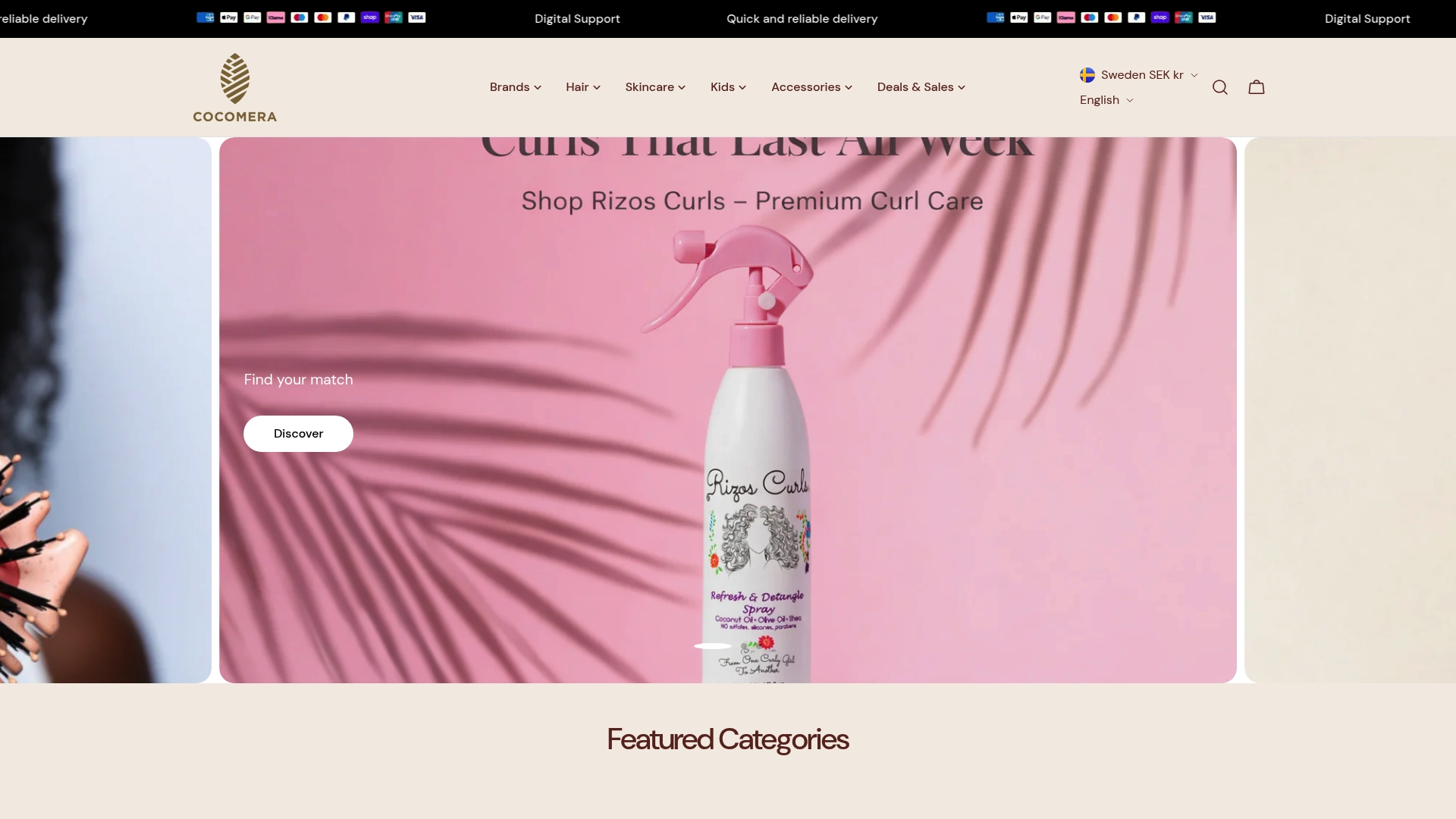
One standout example is the Innersense Inner Peace Whipped Creme Texturizer, a paraben-free styling cream formulated for definition without the preservative family this article breaks down. It’s one option among many, not the only route to paraben-free styling, but it’s a solid entry point if you’re testing the switch. Browse the full range of leave-in styling products to compare formulas side by side and find what fits your curl pattern and skin.
Frequently Asked Questions
Are parabens actually harmful in the concentrations used in cosmetics? Major reviews, including the Cosmetic Ingredient Review, have found most parabens safe at current regulated concentrations. Some studies raise concerns about endocrine activity at higher or cumulative exposure, but that’s a different question from the amounts typically found in a single product.
Why do people choose paraben-free skincare if regulators say parabens are safe? Many shoppers prefer precaution given unresolved questions in the research, or they’ve had a personal sensitivity reaction. Others simply prefer simpler ingredient lists, which is why demand for paraben-free cosmetics has grown even as regulators maintain current limits are safe.
What replaces parabens in paraben-free products? Common substitutes include phenoxyethanol, benzyl alcohol, and organic acids like sorbic acid. Each has different antimicrobial strengths, and some formulas need a more complex preservative blend to match what a single paraben could do alone.
Is paraben-free the same as preservative-free? No. A genuinely preservative-free water-based product is a microbial risk within weeks. Paraben-free products still need an alternative preservative system to stay safe over the product’s shelf life.
How can I tell if a product is truly paraben-free? Check the full ingredient list for any name ending in “-paraben” and its chemical synonyms. Brands with transparent labeling, including full ingredient disclosure on the product page, make this far easier to verify than a front-of-package “paraben-free” claim alone.
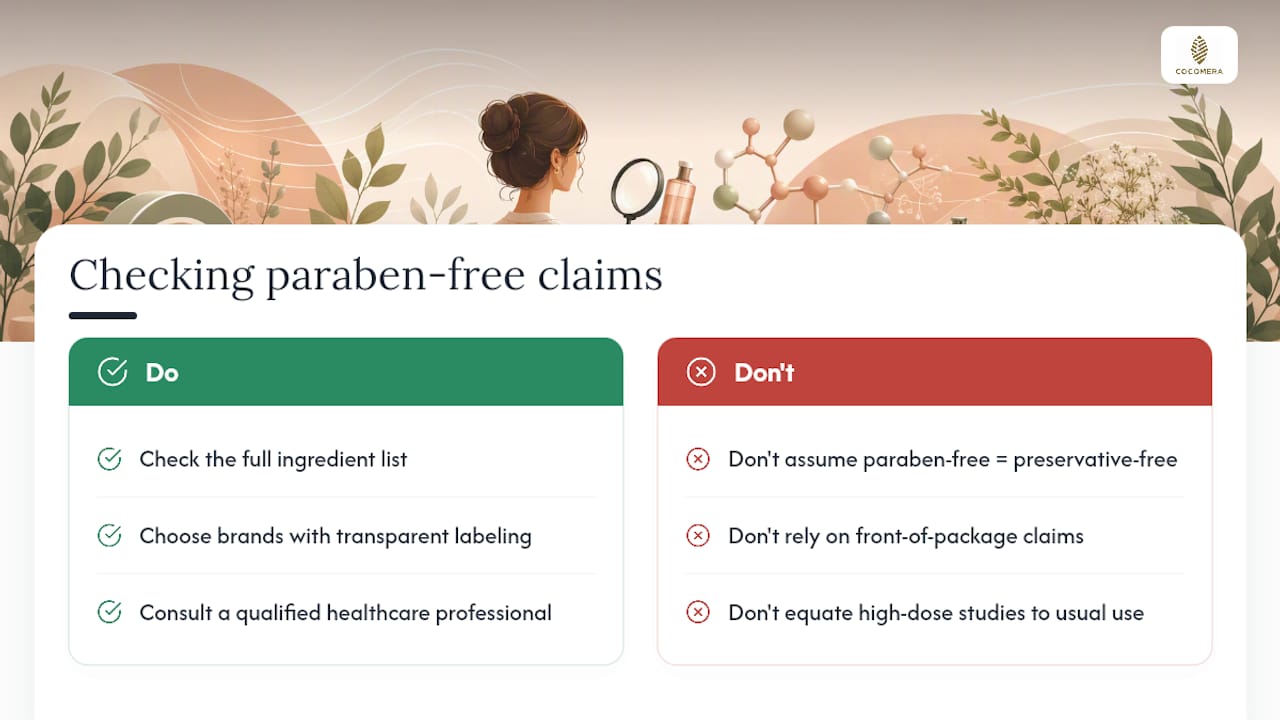
This article is general information, not a substitute for advice from a qualified doctor. Consult a qualified healthcare professional about your own circumstances before acting on anything here.
Sources
- EU cosmetics regulation (consolidated entry) data page
- Parabens in Cosmetics | FDA
- Peer-reviewed article summarizing endocrine concerns (PubMed ID 29596967)
- Review article on parabens, environmental spread, and possible health correlations (PubMed ID 39357765)
- Amended safety assessment of parabens as used in cosmetics (CIR)
- What You Should Know About Parabens | Cleveland Clinic


