


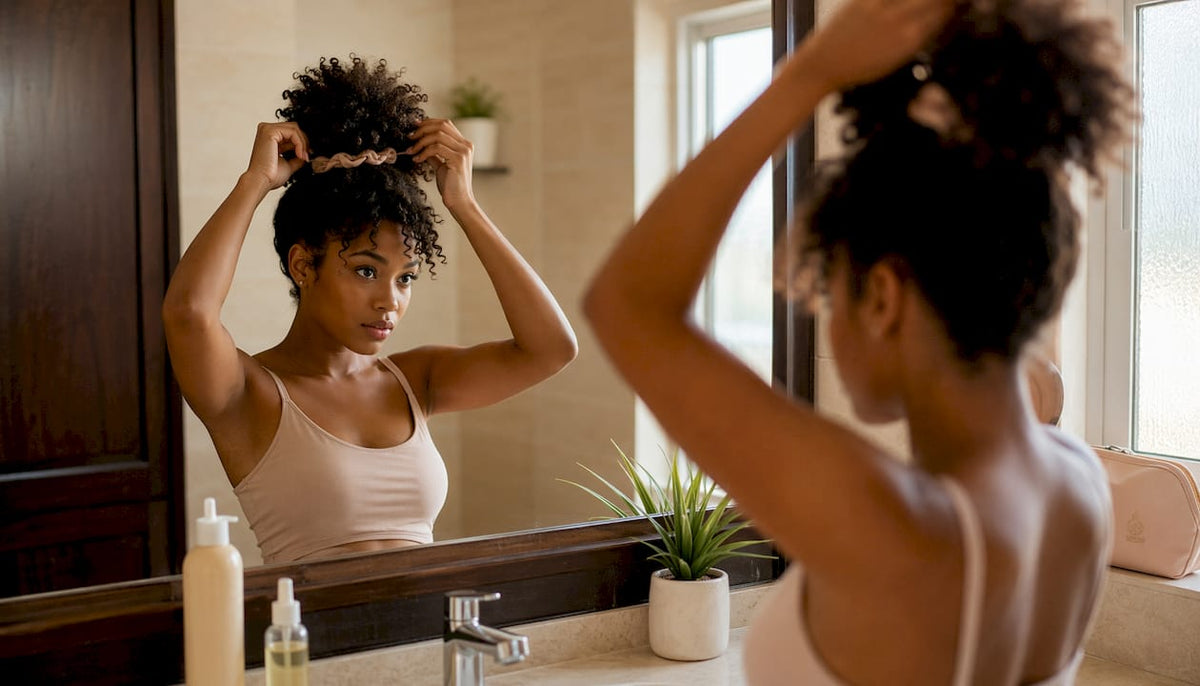
Your curls don’t have to suffer every night. The most effective sleep tips for curly hair come down to three things: reducing friction, locking in moisture, and keeping your curl pattern intact while you rest. Swap your cotton pillowcase for silk or satin, apply a light leave-in conditioner before bed, and gather your hair into a protective style. That combination alone will transform your mornings.
Here’s what to prioritize tonight:
- Switch your pillowcase. Cotton absorbs moisture and creates friction that leads to frizz and breakage. Silk or satin lets curls glide instead of snag.
- Use a protective style. The pineapple method, loose braids, or a satin bonnet keep your curl pattern from getting crushed overnight.
- Apply moisture before bed. A lightweight leave-in conditioner or hair oil seals hydration into your strands while you sleep.
- Never go to bed with soaking wet hair. Wet curls flatten easily, dry in odd shapes, and frizz the moment they’re disturbed.
- Mind your sleep position. Back sleeping pushes curls flat. Side or stomach sleeping gives them more room to stay intact.
Table of Contents
- Protective hairstyles that actually keep your curls intact overnight
- How to keep your curls moisturized through the night
- How your sleep position affects your curls
- Choosing the right products and accessories for your nighttime curl routine
- How to refresh your curls in the morning after sleep
- Key Takeaways
Protective hairstyles that actually keep your curls intact overnight
The right sleeping hairstyle for curls does two things: it prevents friction and stops your curl clumps from getting crushed under the weight of your head. Here are the styles that consistently work across hair types 2, 3, and 4.
- The pineapple method. Flip your head upside down, gather curls loosely at the very top of your head, and secure with a silk or satin scrunchie. The curls sit above the pillow rather than under it. Never use a regular elastic — it dents and breaks strands. This works best for longer hair, roughly shoulder length and beyond.
- Multi-pineapple for shorter curls. If your hair is too short for a single pineapple, divide it into two or three mini ponytails across the top of your head. Same principle, smaller sections.
- Loose braids or two-strand twists. These work well for medium to long hair, especially tighter curl patterns like 3C and 4A. They reduce tangling and give you a soft, slightly stretched curl when you wake up. Keep them genuinely loose — a tight braid will leave a crimp at the root.
- Loose messy bun. Good for wavy or looser curl types (2A–3A). Flip your hair forward, twist it loosely, and secure with a scrunchie. You’ll lose some definition, but you’ll protect against breakage and frizz.
- Bantu knots. A protective style with roots in African hair traditions, Bantu knots work especially well for curl types 3 and 4. Mist hair lightly, section it into four to six parts, twist each section, then coil it around the base and pin it. Release in the morning for defined, bouncy curls.
- Satin or silk bonnet. If styling feels like too much effort, a bonnet is your best friend. It locks in moisture, reduces friction, and keeps your style intact regardless of how much you toss and turn. Look for one with an adjustable band so it stays on through the night.
For more protective styling ideas tailored to curly and coily hair, there’s a wealth of inspiration beyond the basics.
Pro Tip: Protective styles should be loose enough to avoid tension but secure enough to prevent tangles. If you feel any pulling at the scalp, redo the style. Tension overnight leads to hairline damage over time.
How to keep your curls moisturized through the night
Curly hair is naturally drier than straight hair because the scalp’s natural oils struggle to travel down each twist and turn of the strand. Overnight, friction against your pillow pulls out even more of that moisture. The result? Frizz, dryness, and flattened curls by morning.
- Apply a leave-in conditioner before bed. Focus on the mid-lengths and ends, where dryness hits hardest. A lightweight leave-in locks in hydration without weighing curls down. Apply to damp, not soaking-wet, hair so the product absorbs properly.
- Add a hair oil on top. A few drops of argan, jojoba, or a curl-specific blend seals the leave-in and adds a layer of protection. Cocomera’s curated hair oils are selected specifically for textured hair types 2, 3, and 4, so you’re not guessing at what works.
- Try a light moisture spritz. If your curls feel dry but don’t need a full product refresh, mix water with a small amount of leave-in conditioner in a spray bottle and mist lightly before bed. Scrunch gently to reactivate the curl pattern.
- Never sleep on soaking-wet hair. Wet curls are fragile. They flatten under pressure, dry in distorted shapes, and frizz at the slightest disruption. If you wash your hair in the evening, diffuse on low heat until mostly dry before bed.
- Watch for product buildup. Layering products every night without cleansing can lead to buildup that weighs curls down and blocks moisture from reaching the strand. On nights when your scalp feels heavy or coated, a gentle wash with a clarifying shampoo clears the slate.
- Use a humidifier in dry environments. Heated rooms in winter pull moisture from the air, and your hair pays the price. A humidifier helps maintain ambient moisture in your bedroom, which directly supports curl hydration overnight. This is especially useful in dry climates or during colder months when indoor heating runs constantly.
How your sleep position affects your curls
Most people don’t think about this, but the way you sleep matters almost as much as what you put in your hair.
- Back sleeping is the hardest on curls. When you lie on your back, the weight of your head presses directly onto your hair. Curls flatten, and every time you shift your head side to side, the friction builds up. By morning, the back of your hair is often a tangled, frizzy mess.
- Side or stomach sleeping is gentler. Sleeping on your side reduces the surface area of hair in contact with the pillow and gives curls more room to stay in their natural shape. Stomach sleeping works similarly, though it can put strain on the neck for some people.
- Protective styles give you more flexibility. If you pineapple your hair or wear a bonnet, your sleep position matters less. The curls are lifted or enclosed, so they’re not taking direct pressure from the pillow regardless of how you move.
- Pillow height and firmness play a role. A very high, firm pillow pushes your head forward and crowds your curls against your shoulders, causing bunching at the nape. A softer, lower pillow tends to work better for curly hair, giving the style room to breathe.
- Airflow in the room can disrupt curls too. A fan blowing directly at your head all night dries out your strands and disturbs the curl pattern. Point fans away from the bed, or use a bonnet to shield your hair.
Choosing the right products and accessories for your nighttime curl routine
Getting your curly hair night routine right is partly about technique and partly about having the right tools. Here’s how to think through each category.
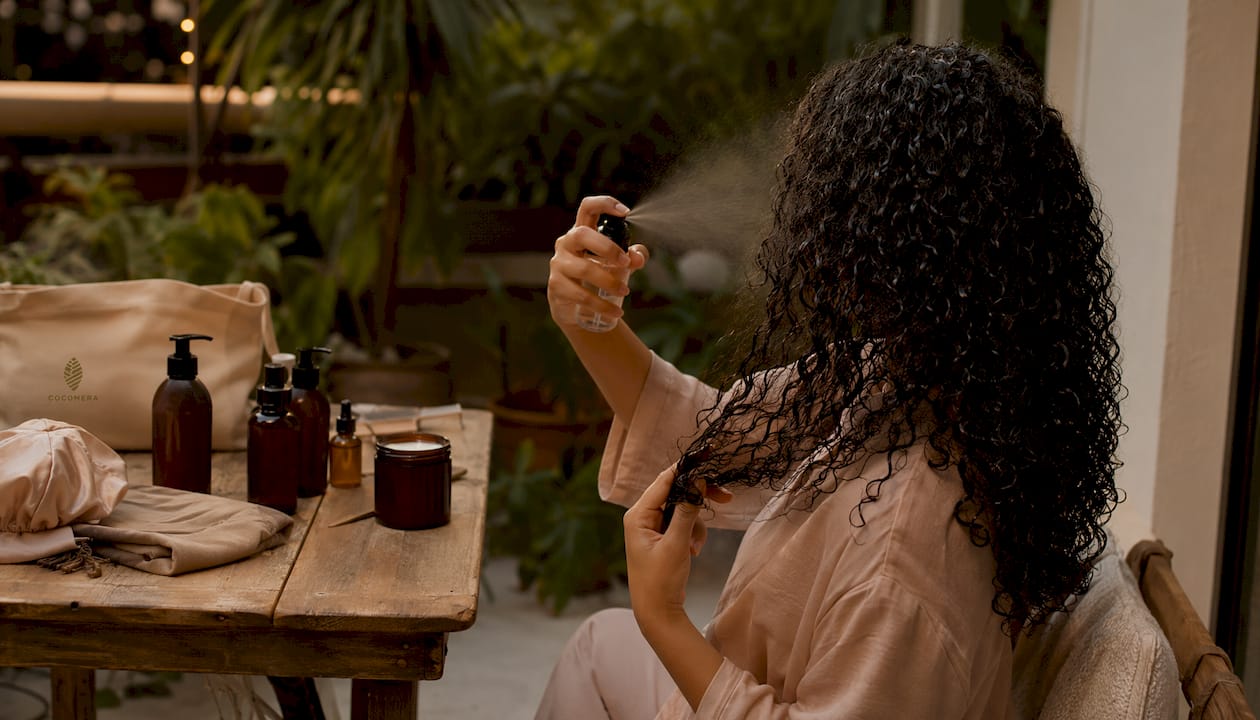
Silk vs. satin: which should you choose?
Both silk and satin reduce friction compared to cotton, but they work slightly differently. Silk is a natural fiber with a smooth surface that’s gentle on both hair and skin. Satin is typically a synthetic weave that mimics silk’s smoothness at a lower price point. For most people, either works well. Silk is the premium choice for very fine or high-porosity curls; satin is practical, easy to wash, and widely available. What matters most is ditching cotton entirely. Cotton pillowcases absorb your hair’s natural oils and create the kind of friction that turns defined curls into a frizzy tangle by morning.
Bonnets vs. pillowcases: do you need both?
A bonnet provides full enclosure, which means your hair stays protected no matter how much you move. A silk or satin pillowcase is a good baseline, but if you’re a restless sleeper, a bonnet adds a level of security a pillowcase can’t match. Many people with type 3 and 4 curls use both. The combination of a silk pillowcase and bonnet gives double protection against friction and moisture loss.
Leave-in conditioners and oils for overnight use
Not every leave-in is suited for overnight wear. Look for lightweight, non-greasy formulas that absorb into the strand rather than sitting on top. Heavier creams can cause buildup when used nightly. Cocomera’s leave-in conditioner collection is curated specifically for wavy, curly, coily, and afro hair types, so each product is vetted for textured hair rather than adapted from a straight-hair formula.
Pro Tip: Apply your leave-in and oil to damp hair, not dry. Damp strands absorb product far more effectively, and you’ll use less product overall while getting better moisture retention.
Humidifiers as part of your sleep environment
A bedroom humidifier is one of the most underrated tools for curly hair care at night. Environmental humidity significantly impacts curl health overnight, particularly in dry climates or during winter months when heating systems strip moisture from the air. A small cool-mist humidifier placed near your bed can make a noticeable difference in how your curls feel and look by morning.
A simple nighttime routine, step by step:
- Detangle gently with a wide-tooth comb or your fingers while hair is still damp.
- Apply a lightweight leave-in conditioner from mid-length to ends.
- Seal with a few drops of hair oil.
- Style into your chosen protective style (pineapple, braids, or bun).
- Put on a satin bonnet or switch to a silk or satin pillowcase.
- If your room is dry, run a humidifier overnight.
For a deeper look at how curl type affects your routine, Cocomera’s guide covers hair types 2 through 4 in detail.
How to refresh your curls in the morning after sleep
Even a perfect nighttime routine leaves curls needing a little attention in the morning. The goal is a light touch, not a full reset.
Start by gently removing your bonnet or unwinding your pineapple. Don’t rush or tug. Let your curls fall naturally, then give your roots a gentle shake to wake up the volume. If you slept in braids or twists, undo them slowly and finger-separate the sections rather than pulling them apart.
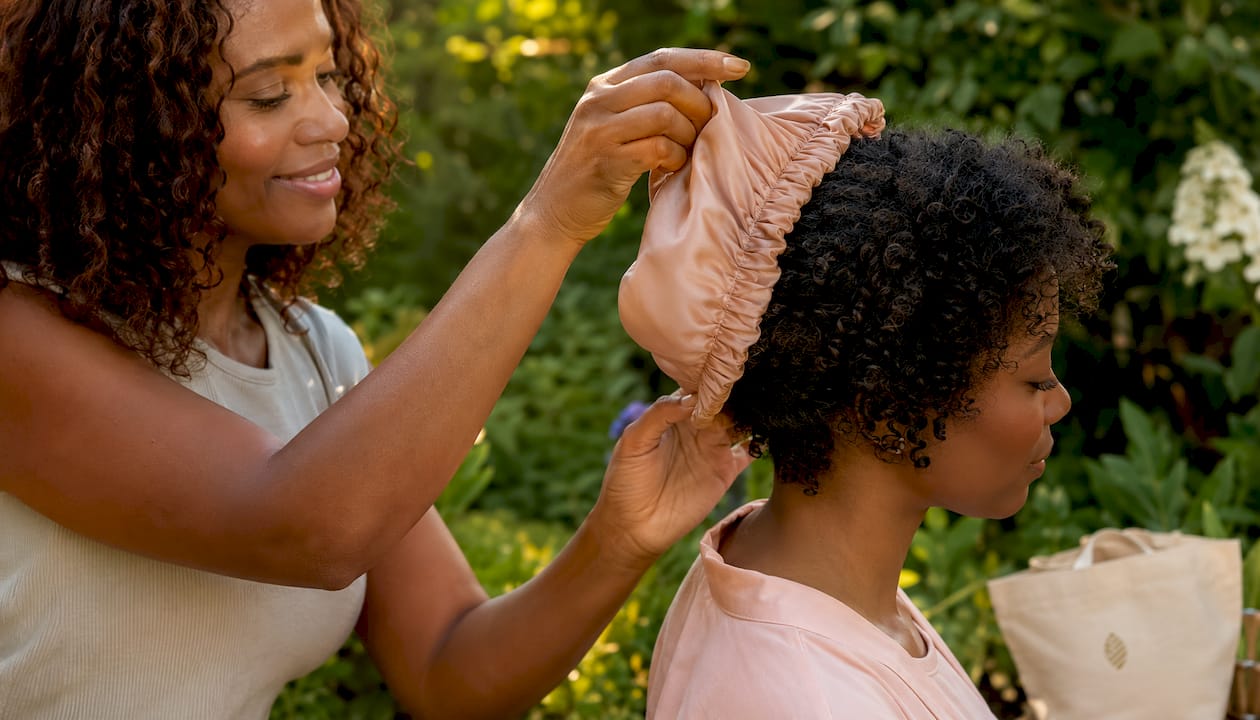
For any flattened or fuzzy spots, fill a spray bottle with water and a small amount of leave-in conditioner and mist lightly. Scrunch upward from the ends toward the roots to reactivate the curl pattern. A pea-sized amount of curl cream on the areas that need more structure is usually enough. Avoid heavy brushing — brushing dry curly hair breaks up the curl clumps and creates frizz fast.
If your hair still feels damp from overnight moisture or a morning spritz, use a diffuser on low heat rather than air-drying flat against your head. Diffusing while scrunching upward adds volume and speeds up drying without disrupting the curl pattern you preserved overnight. For more on managing frizz throughout the day, Cocomera’s frizz control guide covers the full picture.
The morning refresh works best when the nighttime routine was solid. Good prep the night before means less work in the morning, and that’s the whole point.
Key Takeaways
A consistent curly hair night routine built around friction reduction, moisture retention, and protective styling is the most effective way to wake up with defined, healthy curls.
| Point | Details |
|---|---|
| Ditch cotton pillowcases | Silk or satin reduces friction and prevents moisture loss that leads to frizz and breakage. |
| Use a protective style every night | Pineapple, loose braids, or a satin bonnet keep curl clumps intact and reduce tangling while you sleep. |
| Apply moisture before bed | A lightweight leave-in conditioner and a few drops of hair oil lock in hydration overnight. |
| Never sleep on wet hair | Wet curls flatten easily and dry in distorted patterns; diffuse until mostly dry before bed. |
| Use a humidifier in dry rooms | Maintaining ambient moisture in your bedroom helps curls stay hydrated, especially in winter. |


