


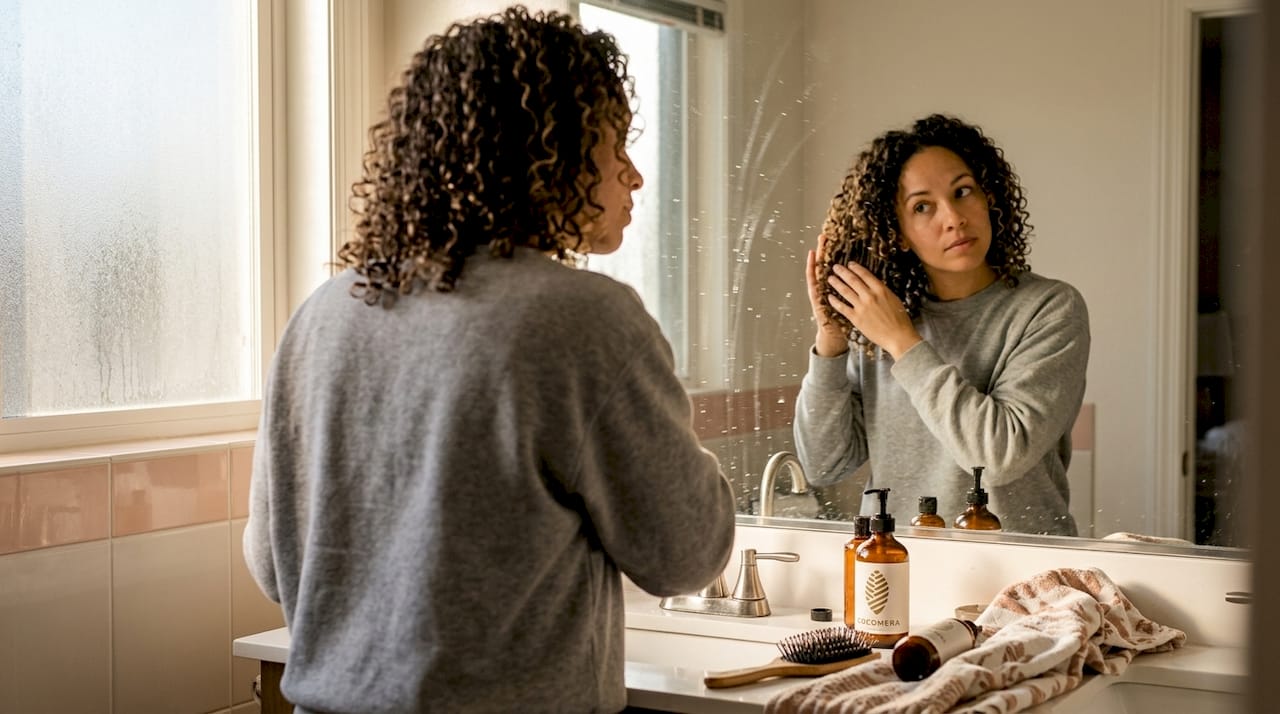
Textured hair is not just a different look. It is a fundamentally different structure that responds poorly to generic care. If you have wavy, curly, coily, or afro hair, you have probably noticed that the routines your straight-haired friends swear by leave your curls dry, frizzy, or brittle. That is not a coincidence. Curly, coily, and afro hair types are inherently drier and more fragile due to their structure, which means the products and habits that work for others simply do not work for you. This article breaks down the science, the common mistakes, and the practical routines that actually protect and strengthen textured hair.
Table of Contents
- Understanding the structure of textured hair
- Impact of common practices and routines
- Protective routines: Moisture, oiling, and maintenance
- Tailoring routines to curl type and lifestyle
- Why most women underestimate the value of routine
- Explore proven styling and care solutions for your curls
- Frequently asked questions
Key Takeaways
| Point | Details |
|---|---|
| Structure defines needs | Curly, coily, and afro hair’s unique structure demands specialized care routines. |
| Routine protects health | Evidence shows curl-specific routines prevent dryness, breakage, and scalp issues. |
| Oiling reduces damage | Using oils in a routine can reduce breakage by up to 65% and preserve the curl pattern. |
| Customization is crucial | Tailoring routines to your curl type and lifestyle delivers healthier, stronger hair. |
| Consistency outperforms trends | Regular, simple routines work better than chasing complicated fixes. |
Understanding the structure of textured hair
Before you can build a routine that works, you need to understand why your hair behaves the way it does. Textured hair is not just wavy or coiled on the outside. Its actual cross-section is elliptical rather than round, which changes everything about how it grows, bends, and responds to moisture.
Because of this elliptical, coiled shape, sebum struggles to travel down the hair shaft. On straight hair, natural oils move easily from root to tip. On curly and coily hair, every twist and bend is a barrier. The result is chronic dryness, especially at the ends, no matter how healthy your scalp is.
This structure also creates mechanical weak points. Every curve in the hair shaft is a spot where tension concentrates. That is why textured hair breaks more easily during combing, detangling, or even sleeping on a rough pillowcase. It is not weak hair. It is hair that needs handling that respects its geometry.
Here is a quick comparison of how textured and straight hair differ structurally:
| Feature | Straight hair | Textured hair |
|---|---|---|
| Shaft shape | Round | Elliptical |
| Sebum distribution | Even, root to tip | Uneven, concentrated at roots |
| Moisture retention | Higher | Lower |
| Breakage risk | Lower | Higher at curl points |
| Response to generic routines | Generally positive | Often damaging |
The practical takeaway from this is clear:
- Textured hair needs external moisture because its own oils cannot do the job alone
- Detangling should always happen on wet, conditioned hair to reduce tension at weak points
- Products designed for straight hair often contain ingredients that coat the shaft without penetrating it, which makes dryness worse over time
“Textured hair’s structure is not a flaw to fix. It is a biological reality to work with. The right routine does not fight your curl pattern. It supports it.”
For a deeper look at how to build on this foundation, the curly hair care tips guide covers practical steps by hair type. And if you want to understand exactly why moisture is so central, the essential moisture guide explains it clearly.
Impact of common practices and routines
Knowing the structure of textured hair makes it easier to see why so many common habits cause damage. Heat tools, chemical treatments, and even washing frequency all interact with your hair’s structure in ways that can quietly erode its health over time.
Heat styling, chemical treatments, and frequent washing increase hair porosity and cause structural damage. High porosity means your hair absorbs moisture quickly but loses it just as fast, leaving strands perpetually dry and prone to tangling. This is a cycle that is hard to break once it starts.
The data on chemical relaxers is especially striking. Women with chemically relaxed hair experience significantly higher rates of scalp flaking, hair breakage, and hair loss compared to those who keep their natural curl pattern. The chemicals alter the disulfide bonds in the hair shaft permanently, and the regrowth line where relaxed meets natural becomes a chronic breakage point.
Here is how protective and damaging routines compare:
| Practice | Effect on textured hair |
|---|---|
| Weekly heat styling | Increases porosity, weakens shaft |
| Chemical relaxing | Permanent structural damage, breakage at regrowth |
| Washing more than twice weekly | Strips natural oils, increases dryness |
| Protective styling with moisture | Reduces manipulation, retains length |
| Regular deep conditioning | Restores elasticity, reduces breakage |
Building a routine that protects rather than damages comes down to a few consistent choices:
- Reduce heat use to special occasions, and always apply a heat protectant first
- Wash every 7 to 10 days to preserve natural oils without letting buildup accumulate
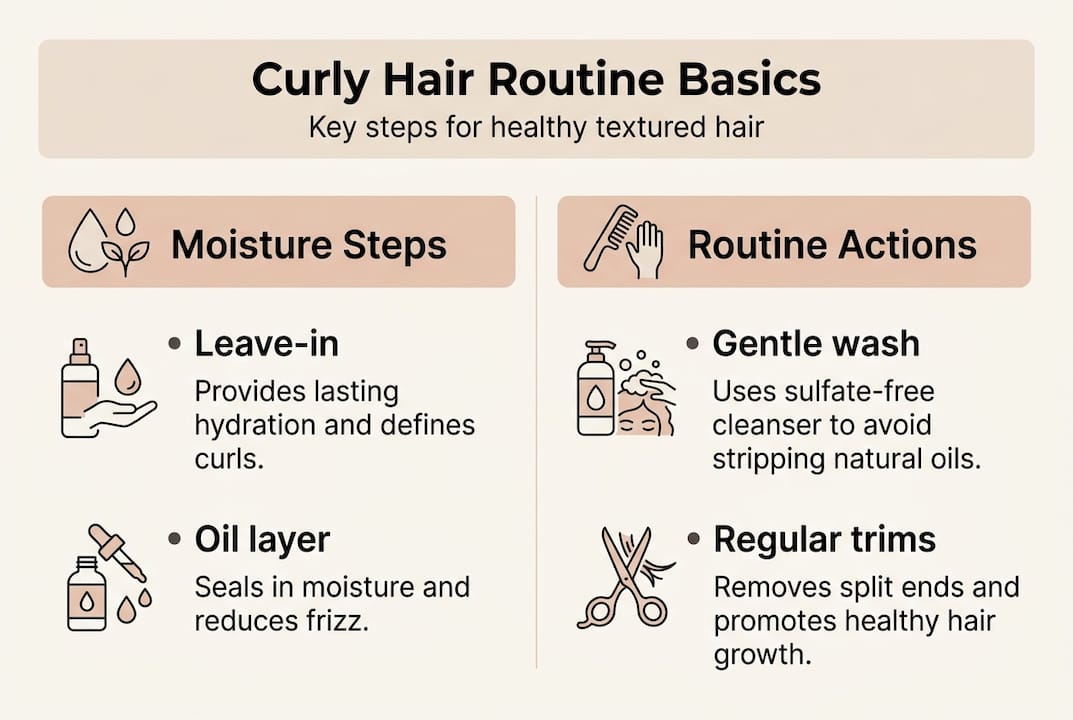
- Use a sulfate-free cleanser that cleans without stripping moisture
- Deep condition after every wash to restore what the cleansing process removes
- Detangle gently with fingers or a wide-tooth comb before rinsing out conditioner
Pro Tip: If you are transitioning away from heat or chemicals, focus on moisture first. Your hair needs to rebuild its internal water balance before it can handle styling stress again.
The wash day workflow guide walks through each step in detail, and the curly hair routine article gives you a full framework to follow.
Protective routines: Moisture, oiling, and maintenance
Once you understand what harms textured hair, the next step is building habits that actively protect it. Moisture and oiling are not optional extras. They are the foundation of any routine that actually works for curly, coily, or afro hair.

Oiling is one of the most evidence-backed practices in textured hair care. Protective routines like oiling reduce breakage and surface roughness variability by up to 65%. That is a significant number. It means that consistently oiling your hair before washing or as a daily sealant is not just a cultural tradition. It is a measurable form of damage prevention.
The key is using the right oils for your hair’s porosity level. Low-porosity hair benefits from lighter oils like argan or jojoba that do not sit on top of the shaft. High-porosity hair responds better to heavier oils like castor or shea butter that fill in gaps along the cuticle. The oils for curly hair guide breaks this down by porosity so you can match the oil to your actual hair needs.
Moisture retention goes beyond just applying a leave-in conditioner. It is a layered process:
- Start with water or a water-based product as the base layer
- Apply a cream or leave-in conditioner to add and hold moisture
- Seal with an oil or butter to slow evaporation
- Protect at night with a satin bonnet or pillowcase to reduce friction
This layered approach, often called the LOC or LCO method, works because it addresses moisture loss at multiple points. For product recommendations matched to this method, the hair moisturizers guide covers options for every curl type.
Pro Tip: Pre-pooing (applying oil before shampooing) is one of the easiest ways to prevent wash day dryness. It creates a barrier that limits how much moisture the shampoo strips from your strands.
Regular maintenance also includes trimming split ends every 8 to 12 weeks. Split ends travel up the shaft and cause breakage further from the tip, so trimming is not just cosmetic. It is protective. More strategies are covered in the prevent breakage tips article.
Tailoring routines to curl type and lifestyle
No two heads of textured hair are exactly alike. A type 2b wave and a type 4c coil have different moisture needs, different detangling challenges, and different responses to the same products. Customizing your routine is not about following a trend. It is about making your routine actually work for your specific hair.
Routines that preserve natural texture empirically reduce alopecia and breakage, and the research supports minimal manipulation as a key benchmark. This means the fewer times you touch, pull, or style your hair on any given day, the better your long-term retention will be.
Here is how to start customizing by curl type:
- Type 2 (wavy): Focus on lightweight moisture and anti-frizz products. Avoid heavy butters that weigh down the wave pattern. Refresh with a water and conditioner mix between wash days.
- Type 3 (curly): Prioritize curl definition and moisture balance. Use a gel or cream styler to hold the curl without crunch. Deep condition weekly.
- Type 4 (coily/afro): Maximum moisture is the priority. Use thick creams, butters, and regular oiling. Protective styles like braids or twists reduce daily manipulation significantly.
Lifestyle also shapes your routine in real ways. If you work out frequently, a co-wash (conditioner-only wash) between full wash days keeps your scalp clean without stripping moisture. In cold, dry European winters, you may need to seal with heavier products to compensate for low humidity pulling moisture from your strands. Traveling? Pack a small spray bottle with water and leave-in to refresh your curls without needing a full routine.
“The best routine is the one you will actually do consistently. Start simple, track what works, and build from there.”
For product selection matched to your curl type, the curl-specific ingredients guide is a solid starting point. And if you have type 3 or 4 curls and want full styling guidance, the afro styling routines article covers step-by-step approaches for 2026.
Why most women underestimate the value of routine
Here is something most hair content will not tell you: routine fatigue is not a sign that you are doing too much. It is usually a sign that you are following advice that was never designed for your hair type.
When you spend an hour on a wash day routine that leaves your hair feeling worse, you start to believe your hair is just difficult. But the problem is almost never your hair. It is the routine. Chasing every new product launch or trending method creates noise that drowns out the simple habits that actually work.
Consistency with a few well-chosen steps outperforms any complicated 12-step routine. Oiling regularly, protecting at night, and washing at the right frequency will do more for your curl health over six months than any miracle product used once. The brands and methods that work are often the least flashy ones.
At Cocomera, we see this pattern constantly. Customers come in overwhelmed, having tried everything. What turns things around is almost always a stripped-back routine built on the right basics, using single ingredient solutions that do one thing well. Less is genuinely more when it comes to textured hair.
Explore proven styling and care solutions for your curls
Building a routine that works starts with having the right products in your corner. At Cocomera, every product is carefully selected to meet the real needs of wavy, curly, coily, and afro hair types.
Whether you are looking for curly hair styling products that define and hold your curl pattern without crunch, or curly hair treatments that restore moisture and reduce breakage, you will find options matched to your specific curl type and routine needs. Cocomera curates products from trusted international and local brands so you do not have to spend hours researching. Your next step toward healthier, stronger curls is right here.
Frequently asked questions
What is the most important step in a hair routine for textured hair?
Moisture retention is the foundation. Using oiling and leave-in conditioners consistently combats the chronic dryness and breakage that textured hair is most vulnerable to.
How often should you wash curly, coily, or afro hair?
Every 7 to 10 days is a strong baseline for most textured hair types. Frequent washing increases porosity and strips the natural oils your curls need to stay healthy, so less is usually more.
Do protective styles and oils really prevent breakage?
Yes. Research shows that oiling reduces breakage and surface roughness by up to 65%, making it one of the most effective and accessible protective habits for textured hair.
Is it better to use natural or relaxed hair routines?
Natural hair routines consistently outperform relaxed ones in terms of hair health. Relaxed hair experiences higher rates of scalp flaking, breakage, and loss compared to natural curl routines.
Can routines be customized for different curl types and lifestyles?
Absolutely. Routines preserving natural texture empirically reduce alopecia and breakage, and tailoring steps to your curl pattern and daily life makes those results even stronger.


