



Your core routine: AM means gentle cleanse, antioxidant serum, ceramide moisturizer, and tinted mineral SPF. PM means gentle cleanse, targeted actives (niacinamide, azelaic acid, or retinoid), then a moisturizer or occlusive to seal everything in. That’s the whole framework. Everything below explains why it works and how to do it safely.
Start here — your daily essentials:
- Cleanse gently, morning and night, with a sulfate-free or low-pH cleanser.
- Apply moisturizer within three minutes of cleansing, while skin is still damp, to lock in hydration
- Use a vitamin C or niacinamide serum in the morning before SPF
- Apply tinted mineral sunscreen with iron oxide every morning, rain or shine
- At night, introduce one active at a time (niacinamide, azelaic acid, or retinoid) and give it 4–6 weeks before adding another
- Reapply sunscreen every two hours when outdoors
Pro Tip: Consistency over 8–12 weeks matters more than the products themselves. Visible results take time, and introducing too many actives at once is the fastest way to trigger the very hyperpigmentation you’re trying to prevent.
Key Takeaways
Melanin-rich skin benefits most from a consistent, barrier-first routine anchored by daily tinted mineral SPF and gentle active introduction — not aggressive treatments or trend-chasing.
| Point | Details |
|---|---|
| Daily tinted SPF is the top priority | Tinted mineral sunscreen with iron oxide blocks visible light, a key PIH trigger, and prevents new dark spots from forming. |
| Moisturize on damp skin | Applying ceramide-rich moisturizer within three minutes of cleansing locks in hydration and supports the skin barrier. |
| Introduce actives slowly | Start retinoids and acids at low concentrations, two nights per week, and wait 4–6 weeks before adding another active. |
| Expect 8–12 weeks for visible results | Dark spots can take 6–12 months to fade fully; consistency over time outperforms any single product. |
| Cocomera’s Black Girl Sunscreen range | Tinted SPF 30 and SPF 50 options formulated for melanin-rich skin, available with no white cast or ashy finish. |
Table of Contents
- Why does melanin-rich skin need its own self-care approach?
- What should your morning routine look like for melanin-rich skin?
- How should your evening routine differ for repair and treatment?
- How do you safely exfoliate and treat dark spots?
- Does melanin-rich skin really need daily sunscreen?
- Which ingredients should you use, and which should you avoid?
- How do you care for body areas and keloid-prone zones?
- When should you see a dermatologist for melanin-rich skin?
- What diet and lifestyle habits support healthy melanin skin?
- How does hair care interact with your facial skincare routine?
- What nighttime recovery techniques work best for melanin-rich skin?
- The honest truth about self-care for melanin-rich skin
- Sunscreen and hydration essentials from Cocomera
- Sources
Why does melanin-rich skin need its own self-care approach?
Generic skincare advice was largely built around lighter skin tones, and the gap shows. Melanin-rich skin carries a higher likelihood of post-inflammatory hyperpigmentation (PIH) and keloid scarring, and tends to be drier due to lower ceramide levels — three factors that change almost every product and routine decision you make.
PIH is the dark spot left behind after a pimple, ingrown hair, or any skin irritation. In melanin-rich skin, the melanocytes (pigment-producing cells) are more reactive, so even mild inflammation can trigger lasting discoloration. Keloid scarring, where scar tissue grows beyond the original wound boundary, is also more common. These aren’t cosmetic inconveniences — they’re physiological tendencies that require a protective, barrier-first approach rather than the aggressive exfoliation routines that dominate mainstream skincare content.
What this means practically:
- Harsh physical scrubs, high-strength peels, and aggressive retinoid introductions can worsen PIH
- Barrier repair (ceramides, glycerin, fatty acids) is a priority, not an optional step
- Sun protection isn’t just anti-aging — it’s the single most effective tool for preventing new dark spots and stopping existing ones from deepening
- Fragrance, alcohol, and irritating preservatives carry more risk because any inflammatory response can leave a mark
The good news: once you understand these tendencies, building an effective routine becomes straightforward. Protect the barrier, prevent inflammation, treat gently.
What should your morning routine look like for melanin-rich skin?
AM is about protection first. Dermatologists recommend that morning routines prioritize environmental defense — antioxidants and sunscreen — while leaving active treatments for the evening.
Morning steps, in order:
- Gentle cleanse. Use a sulfate-free, low-pH cleanser. If your skin isn’t oily or you wore a light moisturizer overnight, a water rinse is enough. Over-cleansing strips ceramides.
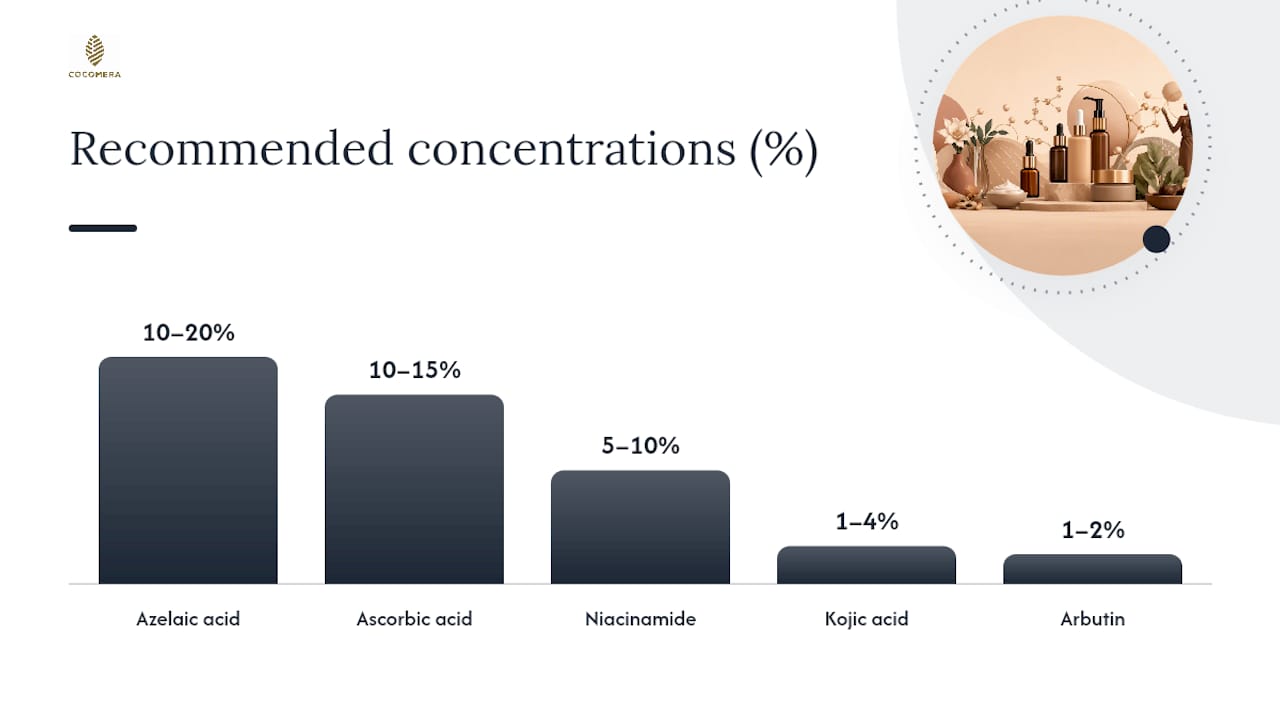
- Vitamin C or niacinamide serum. Vitamin C (ascorbic acid, ideally L-ascorbic acid at 10–15%) neutralizes free radicals and supports brightening. Niacinamide at 5–10% calms inflammation and fades existing spots. Pick one to start.
- Moisturizer. Apply while skin is still slightly damp. Look for ceramides, glycerin, and hyaluronic acid. Applying moisturizer within three minutes of cleansing reduces transepidermal water loss — a step that makes a measurable difference for drier melanin-rich skin.
- Tinted mineral sunscreen with iron oxide. This is non-negotiable. Apply as the final step, generously, to face and neck.
What to look for in each product:
- Vitamin C: stable formulas (L-ascorbic acid or ascorbyl glucoside), pH under 3.5, opaque or dark packaging
- Moisturizer: ceramide NP or AP, glycerin, shea butter, or squalane — avoid alcohol-heavy formulas
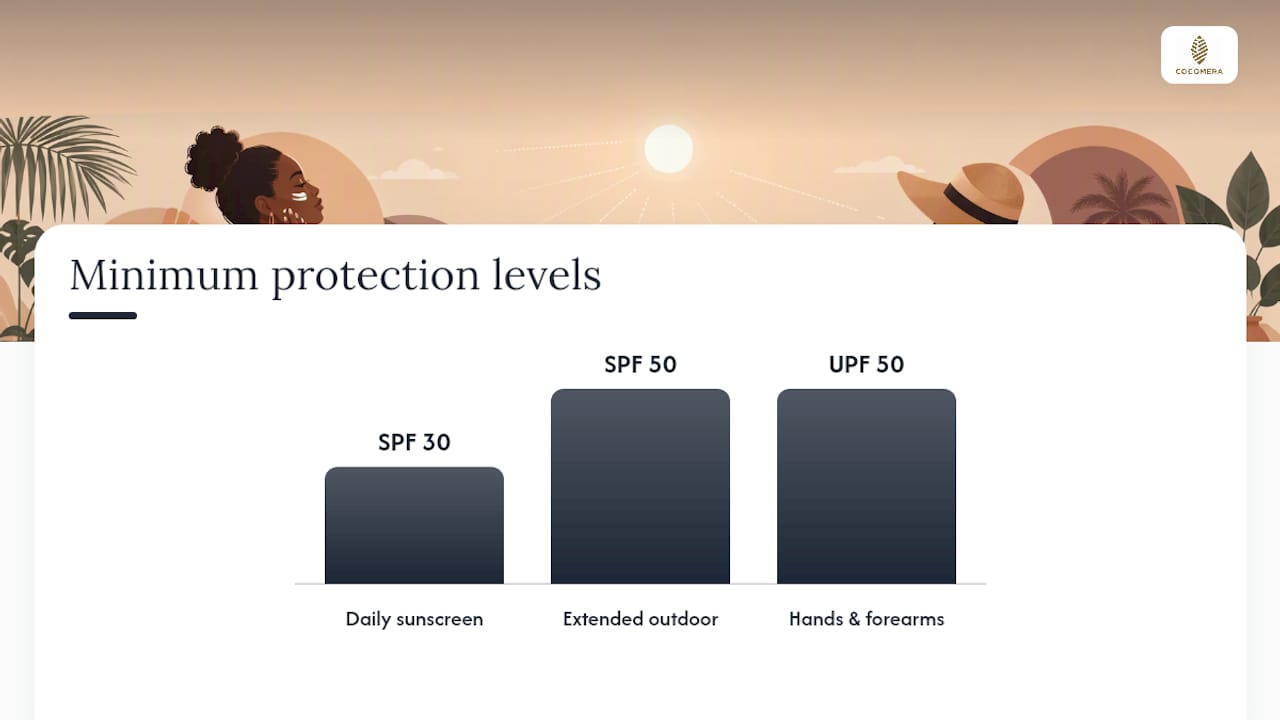
- Sunscreen: SPF 30 minimum, tinted, iron oxide listed in ingredients, no white cast
Pro Tip: Test sunscreen on your jawline before committing to a full face application. Tinted formulas vary widely — some blend invisibly on deeper tones, others leave a gray or orange cast. Black Girl Sunscreen’s Make It Glow SPF 30 was specifically formulated to avoid that problem on melanin-rich skin.
How should your evening routine differ for repair and treatment?
PM is when your skin repairs itself, which makes it the right time for actives. The evening routine should focus on restoration and targeted treatment, timed to the skin’s natural repair cycle.
Evening steps, in order:
- Double cleanse if you wore SPF or makeup. An oil-based cleanser first, then a gentle water-based cleanser. This removes sunscreen residue without stripping.
- Targeted active. Choose one: niacinamide (5–10%), azelaic acid (10–20%), or a low-strength retinoid (0.025–0.05% retinol to start). Apply to clean, dry skin.
- Wait 10–15 minutes before the next step if using retinoids or acids, to reduce irritation risk.
- Moisturizer. Same ceramide-rich formula as your AM routine, or a slightly richer version for nighttime.
- Occlusive (optional but effective). A thin layer of petrolatum, shea butter, or a sleeping mask seals everything in and supports barrier repair overnight.
Clinical caution: Starting low and going slow with retinoids and acids in skin of color is the standard clinical recommendation. Irritation from moving too fast doesn’t just cause redness — in melanin-rich skin, it triggers PIH, which is the exact problem you’re trying to treat. Begin with two nights per week, assess after four weeks, then increase frequency only if your skin tolerates it well.
Pro Tip: Introduce one new active every 4–6 weeks. Patch-test on your inner arm first, then the side of your neck — areas that share your facial skin tone and react similarly — before applying to your full face.
How do you safely exfoliate and treat dark spots?
Favor chemical exfoliation over physical scrubs. Walnut shells, sugar, and coarse beads create micro-tears that trigger inflammation — and inflammation in melanin-rich skin means PIH. Starting chemical exfoliants at low concentrations and slowly increasing frequency reduces irritation and PIH flare-ups compared with aggressive peels.
Lactic acid (5–10%) and mandelic acid (5–10%) are the gentlest AHA options and well-suited to melanin-rich skin. Mandelic acid’s larger molecular size means slower penetration and less irritation risk. Glycolic acid works but requires more caution at higher concentrations. Salicylic acid (BHA, 0.5–2%) is useful for oily or acne-prone skin.
Depigmenting ingredients with clinical support:
| Ingredient | Evidence level | Safety notes for melanin-rich skin |
|---|---|---|
| Niacinamide (5–10%) | Multiple RCTs | Well-tolerated; start at 5% |
| Azelaic acid (10–20%) | RCTs, FDA-approved | Gentle; suitable for sensitive skin |
| Kojic acid (1–4%) | Clinical studies | Can irritate; use short-contact or low % |
| Arbutin (1–2%) | Clinical studies | Generally well-tolerated |
| Ascorbic acid (10–15%) | RCTs | Oxidizes quickly; use stable formulas |
Several of these botanical and topical agents show clinical promise for hyperpigmentation, though many lack long-term RCT data. Combining two or three (for example, niacinamide plus azelaic acid plus SPF) tends to outperform any single ingredient used alone.
The American Academy of Dermatology notes that many dark spots fade within several months once the triggering cause is removed, but deeper dermal pigmentation can take longer and may need prescription-strength treatment.
Pro Tip: If you’re planning a professional chemical peel or laser treatment, stop all exfoliating acids and retinoids at least one week before the procedure. Seek practitioners with documented experience treating melanin-rich skin — the risk of PIH from an incorrectly calibrated peel is real and can set progress back months.
Does melanin-rich skin really need daily sunscreen?
Yes, without exception. The myth that darker skin doesn’t need sunscreen is explicitly false according to dermatology experts — and it’s one of the most damaging misconceptions in skincare for people of color.
Here’s why it matters beyond UV protection: visible light and heat are significant PIH triggers. Standard chemical sunscreens block UVA and UVB but offer little protection against visible light. Tinted mineral sunscreens containing iron oxide block visible light, which is why the AAD specifically recommends tinted formulas with iron oxide for darker skin tones managing hyperpigmentation.
Sunscreen essentials for melanin-rich skin:
- SPF 30 minimum; SPF 50 if you’re outdoors for extended periods
- Tinted formula with iron oxide for visible-light protection
- Reapply every two hours outdoors, or after sweating and swimming
- Apply to neck, ears, and hands — not just the face
- For hands and forearms, UPF 50 sun gloves offer practical coverage without reapplication hassle
Skin cancer does occur in Black and brown skin, and outcomes tend to be worse when diagnosed late — partly because the myth of built-in protection leads to delayed checks and delayed diagnosis. Daily sunscreen and annual skin checks are both part of responsible self-care.
Pro Tip: Layer sunscreen under a tinted moisturizer or foundation with SPF for double coverage. Test for ashy cast by applying to the back of your hand in natural light — what looks white indoors often disappears in daylight, but a gray cast will be visible either way.
Which ingredients should you use, and which should you avoid?
Use these — with the right frequency:
- Niacinamide (5–10%): Daily use, AM or PM. Fades spots, calms redness, strengthens barrier.
- Azelaic acid (10–20%): Once or twice daily. Treats PIH and acne; gentle enough for sensitive skin.
- Vitamin C (10–15% L-ascorbic acid): AM use. Brightening and antioxidant protection. Use a stable, low-pH formula.
- Retinoids (0.025–0.05% retinol to start): PM only, 2–3 nights per week initially. Speeds cell turnover and fades pigmentation over time. Increase frequency gradually over 8–12 weeks.
- Lactic or mandelic acid (5–10%): 1–2 times per week, PM. Gentle exfoliation without aggressive irritation.
- Ceramides, glycerin, squalane: Daily, AM and PM. Barrier repair and hydration — foundational, not optional.
Warning: Avoid unregulated skin-lightening products containing mercury, high-dose hydroquinone (above 2% without medical supervision), or unlabeled bleaching agents. These are sold online and in some beauty supply stores, often marketed specifically to people of color. Mercury-containing products are illegal in the U.S. and cause serious systemic harm. High-dose hydroquinone without dermatologist oversight can cause ochronosis — a paradoxical darkening of the skin that is difficult to reverse. If a product promises dramatic lightening in days, that’s a red flag, not a selling point.
How do you care for body areas and keloid-prone zones?
The same protective logic that applies to your face applies everywhere else. Underarms, neck, chest, and any area prone to friction or irritation deserve the same barrier-first, inflammation-aware approach.
Targeted care by area:
- Underarms: Use a gentle, fragrance-free deodorant. Shaving causes micro-trauma — consider switching to an electric trimmer or depilatory cream formulated for sensitive skin. Apply a niacinamide serum to hyperpigmented underarm skin 2–3 times per week.
- Neck and chest: These areas are often neglected but show PIH and sun damage. Extend your facial SPF and moisturizer down to your décolletage daily.
- Scars and keloid-prone areas: Keep healing wounds moist with petrolatum or silicone gel sheets. Avoid picking, squeezing, or any unnecessary trauma. Silicone sheets applied consistently over 8–12 weeks can help flatten raised scars.
- Stretch marks: Consistent moisturizing with shea butter or oils (rosehip, marula) supports skin elasticity, though no topical fully erases established stretch marks.
- Post-procedure aftercare: After waxing, threading, or laser treatments, apply a calming, fragrance-free moisturizer immediately and keep the area out of direct sun for at least 48 hours.
Pro Tip: Before any procedure — waxing, tattooing, laser, or even a minor dermatological treatment — ask specifically whether the practitioner has experience with melanin-rich skin. Estheticians and clinicians trained in skin of color reduce complication rates significantly. It’s a reasonable question, and the right provider will welcome it.
When should you see a dermatologist for melanin-rich skin?
Self-care handles a lot, but some situations need a professional. See a board-certified dermatologist if:
- PIH worsens or spreads despite 12 weeks of consistent, gentle care
- A lesion changes shape, color, or bleeds — get it checked promptly
- Keloids appear or existing scars grow beyond the original wound boundary
- You want prescription-strength treatments (tretinoin, hydroquinone 4%, tranexamic acid)
- You’re considering a chemical peel, laser, or microneedling procedure
Questions to ask a prospective dermatologist:
- “Do you regularly treat patients with skin of color?”
- “What lasers or peel depths do you use for darker skin tones, and how do you adjust for PIH risk?”
- “What’s your protocol if I develop post-procedure hyperpigmentation?”
Finding a skin-of-color–experienced provider matters. The American Academy of Dermatology’s Skin of Color Society maintains a directory of dermatologists with this specialty. Telehealth platforms have also expanded access to dermatologists who specialize in melanin-rich skin.
Pro Tip: Bring photos to your appointment. Tracking changes over time with consistent lighting and angles gives a dermatologist far more useful information than a single in-office look.
What diet and lifestyle habits support healthy melanin skin?
Skin health reflects what happens inside as much as what you apply outside. A few habits consistently show up in dermatology guidance for melanin-rich skin:
Hydration is foundational. Drinking adequate water supports skin turgor and barrier function, though it won’t replace topical moisturizers for dry skin. Aim for roughly eight cups daily, more in heat or during exercise.
Antioxidant-rich foods — leafy greens, berries, citrus, and foods high in vitamins C and E — support the skin’s natural defense against oxidative stress. Vitamin C from food also supports collagen synthesis, which matters for scar healing and skin resilience.
Omega-3 fatty acids from fatty fish, flaxseed, and walnuts help maintain the lipid barrier, which is particularly relevant given the lower ceramide levels common in melanin-rich skin.
Sleep is when skin repair peaks. Seven to nine hours allows the skin’s natural regeneration cycle to complete, which is exactly why PM actives work best applied before bed rather than during the day.
Stress management reduces cortisol, which in elevated levels can worsen acne, eczema, and other inflammatory conditions — all of which trigger PIH in melanin-rich skin. Exercise, consistent sleep schedules, and even brief mindfulness practices all help.
Alcohol and smoking both impair barrier function and slow healing. Reducing or eliminating them shows up in skin quality faster than most topical products.
How does hair care interact with your facial skincare routine?
For people with textured hair, the overlap between hair products and facial skin is real and often overlooked. Oils, butters, and styling products that migrate from hairline to forehead can clog pores and trigger breakouts — which then leave PIH marks.
A few practical adjustments make a significant difference:
Apply hair oils and edge control before your facial moisturizer, then cleanse the hairline gently if product transfer occurs. If you use heavy butters or oils on your scalp, consider a light barrier (like a thin layer of petroleum jelly) along the hairline before styling to reduce migration.
Leave-in conditioners and curl creams with aloe vera or glycerin are generally lighter and less pore-clogging than heavy petrolatum-based products. For the scalp, the same gentle-cleansing principle applies — sulfate-heavy shampoos strip the scalp’s natural oils and can cause the kind of dryness and flaking that leads to scratching and subsequent PIH on the scalp and temples.
Silk or satin pillowcases reduce friction on both hair and facial skin overnight. Less friction means fewer micro-irritations, fewer breakouts, and fewer dark spots along the cheeks and temples where hair contacts skin during sleep.
What nighttime recovery techniques work best for melanin-rich skin?
The PM routine’s final step — sealing everything in — is where a lot of people stop short. An occlusive or sleeping mask applied after your moisturizer creates a physical barrier that prevents water from evaporating overnight, giving actives more time to work in a hydrated environment.
Occlusive options, from lightest to heaviest:
- Sleeping masks (gel or cream-based): products like those containing hyaluronic acid and peptides add hydration while sealing. Apply as the last step, 2–3 nights per week.
- Shea butter: a natural occlusive with fatty acids that also supports barrier repair. Particularly useful for very dry or eczema-prone skin.
- Petrolatum (plain petroleum jelly): the most effective occlusive available. A thin layer on top of moisturizer — the “slugging” technique — dramatically reduces overnight water loss. Non-comedogenic in pure form, though some people with acne-prone skin prefer to use it only on dry patches.
One practical note: if you’re using a retinoid, apply it to clean, dry skin, wait 15 minutes, then apply moisturizer, and seal with your occlusive. Applying an occlusive directly over a fresh retinoid application increases penetration and can cause irritation in melanin-rich skin.
Silk pillowcases and a cool, humidified sleeping environment support the same goal: keeping skin hydrated and minimizing friction while your PM actives do their work.
The honest truth about self-care for melanin-rich skin
Consistency and simplicity outperform any trending ingredient or elaborate 12-step routine, every time.
The skincare industry generates enormous noise around new actives, viral products, and dramatic before-and-after results. For melanin-rich skin specifically, chasing every trend is counterproductive — each new product introduction is a potential irritation trigger, and irritation means PIH. The most effective approach is the least exciting one: a short, consistent routine built around barrier support and sun protection, with one active introduced at a time.
A few rules worth keeping:
- Start any new active at the lowest available concentration and use it twice a week before increasing
- Prioritize sunscreen and moisturizer above everything else — they prevent new damage while actives treat existing concerns
- Review your routine every 4–12 weeks and assess honestly: is your skin calmer, more even, less reactive? If not, simplify before adding
- Visible results from depigmenting actives take 8–12 weeks minimum. Stopping at week four because you “don’t see anything” is the most common reason routines fail
- Expensive doesn’t mean better. Niacinamide at 5% from a $12 bottle performs the same as the same ingredient in a $90 serum
The goal isn’t perfect skin. It’s skin that’s healthy, protected, and moving in the right direction.
Sunscreen and hydration essentials from Cocomera
Cocomera stocks a curated selection of sunscreen and hydration products built specifically for melanin-rich skin — no white cast, no ashy finish, and no compromise on protection.

The Black Girl Sunscreen collection at Cocomera is the starting point for anyone building a sun-protection habit. The range includes:
- Black Girl Sunscreen Make It Glow SPF 30: A lightweight daily SPF with a natural finish that blends invisibly on deeper tones. No white cast, no pilling under makeup.
- Black Girl Sunscreen Make It Hybrid SPF 50: Higher protection for outdoor days, with a formula that sits comfortably under or over makeup.
- Black Girl Sunscreen Kids SPF 50: Gentle enough for children’s melanin-rich skin, with the same no-cast formula.
- Sun Shield UPF 50 Gloves: Practical coverage for hands and forearms without reapplication.
For hydration, the Mielle Kalahari Melon & Aloe Vera Deep Hydration Curl Forming Glaze layers well as a body moisturizer on damp skin, delivering the glycerin and aloe vera your barrier needs.
Browse the full range at Cocomera and find the products that fit your routine.
Sources
- Skincare Advice From The Esthetician Changing The Game For People Of Color | Vogue
- How to fade dark spots in darker skin tones | American Academy of Dermatology
- Best skincare routine for dark skin | Binder Dermatology
- Skin cancer in Black or brown skin | National Cancer Institute
- Black dermatologists’ skin care routines | Allure
- Clinical review: Use of retinoids and acids in skin of color | PMC
This article is general information, not a substitute for advice from a qualified doctor. Consult a qualified healthcare professional about your own circumstances before acting on anything here.


