


TL;DR:
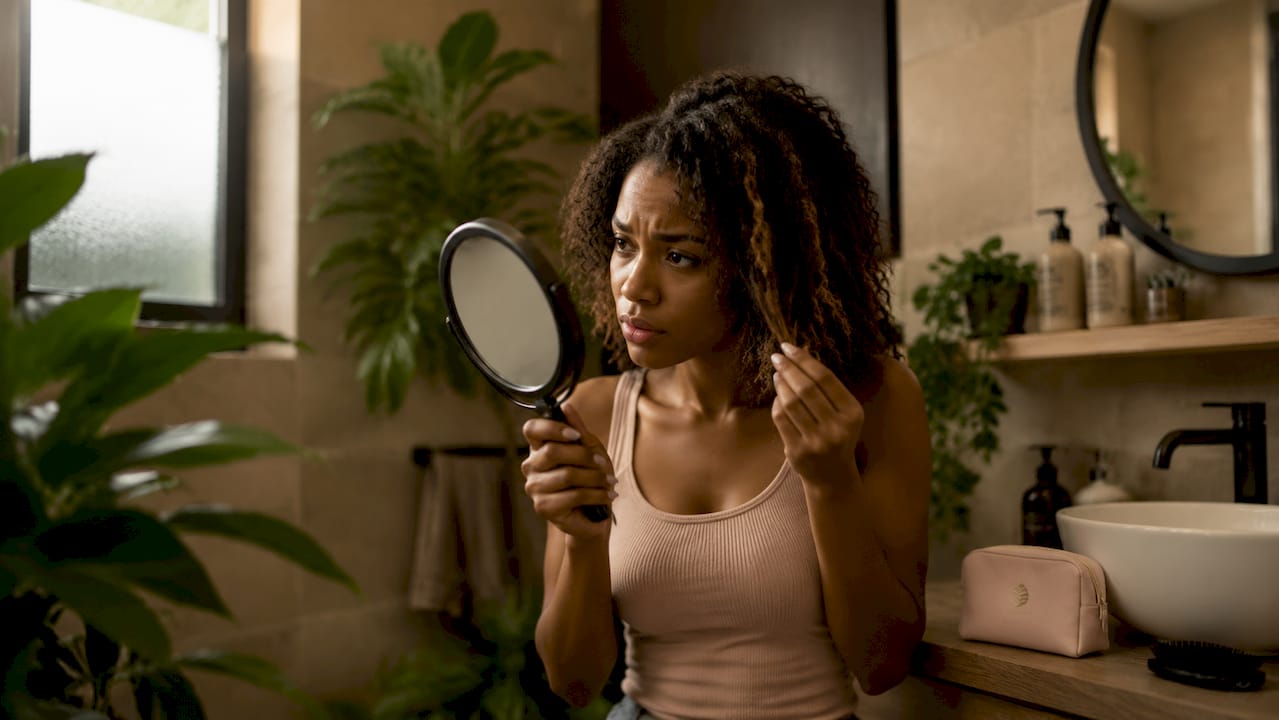
- Heat damage hair is a permanent breakdown of keratin proteins and cuticles caused by high heat from styling tools. It results in dry, brittle strands, with textured hair being more vulnerable due to fragile cuticles and higher moisture content, especially when damp. Preventive measures like fully drying hair, using heat protectants, and trimming damaged ends are vital, while treatments can only improve appearance, not reverse structural damage.
Heat damage hair is the permanent structural breakdown of hair caused by excessive heat from styling tools like flat irons, curling wands, and blow dryers. The damage works at the molecular level. High temperatures lift and crack cuticle scales and denature keratin proteins, leaving hair dry, brittle, and prone to breakage. For people with textured hair, types 2, 3, and 4, the risk is higher because curly and coily strands are naturally more fragile and moisture-sensitive than straight hair. Understanding what causes this damage is the first step toward stopping it.
What is heat damage hair and why does it happen?
Heat damage, known in dermatology as thermal hair damage, is the irreversible alteration of hair’s protein and cuticle structure caused by high heat exposure. The outer layer of each strand, called the cuticle, is made of overlapping scales that protect the inner cortex. When you apply heat above 300°F, those scales lift and crack. The cortex underneath loses moisture rapidly and becomes fragile.
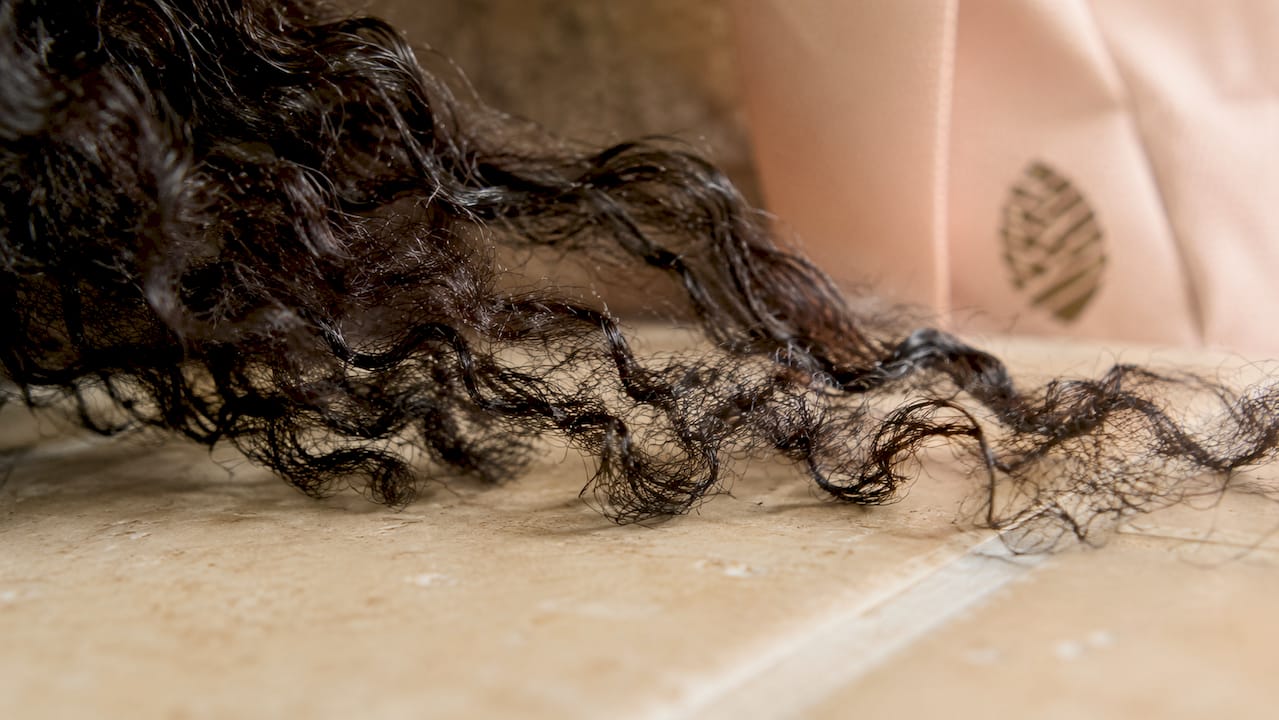
The deeper problem is what happens to keratin, the protein that gives hair its strength and shape. Heat above 300°F converts healthy alpha-keratin into weaker beta-keratin. This molecular change is permanent. No conditioner or mask can reverse it. The result is persistent frizz, poor color retention, and hair that breaks under minimal tension.
Textured hair faces a compounding risk. Coily and curly strands have a naturally uneven cuticle structure and higher moisture content than straight hair. That moisture becomes a liability when heat is applied to damp strands. Steam cavitation inside the cortex creates microscopic bubbles, a condition called bubble hair. Scanning electron microscopy shows these voids weaken the strand from the inside, causing it to snap at the damaged points.
The tools most responsible for thermal damage
Flat irons and pressing combs cause the most concentrated damage because they apply direct, sustained contact heat. Curling wands follow closely, especially when held in place for more than a few seconds. Blow dryers cause less intense damage per session but contribute significantly through daily cumulative use, particularly when used on high heat without a diffuser. Using a diffuser distributes heat more evenly and reduces the risk of bubble hair formation in wet curly strands.
Pro Tip: Never apply a flat iron or curling wand to hair that is even slightly damp. Wet hair heats from the inside out, and the steam has nowhere to escape. The result is bubble hair, which causes breakage that looks and feels like extreme dryness.
What are the signs of heat damaged hair?
Heat damaged hair shows a consistent set of physical signs that distinguish it from simple dryness or protein deficiency. Recognizing these signs early prevents further damage.
The most common signs include:
- Persistent dullness. Damaged cuticles scatter light instead of reflecting it, so hair loses its natural shine even after conditioning.
- Frayed or split ends. The cortex splits when the cuticle can no longer hold it together. Splits travel up the strand if ends are not trimmed.
- Brittle, rough texture. Hair feels straw-like and snaps when stretched rather than stretching and returning to shape.
- Loss of curl pattern. For textured hair, this is the clearest sign. Curls that no longer spring back after washing have lost their structural integrity.
- Excessive tangling. Lifted cuticle scales catch on each other, creating knots that cause more breakage during detangling.
Heat damage vs. dryness vs. protein deficiency
These three conditions overlap but have distinct causes and solutions. Dryness responds to moisture treatments like deep conditioners and leave-ins. Protein deficiency responds to protein treatments like keratin masks or rice water rinses. Heat damage does not fully respond to either. The elasticity test reveals the difference: take a wet strand and stretch it gently. Healthy hair stretches slightly and returns. Heat damaged hair breaks without stretching at all. Dry or protein-deficient hair may stretch too much or snap, but it often improves with the right treatment.
| Condition | Key sign | Responds to treatment? |
|---|---|---|
| Dryness | Rough texture, thirst for moisture | Yes, with deep conditioning |
| Protein deficiency | Mushy, over-elastic when wet | Yes, with protein treatments |
| Heat damage | No elasticity, curl loss, breakage | Partially, damage is permanent |
Is heat damage reversible?
Heat damage is not reversible. Protein denaturation converts alpha-keratin to beta-keratin permanently, and no topical treatment can restore the original molecular structure. The cuticle scales that have cracked or broken off cannot regenerate. This is the hard truth that most product marketing glosses over.
What treatments can do is improve the appearance and manageability of damaged hair. Deep conditioning masks, bond-building treatments like Olaplex No. 3, and protein treatments temporarily fill gaps in the cuticle and reduce frizz. They make hair easier to manage and reduce further breakage. They do not undo the structural change.
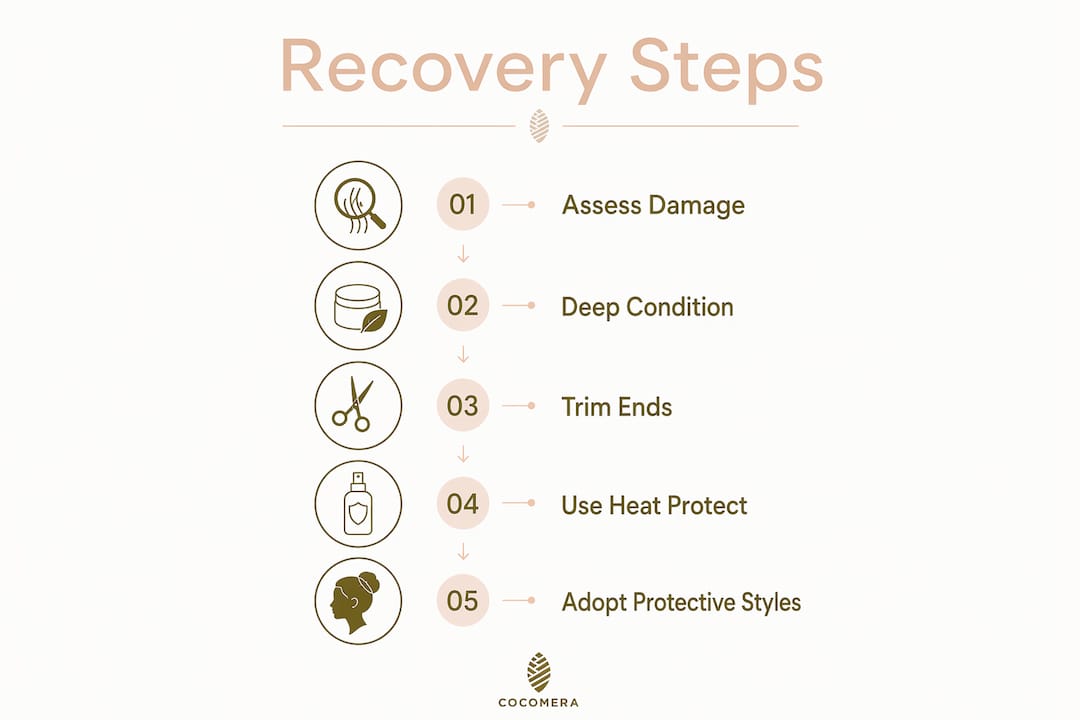
The most effective action for heat damaged hair is trimming. Damaged ends keep splitting up the shaft until they are removed. Regular trims every 6–8 weeks stop the split from traveling further and give healthy new growth room to thrive. For severe damage, a significant cut may be the fastest path to recovery.
Emerging research points to more protective options going forward. A 2026 lab study found that biotinoyl tripeptide-1 nanoparticles reduced cuticle lifting and cortical disruption after repeated heat exposure at 200°C. This suggests that next-generation heat protectants may do more than coat the surface. They may actively stabilize the protein matrix during styling.
Pro Tip: If you are transitioning away from heat styling, protective styles like braids, twists, and buns reduce daily manipulation and give damaged strands time to grow out without further stress. Pair protective styling with a moisture-focused routine to maintain strength in the healthy new growth.
How to prevent heat damage in textured hair
Prevention is the only strategy that fully works. Once the damage is done, management is the only option. These steps reduce risk significantly for textured hair types.
- Dry hair completely before applying heat. Applying a flat iron or curling wand to damp hair causes steam cavitation. Fully dry hair first using a diffuser or air drying before any direct heat tool touches it.
- Use a heat protectant every time. Heat protectants create a barrier that slows heat transfer to the cuticle. Look for formulas with silicones, hydrolyzed proteins, or newer peptide-based ingredients. Apply to damp hair before blow drying or to dry hair before flat ironing.
- Set your tool to the right temperature. For fine or color-treated textured hair, stay below 350°F. For coarser type 4 hair, 375°F is the upper limit for occasional use. Going higher does not improve results. It only accelerates damage.
- Minimize contact time and pressure. Pass a flat iron through each section once, slowly and steadily. Clamping hard or going over the same section repeatedly multiplies heat exposure without improving the style.
- Reduce heat styling frequency. Protective styles like braids, twists, and wash-and-go routines give your hair recovery time. Wet styling techniques for curly and afro hair can produce defined results without any direct heat.
- Maintain moisture and protein balance. Heat strips moisture from the cortex. Regular deep conditioning and occasional protein treatments keep the cuticle supple and less prone to cracking under heat stress.
Key Takeaways
Heat damage is a permanent structural change to hair proteins and cuticles that cannot be fully reversed, making prevention the most effective strategy for textured hair.
| Point | Details |
|---|---|
| Heat damage is permanent | Alpha-keratin converts to beta-keratin above 300°F and no topical treatment can reverse this change. |
| Textured hair is more vulnerable | Coily and curly strands have higher moisture content and fragile cuticles, increasing bubble hair risk. |
| Trim damaged ends regularly | Split ends travel up the shaft until removed; trimming every 6–8 weeks stops further breakage. |
| Always use a heat protectant | Barrier formulas slow heat transfer and reduce cuticle lifting during every styling session. |
| Dry hair fully before heat | Applying heat to damp hair causes steam cavitation, creating microscopic voids that weaken the strand. |
What I have learned from working with heat-damaged textured hair
The biggest misconception I see is that heat damage is a product problem. People buy deep conditioners, bond builders, and protein masks expecting a fix. Those products help with manageability. They do not fix the underlying structure. The real work is behavioral: lower temperatures, less frequent heat, and a heat protectant applied every single time without exception.
The second misconception is that all textured hair handles heat the same way. A type 2 wavy and a type 4c coil have very different tolerances. Type 4 hair is more fragile at the cuticle level and retains moisture differently, which makes it more susceptible to bubble hair when heat is applied carelessly. The advice to “use heat protectant and keep it under 400°F” is too generic for coily hair. The temperature ceiling should be lower, and the frequency should be much less.
What I have found actually works is a combination of regular trims, protective styling as a default, and heat as an occasional tool rather than a daily habit. The research on advanced heat protectant formulations is genuinely exciting, but the products available today still require you to do the behavioral work. No formula compensates for a flat iron set to 450°F used daily on coily hair. Prevention is not a supplement to your routine. It is the routine.
— Cocomera
Products for textured hair at Cocomera
Recovering from heat damage takes the right products alongside the right habits. Cocomera curates heat protectants, strengthening shampoos, and styling products specifically chosen for wavy, curly, coily, and afro hair types.
The styling and heat protection range at Cocomera includes formulas that complement the prevention steps covered here, from barrier sprays to leave-in conditioners that support moisture balance between heat sessions. For strands already dealing with damage, the hair treatments collection features strengthening and repair-focused options suited to types 2, 3, and 4. Every product is selected with textured hair in mind, so you spend less time guessing and more time seeing results.
FAQ
What is heat damage hair exactly?
Heat damage hair is the permanent breakdown of hair’s keratin proteins and cuticle structure caused by excessive heat from styling tools. It results in dryness, breakage, frizz, and loss of curl pattern that does not improve with conditioning alone.
How do I know if my hair is heat damaged?
The clearest sign is loss of curl pattern after washing, combined with hair that breaks instead of stretching when pulled gently while wet. Persistent dullness, split ends, and rough texture are also reliable indicators.
Can heat damaged hair grow back healthy?
New growth comes in healthy as long as you stop the damaging behavior. The already-damaged strands cannot repair themselves, so regular trims are necessary to remove compromised ends as healthy hair grows in.
What temperature is safe for textured hair?
For most textured hair, staying below 375°F reduces the risk of protein denaturation. Fine or color-treated curly hair should stay below 350°F. Applying heat above these thresholds accelerates cuticle cracking and keratin breakdown with each use.
Does a heat protectant fully prevent heat damage?
A heat protectant significantly reduces damage by slowing heat transfer to the cuticle, but it does not eliminate risk entirely. Pairing a protectant with proper tool practices and controlled temperatures gives the best protection.


