


TL;DR:
- Proper moisture preservation, gentle handling, and tailored routines are essential for healthy, defined curls. Washing 2 to 3 times weekly, detangling in the shower, and avoiding touching curls while drying prevent damage and frizz. Using appropriate products and protective sleeping habits help maintain curl pattern and overall hair health.
Curly hair dos and don’ts are the foundational rules that separate healthy, defined curls from chronic frizz, breakage, and frustration. The core principle is preservation, not correction: curly and textured hair loses moisture faster than straight hair because natural oils from the scalp cannot travel down the spiral shaft easily. That structural reality shapes every decision you make, from how often you wash to what you put on your pillow. Get these basics right, and your curl pattern takes care of itself.
1. The curly hair dos and don’ts of washing frequency
Washing too often is one of the most common curly hair mistakes, and the damage compounds quietly. The American Academy of Dermatology recommends washing based on scalp condition, and for most curl types, that means 2 to 3 times per week. Washing daily strips the scalp of sebum before it has any chance of reaching the mid-lengths and ends, leaving curls brittle and prone to breakage.
Straight hair benefits from daily washing because sebum travels the shaft quickly. On a coiled or spiral strand, that same oil barely makes it past the root. This is why consistent hair routines matter so much for textured hair: frequency is a variable you control, and getting it wrong undermines everything else.
Co-washing, which means washing with conditioner only, works well between full shampoo sessions for type 3 and type 4 hair. It cleanses lightly without stripping. When you do shampoo, choose a sulfate-free formula. Sulfates are detergents strong enough to degrease engines. They clean, but they take your curl’s moisture barrier with them.
Pro Tip: Use a clarifying shampoo once a month to remove product buildup, then follow immediately with a deep conditioning treatment to restore moisture balance.
2. How to detangle curly hair without causing damage
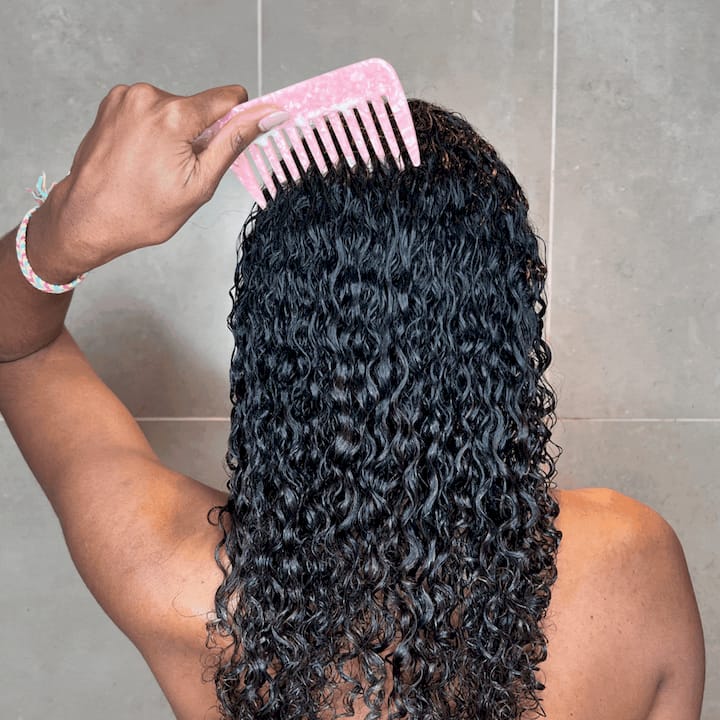
Detangling dry curly hair causes frizz and breaks the curls. CHALK confirms that detangling in the shower with conditioner is best. It causes less damage than combing dry hair. Wet hair with conditioner helps knots come out easily without breaking the strands.
Follow this sequence every time:
-
Apply a generous amount of conditioner to soaking wet hair in the shower.
-
Use your fingers first to break apart large tangles gently.
-
Follow with a wide-tooth comb if needed, never a fine-tooth brush.
-
Start from the ends and work upward toward the roots gradually. This prevents you from forcing knots down the shaft and snapping strands.
-
Rinse lightly or leave conditioner in, depending on your routine.
Tools matter here. A wide-tooth comb like the Cocomera Detangling Brush, Felicia Leatherwood Detangler Brush or a simple shower comb works for most curl types. Avoid boar bristle brushes on wet curly hair entirely. They are designed for straight hair and will shred your curl clumps.
Pro Tip: Apply a detangling conditioning mask once a week instead of standard conditioner on wash day. The extra slip reduces manipulation time and leaves curls noticeably softer.
3. Drying methods that protect curl definition
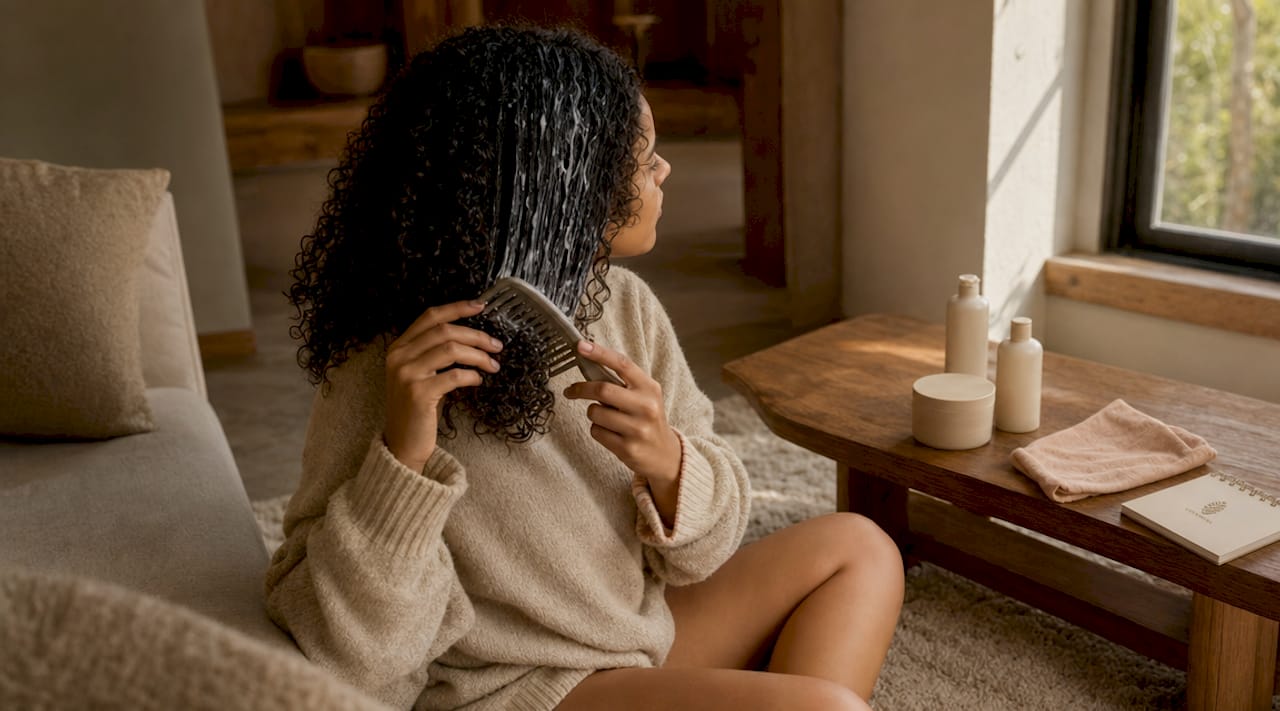
How you dry your hair determines whether your curl pattern survives the process. Touching curls while drying is the primary cause of frizz. Even with perfect products applied, manipulation during the setting phase disrupts clump formation and breaks apart the curl structure you just built.
Here is how air-drying and diffusing compare:
| Method | Best for | Key advantage | Risk to avoid |
|---|---|---|---|
| Air-drying | Type 2 and 3 hair | Zero heat damage | Takes longer; avoid touching |
| Diffusing | Type 3 and 4 hair | Faster; lifts roots | Use only low heat and airflow |
A diffuser on low heat is non-negotiable if you use a hairdryer. Without a diffuser, direct airflow blows curl clumps apart and creates frizz that no product can fix afterward. The Cocomera guide on hair diffusers for curls explains exactly how to position and move the diffuser for maximum definition.
Replace your regular towel with a microfiber towel or a plain cotton T-shirt. Standard terrycloth towels have a rough surface that roughens the hair cuticle and creates frizz before drying even begins. Scrunch upward gently with the microfiber towel to remove excess water, then leave the hair alone.
Pro Tip: Once your hair is 100% dry, scrunch out the gel cast with oil using a tiny drop of hair oil. This softens the crunchy texture while preserving the curl clumps underneath.
4. Choosing the right products for your curl type
Product selection is where most people with curly hair lose time and money. Avoid products containing harsh alcohols such as isopropyl alcohol, sulfates, and heavy silicones like dimethicone. Harsh alcohols evaporate fast and take moisture with them. Heavy silicones coat the strand and block hydration from entering, creating buildup that eventually weighs curls flat.
Look for these ingredients instead:
-
Humectants: glycerin, aloe vera, and honey draw moisture into the hair shaft.
-
Emollients: shea butter, mango butter, and natural oils like argan or jojoba soften and smooth the cuticle.
-
Proteins: hydrolyzed keratin or silk protein strengthen the strand structure, especially for high-porosity hair.
-
Film-formers: flaxseed gel and certain plant-based polymers hold curl shape without stiffness.
The layering sequence matters as much as the ingredients. Curl definition comes from moisture and structure working together: leave-in conditioner hydrates, curl cream adds softness and weight, and gel locks the shape. Apply all three to soaking wet hair, then scrunch upward to encourage curl formation. Oils go on last as sealants on damp hair, not as moisturizers on dry hair. Applying oil to dry hair seals out moisture rather than sealing it in.
Pro Tip: Read ingredient labels from top to bottom. Ingredients are listed by concentration, so if water is not in the first three ingredients of your leave-in conditioner, the product is not primarily a moisturizer.
5. Nighttime habits that preserve your curls
Sleeping on a cotton pillowcase undoes a full day of careful styling. Cotton absorbs moisture and creates friction against the hair shaft, which causes frizz and mechanical breakage overnight. Satin or silk pillowcases reduce that friction significantly, help retain natural oils, and let curls move without snagging.
Protective sleeping styles extend your curl life between wash days:
-
The pineapple: gather all hair loosely at the very top of your head and secure with a soft scrunchie. This keeps curl clumps intact and prevents them from being crushed under your head.
-
Loose twists or braids: for type 4 hair especially, two or three loose twists protect length and reduce tangling overnight.
-
Satin bonnet or silk wrap: the most protective option for coily and afro-textured hair, covering all strands completely.
Never go to sleep with wet hair. Wet hair is at its most fragile state. The friction and movement of sleep on wet strands causes tangling, matting, and breakage that is much harder to reverse than frizz. If you wash at night, diffuse or air-dry completely before lying down. On non-wash days, refresh curls with a light mist of water mixed with a small amount of leave-in conditioner, then re-scrunch to revive the shape.
Key takeaways
Curly hair care requires moisture preservation, gentle handling, and consistent routines that work with your curl pattern rather than against it.
| Point | Details |
|---|---|
| Wash 2 to 3 times per week | Overwashing strips natural oils and causes dryness and breakage in curly hair. |
| Detangle only on wet hair | Use fingers or a wide-tooth comb with conditioner, starting from ends to roots. |
| Never touch curls while drying | Manipulation during drying disrupts clump formation and creates frizz. |
| Avoid sulfates and heavy silicones | Choose products with humectants, emollients, and proteins for hydration and definition. |
| Protect curls overnight | Use a satin pillowcase or bonnet and sleep in a pineapple or loose protective style. |
What I have learned from years of working with textured hair
The most common pattern I see is people treating their curls like a problem to solve rather than a texture to understand. They buy five new products after one bad hair day, change their entire routine, and then wonder why their curls are confused and inconsistent. The truth is that curly hair rewards patience and observation far more than it rewards effort.
One thing most articles skip: your curl pattern changes with the seasons, with stress, with diet, and with hormonal shifts. A routine that worked perfectly last winter may not work in summer humidity. That is not a failure. It is just hair responding to its environment. The skill is learning to read those signals and adjust one variable at a time, not overhaul everything at once.
At Cocomera, we have seen this play out across hundreds of customers with type 2, 3, and 4 hair. The people who get the best results are not the ones with the most products. They are the ones who know their curl type, stick to a consistent wash day workflow, and give new products at least four weeks before judging them. Curls do not reveal their full potential overnight.
The other thing worth saying plainly: embrace the texture you have. Chasing someone else’s curl pattern on social media leads to product choices that do not suit your hair’s actual porosity, density, or elasticity. Work with what grows from your scalp. That is where the best results live.
— Cocomera
Build your curl routine with the right products

Knowing the rules is only half the work. The other half is having products that actually deliver on moisture, definition, and hold without compromising your curl health. At Cocomera, every product in the range is curated specifically for wavy, curly, coily, and afro hair types. Browse the full collection of curly hair styling products to find gels, curl creams, and leave-in conditioners matched to your curl type. For deeper repair and hydration, the hair masks for curly hair collection covers everything from weekly treatments to intensive moisture restoration. If you care for a child with curly hair, Cocomera also carries a dedicated kids’ curly hair range formulated for delicate strands.
FAQ
How often should you wash curly hair?
Most curl types benefit from washing 2 to 3 times per week. The American Academy of Dermatology recommends adjusting frequency based on scalp condition, since overwashing strips the natural oils that curly hair depends on for moisture.
What is the best way to detangle curly hair?
Detangle in the shower on wet hair with conditioner applied, using fingers first and then a wide-tooth comb. Always start at the ends and work upward toward the roots to minimize breakage.
Why do my curls frizz when I dry them?
Touching or scrunching curls before they are fully dry disrupts the clump formation that creates definition. Apply products to soaking wet hair, then leave curls completely alone until dry.
Can I use any hair oil on curly hair?
Oils work best as sealants applied to damp hair after your leave-in conditioner and curl cream. Applying oil to dry hair seals out moisture rather than locking it in, which reduces hydration over time.
Do I need a diffuser for curly hair?
A diffuser is the safest way to use a hairdryer on curly hair. Direct airflow without a diffuser blows curl clumps apart and creates frizz that no product can correct afterward. Use low heat and low airflow settings for best results.


