


TL;DR:
- The pineapple hair method involves loosely gathering textured hair at the crown to protect curls overnight. Consistent use reduces friction and extends styled curl longevity for up to a week. It is unsuitable for very short or fine hair, which benefits more from satin accessories or bonnets.
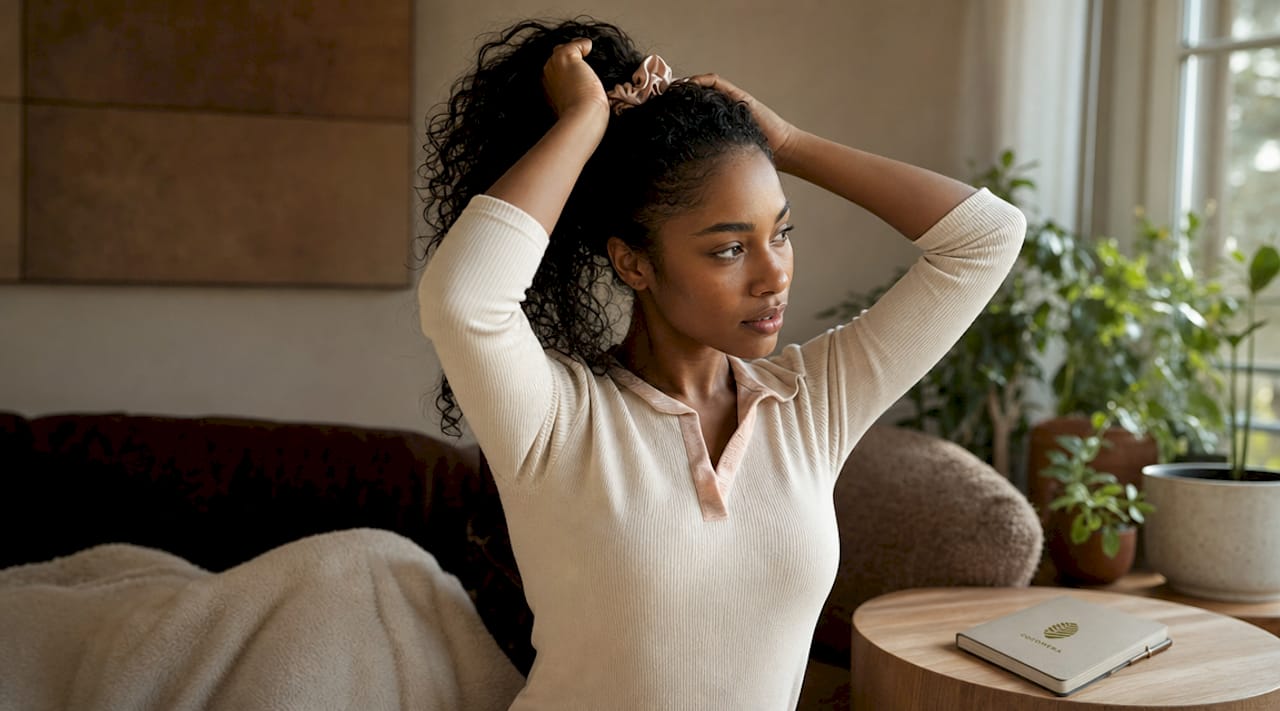
Pineapple hair is a protective styling technique where curly, coily, or textured hair is loosely gathered into a high, soft ponytail at the crown of the head to preserve curl definition overnight. Also called “hair pineappling” in the curly hair community, the method gets its name from the shape the gathered hair creates at the top of your head. It works by lifting your curls away from your pillow, reducing friction, tangling, and the flattening that destroys a good curl day by morning. Used consistently as part of a nighttime hair care routine, pineappling can extend a styled look across multiple days without a full wash day reset.
What is pineapple hair and how does it work?
The pineapple hair method is defined by one core principle: keep your curls elevated and undisturbed while you sleep. When curly or coily hair rests flat against a pillow, the friction between your strands and the pillowcase breaks up curl clumps, causes frizz, and compresses the volume you spent time building. Pineappling solves this by gathering all your hair loosely at the very top of your head, so the curls hang freely rather than getting crushed.
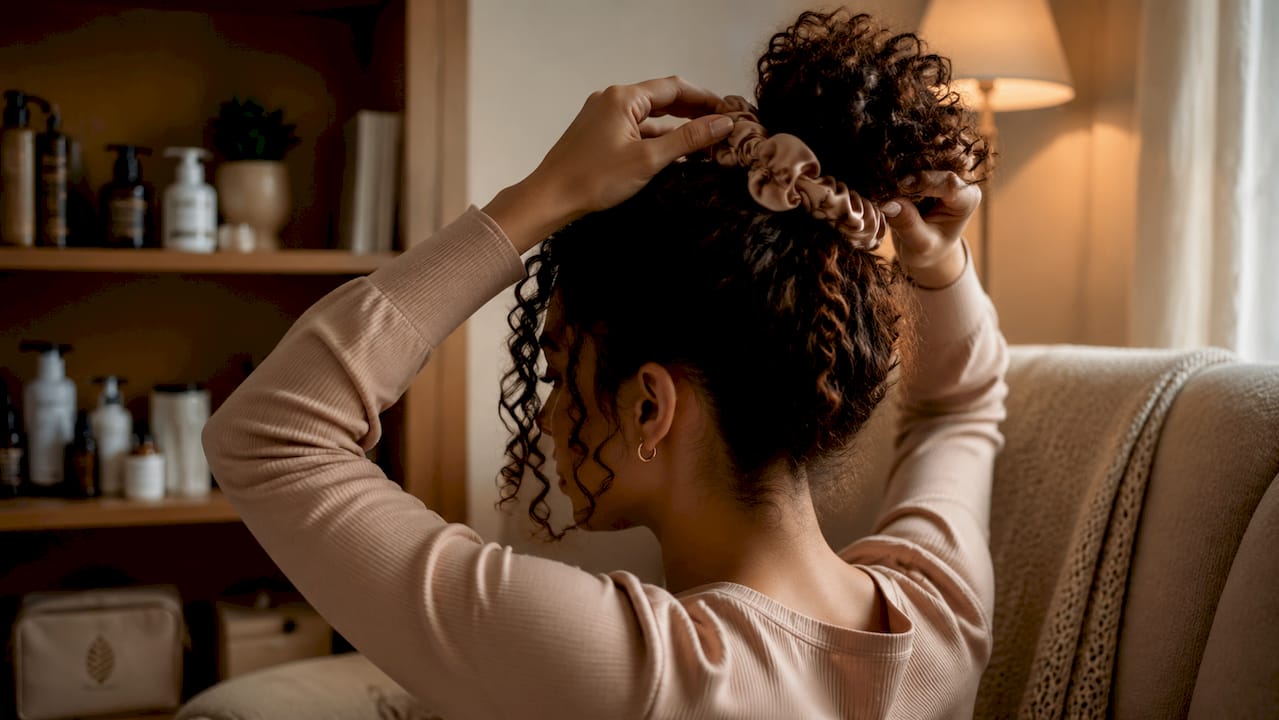
The technique is especially effective for hair types 3A through 4C, where curl pattern integrity is directly tied to how undisturbed the curl clump stays. A wash-and-go, braid-out, or twist-out can survive the night almost intact when pineappled correctly. Without any protection, those same styles often look flattened or frizzy by morning, requiring product, water, or a full re-style.
Pineappling is not the same as plopping, though both terms come up in curly hair conversations. Plopping is a wash-day technique that uses a microfiber towel to gently absorb moisture and define curls while they dry. Pineappling happens after the hair is fully dry and styled, as an overnight preservation step. They serve different purposes at different stages of your routine.
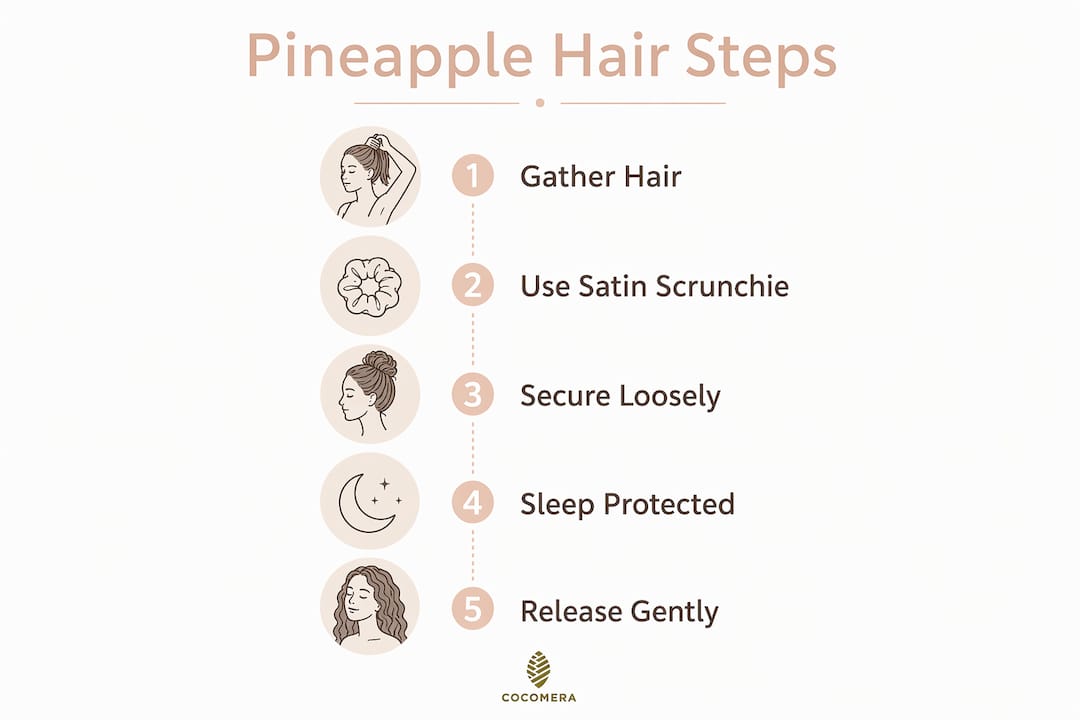
How to pineapple hair: step-by-step for curly and coily types
Getting the pineapple right takes less than two minutes once you know the mechanics. The most common mistake is pulling the hair too tight or placing the ponytail too low, both of which create creases and flatten the roots.
- Start with dry, fully styled hair. Pineappling works on hair that has already dried completely. Wet or damp hair will not hold its shape and may develop mildew odor overnight.
- Flip your head forward. Tilt your head down so your hair falls toward your face. This naturally gathers all your curls toward the crown without you having to drag them upward.
- Gather hair loosely at the very top of your head. Use your hands to collect all your hair into a high, soft mound. The key word is loose. You are not creating a tight bun or a gym ponytail.
- Secure with one loop of a satin or silk scrunchie. One loop only prevents crease lines in your curls. Wrapping the scrunchie twice creates dents that are visible the next morning and can take hours to fall out.
- Let the curls fan out freely. Your gathered hair should sit like a pineapple top, with curls fanning out in all directions rather than being compressed into a tight shape.
- Lay on a satin or silk pillowcase. Even with a perfect pineapple, some curls near the nape or temples will escape and rest against your pillow. A satin pillowcase reduces friction on those escaped strands so they do not frizz overnight.
Pro Tip: If your scrunchie leaves a dent even with one loop, try a spiral hair tie or a very wide fabric scrunchie. The wider the band, the less concentrated the pressure on your curl clumps.
Benefits of the pineapple hair method for curl definition and volume
The pineapple hair method delivers results that go beyond just “looking better in the morning.” Gathering hair loosely at the crown reduces tangles and prevents the overnight flattening that strips curls of their shape and volume. This matters because re-styling textured hair daily puts repeated stress on strands, increasing breakage over time.
“Daily use of the pineapple method can extend curl style longevity up to one full week with regular nightly application.” This means a single wash day can carry you through five to seven days of defined, frizz-free curls when the method is applied consistently.
The benefits compound when you combine pineappling with the right pillowcase. Silk and satin pillowcases reduce friction on any curls that escape the pineapple, which is especially relevant for longer hair where more strands inevitably contact the pillow. Cotton pillowcases, by contrast, absorb moisture from your hair and create the kind of friction that separates curl clumps and causes frizz.
Stylists consistently note that pineapple works best for long, thick curls because the hair is elevated away from friction points. For those with type 3B to 4B curls, the method preserves braid-outs and twist-outs particularly well, since those styles rely entirely on the curl clump staying intact. The result is not just better-looking hair. It is less manipulation, less product use, and less mechanical stress on each strand.
When pineapple hair does not work and what to do instead
The pineapple method is not a universal solution. Hair that is too short to reach the crown simply cannot be gathered into a pineapple. Attempting to force the technique on a Teeny Weeny Afro (TWA) or very short natural hair causes tension and potential hair loss at the hairline and roots, which is the opposite of protective.
Fine-textured curls also face a specific challenge. Very fine strands can lose their curl pattern from the weight of being gathered, even loosely. If your curls look stretched or elongated after pineappling rather than springy and defined, the method may be pulling more than protecting.
For short hair or fine-textured curls, these alternatives work better:
- Satin-lined bonnet. A bonnet covers all your hair without requiring any gathering or tension. It is the most effective single tool for protecting short natural hair overnight.
- Satin or silk scarf wrap. A loose wrap keeps hair contained without the pulling that a scrunchie creates at the crown.
- Multiple mini pineapples. For medium-length hair that is too short for one full pineapple, dividing hair into two or three smaller gathered sections distributes the tension and still lifts curls off the pillow.
- Satin pillowcase alone. For very short TWA styles, a quality satin pillowcase provides meaningful friction reduction without any gathering at all.
Pro Tip: If you use a bonnet, choose one with a wide, loose band. A tight elastic band around the hairline creates the same tension and breakage risk you were trying to avoid with pineappling.
How pineapple hair fits into your full curl care routine
Pineappling occupies a specific and non-negotiable slot in a curly hair routine: it is the last step before sleep and the first thing you undo in the morning. Understanding where it sits relative to other techniques helps you get more from every wash day.
The table below shows how pineappling compares to plopping, the other technique most often confused with it.
| Technique | When you do it | Purpose | Tools needed |
|---|---|---|---|
| Plopping | After washing, while hair is wet | Absorbs excess water, defines curl clumps | Microfiber towel or T-shirt |
| Pineappling | After hair is fully dry and styled | Preserves curl shape and volume overnight | Satin or silk scrunchie, satin pillowcase |
Plopping and pineappling are complementary, not competing techniques. You plop on wash day to set your curls, then pineapple each night to keep them intact. Learn more about the hair plopping method if you want to maximize what your wash day produces before pineappling takes over.
The morning after pineappling, how you release your hair matters as much as how you secured it. Flip your head forward again, remove the scrunchie slowly, and let the curls fall without shaking or scrunching. If curls need refreshing, a small amount of water mixed with a leave-in conditioner or curl cream applied with a prayer hands motion restores definition without disturbing the curl clump structure.
Common mistakes that reduce pineapple effectiveness
Most pineapple failures come down to a few repeatable errors. Knowing them in advance saves you from a week of bad hair mornings.
- Tying too tightly. A tight pineapple pulls at the roots, creates tension headaches, and leaves a visible crease at the base of the gathered section. If your scalp feels any pull, loosen the scrunchie.
- Using a regular elastic band. Standard hair ties have no give and create sharp crease lines in curls. Satin or silk scrunchies are the only appropriate tool for pineappling.
- Placing the ponytail too low. A pineapple placed at the mid-back of your head is just a regular ponytail. It needs to sit at the very crown so curls hang freely in all directions.
- Pineappling damp hair. Wet curls secured overnight will not dry into their natural pattern. They will dry compressed and misshapen, often with a flat section where the scrunchie sat.
- Skipping the pillowcase upgrade. Even a perfect pineapple leaves some hair exposed. Without a satin or silk pillowcase, those exposed strands frizz and tangle, undoing part of the work.
Pro Tip: In the morning, resist the urge to immediately run your fingers through your curls. Let them fall naturally first, then use a wide-tooth comb or your fingers only at the ends to separate any clumps that fused overnight.
For a broader look at what supports healthy textured hair beyond just nighttime care, Cocomera’s curly hair care tips cover the full picture from wash day to styling.
Key takeaways
The pineapple hair method protects curl definition overnight by lifting hair away from friction, and consistent nightly use can extend a styled look up to a full week.
| Point | Details |
|---|---|
| Core definition | Pineapple hair gathers curls loosely at the crown to prevent overnight friction and flattening. |
| One-loop rule | Use a single loop of a satin or silk scrunchie to avoid crease lines in your curl clumps. |
| Style longevity | Nightly pineappling can extend a curl style up to seven days without a full wash day reset. |
| Not for all hair | Very short hair and TWAs cannot be pineappled safely; satin bonnets are the better alternative. |
| Pair with plopping | Plopping manages wash-day moisture; pineappling preserves the finished style each night after. |
What Cocomera has learned about pineapple hair
After working with customers across hair types 2 through 4, the pattern we see most often is this: people learn the pineapple method, do it once, and then abandon it because their curls still looked flat in the morning. Almost every time, the issue is not the technique. It is the scrunchie or the pillowcase.
A thin elastic wrapped twice will undo everything a good pineapple is supposed to accomplish. The same goes for sleeping on cotton. These are not minor details. They are the difference between waking up with second-day curls that look intentional and waking up with a frizzy, compressed mess that takes 20 minutes to revive.
The other thing worth saying directly: pineappling is not a substitute for good products. If your curls are dry or poorly defined going into the pineapple, they will come out dry and poorly defined. The method preserves what is already there. It does not create definition from nothing. This is why we always recommend pairing pineappling with a quality curl cream or leave-in conditioner applied on wash day, so the curls you are protecting are actually worth protecting.
For shorter hair, we have seen customers feel frustrated that pineappling does not work for them, as if they are missing out on a technique everyone else gets to use. A satin bonnet does the same job and in many cases does it better. There is no hierarchy here. The goal is protected, defined curls in the morning, and the right tool depends on your hair, not on what is trending.
— Cocomera
Protect your curls with the right products from Cocomera

The pineapple method works best when your curls are well-moisturized and defined before you sleep. At Cocomera, we carry a curated selection of curl styling products specifically chosen for wavy, curly, coily, and afro hair types 2 through 4. From curl creams and styling lotions that lock in definition on wash day to accessories that support your nighttime routine, everything is selected with textured hair in mind. If you are building or refining your curl care routine, Cocomera makes it easier to find the right products for your specific curl pattern in one place.
FAQ
What is the pineapple hair method?
The pineapple hair method is a protective technique where curly or coily hair is loosely gathered into a high ponytail at the crown of the head before sleep to preserve curl shape and reduce frizz overnight.
Why do pineapple hair at night?
Pineappling at night lifts your curls away from your pillow, reducing the friction and compression that breaks up curl clumps and causes frizz. Used consistently, it can extend a styled look up to a full week.
Can you pineapple short natural hair?
Very short hair and TWAs cannot be pineappled effectively. Attempting it on short hair causes tension and potential hair loss at the roots. A satin-lined bonnet is the recommended alternative for short natural hair.
What type of scrunchie should you use for pineapple hair?
A satin or silk scrunchie secured with one loop is the correct tool. Standard elastic bands create crease lines in curls, and wrapping the scrunchie twice causes dents that are visible the next day.
Is pineapple hair the same as plopping?
No. Plopping is a wash-day technique that uses a microfiber towel to absorb moisture and define curls while drying. Pineappling is an overnight preservation step done after hair is fully dry and styled. The two methods are complementary, not interchangeable.


