


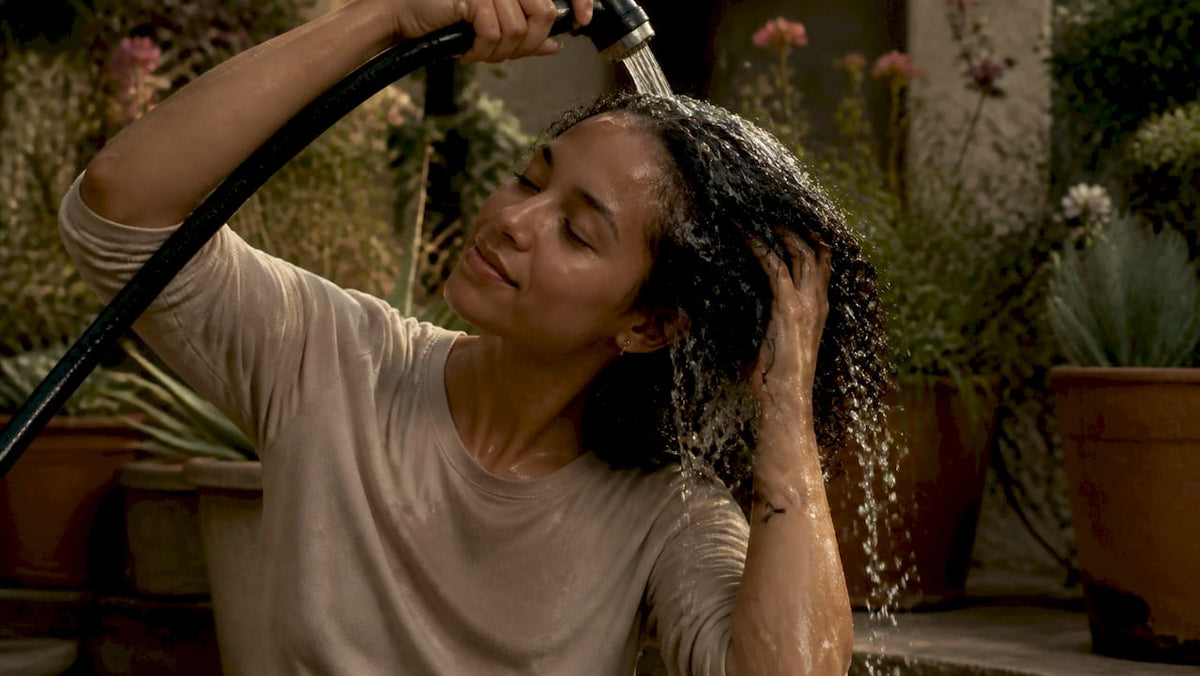
A low-poo shampoo is a gentler, low-lather shampoo formulated to cleanse without stripping your scalp’s natural oils. Instead of sodium lauryl sulfate (SLS) or sodium laureth sulfate (SLES), it relies on milder surfactants that lift dirt and buildup while leaving moisture behind. According to Clinic Advisor, low-poo shampoos avoid harsh detergents specifically to prevent frizz and protect the natural oils curly and coily hair depends on. If your hair is dry, curly, coily, color-treated, or your scalp runs sensitive, low-poo is almost certainly worth trying.
Key Takeaways
Low-poo shampoo is the most practical entry point for curly and coily hair care: gentle enough to preserve moisture, effective enough to actually cleanse.
| Point | Details |
|---|---|
| What low-poo is | A low-lather shampoo using mild surfactants instead of SLS or SLES to clean without stripping oils. |
| Who benefits most | Curly, coily, dry, color-treated, or sensitive-scalp hair types see the clearest improvement. |
| How to start | Do one final sulfate wash, then switch to low-poo and give hair 4–8 weeks to adjust. |
| When to clarify | Use a clarifying shampoo once a month, or when curls feel coated, limp, or weighed down. |
| Cocomera’s role | Cocomera’s curated shampoo, conditioner, and treatment collections support a complete low-poo routine for textured hair. |
Table of Contents
- What the low-poo method actually does for your hair
- What actually makes a shampoo “low-poo”
- Low-poo vs. no-poo vs. co-wash vs. regular shampoo
- How to start your low-poo routine (step by step)
- Troubleshooting common problems during the transition
- How to choose a low-poo shampoo that actually works
- Cocomera’s take on gentle cleansing for textured hair
- Where to shop your low-poo routine at Cocomera
- Sources
What the low-poo method actually does for your hair
The low-poo method sits in the middle of a cleansing spectrum: co-wash on one end, regular sulfate shampoo on the other, and low-poo squarely between them. The goal is not to skip cleansing but to do it without the aggressive detergent action that leaves curls parched and frizzy.
Curly and coily hair is structurally drier than straight hair. Scalp oils travel easily down a straight strand but struggle to navigate the bends and coils of textured hair, so those oils rarely reach the mid-lengths and ends. Keune’s guide to the low-poo method notes that this structural reality is exactly why low-poo helps: it retains the oils that do exist rather than washing them away.
Hair types that benefit most:
- Type 2 (wavy), Type 3 (curly), and Type 4 (coily/afro) hair
- High-porosity hair that absorbs and loses moisture quickly
- Color-treated hair, where sulfates accelerate fade
- Sensitive or dry scalps prone to irritation or flaking
- Anyone whose hair feels straw-like or frizzy after regular shampooing
Core advantages of low-poo hair care:
- Preserves natural scalp oils and moisture
- Reduces frizz and improves curl definition over time
- Gentler on color and chemical treatments
- Less likely to trigger scalp irritation or dryness
- Still provides real cleansing, unlike co-wash alone
What actually makes a shampoo “low-poo”
The label “low-poo” is not a regulated term, so any brand can print it on a bottle. What matters is the ingredient list.
Mild surfactants to look for
Formulate’s Low Poo Shampoo 101 identifies three surfactants that appear most often in genuine low-poo formulas: Cocamidopropyl Betaine, a coconut-derived amphoteric surfactant that produces light foam and conditions while it cleans; Decyl Glucoside, a sugar-based surfactant that is exceptionally gentle and biodegradable; and Sodium Lauroyl Methyl Isethionate, which gives a slightly richer lather than the other two while remaining far milder than SLS. None of these will give you the dense foam of a conventional shampoo, and that is the point.
Ingredients to avoid
- Sodium Lauryl Sulfate (SLS) and Sodium Laureth Sulfate (SLES)
- Ammonium Lauryl Sulfate (ALS)
- Drying alcohols (isopropyl alcohol, alcohol denat)
- Insoluble silicones like dimethicone and cyclopentasiloxane, which build up without sulfate cleansers to remove them
pH matters more than most labels admit. Research on shampoo pH shows that keeping a shampoo’s pH close to hair’s natural acidity (around pH 4.5–5.5) helps seal the cuticle, reducing frizz and moisture loss. Many drugstore shampoos run alkaline, which swells the cuticle and leaves hair rougher. If a brand lists its pH, that range is a green flag.
How to read a label quickly
Surfactants appear near the top of an ingredient list because they make up the largest portion of the formula. If SLS or SLES is in the first five ingredients, the product is not low-poo regardless of what the front label says. Flip the bottle, find the surfactant, and work from there.
Pro Tip: “Sulfate-free” does not automatically mean low-poo. Some sulfate-free shampoos use other aggressive cleansers like sodium C14-16 olefin sulfonate, which behaves similarly to SLS. Check the specific surfactant name, not just the marketing claim.
Low-poo vs. no-poo vs. co-wash vs. regular shampoo
KUURL’s beginner guide frames low-poo as the middle ground: enough cleansing to avoid buildup, gentle enough to preserve natural curl moisture and pattern. Here is how the four approaches compare:
| Method | Cleansing power | Lather | Buildup risk | Best for |
|---|---|---|---|---|
| Regular shampoo | High | Heavy | Low | Oily scalps, heavy product use |
| Low-poo shampoo | Moderate | Light | Low to moderate | Curly, dry, color-treated hair |
| Co-wash | Low | None to minimal | Moderate to high | Very dry or fragile coily hair |
| No-poo | Very low | None | High if unmanaged | Experimental; needs careful management |

Odele’s co-wash explainer points out that no-poo approaches, which rely on conditioners, clays, or vinegar instead of any commercial cleanser, can leave buildup if not managed carefully. Co-washing prioritizes conditioning with little to no foam, which suits very dry or fragile hair but may not clear scalp buildup adequately for everyone.
Decision rules:
- Heavy product user or oily scalp? Low-poo over co-wash.
- Very dry, fragile, or densely coiled hair with minimal product use? Co-wash may work, but add a low-poo wash weekly.
- Transitioning from regular shampoo? Start with low-poo before trying co-wash.
- Buildup accumulating despite low-poo? Add a clarifying wash monthly.
How to start your low-poo routine (step by step)
Switching to low-poo is straightforward, but the first few weeks can feel strange. Here is a practical plan.
The last sulfate wash
NaturallyCurly’s Curly Girl Method guide recommends starting with one final sulfate shampoo wash before switching. This clears silicone buildup and product residue that would otherwise block your new gentle shampoo from working. Think of it as resetting the slate.
Week-by-week timeline
- Week 1: Do the last sulfate wash. Your scalp may feel clean but tight. That sensation is normal and temporary.
- Weeks 2–3: Switch to your low-poo shampoo. Expect less lather than you are used to. Hair may feel slightly different in texture, sometimes heavier or less “squeaky.” This is not a sign the shampoo is not working.
- Weeks 4–6: Scalp oil production begins to regulate. Many people notice curl definition improving and frizz decreasing during this window.
- Weeks 6–8: Hair settles into its new baseline. Moisture retention improves, and curl pattern often becomes more consistent.
Step-by-step wash technique
- Wet hair thoroughly with lukewarm water (hot water opens the cuticle and increases frizz).
- Apply low-poo shampoo directly to the scalp, not the lengths.
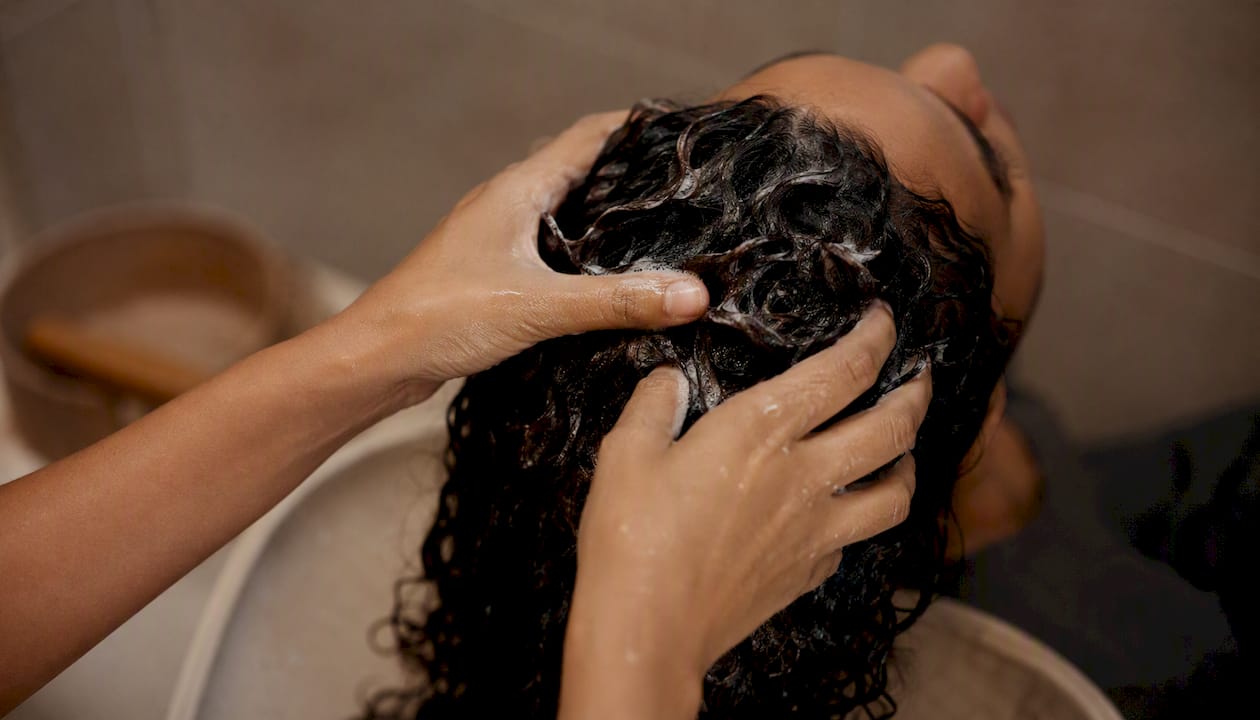
- Massage with your fingertips, not your nails, using small circular motions for 1–2 minutes.
- Let the lather rinse through the lengths as the water runs down. You do not need to scrub the ends.
- Rinse completely, then follow immediately with a conditioner for curly hair to restore moisture.
Pro Tip: Scrunch out excess water with a microfiber towel or a cotton T-shirt rather than rubbing. Friction from a regular towel disrupts the cuticle and undoes the frizz reduction you just worked for.
Wash frequency depends on your scalp. Most people with curly or coily hair do well washing every 5–10 days with low-poo, supplementing with co-wash or water rinses in between. If your scalp feels itchy or looks flaky before that window, wash sooner.
Troubleshooting common problems during the transition
Some issues during the first few weeks are normal. Others signal that something needs adjusting.
Initial oiliness or heaviness: Your scalp is recalibrating after years of over-cleansing. CRISAN Beauty’s research on sebum and scalp health explains that overcleansing strips protective oils, which triggers the scalp to overproduce sebum as compensation. Give it 4–6 weeks before concluding the method is not working.
Flat or limp curls: Often a sign of buildup, either from silicones in styling products or from conditioner residue. This is when you need a clarifying wash.
Scalp tingling or irritation: Check your shampoo for fragrance, essential oils, or preservatives like methylisothiazolinone (MI), which are common sensitizers even in “gentle” formulas.
Product residue that won’t budge: Some styling products, especially those with heavy butters or insoluble silicones, require a true clarifying shampoo to remove. A clarifying shampoo used once or twice a month handles this without disrupting your routine.
Pro Tip: Run your fingers along a dry strand from root to tip. If it feels coated, waxy, or rough rather than smooth, that is a silicone or surfactant buildup signal. A chelating or clarifying wash once a month keeps the slate clean without undoing your low-poo progress.
Practitioners advise keeping clarifying washes occasional, not regular, since frequent use defeats the purpose of the gentler routine. Once a month is a reasonable starting point; adjust based on how much product you use.
How to choose a low-poo shampoo that actually works
Knowing what low-poo is gets you halfway there. Knowing what to look for on a label gets you the rest of the way.
Buying checklist:
- First or second surfactant is Cocamidopropyl Betaine, Decyl Glucoside, or Sodium Lauroyl Methyl Isethionate
- No SLS, SLES, or Ammonium Lauryl Sulfate
- No insoluble silicones (dimethicone, cyclopentasiloxane) unless you plan to clarify regularly
- pH listed between 4.5 and 5.5, or described as “pH-balanced”
- Fragrance and essential oils low on the list or absent if your scalp is sensitive
- Short, readable ingredient list with recognizable names
How to test a product over 2–3 washes
The first wash tells you almost nothing. Your scalp is adjusting. By the second or third wash, you should notice whether your hair feels moisturized after rinsing, whether curl definition is improving, and whether your scalp feels comfortable (not itchy, not greasy). Formulate’s expert Q&A on low-poo confirms that the absence of a “squeaky clean” feeling is expected and correct. Always follow with conditioner.
For high-porosity or damaged hair, a strengthening shampoo formulated for textured hair adds protein support alongside gentle cleansing. For very dry hair, a moisturizing shampoo built on the same mild surfactants prioritizes hydration. Price is less important than ingredient transparency. A $12 shampoo with a clean, short ingredient list beats a $40 bottle with silicones buried in the middle.
For readers building a full routine, pairing a low-poo shampoo with leave-in products helps lock in the moisture the gentle cleanse preserves. Cocomera’s leave-in styling collection includes options formulated for wavy through coily curl types.
Cocomera’s take on gentle cleansing for textured hair
The conversation around low-poo has been happening in the curly hair community for years, but it still gets buried under marketing noise. “Sulfate-free” gets stamped on bottles that replace SLS with equally harsh alternatives. “Gentle” appears on products with fragrance loads that irritate sensitive scalps. The ingredient list is the only honest signal, and most people have never been taught to read one.
What Cocomera has observed in curating products for wavy, curly, coily, and afro hair is that the transition to gentle cleansing is rarely about finding one perfect product. It is about building a system: a mild cleanser, a conditioner that actually moisturizes, and an occasional clarifier to reset when buildup accumulates. Hair type matters, but so does your water quality, your styling product load, and how often you wash. There is no universal answer, which is why ingredient literacy matters more than brand loyalty.
The readers who see the biggest improvement are usually the ones who give the transition time and resist the urge to go back to sulfates the moment their hair feels different. Different is not bad. Different is often the beginning of better.
Where to shop your low-poo routine at Cocomera
Cocomera curates shampoos, conditioners, and styling products specifically for textured hair, Types 2 through 4, so you are not sorting through products designed for straight hair to find what works for curls.
For a low-poo routine, three collections are the most practical starting points. The moisturizing shampoo collection covers gentle, hydration-focused cleansers built on mild surfactants. The clarifying shampoo collection gives you the reset option for when buildup accumulates. And the hair treatments collection rounds out the routine with deep conditioning and repair options for high-porosity or color-treated hair. Browse the full shampoo collection for curly and textured hair to find the right fit for your curl type and porosity level.
Sources
- What is the Low-Poo Shampooing Method? Difference Between Low-Poo and No-Poo
- Low Poo Shampoo 101
- Low-Poo Explained: The Beginner’s Guide to a Gentle Curly Cleanse | KUURL Guides
- Impact of pH in Your Haircare: A Guide to pH-Balanced Shampoo
- Co-Wash vs. Shampoo: How To Know What You Need - Odele


