



A co-wash conditioner is a low-surfactant or surfactant-free cleansing product designed to wash your hair and scalp using conditioning agents instead of traditional detergents. If your hair is dry, curly, coily, or chemically treated, it’s worth trying. According to Healthline, co-washing may particularly benefit hair that’s dry, curly, or coiled, and works best when rotated with regular shampoo rather than replacing it entirely.
- Best for: Wavy (type 2), curly (type 3), and coily/afro (type 4) hair, plus color-treated or frequently washed hair
- Use with caution: Very oily scalps, medicated scalp conditions, or heavy product routines
- Rotation note: Co-wash 1–3 times per week, then clarify with shampoo every 4–6 washes to prevent buildup
Pro Tip: Before your first co-wash, do one clarifying shampoo session to start with a clean slate. This gives you an accurate baseline so you can actually tell whether the co-wash is working.
Key Takeaways
Co-washing works best as a rotation tool for textured hair, not a permanent shampoo replacement, and choosing a formulated co-wash over a regular conditioner is what makes the technique actually cleanse.
| Point | Details |
|---|---|
| What a co-wash is | A low-surfactant cleansing conditioner that washes and moisturizes without stripping natural oils. |
| Who benefits most | Wavy, curly, coily, and color-treated hair types; less suited to very oily scalps. |
| How to use it | Saturate hair, massage scalp 2–3 minutes, detangle, rinse thoroughly, follow with leave-in. |
| When to clarify | Shampoo every 4–6 co-washes, or sooner if roots feel heavy, dull, or itchy. |
| Cocomera’s curated picks | Browse the co-wash collection for silicone-free, type 2–4 compatible options. |
Table of Contents
- What is a co-wash conditioner, exactly?
- How does co-washing compare to shampoo and regular conditioner?
- What are the main benefits of co-washing?
- Who should try co-washing?
- How to co-wash your hair step by step
- How often should you co-wash, and when do you need shampoo?
- What are the downsides and red flags of co-washing?
- How to choose a good co-wash conditioner
- Why does co-washing actually work? The science behind it
- Cocomera’s take on testing co-washing
- Find your co-wash routine at Cocomera
- Sources
What is a co-wash conditioner, exactly?
A co-wash conditioner, also called a cleansing conditioner or conditioning wash, is a product formulated to clean your scalp and hair without the aggressive foaming detergents found in traditional shampoos. The term “co-wash” is short for “conditioner wash,” and it describes both the product and the technique.
Standard shampoos rely on sulfates (sodium lauryl sulfate, sodium laureth sulfate) to strip oil and debris from the scalp. Co-washes use a different approach: mild surfactants and cationic conditioning polymers that lift light dirt and distribute oils without producing heavy lather. The result is a wash that cleanses without stripping.
Key ingredient classes to look for on a co-wash label:
- Mild surfactants (coco betaine, cocamidopropyl betaine): provide gentle cleansing action without sulfate-level stripping
- Cationic polymers (polyquaternium compounds): coat the hair shaft, reduce friction, and improve detangling
- Humectants (glycerin, aloe vera): draw moisture into the hair fiber
- Emollients (shea butter, plant oils): smooth the cuticle and add softness
- Absent or minimal sulfates: the defining feature that separates a co-wash from a regular shampoo
One important distinction: a formulated co-wash is not the same as using your regular rinse-out conditioner on your scalp. Most rinse-out conditioners contain no surfactants at all, so they deposit moisture but don’t actually cleanse. A purpose-built co-wash includes those mild surfactants to do both jobs at once.
How does co-washing compare to shampoo and regular conditioner?
| Co-wash | Regular shampoo | Rinse-out conditioner | |
|---|---|---|---|
| Primary goal | Gentle cleanse + moisture | Deep cleanse, remove buildup | Moisturize, detangle |
| Lather | Low to none | High | None |
| Scalp use | Yes | Yes | Not recommended |
| Best timing | Hydration-focused wash days, frequent washers | Post-workout, heavy product days, clarifying sessions | After every shampoo or co-wash |
The practical difference shows up in real scenarios. After a gym session where you’ve sweated heavily, a regular shampoo does a better job cutting through salt and sebum. On a dry-hair day when you want moisture without stripping, a co-wash is the stronger choice. If you’ve used heavy stylers like castor oil or a thick pomade, neither a co-wash nor a rinse-out conditioner will fully remove them. That’s a clarifying shampoo situation.
Using a regular rinse-out conditioner on your scalp instead of a co-wash is a common mistake. Without surfactants, it can’t lift debris or excess sebum, and the heavier emollients can clog follicles over time. Chemyunion’s formulation analysis confirms that co-washes are specifically engineered to cleanse while depositing moisture, which is a different formulation goal than a standard conditioner.
What are the main benefits of co-washing?
Industry reporting from Glossy identifies co-washes as conditioning-focused, low-lather cleansers that help textured hair retain moisture and prevent breakage. The benefits are most pronounced for hair types 2–4:
- Improved hydration: Co-washes deposit moisture during the cleansing step itself, so hair starts the styling process better hydrated
- Reduced frizz: Preserving the hair’s natural oils keeps the cuticle smoother, which directly reduces frizz between wash days
- Better curl definition: Hydrated, less-stripped hair holds curl patterns more consistently
- Color-safe cleansing: Mild surfactants are gentler on color-treated hair, helping pigment last longer between salon visits
- Less breakage: Detangling under a conditioning wash reduces mechanical stress compared to dry detangling or shampooing without slip
- Scalp comfort for frequent washers: People who wash 3–4 times a week often find sulfate shampoos too drying; co-washing lets them cleanse without the stripping cycle
For type 4 coily hair specifically, the benefit compounds quickly. Coily strands are naturally drier because sebum has a harder time traveling down tightly coiled shafts, so every wash that preserves rather than strips natural oils matters.
Who should try co-washing?
Co-washing suits a specific range of hair types and situations. It’s not a universal upgrade, but for the right person, it changes the entire wash-day experience.
Good candidates:
- Wavy (2a–2c), curly (3a–3c), and coily/afro (4a–4c) hair types
- Dry or low-porosity hair that struggles to retain moisture after shampooing
- Color-treated or chemically processed hair (relaxed, permed, bleached)
- People who wash their hair more than twice a week and find shampoo too drying
- Children with textured hair, whose scalps tend to be more sensitive
Approach with caution:
- Very oily scalps: co-washes may not remove enough sebum, leading to greasy roots within a day
- Heavy product users: if your routine includes thick butters, waxes, or insoluble silicones, you’ll need regular shampoo to clear them
- Medicated scalp conditions (seborrheic dermatitis, psoriasis, fungal issues): replacing a medicated shampoo with a co-wash without consulting a dermatologist can worsen the condition
For kids with sensitive scalps, look for fragrance-free, sulfate-free formulas and keep the scalp massage gentle. A dry or itchy scalp may need targeted treatment alongside or instead of co-washing.
How to co-wash your hair step by step
Getting the technique right matters as much as choosing the right product. Insufficient scalp cleansing is the most common mistake, according to practical how-to coverage from Essentially Natural.
- Saturate your hair completely. Work in sections if your hair is dense or long. Dry hair absorbs product unevenly, so thorough wetting is non-negotiable.
- Apply co-wash generously to the scalp. Use more product than you think you need, especially at the roots and nape.
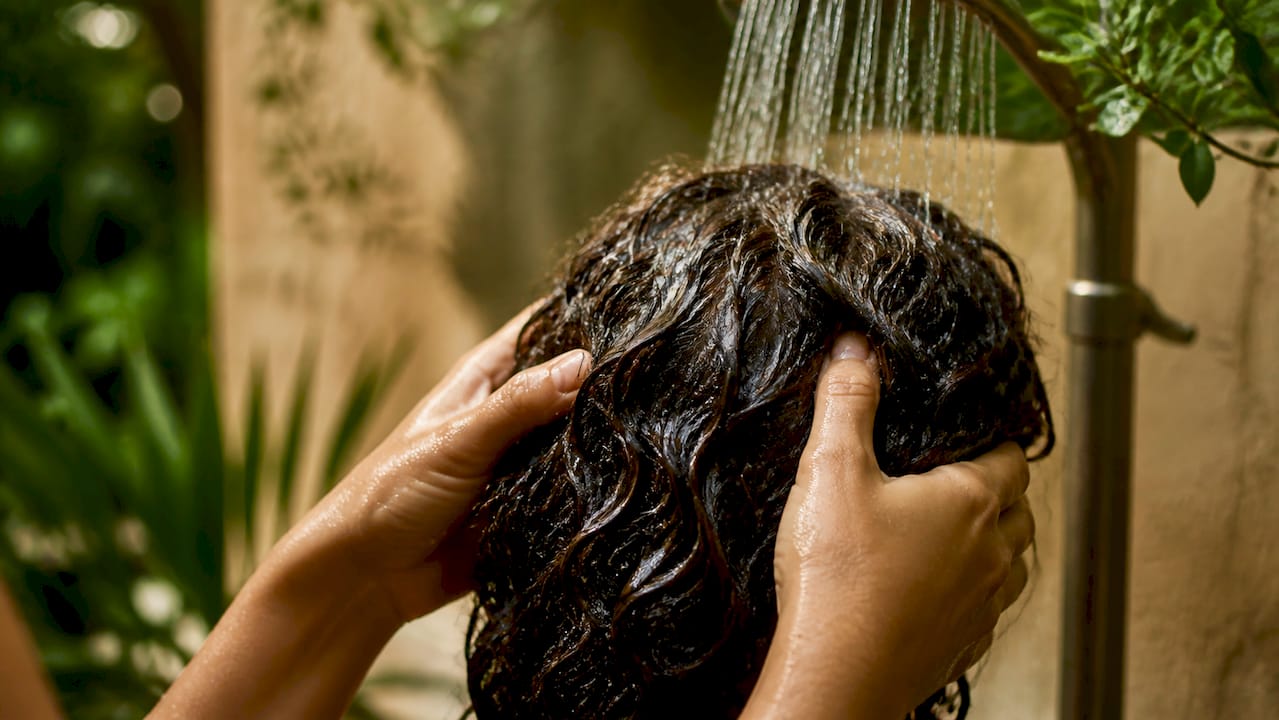
- Massage the scalp with your fingertips. Use small circular motions for 2–3 minutes. The goal is to loosen sebum, product residue, and dead skin cells, not to scrub aggressively.
- Work the product through the lengths. Smooth it from root to tip, using it as a detangling agent while you go.
- Detangle in sections. Use a wide-tooth comb or your fingers while the co-wash is still in. Start at the ends and work upward.
- Rinse thoroughly. This step is where most people rush. Rinse longer than feels necessary, especially at the scalp, to avoid residue that causes buildup.
- Follow with a rinse-out conditioner if needed. For very dry or high-porosity hair, a separate conditioner after co-washing adds an extra moisture layer.
- Style as usual. Apply leave-in, curl cream, or gel while hair is still wet.
For a second-day refresh or post-workout reset, you can co-wash just the scalp and roots without working through the full length, then rinse and re-style.
Pro Tip: If your hair feels heavy or coated after co-washing, you either used too much product or didn’t rinse long enough. Try halving the amount and doubling the rinse time before switching products.
How often should you co-wash, and when do you need shampoo?
Frequency depends on your hair type, lifestyle, and how many products you use. Davines experts recommend treating co-washing as a hydration and maintenance tool, not a permanent shampoo replacement. Rotating both methods is the practical standard.
Sample rotation schedules:
- Type 2 wavy hair: Co-wash 1–2 times per week, shampoo every 2–3 weeks
- Type 3 curly hair: Co-wash 2–3 times per week, shampoo every 1–2 weeks
- Type 4 coily/afro hair: Co-wash 1–2 times per week, shampoo every 2–4 weeks
Signs your scalp needs a shampoo or clarifying wash:
- Roots feel heavy, band-like, or greasy even right after washing
- Hair looks dull and lacks its usual shine or bounce
- Scalp itches persistently between washes
- Curl definition has dropped noticeably without a change in products
- Volume at the roots has decreased over several wash cycles
Pro Tip: When you do clarify, use a clarifying shampoo designed for textured hair rather than a generic clarifying formula. Textured-hair versions remove buildup without the aggressive drying that can set your moisture levels back by weeks. Follow immediately with a deep conditioner or hair mask.
What are the downsides and red flags of co-washing?
Co-washing has real limitations, and ignoring them leads to the most common complaints: greasy roots, itchy scalp, and hair that feels coated rather than clean.
Potential downsides:
- Product buildup: Without periodic shampooing, conditioning polymers and emollients accumulate on the scalp and shaft
- Greasy roots: Oily scalp types often find co-washing insufficient for sebum removal
- Reduced volume: Heavy co-wash formulas can weigh down fine or low-density curls
- Incomplete silicone removal: Insoluble silicones (dimethicone, cyclopentasiloxane) don’t rinse out with a co-wash alone
Ingredient red flags to avoid:
- Insoluble silicones (dimethicone, amodimethicone, cyclopentasiloxane): build up without a sulfate shampoo to remove them; fine if you shampoo regularly, problematic if you co-wash exclusively
- Heavy occlusive oils (petroleum, mineral oil): don’t rinse cleanly with mild surfactants
- Non-rinsable film-formers: some styling-grade polymers don’t belong in a cleansing product
IntoTheGloss notes that using a regular conditioner with silicones as a co-wash substitute is a particularly common pitfall, since it deposits without cleansing and accelerates buildup.
If you have a diagnosed scalp condition, seborrheic dermatitis, or are using a medicated shampoo prescribed by a dermatologist, do not replace that treatment with a co-wash without professional guidance.
How to choose a good co-wash conditioner
The label tells you most of what you need to know. Here’s what to look for and what to skip.
Shopping checklist:
- Mild surfactant in the top half of the ingredient list: coco betaine or cocamidopropyl betaine signals actual cleansing ability
- Silicone-free or water-soluble silicones only: makes clarifying easier and reduces buildup risk
- Humectants near the top: glycerin, aloe vera, or panthenol indicate real moisture delivery
- Cationic polymers: polyquaternium-7 or polyquaternium-10 improve slip and detangling
- pH-balanced formula (ideally 4.5–5.5): keeps the cuticle closed and reduces frizz
- Free of sulfates: the whole point of a co-wash is to avoid them
For a deeper look at which ingredients work best for textured hair, the ingredient type matters more than the brand name on the front of the bottle.
Pro Tip: Run a 2–4 wash trial before judging any co-wash. Your hair needs a few cycles to adjust, especially if you’ve been using sulfate shampoos for years. Track moisture level, scalp comfort, and curl definition across those washes, not just after the first one.
Why does co-washing actually work? The science behind it
Co-washing works because it addresses a specific problem with standard shampoos: sulfate detergents don’t distinguish between the sebum and debris you want removed and the lipids your scalp needs to stay healthy, as explained in Scalp Care for Healthy Hair That Lasts – Shella Bella Beauty™. Research on the scalp’s lipid barrier shows that preserving those lipids is central to scalp health and hair integrity, particularly for textured and dry hair types.
PMC formulation research confirms that co-washes rely on milder surfactants and cationic polymers rather than stronger sulfate detergents, which is what produces the gentler cleansing action. The mild surfactants lift light debris and distribute oils without triggering the stripping cycle that leaves curly hair dry and frizzy.
The US co-wash market now treats co-washing as a distinct commercial category, with adoption rising through 2025 and forecast to continue growing. That growth reflects a broader consumer shift: people with textured hair are moving away from one-size-fits-all cleansing toward products built for their specific curl biology.
Co-washing is not categorically better than shampooing. Experts consistently frame it as a complementary tool: use it for hydration and maintenance, and rotate in shampoo for deep cleansing when the scalp signals it needs one.
Cocomera’s take on testing co-washing
The most useful thing you can do is run a structured trial rather than switching cold. Pick four to six wash sessions, alternate co-wash with one shampoo session in the middle, and track three things: how your hair feels 24 hours after washing, how your scalp feels between washes, and whether your curl pattern looks more or less defined than before.
Low-risk starting conditions: begin on a non-greasy day, use a clarifying shampoo the wash before you start, and keep your styling products simple so you’re not introducing new variables. If you notice persistent scalp itch, greasy roots that don’t resolve after a few cycles, or a flat, coated feeling, rotate in shampoo more frequently rather than abandoning co-washing entirely.
For a complete wash-day workflow that integrates co-washing into a broader routine, Cocomera’s guides cover the full picture for types 2 through 4.
Find your co-wash routine at Cocomera
Cocomera curates co-wash and co-wash-compatible products specifically for wavy, curly, coily, and afro hair types, so you’re not sorting through products built for straight hair.
The co-wash collection includes low-sulfate and sulfate-free cleansing conditioners selected for types 2–4, with ingredient lists you can actually read. Pair your co-wash with a leave-in conditioner for post-wash moisture, and keep a clarifying or strengthening shampoo on hand for your rotation sessions. For parents, the kids’ collection includes gentle options suited to children’s sensitive scalps. Browse the full range at Cocomera and check the ingredient list on any product before adding it to your routine.
Sources
- Co-Wash: How to Co-Wash, Why to Co-Wash, Best Co-Washes | Healthline
- What are co-washes and why are they suddenly so popular? | Glossy
- Co-Wash | Chemyunion
- PMC article (hair care / cosmetics review) | PMC


