


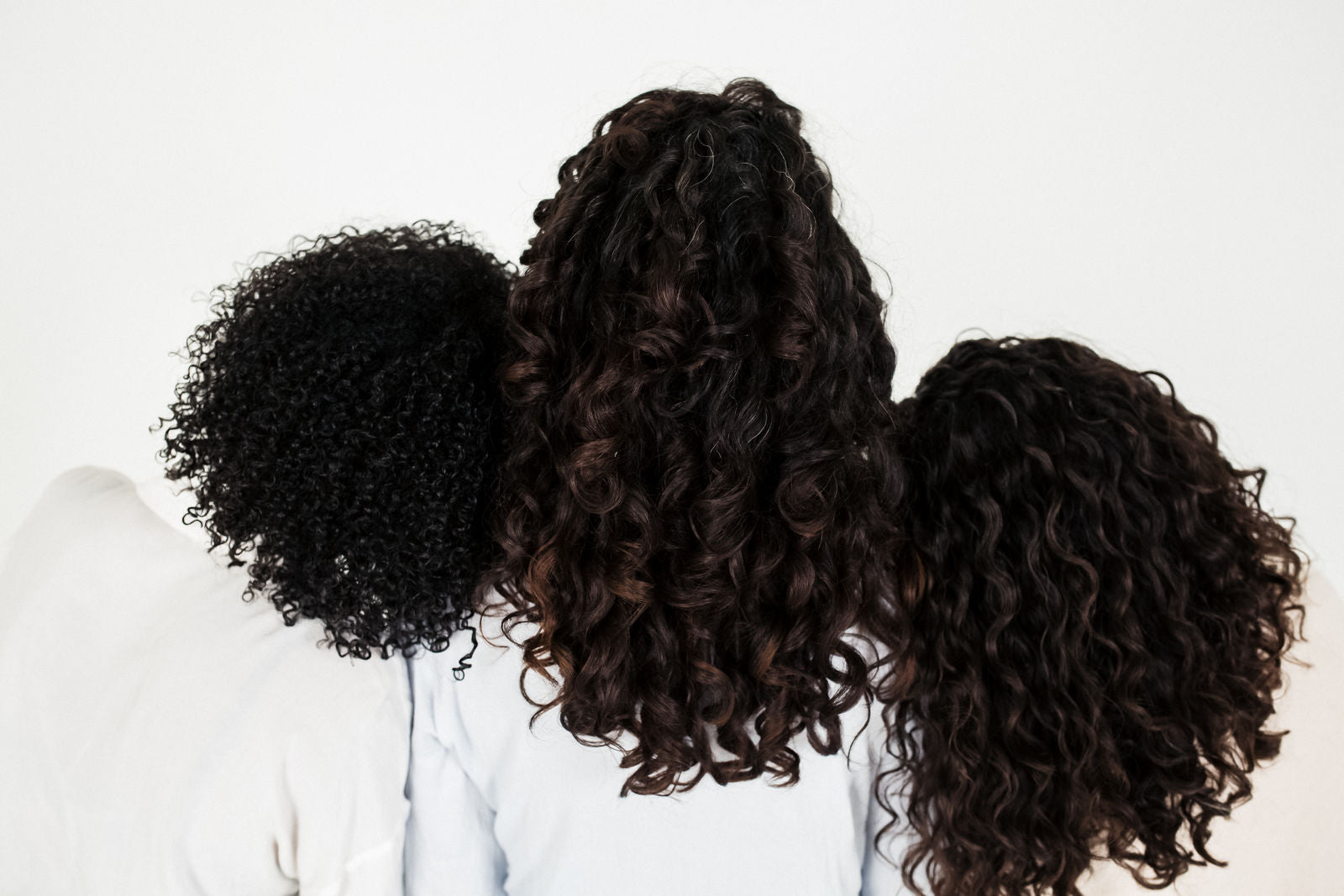
Getting your curl type wrong is more than a minor inconvenience. It can mean years of buying the wrong products, fighting frizz that never quits, and following routines built for someone else’s hair. For women across Europe with wavy, curly, coily, or afro textures, the stakes are real: your climate, water hardness, and local product availability all shape what your hair actually needs. This guide breaks down every curl type from 2A to 4C, compares care routines side by side, and gives you honest product picks so you can stop guessing and start seeing results.
Table of Contents
- How curl types are defined: the basics and controversies
- Type 2 (wavy): identifying, caring, and product picks
- Type 3 (curly): spirals, care techniques, and best products
- Type 4 (coily): character, special routines, and top EU picks
- Comparison chart: key features, care, and products for every curl type
- Why we think curl typing is a tool, not a rule
- Find everything your curls need in one place
- Frequently asked questions
Key Takeaways
| Point | Details |
|---|---|
| Know your curl type | Identifying your curl pattern helps you choose better products and routines. |
| Tailor care to needs | Each hair type from wavy to coily requires its own approach and products. |
| Mixed patterns are normal | Adjust your routine for different sections, not just your dominant pattern. |
| Stay flexible | Your hair can change over time—reassess often and update routines as needed. |
How curl types are defined: the basics and controversies
The most widely used system for classifying curls is the Andre Walker system, originally developed to market hair products. It organizes hair into Types 1 through 4, with subcategories A, B, and C for each. For textured hair, the relevant range is Type 2 (wavy), Type 3 (curly), and Type 4 (coily). Each type is defined primarily by the shape and pattern of the curl strand.
But here is where it gets complicated. The system is visually based, not scientific, and it has real limitations when applied to the full range of human hair textures. It was designed around a narrow visual spectrum and does not account for three factors that matter just as much as curl shape:
- Porosity: How well your hair absorbs and retains moisture
- Density: How many strands per square inch you have
- Texture: Whether individual strands are fine, medium, or coarse
These factors change everything about your routine. Two people can both have 3B curls and need completely different products because one has high porosity and fine strands while the other has low porosity and coarse strands. Expert critiques of the system point out that it tends to favor looser curl patterns and may not represent tighter coil textures accurately.
Misclassification is shockingly common. Studies suggest that a significant majority of people with textured hair identify their curl type incorrectly, leading to product mismatches and routines that actively damage their hair. Good curly hair care tips always start with accurate identification.
“Curl typing is a starting point, not a finish line. Your hair’s behavior tells you more than its shape.”
Hormonal changes, pregnancy, and aging can also shift your curl pattern. If you have multi-textured hair, meaning different curl types on different areas of your head, the system becomes even harder to apply cleanly. Understanding the need for moisture in textured curls is often more useful than locking yourself into a single type label.
Type 2 (wavy): identifying, caring, and product picks
Wavy hair is the most common textured pattern in Europe, and it is also the most misunderstood. Many people with Type 2 hair think they have straight hair because their waves only show up after washing. The three subtypes each behave differently:
- 2A: Loose, fine waves with a slight S-shape. Low frizz, easy to weigh down
- 2B: More defined S-waves, medium texture, moderate frizz potential
- 2C: Thick, coarse waves that border on curly, highly frizz-prone
The biggest mistake wavy-haired women make is using products designed for tighter curls. Heavy creams and butters flatten waves and create buildup. Lightweight mousses and creams are the correct choice for Type 2, along with sulfate-free clarifying shampoos to reset the scalp without stripping natural oils.
Your core routine should look like this:
- Wash with a sulfate-free shampoo (Davines Love Curl Shampoo is a strong pick)
- Apply a lightweight conditioner mid-lengths to ends only
- Scrunch a curl-enhancing gel or mousse into soaking wet hair
- Air dry or use a diffuser on low heat
- Never brush dry waves
Pro Tip: Flip your hair upside down while scrunching in product. Gravity helps the wave form a tighter, more defined shape from root to tip.
European women with wavy hair face two specific challenges: hard water and humidity swings. Hard water leaves mineral deposits that make waves limp and dull. A weekly chelating rinse or a vitamin C wash can remove that buildup. For humidity, a light hold gel acts as a barrier against frizz without making hair crunchy. The complete wavy hair guide covers these regional challenges in more detail, and hair treatments for wavy hair can help restore shine and elasticity between wash days.
Type 3 (curly): spirals, care techniques, and best products
Type 3 hair forms true curls, ranging from loose spirals to tight corkscrews. This is where the difference between curl types becomes very visible, and where shrinkage starts to matter.
- 3A: Loose, shiny spirals about the width of a piece of chalk. Low to moderate frizz
- 3B: Defined ringlets, medium density, more prone to dryness
- 3C: Tight corkscrews, high density, significant shrinkage and frizz
Shrinkage is one of the most surprising features of Type 3 hair. Type 3 curls commonly shrink by 40 to 50% of their stretched length when dry. That means hair that reaches your shoulders when wet may sit at your chin once it dries. This is completely normal and not a sign of damage.
| Curl type | Average shrinkage | Key need |
|---|---|---|
| 3A | 20 to 30% | Definition |
| 3B | 35 to 45% | Moisture + definition |
| 3C | 45 to 55% | Deep moisture + frizz control |
Moisture layering is the foundation of any Type 3 routine. This means applying products in a specific order: a water-based leave-in conditioner first, then a cream or gel to seal. Sulfate-free shampoos are non-negotiable because sulfates strip the natural oils that Type 3 curls desperately need. The ultimate curly hair routine walks through this step by step.

Pro Tip: Pineapple your curls at night by loosely gathering them at the top of your head with a satin scrunchie. This protects your curl pattern and reduces frizz overnight without flattening your roots.
For product picks, Garnier’s Method for Curls line is widely available across Europe and performs well for 3A and 3B. For 3C, look for richer curl creams and best curly moisturizers that balance hydration with hold. The goal is definition without crunch.
Type 4 (coily): character, special routines, and top EU picks
Type 4 hair is the most tightly coiled and the most fragile. It requires the most specialized care, and it is also the most underserved by mainstream European retailers. Understanding your subtype is the first step.
- 4A: Defined S-coils, similar width to a crochet needle, retains some shine
- 4B: Z-pattern, fluffy and voluminous, less defined curl shape
- 4C: Extremely tight coils, least definition, highest shrinkage, most fragile
Type 4 hair experiences up to 75% shrinkage and requires deep hydration to stay healthy. The strand structure makes it harder for scalp oils to travel down the hair shaft, which is why Type 4 hair dries out faster than any other type.
The LOC method (Liquid, Oil, Cream) or LCO method (Liquid, Cream, Oil) is the most effective way to layer moisture and seal it in. Co-washing, meaning washing with conditioner instead of shampoo, is a popular option for maintaining moisture between full wash days. Weekly deep conditioning treatments are not optional for 4B and 4C hair. They are the difference between retained length and chronic breakage. A solid coily hair wash day routine makes all of this manageable.
Pro Tip: Detangle Type 4 hair only when it is wet and saturated with conditioner. Dry detangling causes unnecessary breakage in tight coil patterns.
For European shoppers, Maria Nila Coils & Curls and Pattern Beauty Styling Cream are two strong options. Single ingredient haircare like pure shea butter or castor oil can also fill gaps when specialized products are hard to find locally.
Comparison chart: key features, care, and products for every curl type
According to European curly population data, between 20 and 40% of women in Europe have some form of textured hair, with mixed textures being especially common. Here is a side-by-side summary:
| Feature | Type 2 (wavy) | Type 3 (curly) | Type 4 (coily) |
|---|---|---|---|
| Curl shape | S-wave | Spiral/ringlet | Tight coil/Z-pattern |
| Shrinkage | 10 to 20% | 40 to 55% | 60 to 75% |
| Key need | Volume, light hold | Moisture, definition | Deep hydration, protein |
| Top product type | Mousse, light gel | Curl cream, leave-in | Butter, oil, deep conditioner |
| EU product pick | Davines Love Curl | Garnier Method for Curls | Maria Nila Coils & Curls |
For multi-texture care tips, apply products section by section and treat the most fragile areas first.
Why we think curl typing is a tool, not a rule
After working with textured hair across all types and backgrounds, we have come to believe that the curl typing system is genuinely useful as a starting point but genuinely harmful when treated as a fixed identity. The problem is not the system itself. The problem is how rigidly people apply it.
We see this constantly: someone identifies as a 3C and builds an entire routine around that label, only to find their hair is not responding. Then they blame themselves or the products. But the real issue is that their hair’s porosity, density, or protein sensitivity was never factored in. Curl type tells you the shape. It does not tell you the behavior.
The most effective approach we have seen is to use curl type as a rough map and then pay close attention to how your hair actually responds to moisture, protein, and manipulation. Does it feel mushy when wet? That is a sign of protein deficiency, regardless of curl type. Does it feel dry within hours of moisturizing? That points to high porosity, not a product failure.
European women with textured hair face an extra layer of complexity because the product market here was built around straight and slightly wavy hair. Finding the right products often means looking beyond mainstream drugstore shelves. That is exactly why curated spaces matter. The goal should always be hair that behaves well, not hair that fits a chart.
Find everything your curls need in one place
Knowing your curl type is only half the equation. The other half is finding products that actually work for your specific pattern, porosity, and climate.
At Cocomera, we have done the curation work for you. Our range covers Type 2, 3, and 4 hair with carefully selected products from trusted international and Scandinavian brands. Whether you are building your first wavy hair routine or fine-tuning a coily wash day, you will find products matched to your texture and needs. Browse our full hair treatments collection and explore our blog for routines, ingredient guides, and honest product breakdowns built specifically for textured hair in Europe.
Frequently asked questions
What is the difference between Types 2, 3, and 4 curly hair?
Type 2 is wavy, Type 3 forms spirals or ringlets, and Type 4 is tightly coiled with significantly higher shrinkage and fragility than the other two categories.
How do I identify my curl type at home?
Wash your hair, let it air dry without touching it, and examine the natural pattern. Classification is based on pattern shape, size, and how much it shrinks compared to its stretched length.
Can my curl type change over time?
Yes, curl patterns shift due to hormones, age, and health changes. Up to 30% of women experience pattern shifts after pregnancy, which can affect both texture and the products that work best.
Which products work best for mixed curly hair types?
Use lightweight hydrators on wavier sections and richer creams or oils on coilier areas. Mixed patterns require section-by-section care rather than a single all-over product approach.
Does hair porosity matter more than curl type?
Often, yes. Porosity affects moisture retention and product absorption in ways that curl pattern alone cannot predict, so testing both gives you a much more accurate routine.


