


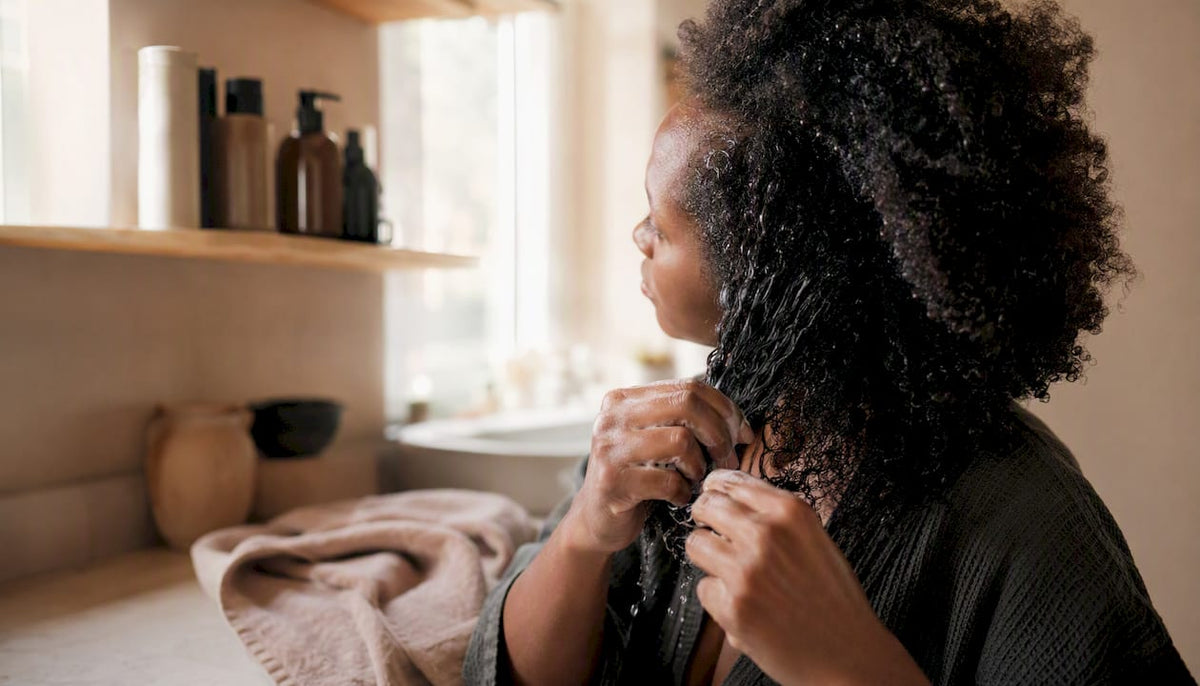
Postpartum hair loss in afro-textured hair, known clinically as telogen effluvium, is temporary in the vast majority of cases and typically resolves on its own within 6–12 months. According to the Cleveland Clinic, shedding usually begins around three months after birth. Here is what to do right now:
- Handle gently. Detangle with your fingers or a wide-tooth comb on wet, conditioned hair only.
- Check your nutrition. Low iron/ferritin, vitamin D, and protein are common contributors. Ask your doctor for a blood panel if shedding feels excessive.
- Switch to low-tension styles. Loose twists, braid-outs, and protective styles with no tight edges reduce mechanical stress on already-fragile strands.
Quick reassurance:
- Most women see regrowth well within their baby’s first year.
- Diffuse thinning all over the scalp is normal; patchy bald spots are not.
- If shedding continues past 9–12 months or you notice scalp pain, see a dermatologist.
Key Takeaways
Postpartum hair loss in afro-textured hair is temporary telogen effluvium that typically peaks around months 3–6 and resolves within 6–12 months, with gentle care and nutrition support as the most effective short-term strategy.
| Point | Details |
|---|---|
| Shedding is usually temporary | Most women see regrowth well within their baby’s first year; the average end point in one study was around 8 months. |
| Afro hair shows more at once | Coils trap shed hairs until wash day, so takedown shock is normal, not a sign of extra loss. |
| Nutrition matters | Test ferritin, vitamin D, and TSH if shedding lasts past 6 months; deficiencies are common and correctable. |
| See a doctor for red flags | Patchy loss, scalp scarring, or shedding past 12 months warrants a dermatology referral, not more home remedies. |
| Cocomera for textured care | Cocomera’s curated hair oils, leave-ins, strengthening shampoos, and masks are chosen specifically for type 3–4 coily and afro hair. |
Table of Contents
- What is postpartum hair loss, and how is it different from other types?
- Why postpartum shedding happens: hormones, stress, and nutrition
- When does postpartum shedding start, peak, and stop?
- Signs that are normal vs. signs that need a doctor
- How postpartum shedding looks different on afro-textured hair
- Safe home measures and what the evidence actually supports
- What a clinician can offer beyond home care
- Cocomera’s recommended daily and weekly routine for postpartum shedding
- Cocomera’s perspective on postpartum hair care for textured hair
- Build your postpartum hair kit with Cocomera
- Sources
What is postpartum hair loss, and how is it different from other types?
Postpartum hair loss is a form of telogen effluvium, a condition where a large number of hair follicles shift simultaneously into the resting (telogen) phase and then shed. During pregnancy, elevated estrogen keeps more hairs than usual in the active growth phase. After birth, estrogen drops sharply, and those hairs all enter the shedding phase at roughly the same time. The result: handfuls of hair in the shower instead of the usual daily loss.
Telogen effluvium is diffuse. You lose hair evenly across the scalp, not in defined patches. If you are seeing round bald spots, a receding hairline, or scarring, that points to a different condition entirely and warrants a dermatologist visit.
Understanding which type of hair loss you are dealing with changes everything about how you respond to it.
| Type | Pattern | Cause | Reversible? |
|---|---|---|---|
| Telogen effluvium | Diffuse, all-over thinning | Hormonal shift, stress, nutritional deficit | Yes, usually within 12 months |
| Alopecia areata | Round or oval bald patches | Autoimmune | Often, but unpredictable |
| Traction alopecia | Edges, temples, hairline | Repeated tension from tight styles | Yes, if caught early |
Why postpartum shedding happens: hormones, stress, and nutrition
The hormonal drop after birth is the primary driver, but it rarely acts alone. Several factors can intensify or prolong shedding.
- Estrogen crash. The sharp fall in estrogen after delivery is what Hopkins Medicine identifies as the central mechanism. Follicles that were held in growth mode during pregnancy all release at once.
- Physical trauma of childbirth. Labor is a significant physiological stressor. Difficult deliveries, blood loss, and surgical recovery can all push more follicles into the telogen phase.
- Sleep deprivation. Chronic sleep disruption in the newborn months compounds the stress load on the body.
- Iron and ferritin deficiency. Low ferritin is one of the most common and correctable contributors to prolonged shedding. If your levels are low, hair loss can persist well past the typical window.
- Vitamin D and zinc. Both play roles in follicle cycling. Deficiencies are common postpartum and worth testing if shedding is severe.
- Protein intake. Hair is primarily keratin. Insufficient dietary protein, especially common when breastfeeding and sleep-deprived, slows regrowth.
A questionnaire-based study published in PMC found that longer breastfeeding duration correlated with higher odds of postpartum hair loss in that cohort. The researchers also noted an association with preterm labor. These are observational findings, not proof of direct cause, but they are worth knowing if you are breastfeeding and noticing prolonged shedding.
Pro Tip: If you are breastfeeding and shedding heavily past the six-month mark, ask your provider to test ferritin specifically, not just hemoglobin. Ferritin can be low even when standard anemia markers look normal.
When does postpartum shedding start, peak, and stop?
The timeline is more predictable than most people expect. The PMC study cited above reported average start, peak, and end months of approximately 2.9, 5.1, and 8.1 months postpartum in their sample.
| Phase | Typical timing | What you notice |
|---|---|---|
| Early postpartum | Months 1–2 | Little to no change; hair still feels full |
| Onset of shedding | Months 2–4 | Noticeably more hair on the brush or in the drain |
| Peak shedding | Months 3–6 | Heaviest loss; may see scalp through hair |
| Recovery | Months 6–12 | Shedding slows; short regrowth hairs appear |
USA Today’s coverage with dermatologist input notes that roughly 9 in 10 women notice postpartum shedding to some degree. That prevalence is worth sitting with: if it is happening to you, you are in the overwhelming majority, not an outlier.
Shedding that continues past 12 months, or that presents as patchy rather than diffuse, falls outside the typical pattern. That is when a dermatology referral makes sense.
Signs that are normal vs. signs that need a doctor
Most postpartum shedding is straightforward. These markers help you tell the difference.
Normal signs:
- Diffuse thinning across the crown and temples
- More hair on the pillow, in the shower drain, or on the brush
- Onset between 2–4 months postpartum
- No scalp pain, itching, or visible scarring
- Gradual slowdown after month 6
See a clinician if:
- Loss continues past 9–12 months with no sign of slowing
- You notice round bald patches or a receding hairline
- Scalp feels tender, itchy, or shows visible scarring
- You have symptoms of thyroid dysfunction (fatigue, weight changes, temperature sensitivity)
- Shedding began before 6 weeks postpartum
Pro Tip: Before your appointment, photograph your hairline and part width once a week for a month. Clinicians can assess progression far more accurately from a documented visual record than from a verbal description.
A standard workup typically includes a CBC with ferritin, TSH (thyroid), and vitamin D. These are simple blood tests that rule out the most common correctable causes. Resources like FitRx’s female hair loss tracker can also help you log symptoms between appointments.
How postpartum shedding looks different on afro-textured hair
Here is something most general guides miss entirely: on afro and coily hair, postpartum shedding often appears far more dramatic than it actually is. The reason is structural. Coils and tight curls physically trap shed hairs within the hair shaft rather than releasing them daily the way straighter textures do. When you finally detangle or take down a protective style, weeks of accumulated shed hairs release all at once.
This is called takedown shock, and it is normal. It does not mean you are losing more hair than someone with straight hair. It means your hair held onto it longer.
Practical care steps for afro-textured hair during shedding:
- Moisturize before detangling. Dry detangling on coily hair causes breakage that looks identical to shedding. Always apply a leave-in or conditioner first. The Cocomera guide to moisture for textured curls explains why moisture is non-negotiable for coily strands.
- Use a wide-tooth comb or your fingers. Start from the ends and work upward in sections. Never pull through from root to tip.
- Keep protective styles loose at the roots. Tight braids or twists at the hairline accelerate traction alopecia on top of telogen effluvium. Your edges are already vulnerable.
- Limit heat. Blow-drying and flat-ironing add mechanical and thermal stress to fragile postpartum strands. Air-dry or diffuse on low.
- Use lightweight oils. Castor oil and jojoba oil seal moisture without weighing down fine new regrowth. Apply to ends and scalp sparingly.
- Wash in sections. Detangle each section before washing, then wash in loose twists or braids to prevent tangling in the shower.
Dermatologists at the AAD recommend volumizing shampoos and light conditioners applied to ends only, which aligns well with afro hair care principles: moisture at the ends, lightweight products at the roots.
Pro Tip: Plan protective style takedowns on a day when you have time and patience. Saturate the hair with a detangling conditioner first, work in small sections, and expect the process to take longer than usual. Rushing a takedown during peak shedding is where most of the preventable breakage happens.
Safe home measures and what the evidence actually supports
Not everything marketed for postpartum hair loss does what it claims. Here is a practical breakdown.
What has reasonable support:
- Iron/ferritin supplementation if blood tests confirm deficiency. This is one of the few interventions with a clear mechanism.
- Vitamin D supplementation if levels are low, particularly common postpartum.
- Protein-rich diet. No supplement replaces adequate dietary protein for hair structure.
- Scalp massage. Small studies suggest regular scalp massage may support follicle stimulation. It costs nothing and causes no harm.
- Gentle, sulfate-free shampoos. Reduce scalp irritation and mechanical stress during washing.
What is cosmetic only (helps appearance, not regrowth rate):
- Volumizing shampoos and thickening sprays make hair look fuller but do not accelerate regrowth.
- Lightweight oils improve shine and reduce breakage but do not speed up the follicle cycle.
What to approach carefully:
| Remedy | Evidence level | Breastfeeding caution |
|---|---|---|
| Biotin supplements | Weak for non-deficient women | Generally considered low-risk; confirm with provider |
| Topical minoxidil | Effective for androgenic alopecia; limited data for telogen effluvium | Not recommended while breastfeeding |
| High-dose zinc | May help if deficient; excess can be harmful | Stick to recommended daily amounts |
| Essential oil blends | Anecdotal; no strong clinical evidence | Dilute properly; some oils are not safe during breastfeeding |
For hair-growth oil options, ZenChemy Lab’s hair growth oil range offers a reference point for what the broader market carries in this category.
What a clinician can offer beyond home care
For most women, postpartum telogen effluvium resolves without medical intervention. But when it does not, or when the picture is unclear, a clinician’s workup adds real value.
Standard tests a doctor may order:
- Ferritin and CBC. Rules out iron-deficiency anemia, the most common correctable cause of prolonged shedding.
- TSH (thyroid-stimulating hormone). Postpartum thyroiditis affects a meaningful percentage of women and causes hair loss that mimics telogen effluvium.
- Vitamin D (25-OH). Deficiency is widespread postpartum and directly affects follicle health.
- Zinc levels. Less commonly ordered but relevant if diet is restricted.
On minoxidil and PRP: These treatments exist, but The Bump’s clinical overview makes the point clearly: most clinic interventions target chronic or androgenic hair loss, not routine postpartum telogen effluvium. Minoxidil is not recommended while breastfeeding. PRP (platelet-rich plasma) is an in-office procedure with limited evidence for postpartum shedding specifically. If a clinician suggests either, ask whether your shedding pattern actually fits the indication.
A dermatology referral is appropriate when loss is patchy, when the hairline shows signs of scarring (which can indicate CCCA, a condition more common in women with afro-textured hair), or when shedding continues past 12 months. Hairgivers’ resource on hair loss in afro hair covers traction alopecia and CCCA patterns worth knowing.
Cocomera’s recommended daily and weekly routine for postpartum shedding
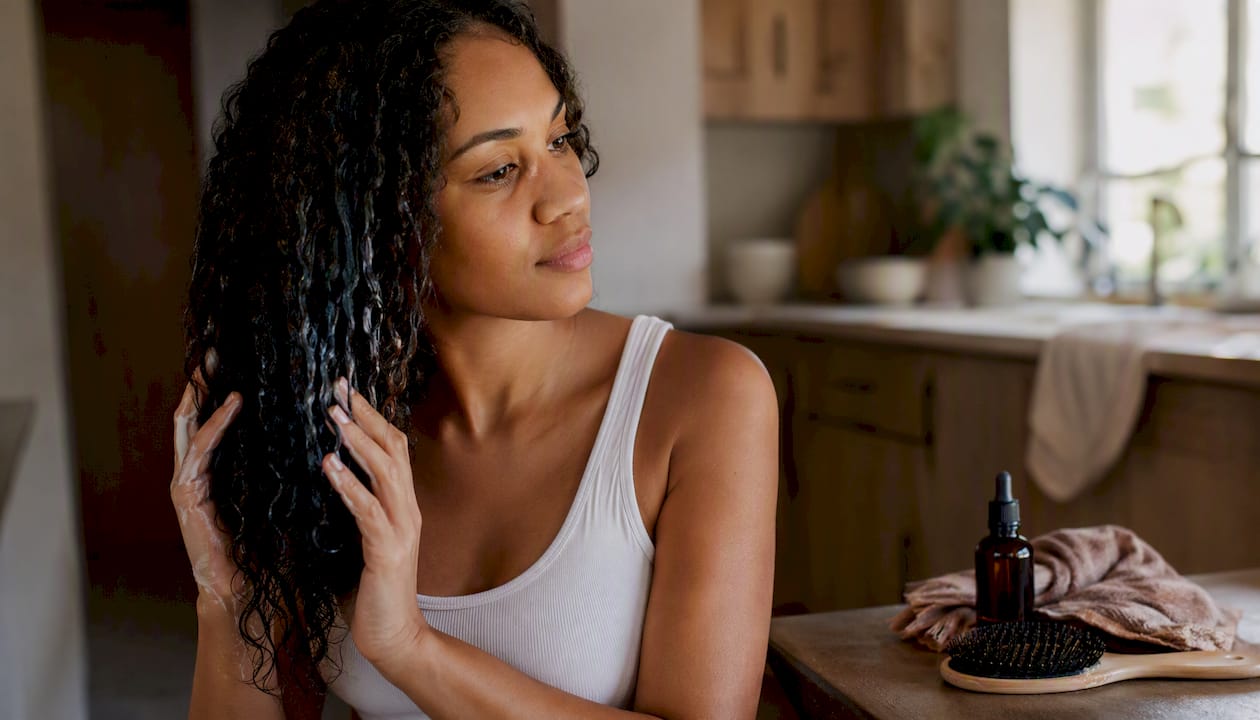
This routine is built for new mothers: low effort, low manipulation, and designed to protect fragile postpartum strands without requiring an hour in front of the mirror.
Daily (5 minutes):
- Refresh moisture with a water-based leave-in spray or a few drops of lightweight oil on the ends.
- Loosely re-twist or pin sections to keep hair contained without tension.
- Sleep on a satin pillowcase or wear a satin bonnet to reduce overnight friction.
Weekly (20–30 minutes):
- Apply a leave-in conditioner to damp hair and detangle in sections with a wide-tooth comb, starting from the ends.
- Style into loose twists, a braid-out, or a low puff. Avoid tight edges.
- Check your hairline and part width. Early changes are easier to address than advanced ones.
Wash day (every 1–2 weeks):
- Pre-poo with a lightweight oil or conditioner to protect strands before shampooing.
- Wash with a strengthening shampoo formulated for textured hair, working in sections.
- Follow with a deep conditioning mask. Leave on for 15–30 minutes under a plastic cap.
- Apply leave-in while hair is still wet, then seal with a light oil.
- Air-dry or diffuse on low heat.
Product categories that support this routine:
- Leave-in conditioner: the foundation of moisture for coily hair
- Lightweight hair oil (castor, jojoba, or argan): seals moisture and supports scalp health
- Strengthening or sulfate-free shampoo: cleans without stripping
- Deep conditioning hair mask: weekly protein and moisture replenishment
For more on afro hair styling for curl types 3 and 4, Cocomera’s blog covers step-by-step techniques that work well during the postpartum period.
Pro Tip: The best routine for a sleep-deprived new mother is the one she will actually do. If a full wash day feels impossible, a co-wash (conditioner only) and loose twists takes 15 minutes and keeps hair manageable without stripping moisture.
Cocomera’s perspective on postpartum hair care for textured hair
There is a gap in most postpartum hair loss content, and it is not subtle. The advice is almost always written for straight or wavy hair: “use a volumizing shampoo,” “try a shorter cut.” For women with type 3 and 4 coils, that guidance lands somewhere between useless and actively harmful.
The real issue is not just the shedding. It is that afro-textured hair requires more handling to maintain, and more handling during peak shedding means more breakage. The solution is not to handle it less and let it mat. It is to handle it smarter: more moisture, gentler tools, lower tension, and realistic expectations about what wash day will look like for the next several months.
Cocomera’s focus on textured hair care, including Swedish-language resources for bilingual readers, comes from exactly this gap. The products curated at Cocomera are chosen because they work for coily and afro hair specifically, not adapted from formulas built for other textures.
Build your postpartum hair kit with Cocomera
Postpartum shedding in afro-textured hair calls for a specific set of tools, not a generic “hair loss” product. The kit that actually helps is simple: a gentle strengthening shampoo, a leave-in conditioner, a lightweight hair oil for sealing and scalp support, a deep conditioning mask for weekly repair, and a satin bonnet for overnight protection.

Cocomera curates all of these categories specifically for type 3 and 4 textured hair, sourced from brands that formulate for coils, not around them. Browse the hair treatments collection for masks and targeted care, or explore leave-in styling products for daily moisture options. If you want a personalized routine recommendation based on your curl type and current shedding pattern, reach out through the Cocomera site directly.
Sources
The claims in this article draw on the following sources. For medical decisions, always prioritize a clinician over any online guide.
- Postpartum Hair Loss: Causes, Treatment & What to Expect
- Postpartum hair loss study (PMC) — questionnaire-based analyses linking breastfeeding duration and preterm labor with postpartum hair loss
- Postpartum hair loss: Causes, duration & how to treat it
- Postpartum hair loss tips from dermatologists (AAD)
- Postpartum hair loss consumer coverage (USA Today)
This article provides general information only and is not a substitute for professional medical advice. If you are concerned about your hair loss, consult a dermatologist or your healthcare provider.


